
The Italian Dolomites in October: A Landscape Photography Guide
Italian Dolomites October Landscape Photography
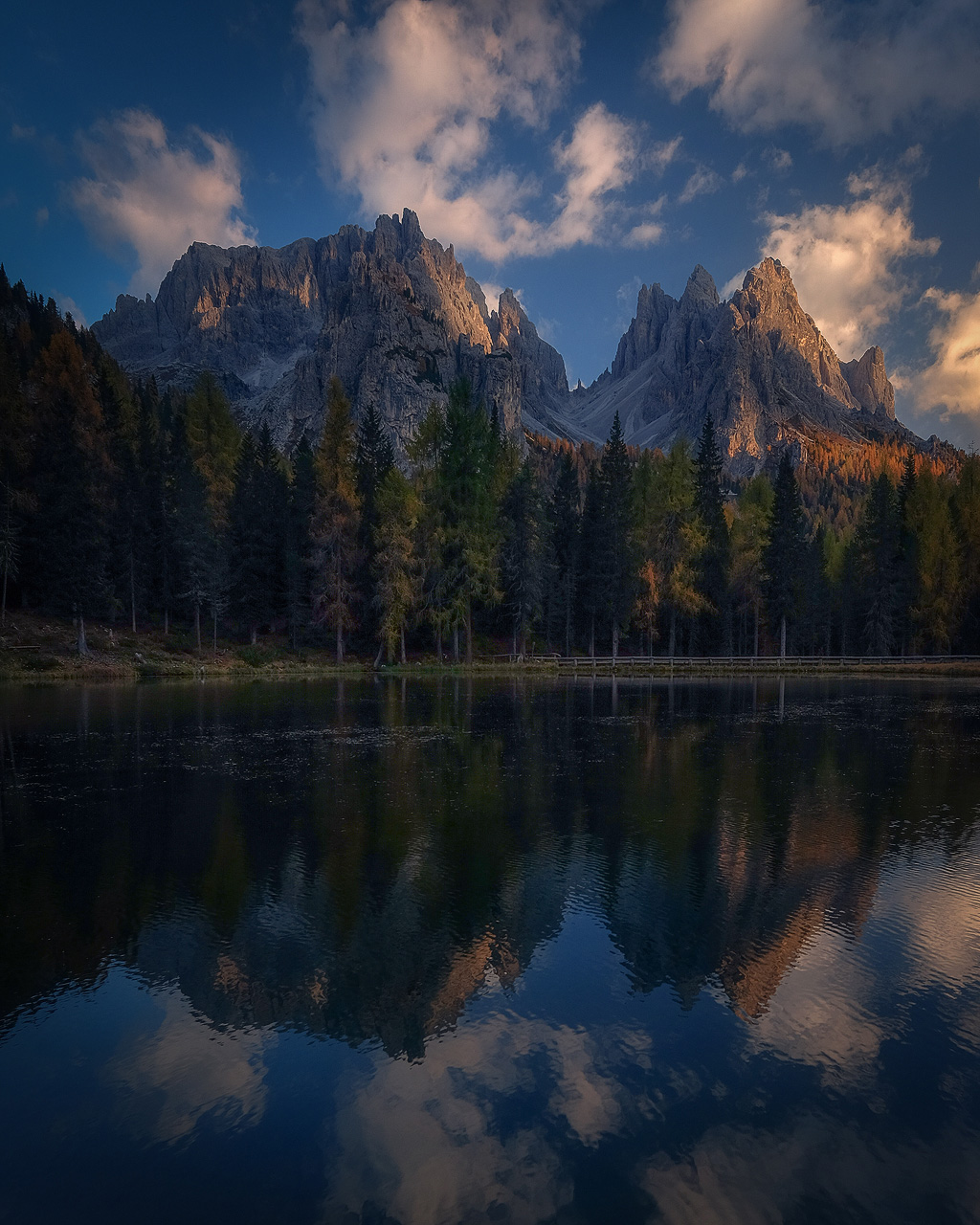
October is the peak window for Dolomites October photography. For roughly three weeks, the European larch trees on the mountain slopes turn vibrant yellow and orange, valley fog settles at dawn, and low-angle sun carves texture across the pale dolomite rock. Combine that with thinning crowds and the chance of early snow on the high peaks, and the Italian Dolomites deliver the strongest conditions of the year for serious landscape photography.
This guide covers when to go, where to shoot, how to work the light, and what to pack for an October Dolomites photography trip.
Why October Is the Best Month for Dolomites Photography
The Italian Dolomites were declared a UNESCO World Heritage Site in 2009 due to their unique geology, which features 18 peaks over 3,000 meters characterized by steeples, pinnacles, and sheer rock walls. The range is renowned for dramatic landscapes — a mix of forested valleys, tranquil lakes, and striking mountain formations that create photographic opportunities found nowhere else in Europe.
Year-round the Dolomites draw hikers, climbers, and skiers. But for photographers working in landscape photography, October delivers a combination of elements no other month matches.
Four things converge for about three weeks each fall:
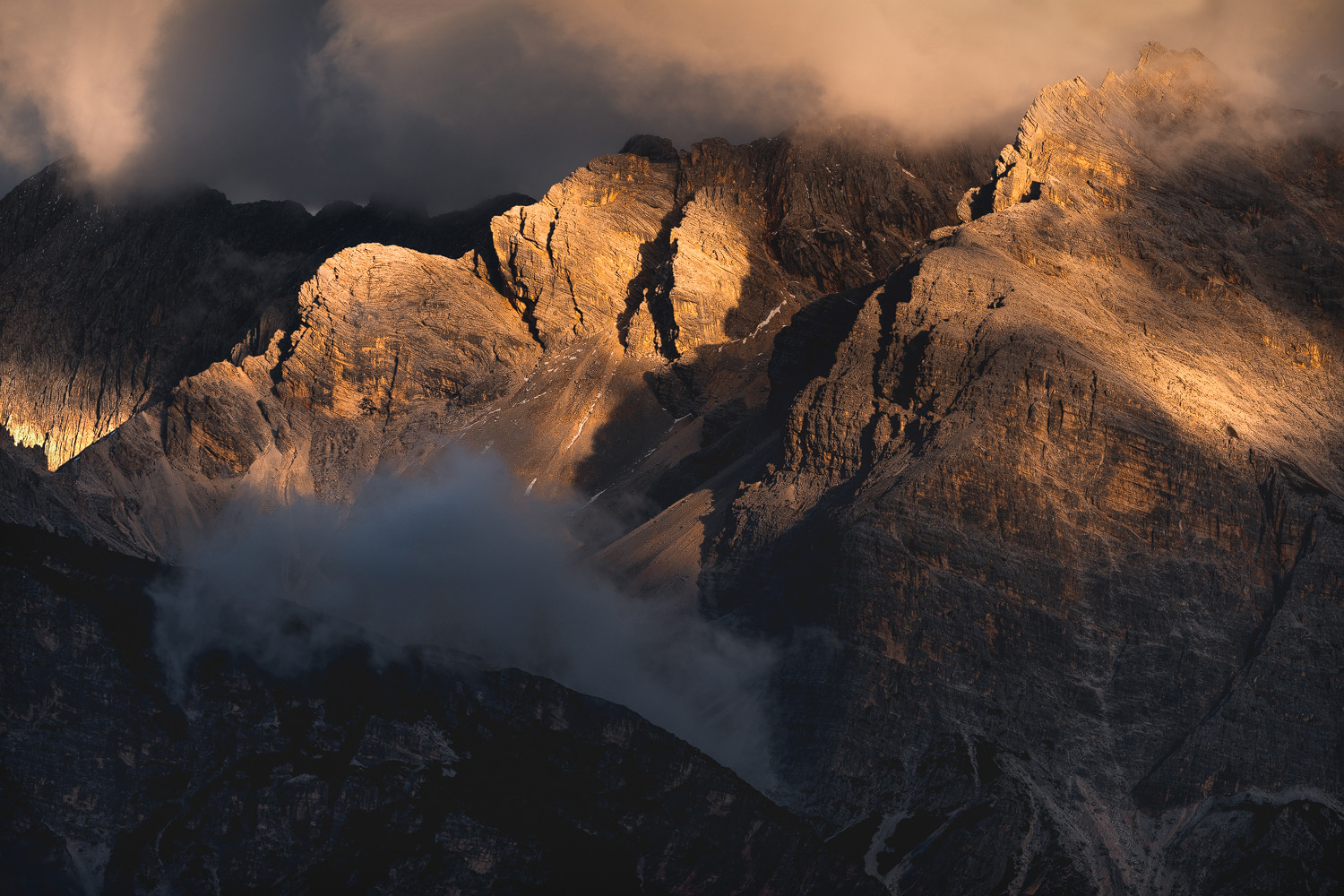
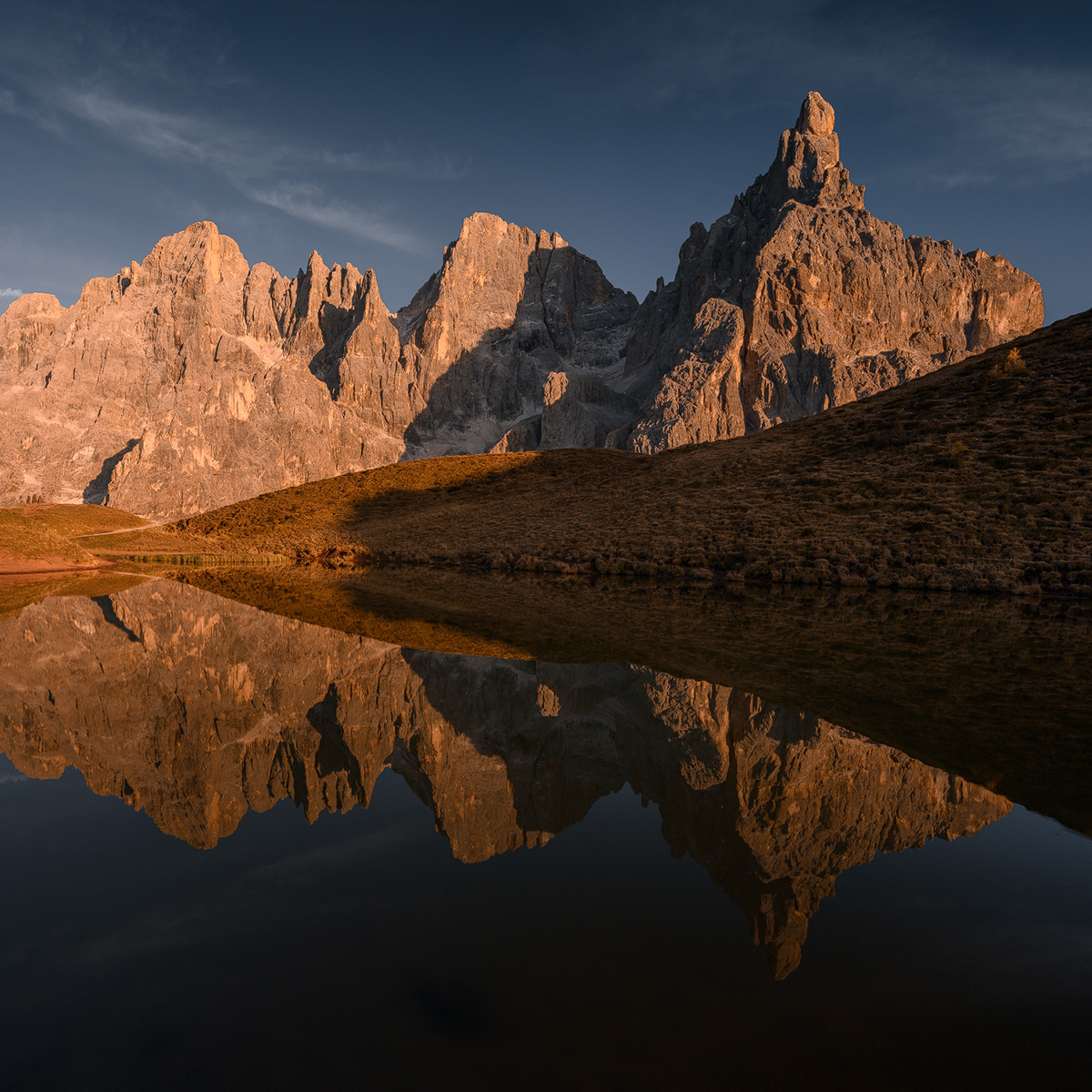
Golden light at low sun angles. The "Golden Hour" lasts longer in October due to the lower position of the sun, providing softer, more flattering light throughout the day. The pale dolomite rock catches warm light differently than any granite range — it holds the color instead of reflecting it. At sunrise and sunset, the peaks turn pink and gold in a phenomenon locals call "Enrosadira." Capturing the Dolomites during sunrise and sunset enhances the colors and textures of the landscape, making these the prime times for photography.
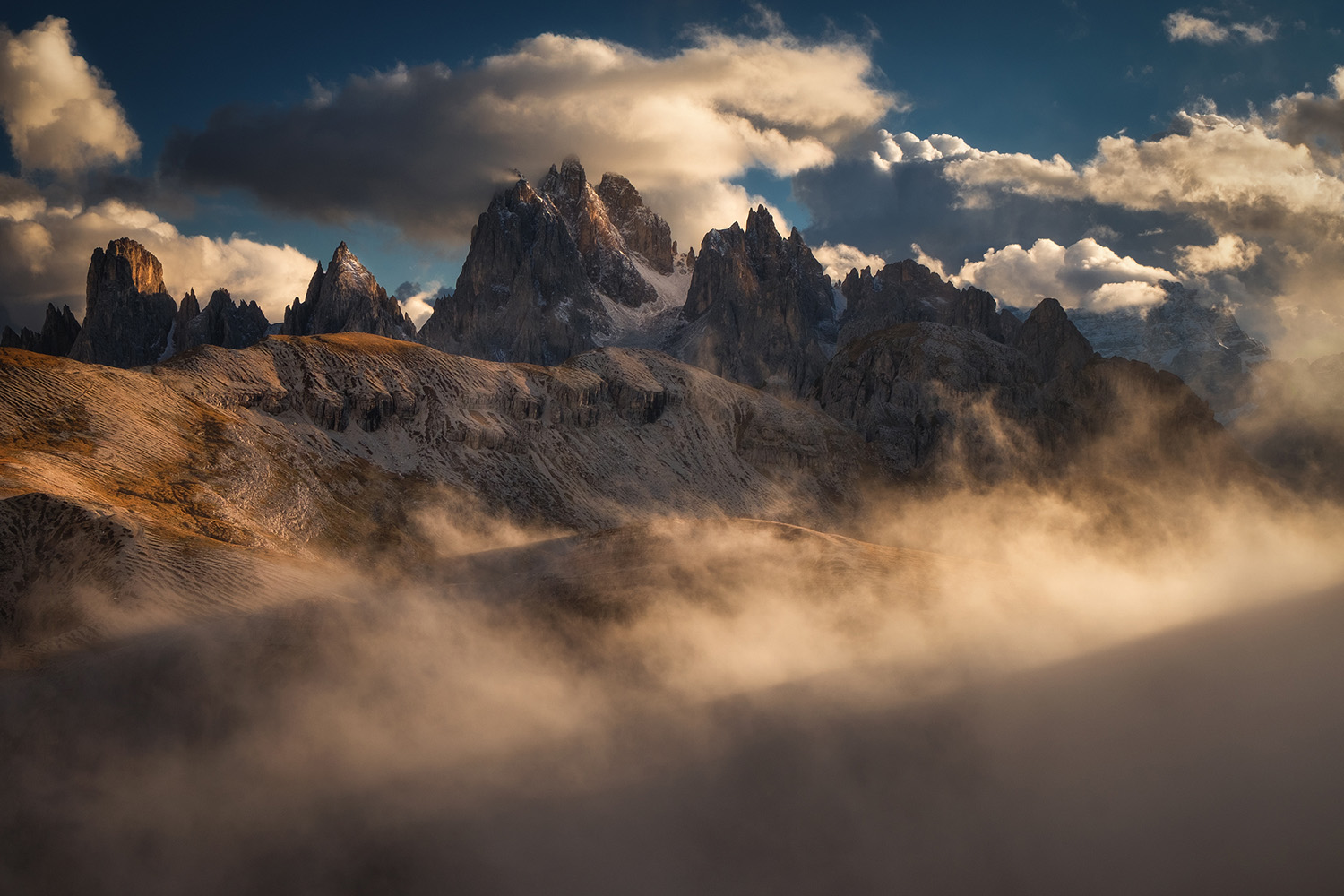
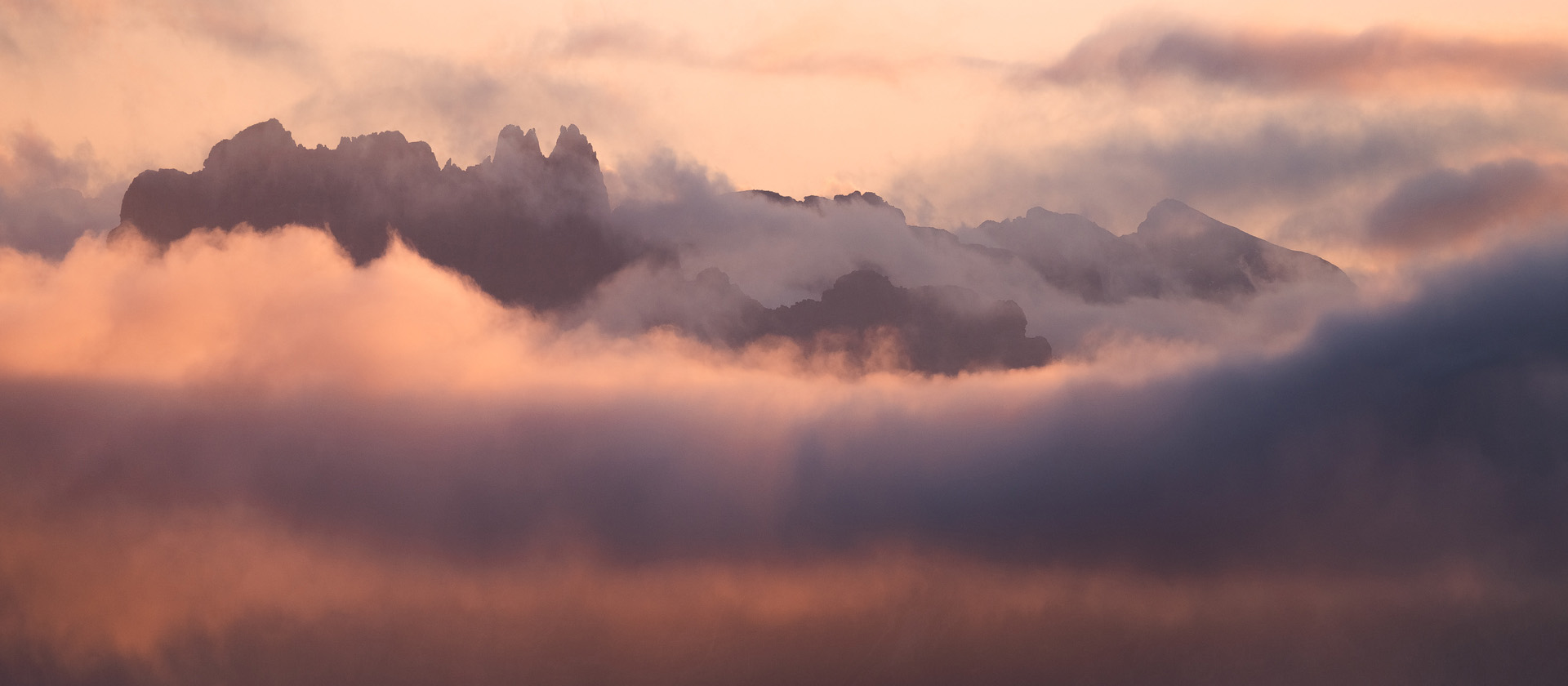
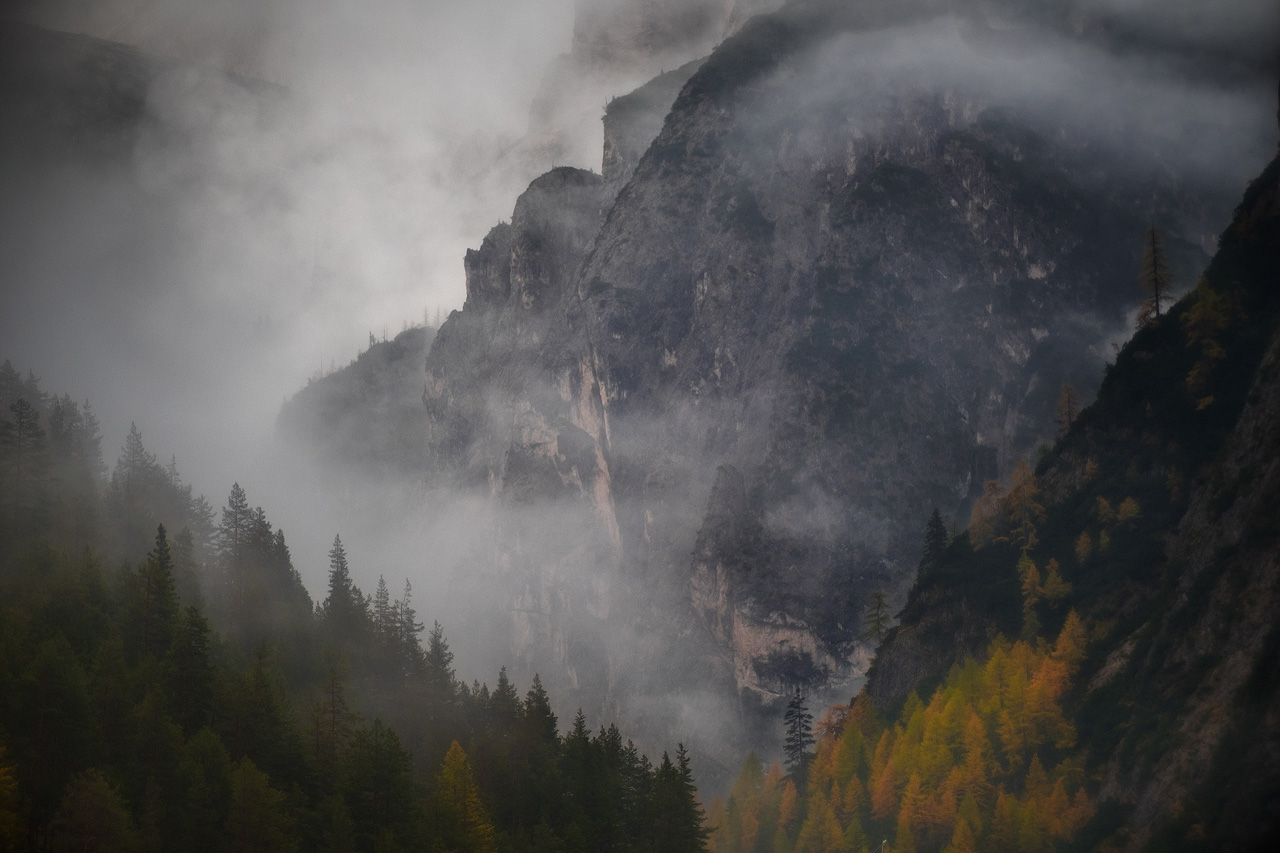
Valley fog and inversions. Cold night air settles into the valleys. Warmer air aloft creates thick fog layers at dawn that burn off through the morning. Shooting from higher elevations — Passo Giau, any of the scenic mountain passes — puts photographers above the weather, looking down at peaks emerging from a sea of cloud. This happens almost daily in early October.
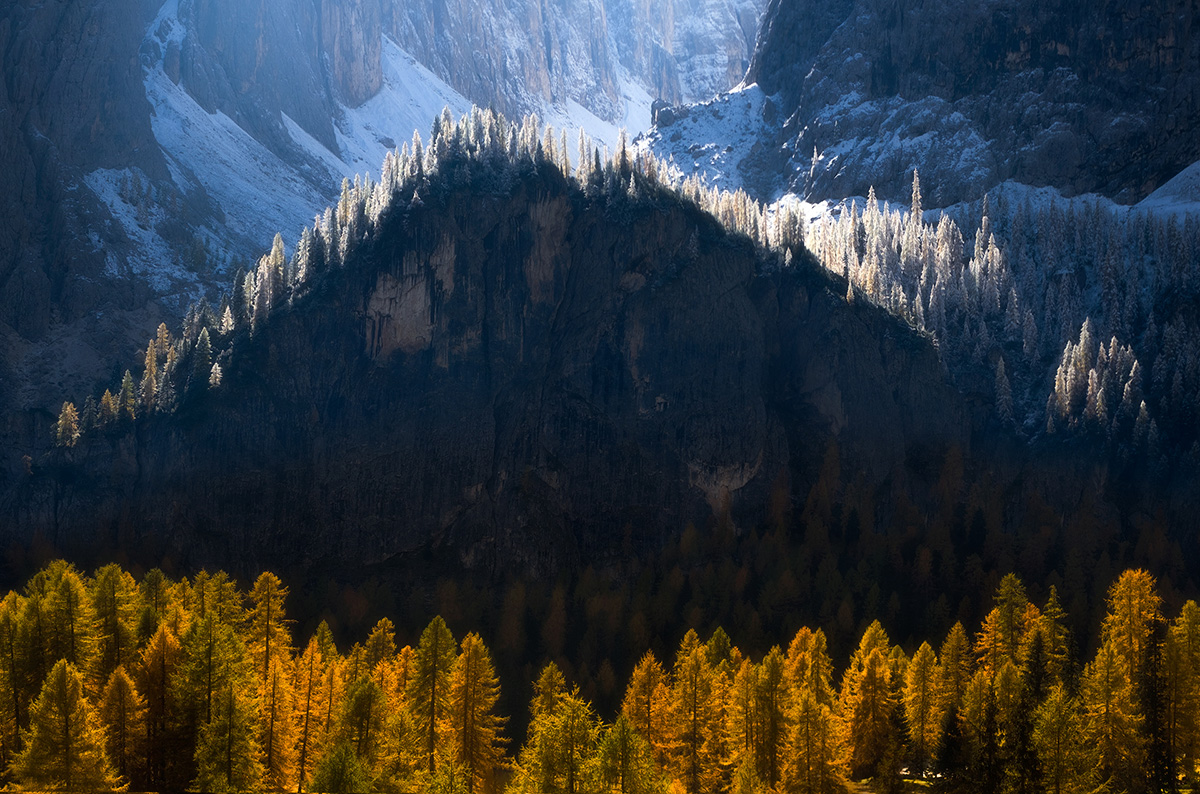
Larch color explosion. Larch trees, which turn vibrant shades of yellow and orange in the fall, are a significant feature of the Dolomites' landscape, enhancing the region's autumn scenery. The European larch (Larix decidua) is a deciduous conifer — in October its needles turn from green to fiery gold before dropping. These trees cover entire slopes in places like Val di Funes, Seceda, and the Passo Gardena area. October is considered a magical time to visit the Dolomites, as the landscape is transformed with vibrant autumn colors, particularly the larch trees that turn yellow.
Thinner crowds. Summer tourism ends after the first week of September. Many cable cars and mountain huts (rifugios) close by late September or early October, which impacts accessibility for photographers — but the tradeoff is dramatically reduced crowds at iconic locations. Trails go quiet, and the famous churches of Santa Maddalena and San Giovanni see a fraction of their July visitor count.
Iconic Dolomites Photography Locations in October
The Dolomites are vast — the range spreads across northern Italy through South Tyrol, the Trentino region, and into Veneto. The Dolomites offer numerous iconic photography locations, including Lago Federa, Alpe di Siusi, and Passo Giau, all known for their stunning autumn scenery. Trying to cover everything in one trip is a mistake. Better to pick two or three base locations and work them deeply.
Val di Funes and the Santa Maddalena Churches
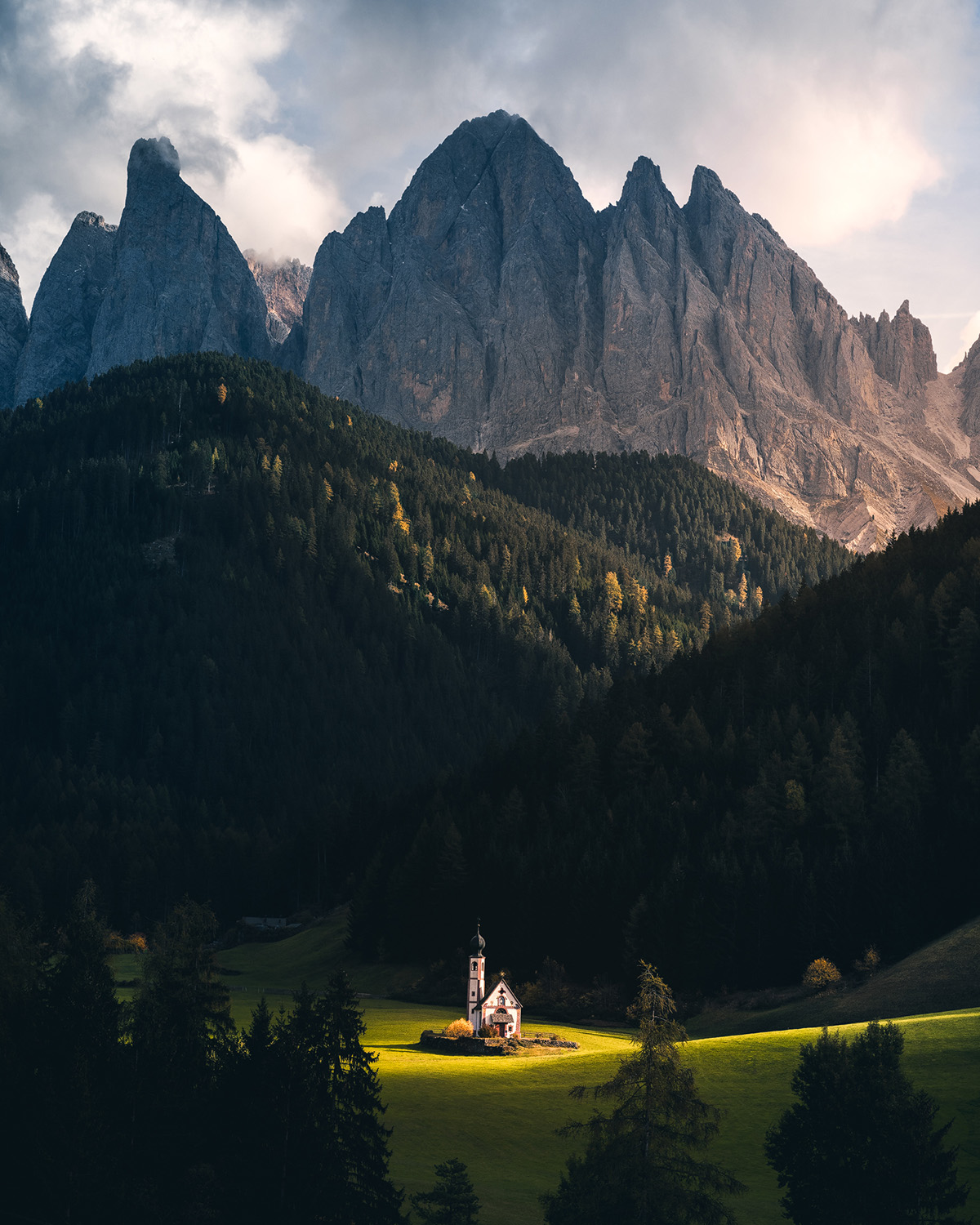
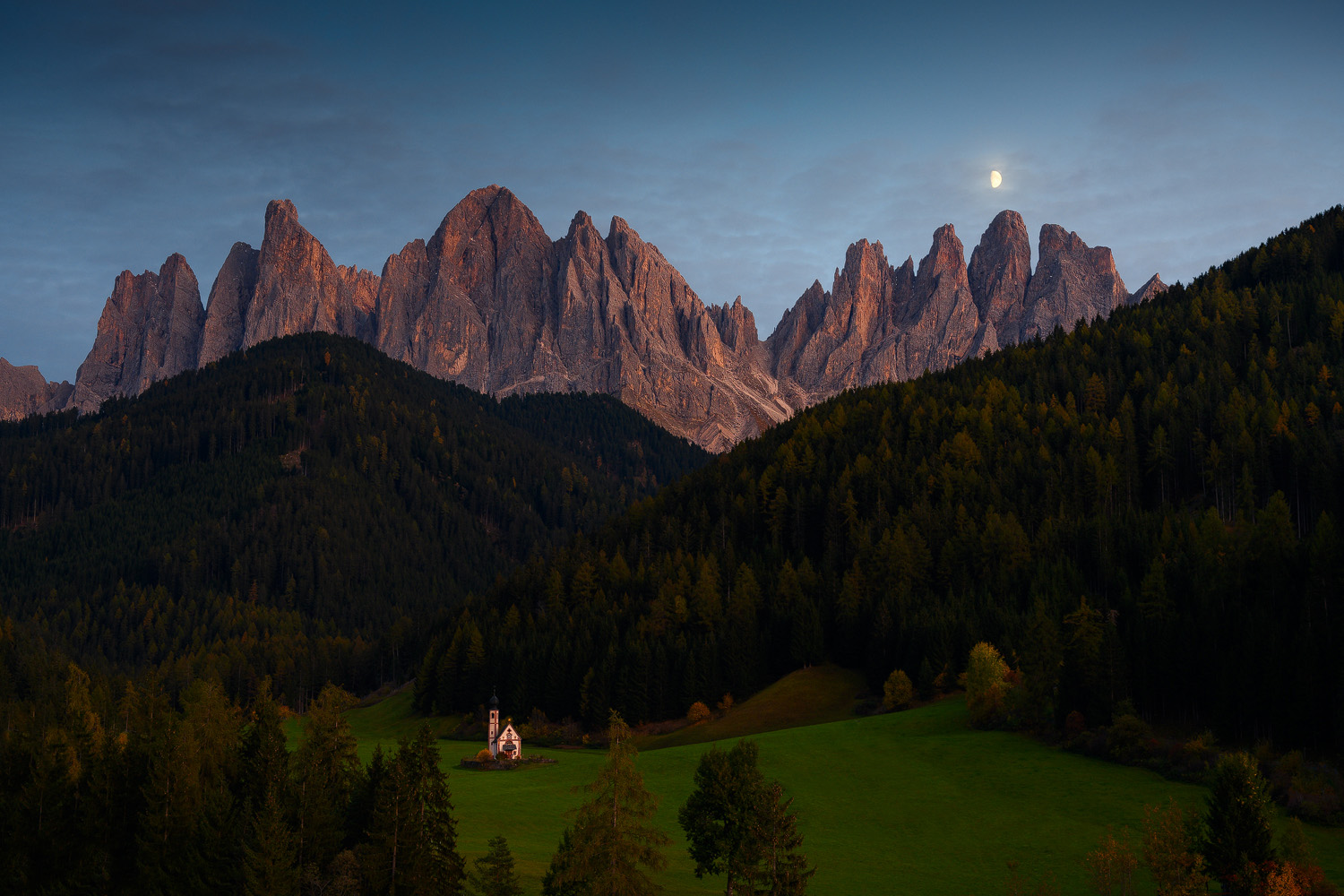
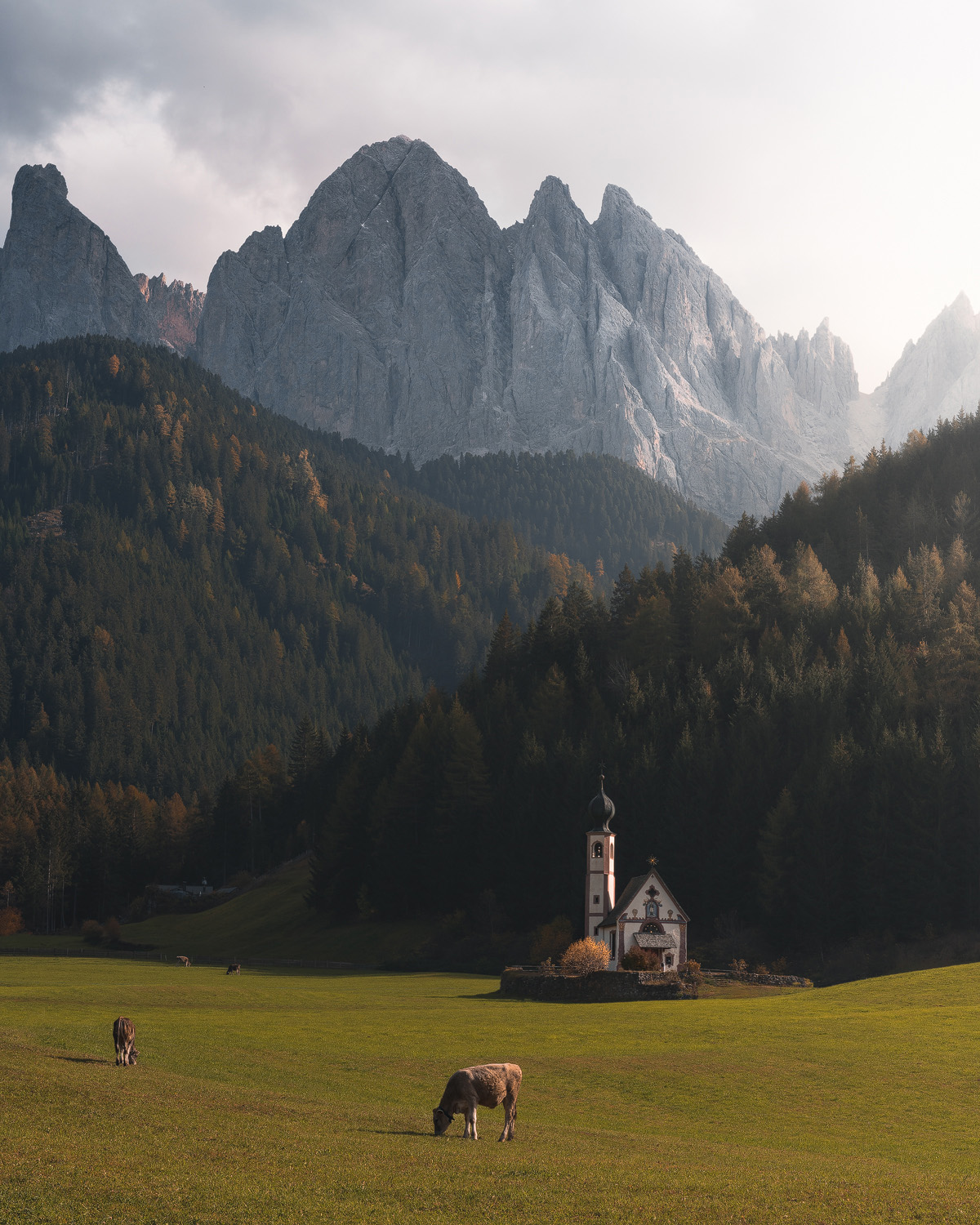
Val di Funes is renowned for its picturesque landscapes, particularly the iconic St. Johann church set against the backdrop of the Odle mountains, which are especially photogenic during the autumn months. The valley contains two famous churches — San Giovanni (the small chapel isolated in a meadow) and Santa Maddalena (the larger village church). Low October sun rakes across the rolling meadows at first light. The marked viewpoint trails above Santa Maddalena offer far stronger compositions than the parking lot.
Tre Cime di Lavaredo
Tre Cime (the Three Peaks of Lavaredo) are the undisputed icon of the range. The circular hiking trail around them is one of the best hikes in the Dolomites — about 10 kilometers, roughly 4 hours at photographer's pace. The loop begins at Rifugio Auronzo and gives photographers constantly changing perspectives — north faces in shadow, south faces catching the light, golden larches framing foregrounds throughout.
Rifugio Locatelli, on the back side of the loop, is the classic sunset location for Tre Cime. Arriving an hour before sunset and settling in for the alpenglow is the approach. The light on the three peaks at last light is what photographers come for.
Cadini di Misurina
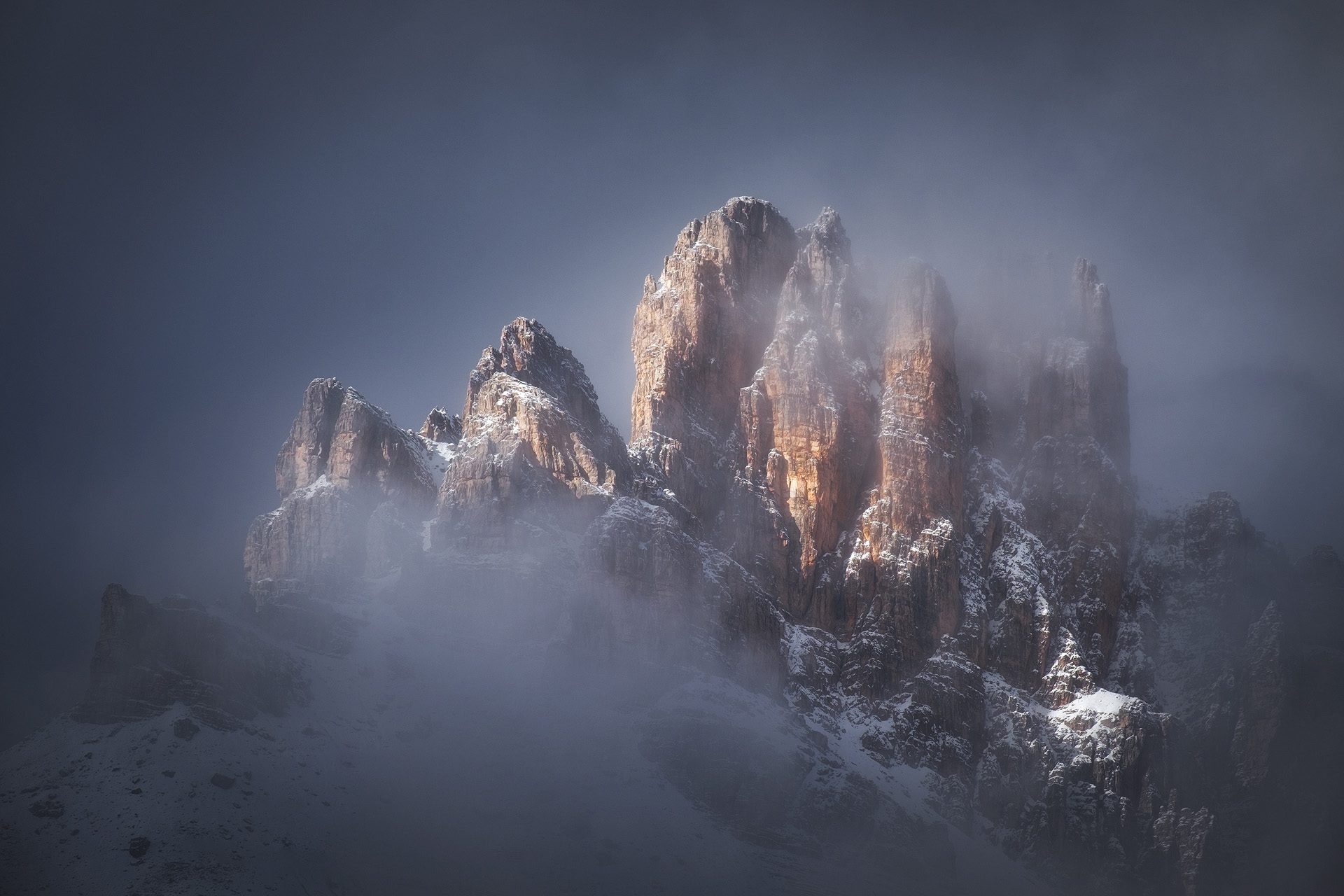
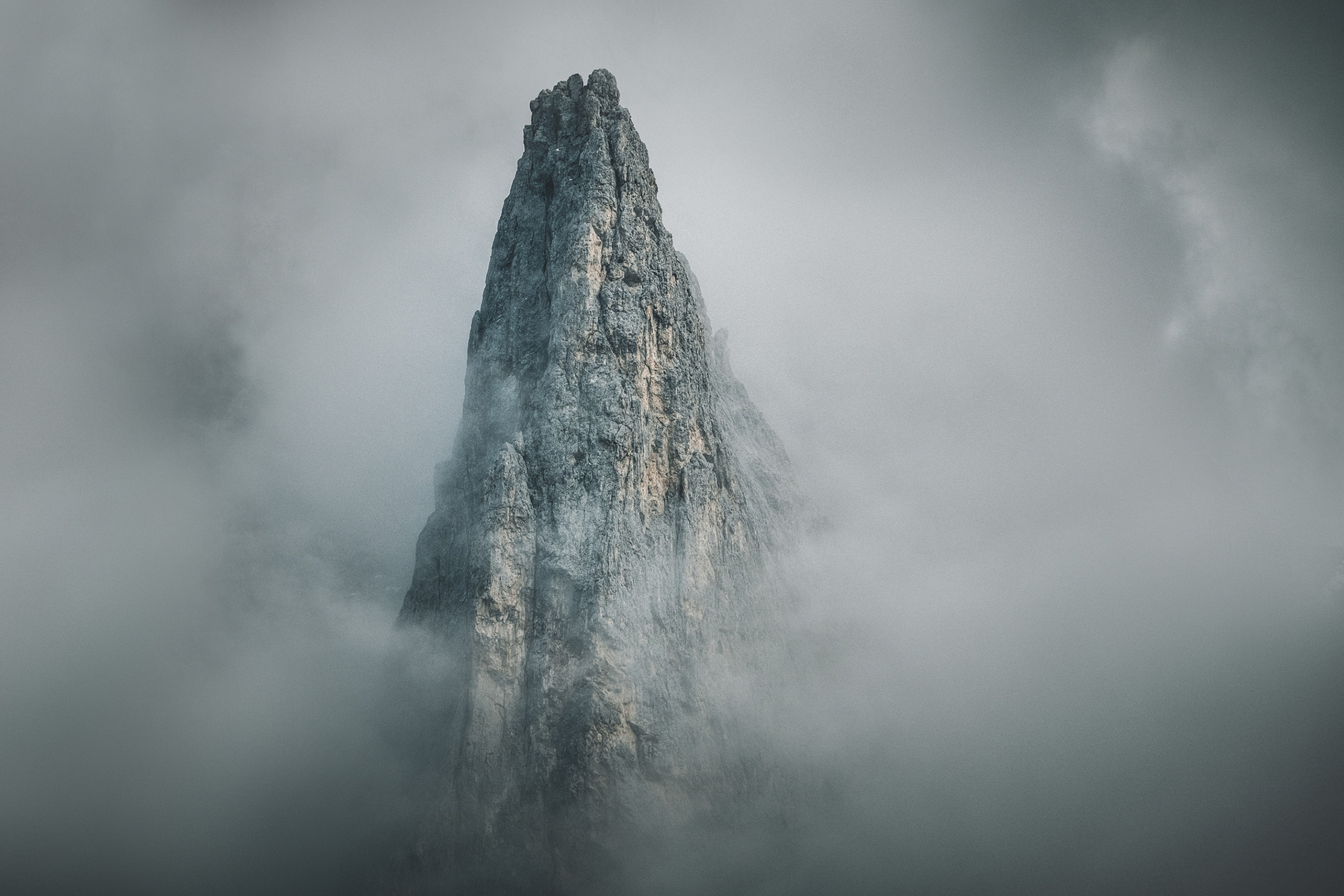
A 20-minute walk from Rifugio Auronzo leads to one of the most recognizable sunset locations in the Alps. The Cadini di Misurina are a cluster of jagged spires — sharp, sci-fi shapes that catch sidelight dramatically at sunset. This is a short walk but the exposure is real.
Seceda Ridgeline
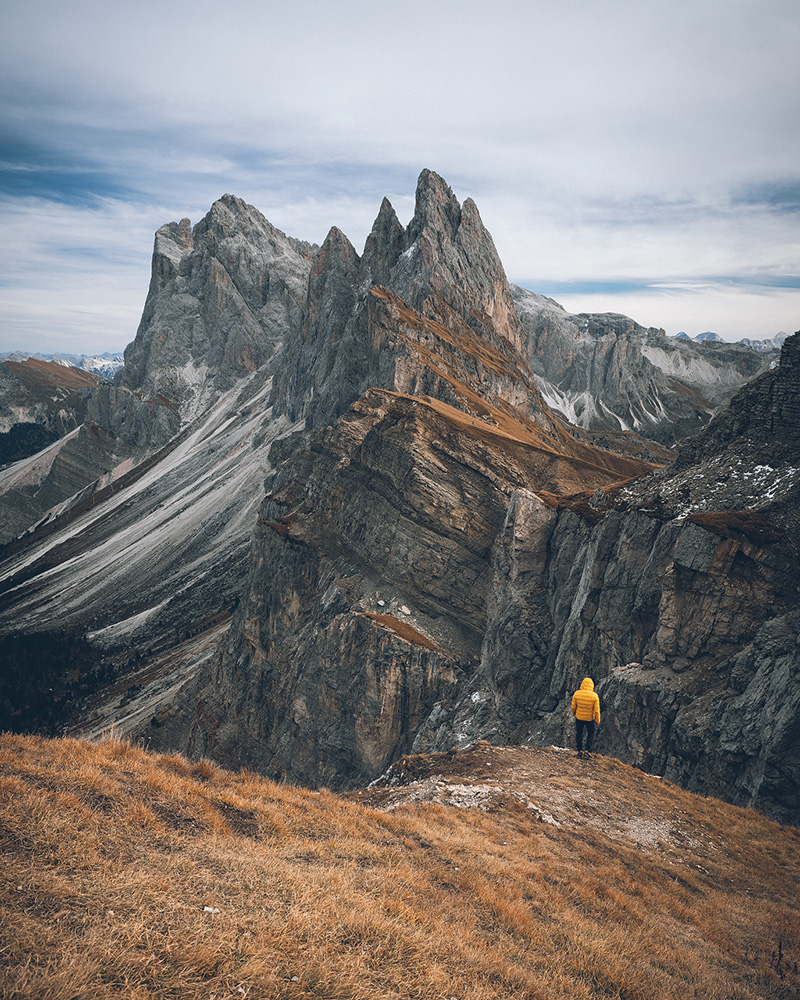
Seceda is accessed by cable car from Ortisei in Val Gardena. The cable car runs into mid-October, then closes. The ridgeline here delivers those blade-like Fermeda towers cutting upward from rolling autumn grasslands — one of the most dramatic compositions in the range. The golden hour light on these formations is extraordinary.
Alpe di Siusi (Seiser Alm)
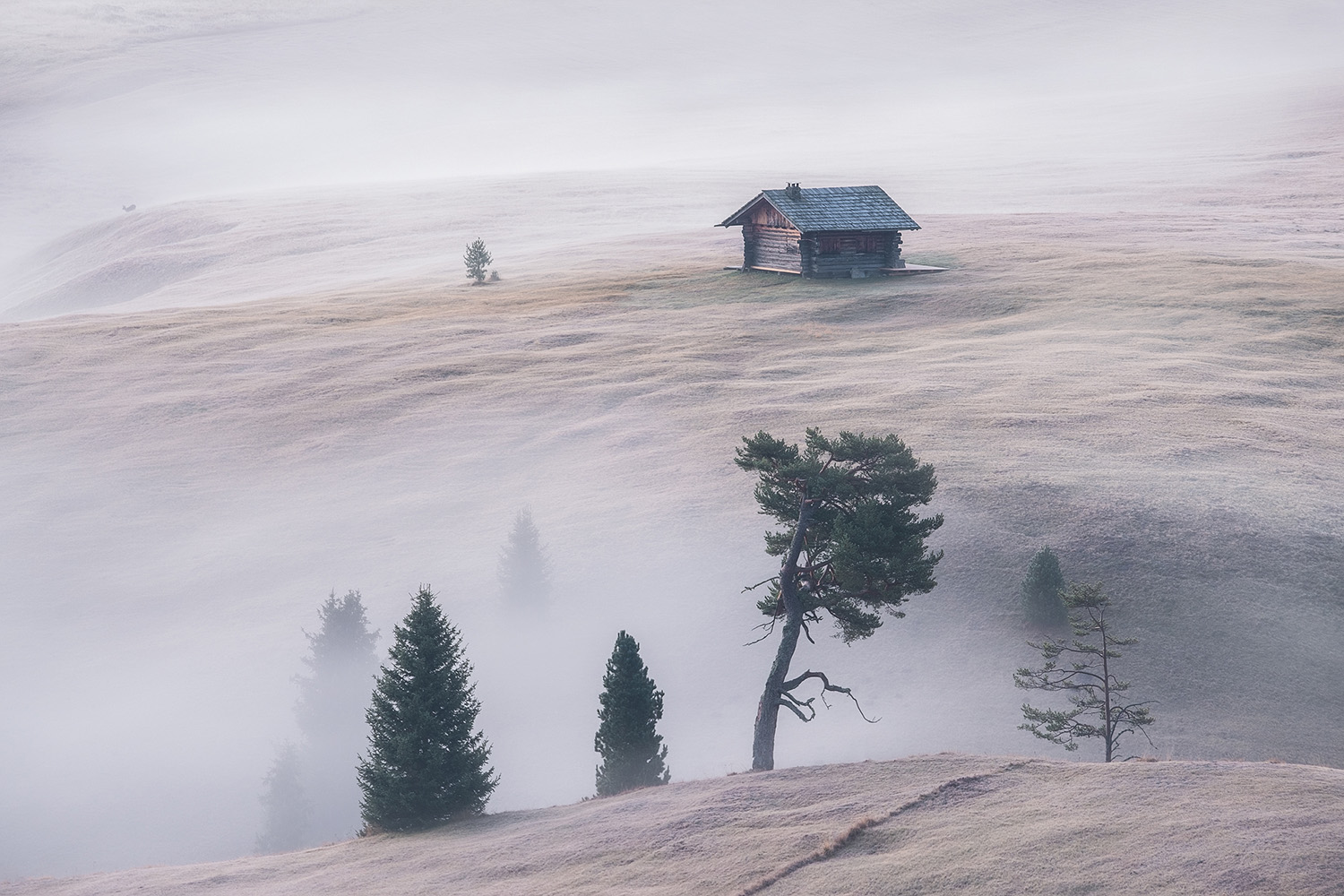
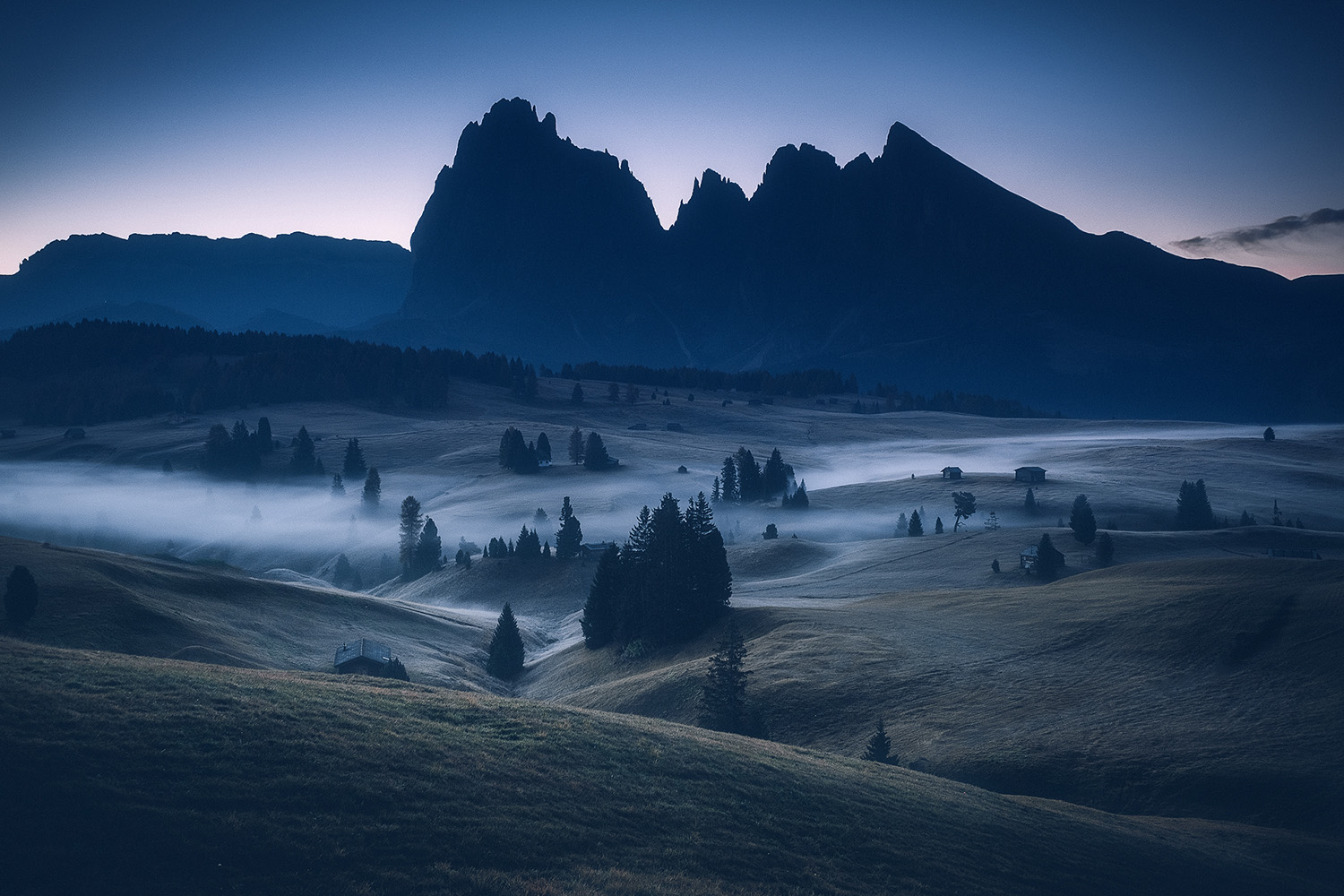
Europe's largest high-altitude alpine meadow. In October the summer grasses cure to gold, creating vast rolling foregrounds beneath the Sassolungo and Sassopiatto peaks. Arriving early at Alpe di Siusi is recommended to capture the best light before sunrise, when the plateau stays clear while fog settles into the lower valleys — one of the most reliable inversion locations in the range.
Lago di Braies
Lago di Braies, also known as Pragser Wildsee, is one of the most popular lakes in the Italian Dolomites, especially stunning during autumn when the colors of the trees reflect beautifully in the water. A study found the lake could sustainably handle about 2,000 daily visitors, but summer days push past 170,000. October's relative quiet is the entire point of photographing here off-season.
Arriving early at Lago di Braies is essential to capture the best light before sunrise. By 10 AM the crowds return.
Lago di Sorapis
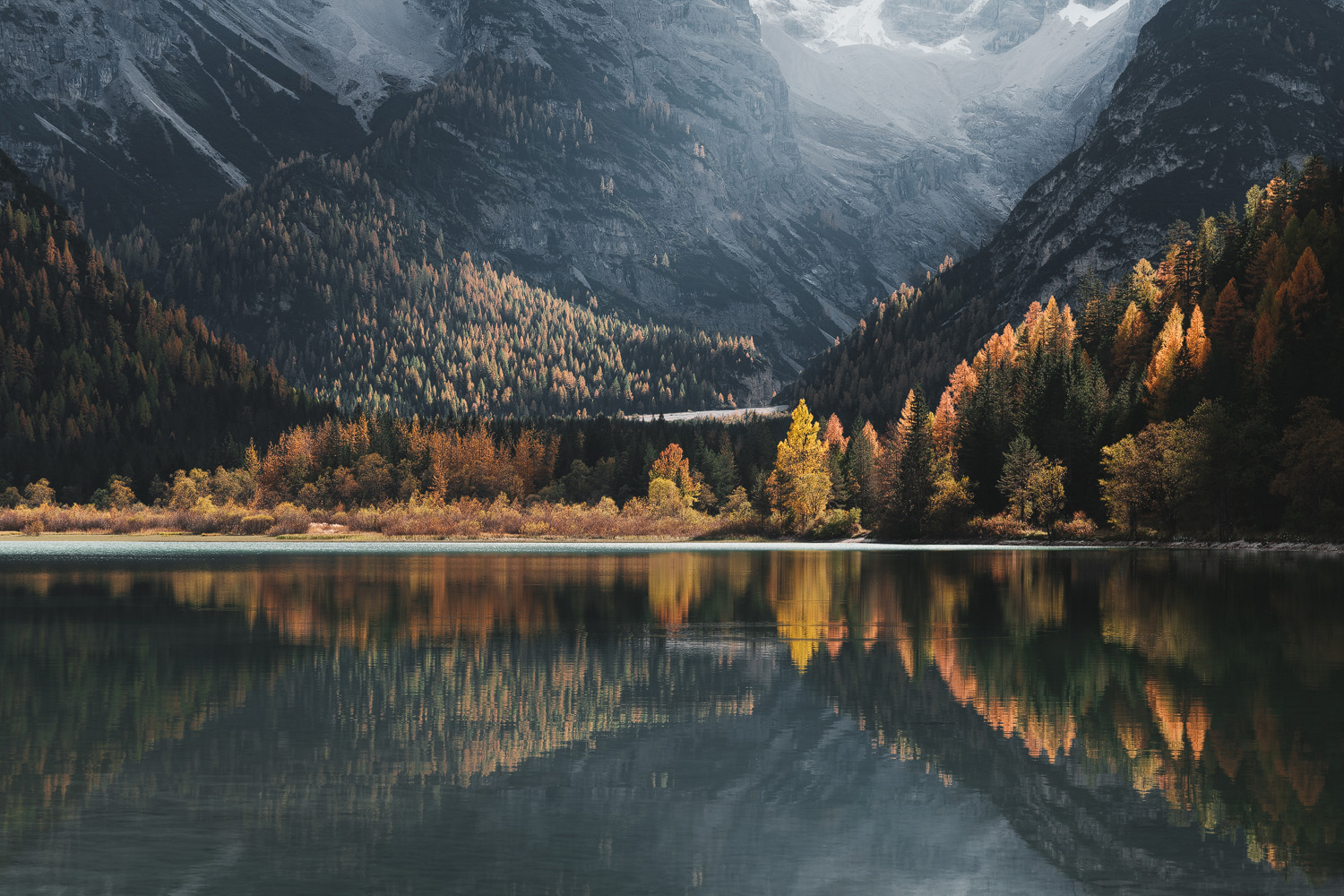
A harder hike — about 2.5 hours each way from Passo Tre Croci. The payoff is a high-altitude alpine lake with milky-turquoise water created by glacial rock flour suspended in it. Surrounded by golden larches against grey dolomite walls, Lago di Sorapis offers one of the strongest color compositions in the range. Weather-dependent in late October.
Lago Federa
Lago Federa is a high alpine lake that becomes a favorite spot for photographers in autumn due to the vibrant colors of the larch trees surrounding it, making it a must-visit location during this season. The hike in from Passo Giau takes about 90 minutes. Less traveled than Braies or Sorapis, which means sunset can be worked without anyone else in the frame.
Passo Giau and the Mountain Passes
The scenic mountain passes deliver sunset when the peaks aren't cooperating elsewhere. Passo Giau delivers 360-degree views of Ra Gusela and the Marmolada glacier. Passo Gardena and Passo Sella give access to the Sella and Sassolungo groups. Parking is limited — early arrival matters, especially for sunrise.
Best Time to Visit the Dolomites in October
The best time to visit the Dolomites for autumn photography is typically from mid-October to early November, when the fall colors are at their peak. Peak autumn colors in the Dolomites can vary each year, but they generally occur in the last two weeks of October, depending on weather conditions.
October is also a month of rapid change. Where a photographer falls within it matters.
Early October (1-10): Stable weather, cable cars still running, most rifugios still open. Larches beginning to turn but not at peak. Lowest risk window — good for photographers who need infrastructure access.
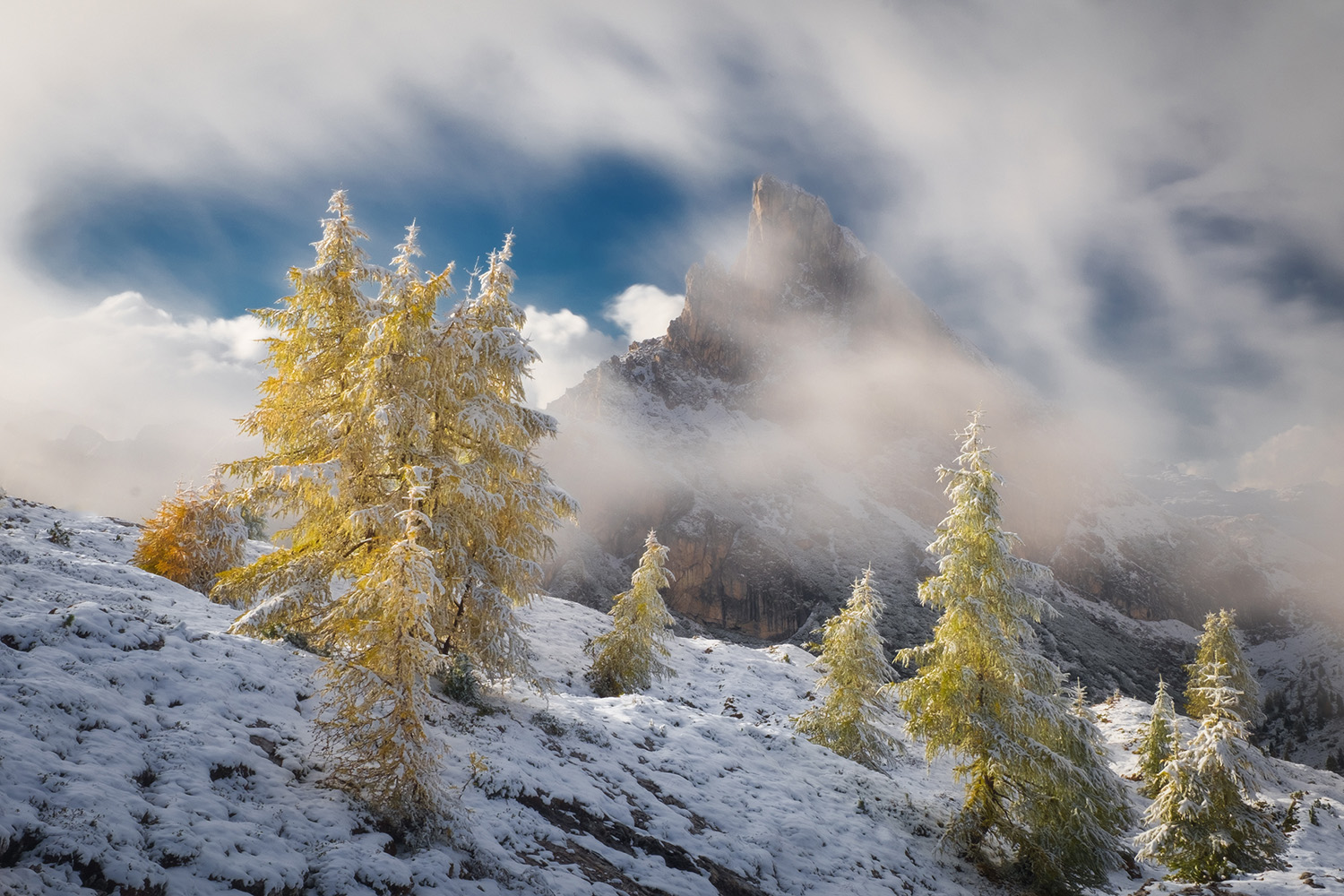
Mid-October (10-25): Peak larch color. Highest reward, highest risk. Weather becomes unpredictable. First snowfall possible above 2,000 meters. Some cable cars close mid-month. Most serious photographers target this window.
Late October to early November (25-5): The traditional read is that the larches have dropped by now. That read is aging. Guides working this range season after season report the window sliding later, and recent years have held color into this stretch — with the added chance of larch gold against the first snow on the high peaks, which is the strongest combination the range offers. Access narrows as passes and lifts close. That's the trade.
Temperatures often drop below freezing at night and in the early morning during October in the Dolomites. Preparation for cold weather is crucial, including the use of gloves, warm layers, and sturdy hiking boots.
Gear and Camera Settings for Dolomites Photography
A wide-angle lens is necessary for sweeping vistas, while a telephoto lens is vital for compressing mountain peaks or highlighting details. Both lenses should be in every photographer's bag for the Dolomites.
Camera body. A weather-sealed mirrorless or DSLR with good dynamic range. October skies can shift from overcast to blazing sun in minutes. The dynamic range to hold highlight detail in bright peaks while recovering shadows in valley fog matters here. Working these conditions cleanly requires a solid grasp of the exposure triangle for landscape photography — aperture, shutter speed, and ISO all come into play as light shifts throughout the day.
Wide-angle zoom. A 16-35mm equivalent for grand landscapes — capturing Val di Funes meadows, the scale of Alpe di Siusi, or tight interior shots of larch groves with foreground depth.
Telephoto zoom. A 70-200mm is essential. Most of the strongest Dolomites compositions come from compression — isolating a single church against the Odle backdrop, picking out ridgelines at dawn, compressing mountain layers into graphic compositions. Photographers who leave the long lens behind miss the best images.
Tripod. Non-negotiable for sunrise and sunset. Wind can kick up at the high passes — a sturdy tripod with a solid ballhead makes the difference between sharp frames and blurred ones.
Filters. Using polarizing filters helps cut glare on alpine lakes and deepen the blues of the sky. A 3-stop graduated ND balances bright sky against darker valley foreground at blue hour. October light doesn't need much help — don't over-filter.
Cold-weather layers. Base layer, insulation, waterproof shell. Gloves, warm layers, and sturdy hiking boots are essential given that temperatures often drop below freezing at night and in the early morning during October. Temperatures swing from freezing at dawn to T-shirt weather at noon. A headlamp for morning hikes in before dawn, and again for the descent after sunset.
How to Work October Light in the Dolomites
Light matters more than location. A perfect composition in flat midday sun makes a forgettable image. An average composition in golden hour becomes something worth printing.
Plan around sunrise and sunset. PhotoPills or The Photographer's Ephemeris show exactly where the sun rises and sets relative to a chosen peak. Being in position an hour before sunrise catches blue hour and first light. Staying an hour after sunset captures alpenglow and twilight color. The middle of the day is for scouting new locations, hiking between spots, or shooting inside forest scenes where flat light works.
For photographers chasing night sky and astrophotography in the range, the principles that apply to photographing the northern lights also apply to Milky Way work in the Dolomites' dark-sky zones.
Use Instagram to scout current conditions. Checking recent Instagram posts from specific locations just before a shoot helps photographers assess current conditions and avoid disappointment, as recent posts reflect the latest scenery, weather, and fall color progression.
Embrace bad weather. The strongest Dolomites photography often happens when most photographers pack up. Overcast skies give soft diffused light perfect for forest scenes. Fog simplifies chaotic compositions. A storm clearing at sunset produces the most dramatic sky conditions of the year.
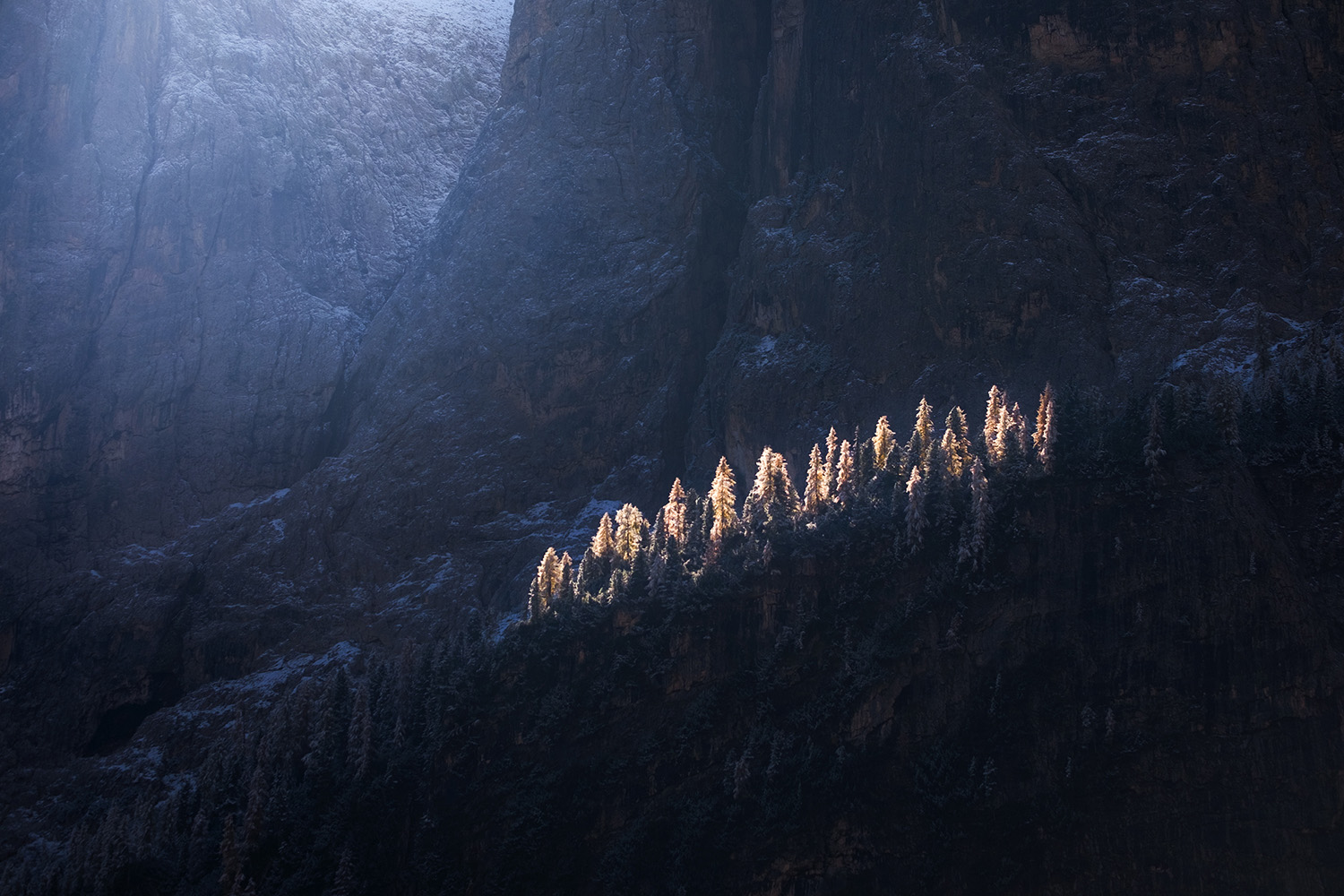
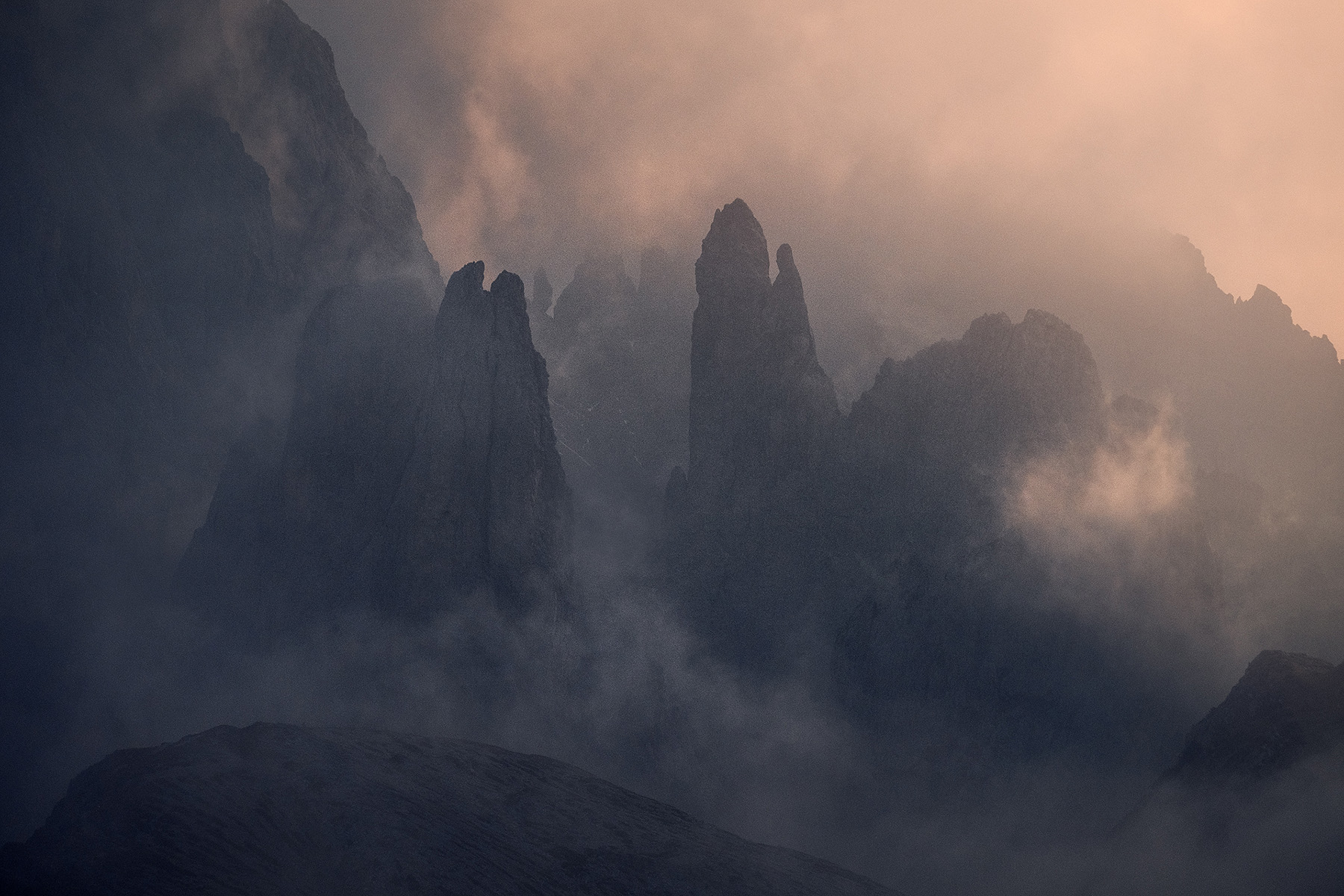
Use compression to your advantage. Wide-angle shots of the Dolomites are everywhere. What makes photographers stand out is telephoto work — picking out jagged ridgelines against distant peaks, compressing multiple layers of mountain into a graphic composition, isolating a single stand of larches catching late sun. Most travelers don't bring long lenses.
Understanding how focal length shapes your images is the difference between a flat wide shot and a layered telephoto composition that captures what photographers actually see standing there.
Find your own frame. The same three iconic shots of Tre Cime, Seceda, and Santa Maddalena circulate on every photographer's Instagram. Walking past the first viewpoint, getting off the main trail, and looking at foreground elements that others ignore — weathered wood, lichen-covered rock, alpine grass bending in wind — leads to stronger, less imitated compositions.
Trip Logistics: Cortina d'Ampezzo, Val Gardena, and Where to Base
One or two base locations is the right approach. The range is too spread out to bounce around every night.
Cortina d'Ampezzo. Best base for the eastern Dolomites — Tre Cime, Cadini di Misurina, Lago di Sorapis, Passo Giau. Mid-range to expensive. Full services year-round. Venice Marco Polo airport is the closest major hub — about 2 hours by car.
Val Gardena (Selva, Ortisei). Best base for the western Dolomites — Seceda, Alpe di Siusi, Val di Funes, Passo Gardena. More affordable than Cortina, broader lodging range. Innsbruck airport is 2 hours away, Venice 3 hours.Photographers who have worked mountain coastal environments — the kind of terrain that defines the Lofoten Islands in Arctic Norway — will find the Dolomites' rapid weather shifts and low-angle light familiar.
Alta Badia region. Quieter option, central location. Good for photographers who want to split time between east and west without moving accommodations.
A rental car is essential. Public transport exists but limits the ability to chase light. A car opens access to the scenic mountain passes, remote trailheads, and first-light locations that matter. Some passes close in late October — road conditions should be checked daily.
Many cable cars and mountain huts (rifugios) close by late September or early October, which impacts accessibility for photographers. Operating schedules should be verified before planning a trip around a location that requires the lift to reach.
Safety and Conditions in the Autumn Dolomites
October conditions shift fast. Trails that are dry at 8 AM can be ice-slicked by 4 PM. Early snow above 2,000 meters can obscure trail markers and turn easy hikes into navigation problems.
Check weather the night before and again at dawn. Carry a headlamp even for day hikes — autumn light fades fast in mountain valleys. Many trails cross protected zones in Dolomiti Bellunesi and Fanes-Sennes-Braies national parks. Stay on marked trails. Pack out everything packed in. Give wildlife distance.
Mountain weather deserves respect. The reward is there for photographers who prepare properly.
Frequently Asked Questions About Dolomites October Photography
Plan Your October Dolomites Photography Trip
The Italian Dolomites in October deliver something no other landscape in Europe matches at that scale — golden larches, valley fog, dramatic peaks, and thinning crowds for about three weeks a year.
Face The Outdoors Photography is running a small-group Dolomites photography workshop October 23–29, 2027 — six to ten photographers, based around the locations, timing, and light described in this guide. For photographers who want the logistics handled and want to photograph the region alongside an experienced workshop leader, the workshop is the fastest path. Photographers interested in other destinations can see the full lineup of upcoming photography workshops from Alaska to international locations.
Browse the October 2027 Dolomites photography workshop
For photographers planning the trip independently, packing the right lenses, picking one base location, and spending a week there is the approach. October light does the rest.
Michael Schultz is an Alaska-born landscape and wildlife photographer with more than two decades of professional field experience. He is the founder of Face The Outdoors Photography, featured in National Geographic, and leads small-group photography workshops in the Dolomites, Arctic Norway, Lake Clark (Alaska), and Caddo Lake (Texas).