Understanding Focal Length in Landscape Photography
Every lens you own sees the world differently. A 16mm wide angle pulls in a sweeping vista from mountain to mountain. A 200mm telephoto compresses distant peaks into layered shapes that feel stacked on top of each other. The number that defines this difference — how much of the scene your lens captures and how large subjects appear — is focal length in landscape photography.
It's one of the most important creative decisions you make in the field, and it happens before you even think about aperture or shutter speed. Your choice of focal length for landscape work shapes your perspective, your composition, and the entire mood of a photograph. Focal length affects the zone of focus too, but aperture is the primary control — and understanding both together is what gives you real creative freedom.
A wide lens standing three feet from a foreground rock tells a completely different story than a telephoto isolating a single ridge line from half a mile away. Same location. Different lens. Different image.
This guide breaks down how focal length works — what different focal lengths actually do, when to reach for a wide angle versus a telephoto, and how to start choosing your lens based on what you want the viewer to feel rather than just what fits in the frame. If you're just getting started, pair this with my landscape photography for beginners guide for the full foundation — gear, settings, composition, and light.
What Is Focal Length and Why Does It Matter?
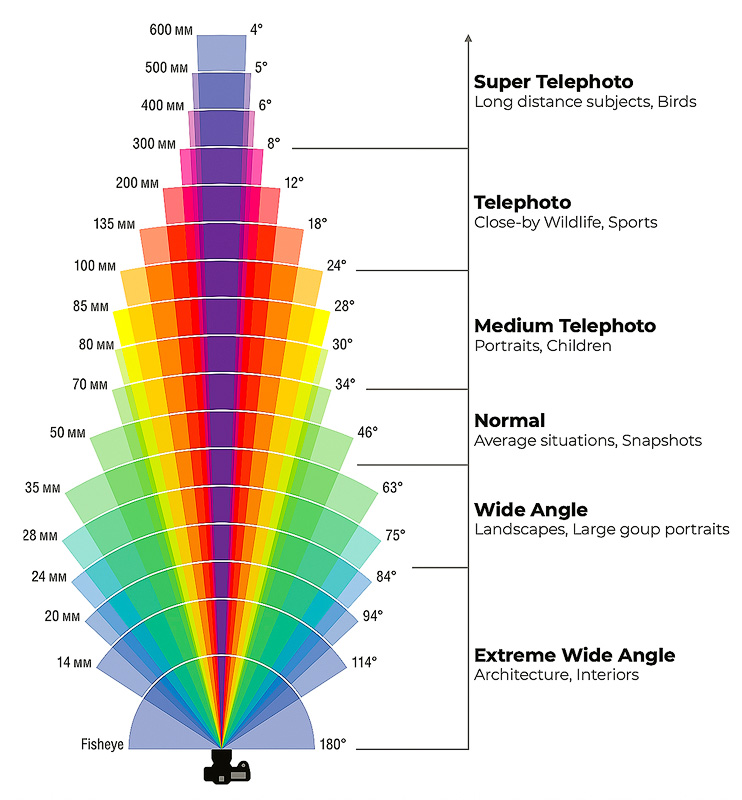
Focal length is measured in millimeters. It tells you how much of the scene your lens captures — this is called the angle of view. A short focal length like 16mm or 24mm gives you a wide angle of view, fitting an expansive scene into your frame. A long focal length like 200mm or 400mm gives you a narrow angle of view, acting like a telescope to bring distant subjects close.
The technical definition: focal length is the distance from the lens's nodal point — its optical center — to the sensor when focused at infinity. In real life, what matters is simpler. Short focal length means wide view. Long focal length means narrow view. The focal range you choose determines everything about how the scene reads.
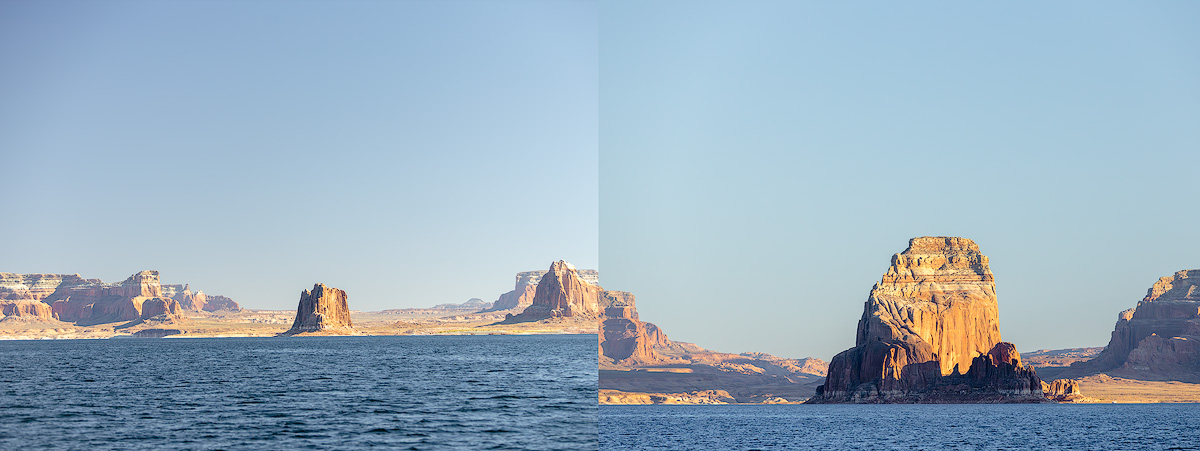
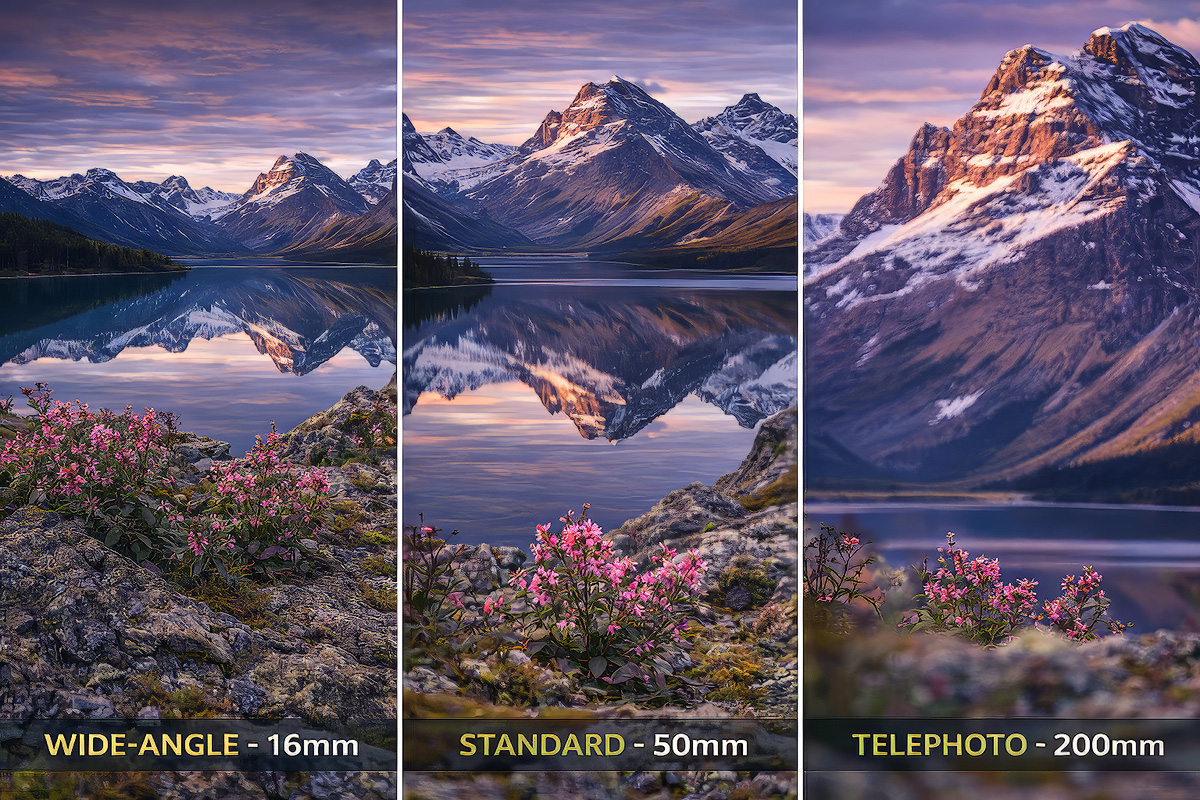
But focal length does more than adjust how much fits in the frame. It fundamentally changes the relationship between objects in your photograph. Wide angle lenses make foreground elements feel large and dramatic while pushing the background further away. A telephoto lens compresses the scene, making distant mountains appear massive and stacked right behind your foreground. Standard lenses — typically around 50mm — closely match the perspective of the human eye, providing a natural look with less distortion.
This ability to manipulate perspective is what makes focal length for landscape photography such a powerful creative tool. It's how we create scale, drama, and intimacy — not just by moving our feet, but by choosing which lens to pull from the camera bag.
Certain focal lengths, especially ultra-wide or very short ones, can introduce perspective distortion, stretching objects near the edges of the frame. Choosing lenses that produce less distortion — like high-quality prime lenses or tilt-shift lenses — results in sharper, more accurate landscape images. Chromatic aberration can also appear at the extremes of cheaper lenses, showing as color fringing along high-contrast edges.
Sensor Size and Crop Factor
Your camera's sensor size directly affects how focal length translates to the field of view. Understanding this relationship between your gear and the final image is important — different camera systems don't see the same thing through the same lens.
A full frame camera matches the sensor dimensions of classic 35mm film. A crop sensor camera is smaller — it captures only the center portion of the image projected by the lens. Mount the same 50mm lens on both a full frame body and a crop sensor body, and the crop produces a tighter, more zoomed-in view. The crop sensor captures a reduced portion of what the lens projects, narrowing the angle of view.
The crop factor tells you how much tighter. Most APS-C bodies — like Nikon DX models — have a 1.5x crop factor. A 24mm lens on a crop sensor body behaves more like a 36mm on full frame. A 50mm becomes effectively a 75mm.
For telephoto work, crop sensors give you extra reach — your 200mm effectively becomes 300mm without carrying heavier glass. For landscapes where you want the widest possible view, it works against you. Your wide lens isn't as wide as you'd expect on a full frame body, and you may need ultra wide glass to compensate.
Sensor size also affects how much of the scene stays in focus at a given aperture. At the same focal length and f-stop, a larger sensor produces a shallower zone of focus. A smaller sensor keeps more front-to-back sharpness — which for shooting landscapes can actually be useful.
When choosing lenses, know your camera body. The focal length printed on the lens tells one story on full frame and a different story on crop sensor bodies. Understanding this interaction helps you pick the right glass for the sharp images you want to make.
Wide-Angle Lenses: Capturing Grand Landscapes
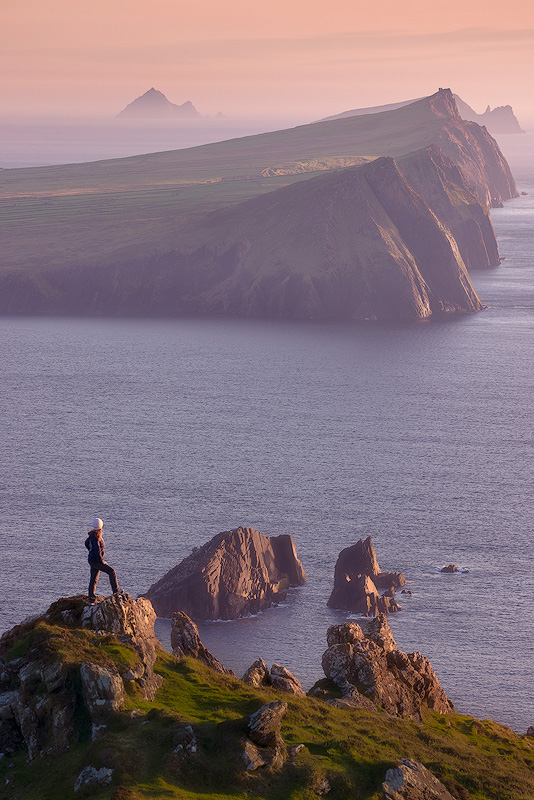
When most landscape photographers think about capturing a sweeping vista, they picture wide-angle territory. The 16-35mm range is the workhorse focal range for this kind of work, with ultra wide lenses starting at 12mm or 14mm for even more expansive scenes. Ultra wide focal lengths are ideal when you want the camera to capture everything from your boots to the horizon in a single frame.
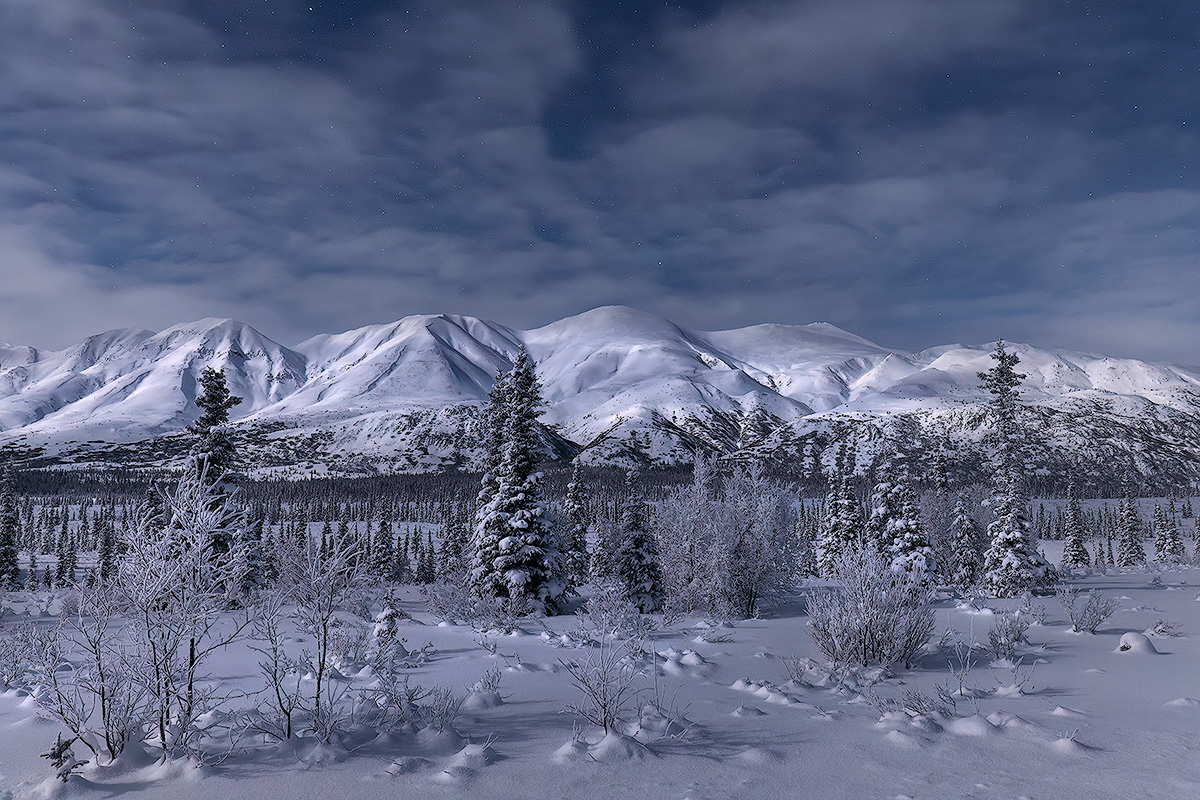
My 15-35mm is probably the most-used lens in my bag. There's nothing quite like standing at the edge of a canyon, using a 16-35mm to capture both the textured rock at your feet and the layered vista stretching to the horizon. Wide-angle lenses (typically 14-35mm) are essential for capturing expansive landscapes, allowing you to include both foreground and background elements in a single frame, creating a sense of immersion. That feeling of scale — making the viewer feel like they're standing right there — is what these lenses do best.
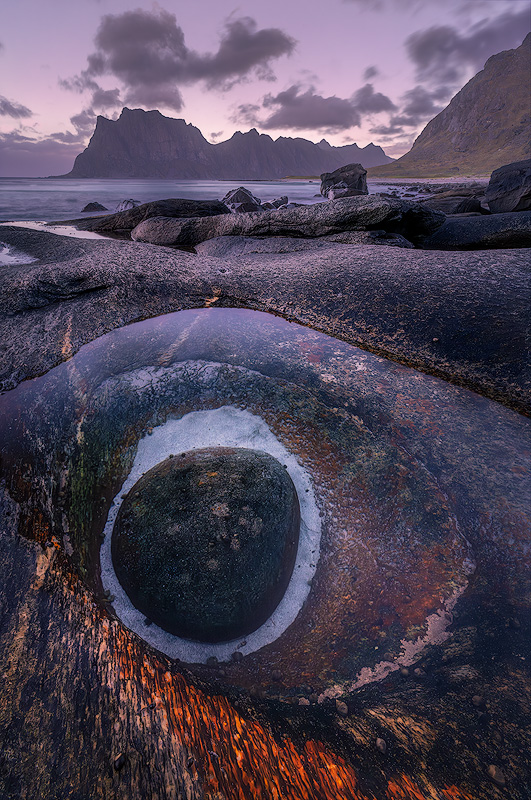
The key to good wide-angle composition is a strong foreground. Without something compelling in the near part of the frame — a rock formation, wildflowers, a tide pool — landscape shots can feel empty. A strong foreground anchor gives the viewer a place to enter the image and a path to follow into the background.
Wide angle lenses naturally provide a larger zone of front-to-back sharpness, making it easier to keep both near and far elements in focus. Combined with the hyperfocal distance technique, you can hold sharp focus from a few feet in front of the lens all the way to infinity. Using manual focus to set the hyperfocal distance precisely is the most reliable method for maximizing sharpness across the entire scene.
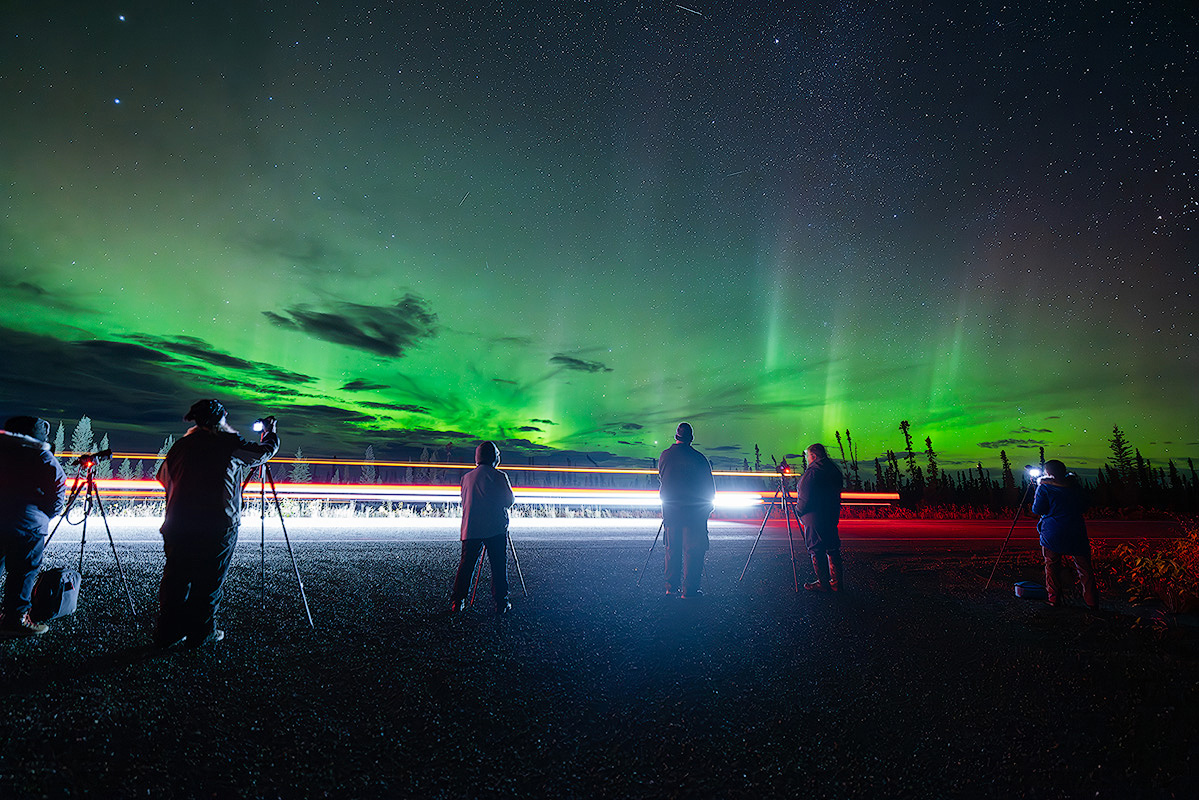
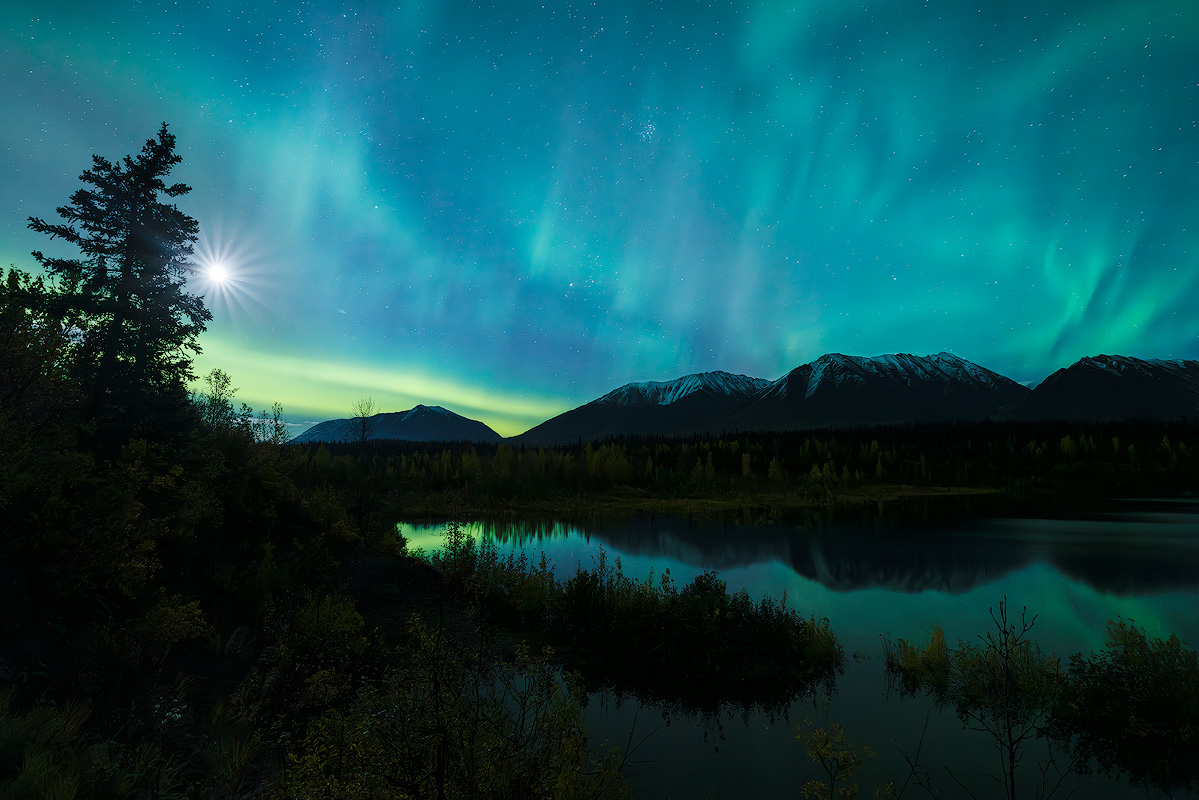
These lenses are also essential for astrophotography landscapes and night sky work. When you're photographing the northern lights or the Milky Way, a wide angle captures the full sweep of the sky along with enough foreground to anchor the composition. A fast prime like a 14mm f/2.8 or 20mm f/1.4 excels in low light situations where you need to gather maximum light.
Ultra wide lenses (14mm-20mm) are perfect for capturing vast scenes and immersive landscapes. An ultra wide lens at 14mm or 16mm is my favorite focal length range for big scenes where scale is the story.
Telephoto Lenses: Finding the Scene Within the Scene
Telephoto lenses get less attention than they deserve. Anything from about 70mm and up qualifies, and this is where landscape photography gets interesting in ways most beginners don't expect.
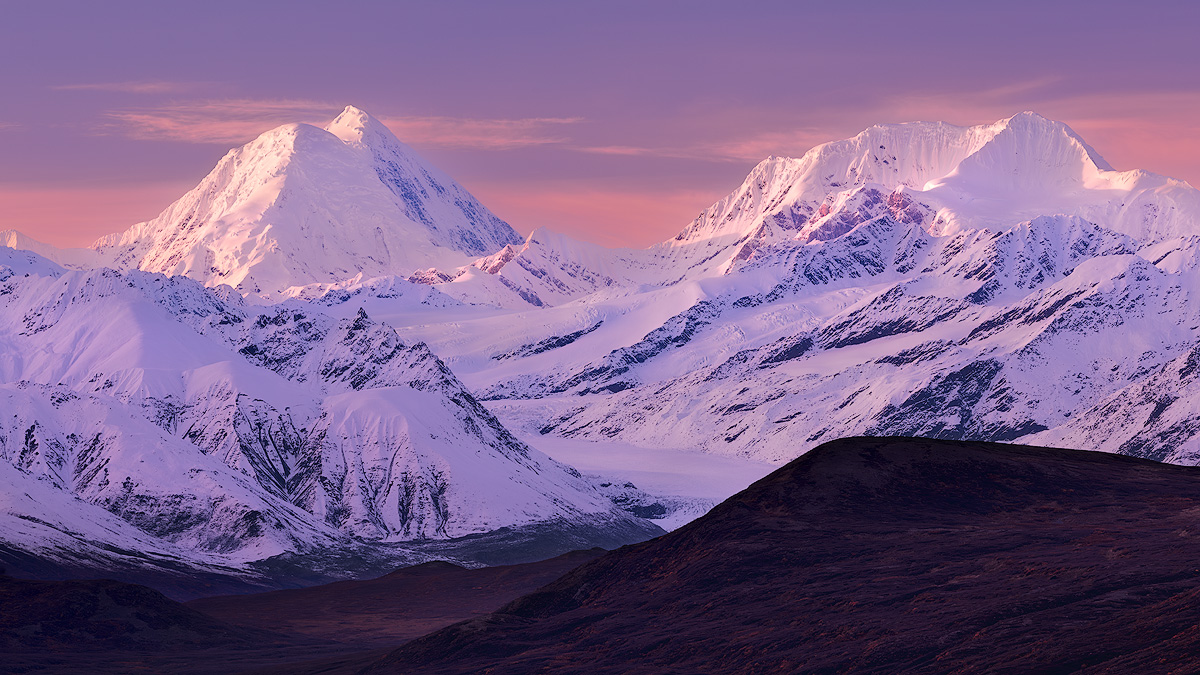
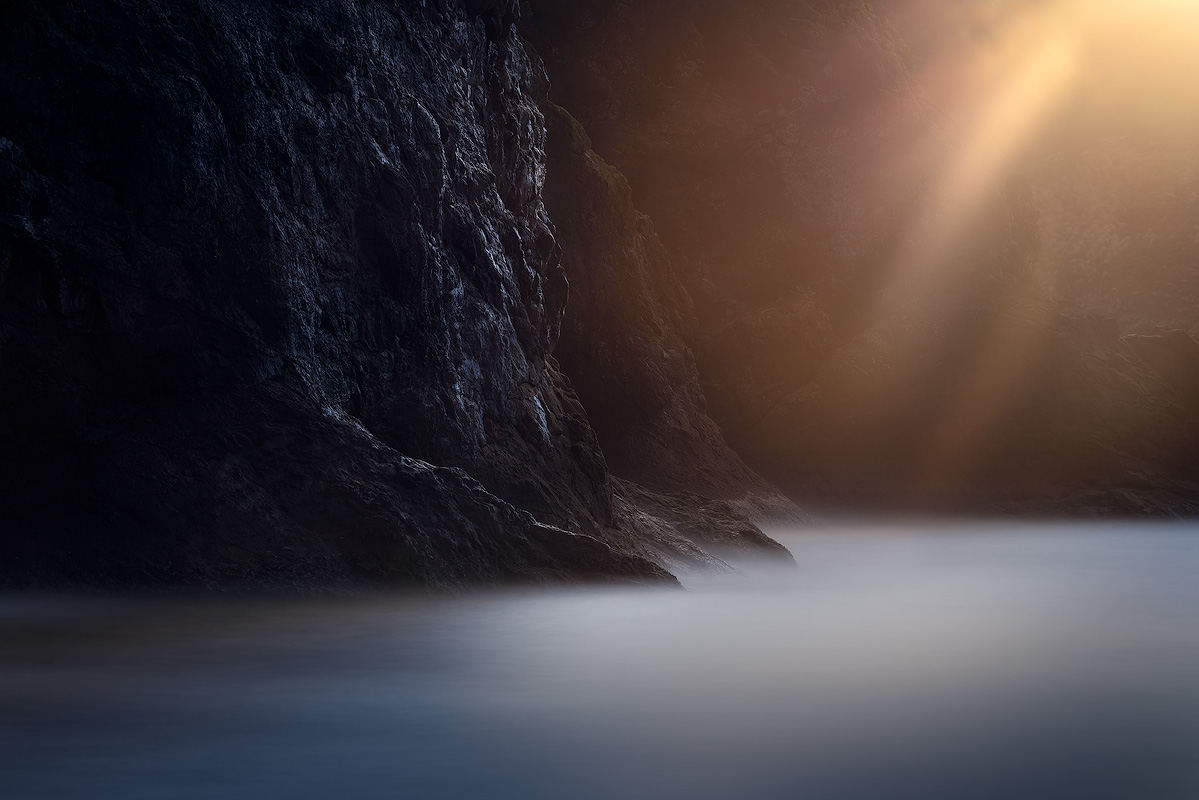
Telephoto lenses (70mm and beyond) are often underutilized in landscape photography, but they can effectively isolate and emphasize specific elements within a scene, creating powerful compositions by compressing distance and simplifying chaotic landscapes. Instead of capturing the entire scene, you focus on a single peak catching the last light. Instead of the whole valley, you pull out one layer of fog sitting between two ridges. The result is simpler, more focused compositions with more emotional impact.
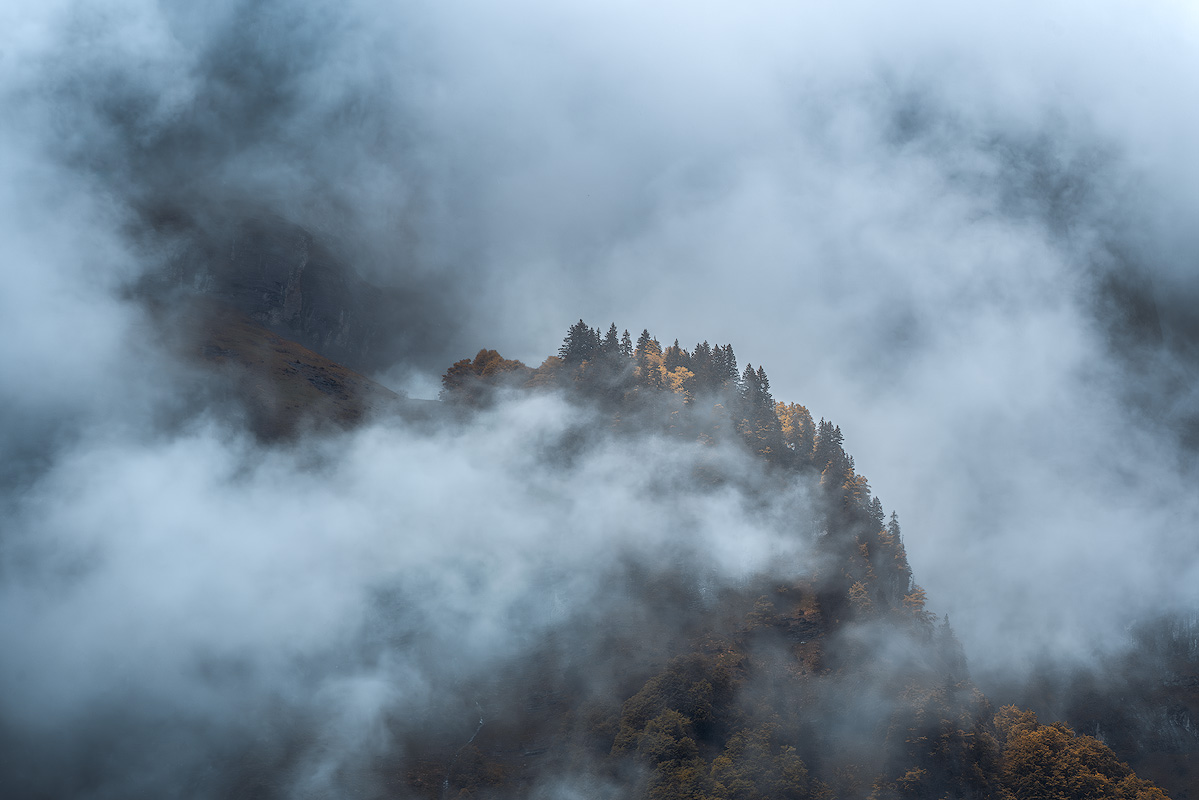
The biggest creative advantage is compression. A telephoto lens makes background elements appear larger and closer than they actually are. Distant mountains look massive and stacked. Layers of hills flatten into graphic shapes. I've used a 200mm lens to photograph a single tree on a distant ridge through morning fog — the compression made the layers feel piled on top of each other, creating a minimalist image. These intimate landscapes and abstract images are impossible with shorter focal lengths.
Mid-range lenses (35mm-70mm) provide a perspective similar to human vision, suitable for intimate landscapes where you want a natural feel without the exaggeration of a wide angle or the compression of a telephoto. A 24-70mm is often considered the most versatile lens for landscape photography, as it is wide enough for expansive scenes and long enough to isolate subjects, making it ideal for travel and quick composition changes.
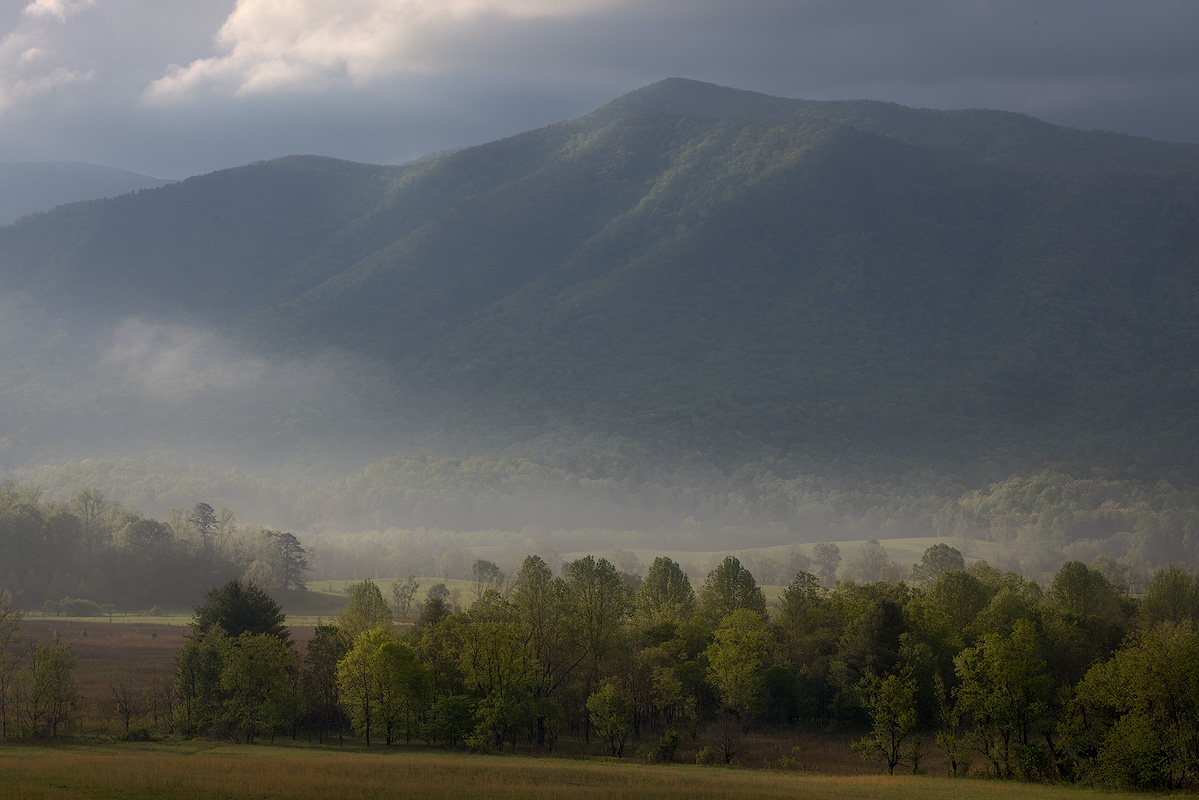
Telephoto lenses also allow you to capture distant subjects with greater detail and clarity, making it possible to highlight specific features in a landscape that might otherwise be lost in a wide shot. Using manual focus with a telephoto lens gives you precise control over which element in the scene your camera locks onto. Don't just think about the big picture — look for the smaller scenes within the scene. When atmospheric haze sits between layers of hills, a longer focal length turns it into a compositional element rather than an obstacle.
How Different Focal Lengths Shape Perspective
The human eye sees through what amounts to roughly a 50mm lens on a full frame body. This is the perspective that feels most natural — the sense of scale and spatial relationships that matches real life. When you lift a camera to your eye, you transcend that limitation.
When you choose a focal length shorter than 50mm, you're expanding beyond natural vision. Wide angles stretch space — foregrounds feel larger, backgrounds feel further away. When you go longer than 50mm, you compress space — layers flatten, distant objects appear closer.
Neither is more correct. They're different interpretations of the same landscape. The wide shot says "look how vast this is." The telephoto shot says "look at this one thing."
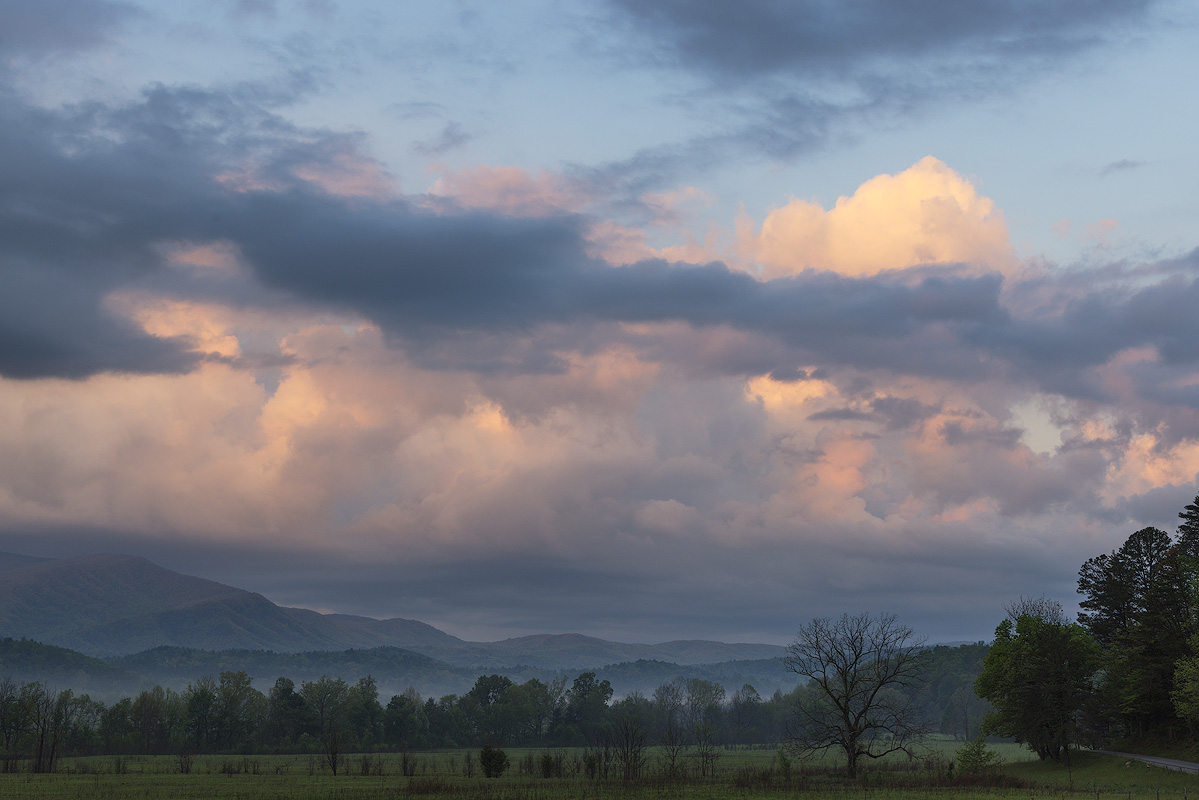
Perspective manipulation occurs as focal length indirectly controls perspective by forcing you to stand closer to or farther from the subject. A 24mm and a 200mm can produce similar framing of the same subject, but the perspective — the spatial relationship between foreground and background — will be completely different.
Focal length dictates the angle of view and perspective in landscape photography, acting as a creative tool to either expand or compress a scene. Understanding this shift is what lets you make intentional choices. You stop defaulting to your widest lens and start asking: what do I want the viewer to feel? Immersion and scale? Go wide. Intimacy and focus? Go long. Something balanced and natural? Start around 35-50mm.
Most landscape photographers carry different focal lengths to address different needs — a 16-35mm for grand landscapes, a 24-70mm for versatility, and a 70-200mm for compression and isolation. Having three lenses covers the vast majority of landscape situations you'll encounter.
Focal Length and Depth of Field
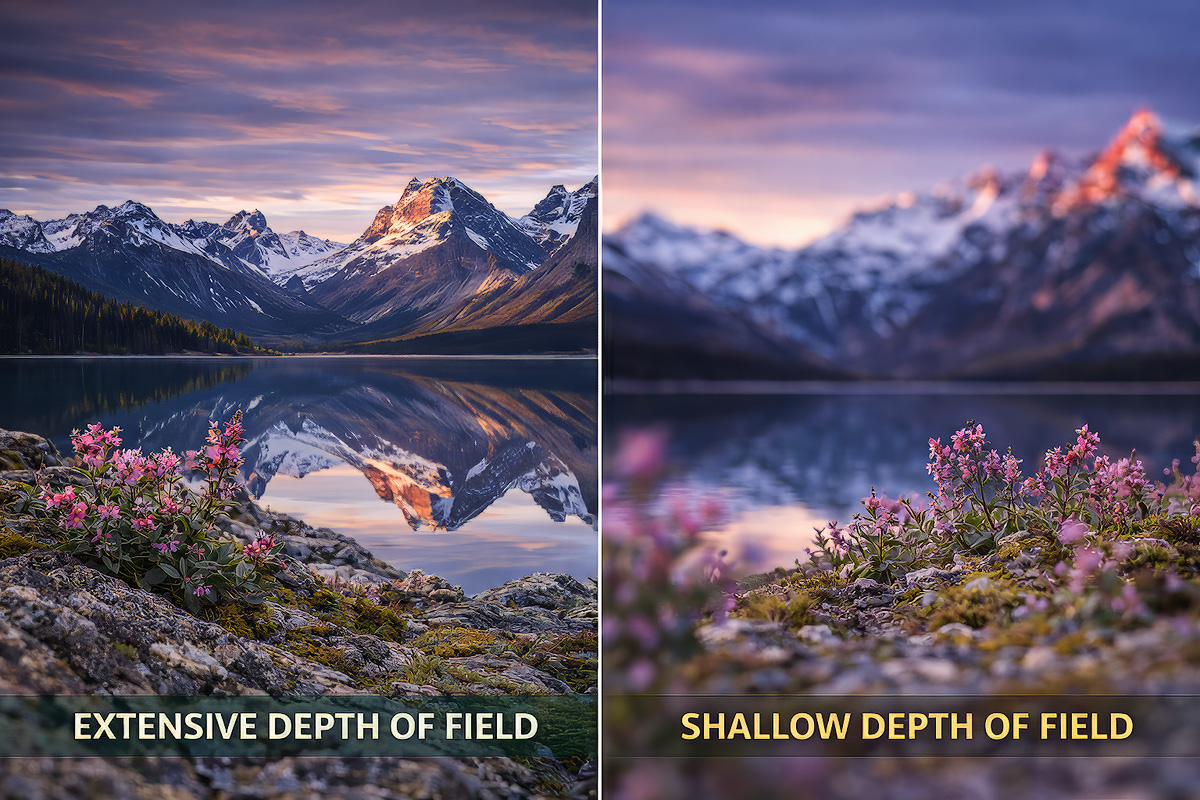
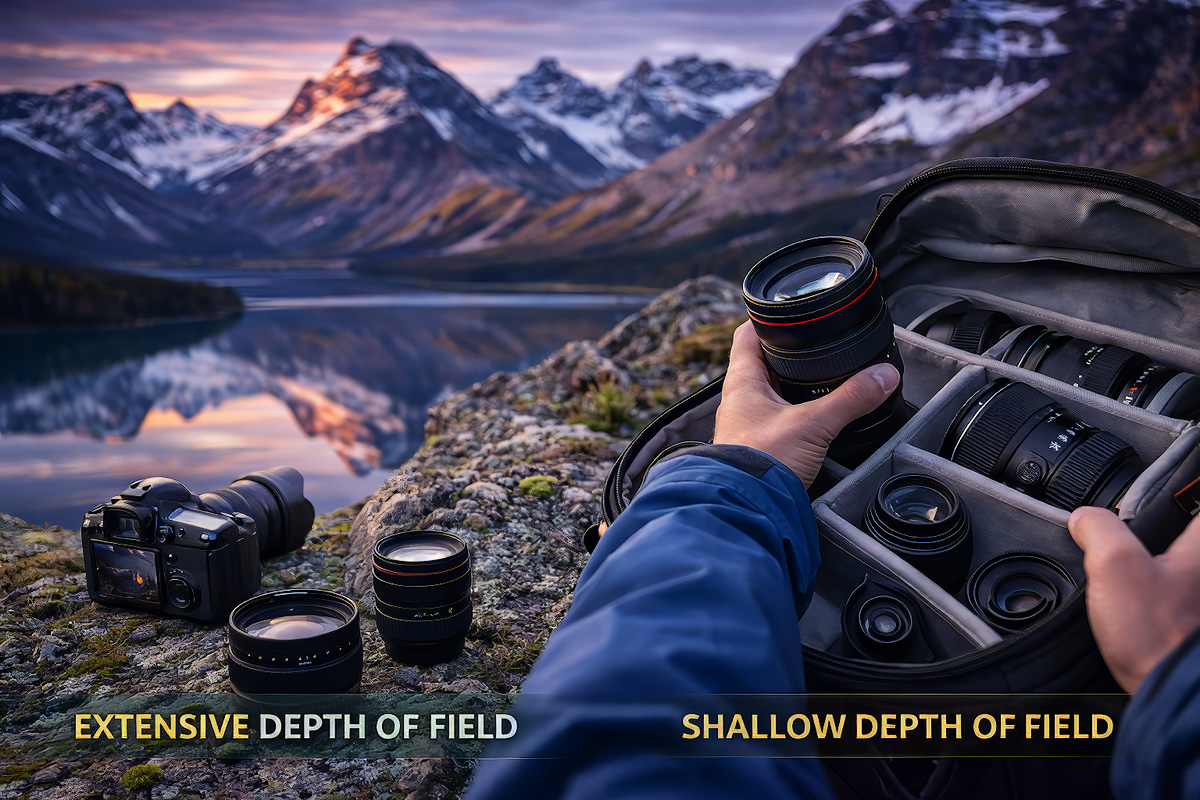
At the same aperture and the same distance from your subject, longer focal lengths produce a shallower depth of field. Shorter focal lengths produce a deeper one. Understanding how your camera handles depth of field at different focal lengths is one of the most useful technical skills in landscape photography.
For landscape photography, this means wide-angle lenses make it easier to get front-to-back sharpness — one reason they're the default for sweeping vistas. A 16-35mm at f/11 keeps everything sharp from a few feet in front of the camera to infinity without much effort. Using a smaller aperture like f/16 extends the zone of sharpness even further.
Telephoto lenses at the same f-stop have a narrower depth of field. At 200mm and f/11, the camera captures a shallower zone of sharpness that can isolate a subject against a soft background. Using a larger aperture like f/4 on a telephoto intensifies this effect — perfect for certain landscapes where you want one element to stand alone.
Choosing the Right Focal Length for Your Scene
The best focal length is the one that tells the story you want to tell. That storytelling instinct is the difference between a good frame and a great one — my guide to improving your landscape photography covers the composition and light decisions that build it. Before pulling a lens from your bag, look at the scene and ask: what's the most interesting part?
If the answer is the vast scale of the entire scene — go wide. An expansive vista demands a wide angle. If it's the way morning light hits a distant peak — telephoto. If it's repeating patterns in sand dunes or layered ridgelines — a mid-range or longer focal length to compress those layers. The perfect focal length depends on the story, not the habit.
Thoughtful post-processing of your landscape images refines your focal length choices into finished photographs — but getting the right framing in the field is always the foundation. Shooting landscapes with intention means your lens choice serves the image rather than just fitting everything in. Excellent image quality starts with choosing the right focal length for the scene, not the most expensive glass.
Prime Lenses vs. Zoom Lenses
This debate has been going on as long as interchangeable lenses have existed. The honest answer: both have a place in landscape work.
- Zoom lenses offer flexibility. One lens covers multiple focal lengths. You recompose without moving or swapping glass. A 16-35mm f/2.8 and a 70-200mm f/4 together cover the focal range most landscape photographers need. When conditions change fast, that flexibility matters. The widest focal length on most zoom lenses may introduce slight softness at the edges, but modern designs have largely closed the quality gap with primes.
- Prime lenses deliver sharper results and wider maximum apertures. A 14mm f/2.8 or 24mm f/1.4 gathers light no zoom can match — critical for astrophotography landscapes and low light situations. Working with one focal length forces you to move and explore compositions physically. That limitation often leads to more thoughtful photographs and sharp images you wouldn't find otherwise.
I carry both. My zoom lenses handle most daytime shooting landscapes situations. My fast prime comes out for night sky and aurora photography where every photon counts and low light performance is everything.
If forced to choose one lens for landscape photography, a 24-70mm gives the most versatile coverage. If I could carry two, I'd add a wide-angle zoom. With three lenses — a 16-35mm, 24-70mm, and 70-200mm — you're prepared for virtually any landscape shot.
Tips for Experimenting with Focal Length
The fastest way to internalize how different focal lengths shape your photographs is deliberate practice.
Shoot the same scene three ways. Find a landscape at the same location and photograph it with a wide-angle, a standard, and a telephoto. Compare how the mood and composition change. You'll see how different focal lengths alter the relationship between foreground and background — and you'll start developing a great focal length instinct for different scenes.
Spend a day with only a telephoto. Leave the wide glass at home. Force yourself to find intimate details and isolated compositions within larger scenes. You'll discover landscape shots you never knew existed — the kind of nature photography that stands out precisely because it doesn't show everything.
Use "foot zoom" with a prime lens. Pick one focal length and move. Walk closer, step back, change your angle. When you can't adjust with a ring, you compose with your feet — and that physical engagement changes how you see.
For hands-on guidance with focal length and composition, consider joining one of my photography workshops. Working through these decisions in the field with real light is the fastest way to build instinct.
FAQ — Focal Length in Landscape Photography
What focal length is best for landscape photography?
There's no single best focal length. Wide angles in the 16-35mm range capture expansive scenes. Telephoto lenses from 70-200mm isolate details and compress layers. Most landscape photographers carry both ranges. A 24-70mm covers the most situations if you're limited to one lens.
What does focal length actually measure?
Focal length is the distance in millimeters from the lens's optical center — the nodal point — to the camera sensor when focused at infinity. In practical terms, it determines your angle of view and how large subjects appear.
Does focal length affect sharpness across the frame?
Yes. At the same aperture and subject distance, longer focal lengths produce a narrower zone of focus. Shorter focal lengths produce a deeper one. Wide-angle lenses make it easier to achieve front-to-back sharpness in landscape photos.
Should I use prime or zoom lenses for landscapes?
Both work well. Zoom lenses offer flexibility — one lens covers multiple focal lengths. Prime lenses deliver sharper results and wider apertures for low light. Most landscape photographers carry both.
How does crop factor affect focal length?
A crop sensor captures a smaller portion of the lens's image, creating a tighter field of view. Multiply the focal length by the multiplier (typically 1.5x for APS-C) to find the equivalent full frame view. A 50mm lens on a 1.5x crop body sees like a 75mm on full frame.
What's the difference between compression and distortion?
Compression is the telephoto effect — background elements appear larger and closer to the foreground. Perspective distortion is the wide-angle effect — objects near the frame edges appear stretched or skewed. Both are tools you can use intentionally for creative effect in landscape photography.
What is my favorite focal length for landscapes?
I use a 15-35mm for about 60% of my landscape photography — it's my go-to for big scenes with strong foregrounds. But my 70-200mm produces the images that surprise people most. Different focal lengths serve different stories, and having the right focal length for the moment matters more than having a single favorite.