Introduction to Nature and Landscape Photography
Nature and landscape photography — the art of creating outdoor pictures that connect viewers with wild places — form a living partnership that draws us into direct conversation with the world's unguarded moments. For photographers who carry cameras into these spaces, the equipment becomes something more than tools—it becomes permission to stand still in places where pale morning light cuts across Zion's sculpted sandstone, to wait beneath Yosemite's granite faces as shadows shift, to witness the Grand Canyon's layers emerge from pre-dawn darkness. We're connected by something deeper than technique: the need to be present when the earth reveals itself.
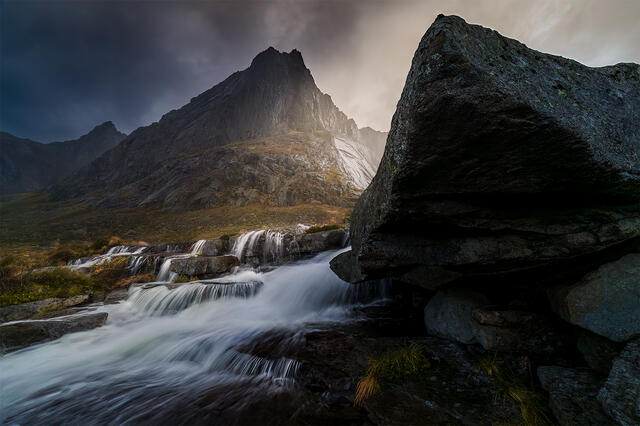
Landscape photography demands you embrace scale—those vast sweeps where rolling hills disappear into distant peaks, where mountain ranges build themselves against enormous skies. The golden hour arrives with fiery precision. Low-angle light transforms ordinary ridgelines into chromatic displays that feel almost unreal. Polarizing filters deepen the intensity of alpine skies, enhance the emerald saturation of valley floors lined with ancient trees. But the real work happens in those moments between setup and capture—reading how light moves, selecting not just any tree but that solitary oak. Studying composition until the landscape tells you what it wants to become.
Nature photography pulls focus tighter. Intimate. The texture of Douglas fir bark after rain. Wildlife moving through their actual lives, not performing for cameras. Night skies where the Milky Way arcs over Death Valley's absolute darkness, so clear you can hear your own breathing. From dew-heavy meadows in early morning to storm systems building over the Colorado Plateau, this work requires patience that borders on meditation. I've learned more standing still in Northern California's coastal ranges than from any technical manual. Costa Rica's rainforest canopy teaches light lessons you can't replicate in studios.
This practice extends beyond documentation into something closer to witness. Fine art prints preserve what happens when place and photographer align—those moments when standing somewhere feels like privilege. Whether it's dawn light breaking across a mountain spine or the particular quiet that settles over forest floors at dusk, each frame holds more than visual information. It carries the weight of actually being there, camera in hand, watching light reshape everything you thought you understood about a place.
The world keeps offering itself up for this kind of attention. Cameras become instruments for something between exploration and reverence—framing the vast alongside the overlooked, the expected next to the completely surprising. For photographers drawn to seek out these encounters with morning light, to track weather systems across open country, to document how illumination changes everything, this becomes a lifetime of returns. The natural world holds its position, patient and available. Ready for the next conversation, the next careful frame, the next moment when seeing and feeling happen simultaneously.
Conservation and Photography
Conservation and photography interweave like morning mist through canyon walls—especially when you're standing in wild places with a camera, feeling the weight of what you're witnessing. Every photographer who's watched pale dawn light transform Zion's red sandstone faces or felt the silence of Northern California's emerald ridges knows this truth: our images carry stories that pulse with life, stories that can awaken something fierce and protective in those who see them. Through the viewfinder, that windswept ridge becomes more than geology. It becomes testimony.
The golden hour arrives like revelation. When low-angle light cuts through Yosemite's granite monuments or bathes the Grand Canyon's layered depths in copper fire, you're not just documenting landscapes—you're capturing the exact moment when stone and sky become living masterpiece. That ethereal glow doesn't just illuminate. It transforms. It makes believers of skeptics, conservationists of casual observers.
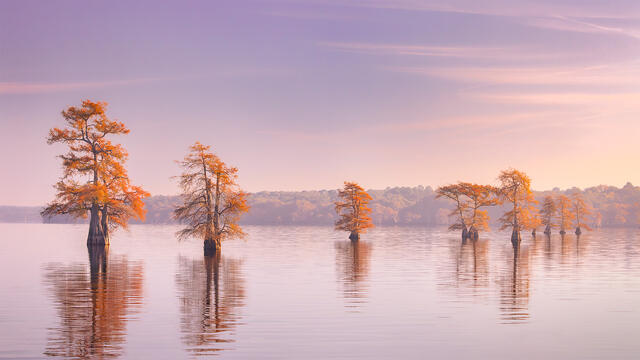
Techniques matter here, but they serve something larger. A polarizing filter deepening the cobalt intensity above Caddo Lake's ancient cypress. Close focus revealing the intricate bark patterns that have weathered decades of storms. These aren't just photographic choices—they're acts of witness, frames through which viewers experience the delicate complexity of ecosystems hanging in the balance. Forest photography becomes urgent when you understand what deforestation actually steals. Not just trees. Entire conversations between species. Centuries of adaptation. Gone.
In places like Costa Rica's cloud forests or Northern California's coastal ranges, workshop participants discover something unexpected happens when technical skill meets genuine wonder. You're adjusting exposure for that morning mist drifting between redwood trunks, but you're also learning why these ancient giants deserve to outlive us all. Hands-on. Heart-open. These experiences change people. They return home carrying more than better compositions—they carry responsibility.
The night sky above truly dark places—where the milky way still writes stories across uncompromised darkness—reveals what we're losing to light pollution faster than most species to habitat destruction. Standing beneath that celestial sweep with your camera capturing twenty-second exposures, you feel both infinitely small and utterly connected to something that cities have taught us to forget. These images don't just celebrate cosmic beauty. They document what disappears when we stop protecting the darkness itself.
This work transcends art, though art it surely is. When someone stops before your print of Half Dome emerging from morning cloud, when they lean closer to study the eye of a jaguar caught in dappled rainforest light, something shifts. Not just appreciation. Recognition. These places aren't separate from us—they're part of who we are. Photography becomes conservation when it reminds us what we stand to lose. And what we still have time to save.