Best Time to See Whales in Alaska: A Photographer’s Month-by-Month Guide
The best time to see whales in Alaska is May through September, with humpback whales peaking in June, July and August, and there’s a second window in March and April when the herring spawn brings humpbacks into Sitka Sound. If you’re photographing whales from a cruise ship, a tour boat or your own skiff, the month you pick changes the light and weather you’ll be working in, and it changes what the whales are doing when you find them.
Here’s what this page covers: what each month looks like on the water, when humpbacks, orcas and gray whales show up, the best time of day to be out, how Juneau, Icy Strait and Seward compare, and how to choose between the spring and summer whale windows.
I was born and raised in Alaska, and I’ve spent a lot of time on the water in Southeast Alaska in my own boat. Most of the information you’ll find online about whale timing is written for cruise passengers, which is fine, but it leaves out the spring window completely and it doesn’t say much about what each month means for your photos, which is what this guide is for.
When Is the Best Time to See Whales in Alaska?
The best time to see whales in Alaska is May through September. Peak whale watching season in Alaska runs from June through August, and whale watching is popular from late May to early September, which lines up with the cruise season. Humpback whales can be seen year-round in Alaska, but most of them cross the ocean to spend the winter breeding in the warm waters around Hawaii and Mexico and come north in spring to feed, so the numbers build through late spring and stay high all summer.
If you’re planning an Alaska trip around whales, there are really two windows worth planning around. The first is spring, when the herring spawn pulls humpbacks into Sitka Sound in March and April. The second is the summer feeding season, when Southeast Alaska’s Inside Passage holds one of the largest concentrations of feeding humpback whales in the North Pacific. Both are great, and they give you very different pictures, which I’ll get into below.
One thing I’ll say up front is that nobody can promise you a whale on a given day. There are many things that affect what you see, from the weather to where the fish are, and what the timing does is put you on the water when the odds are in your favor. After that it’s about being out there for the opportunity when it shows up.
Best Time to See Whales in Alaska, Month by Month
March and April: The Spring Herring Window
This is the window most whale watching guides skip, because the cruise ships aren’t running yet. When the herring spawn hits Sitka Sound, the humpbacks come in to feed on it, and in my experience there are times I see more whales from my own boat in spring than I do later in the year as they move through. Bubble-net feeding happens all summer, but I see it more often in spring, and there are still pods feeding that way through the summer months.
Gray whales migrate through Alaska from mid-March to May, and Sitka Sound has become one of the places they stop. KTOO reported that biologist Lauren Wild found the number of gray whales in Sitka Sound used to sit around 10 or 20 and has been closer to 150 since 2019.
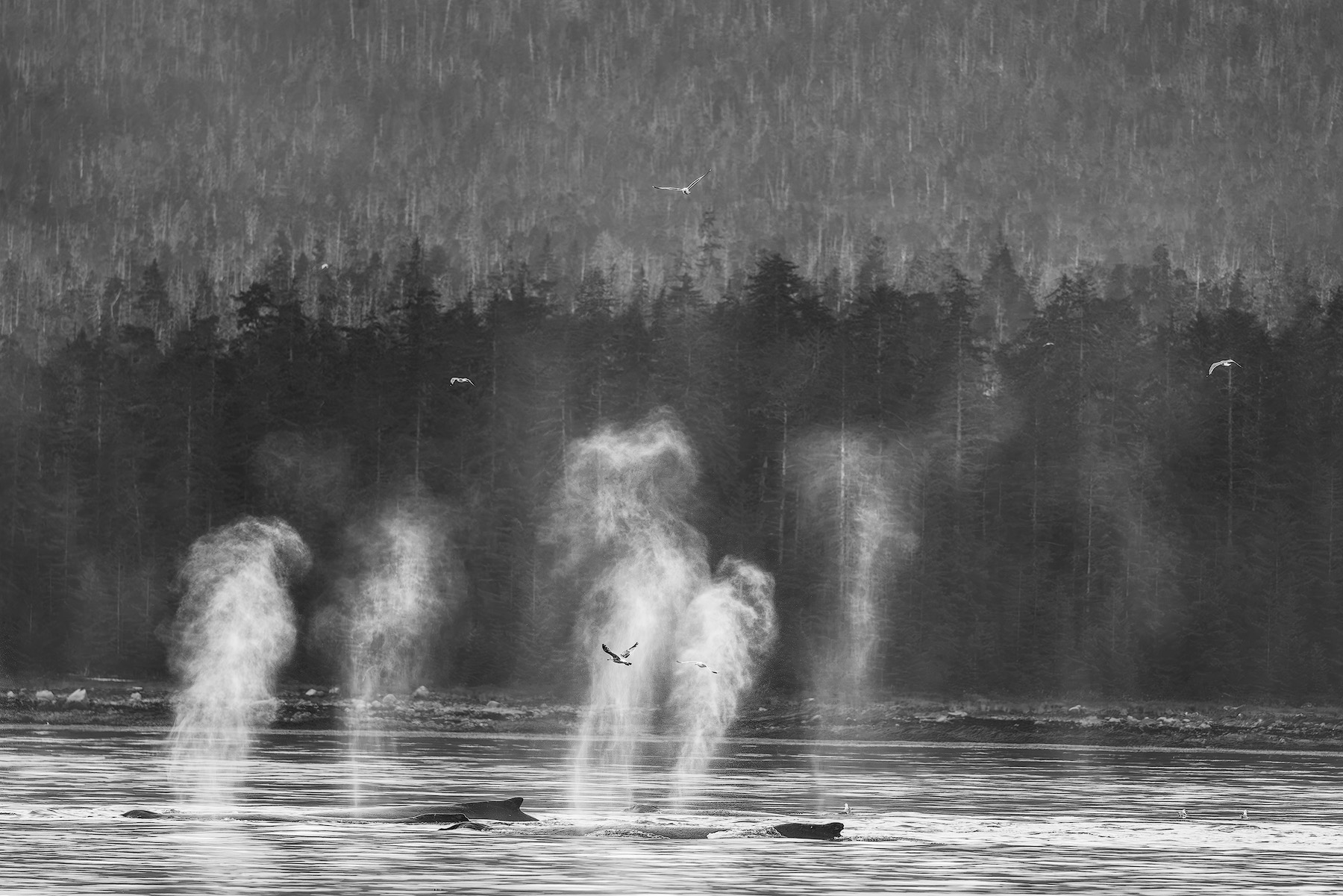
For photography, March gives you something July can’t, which is snow still on the mountains behind the whales. If you visit in March it’s cold and it can be wet, so you dress for it, but the backdrop is worth it. That’s the window my Sitka spring whale photography workshop is built around, with four days on Sitka Sound from March 26 to 29, 2028, and six photographers on the water.
May
Most humpbacks are back in Southeast Alaska waters by late May, and the first cruise ships arrive with them. Orcas are observed year-round but peak in activity between May and June, so May is a good month if killer whales are high on your list. Gray whales are still moving through early in the month. The weather is unsettled, and you’ll get a mix of bright days and low cloud, which actually makes for nice soft light on dark whale skin.
June
June is when the summer feeding season settles in. Humpback whales are commonly seen from May to September, peaking in June, July and August, so from here through August you’re in the heart of it. The days are long in Southeast Alaska in June, and that gives you a lot more hours on the water to catch whales feeding than you’d have in spring.
Whales in Alaska in July
July offers the best weather for an Alaska cruise, and it sits right in the middle of the peak. During the summer months the Inside Passage holds one of the largest concentrations of feeding humpbacks in the North Pacific, and whales will often feed in the same areas for weeks at a time. July is also busy, so the popular tour areas around the cruise ports see a lot of boats.
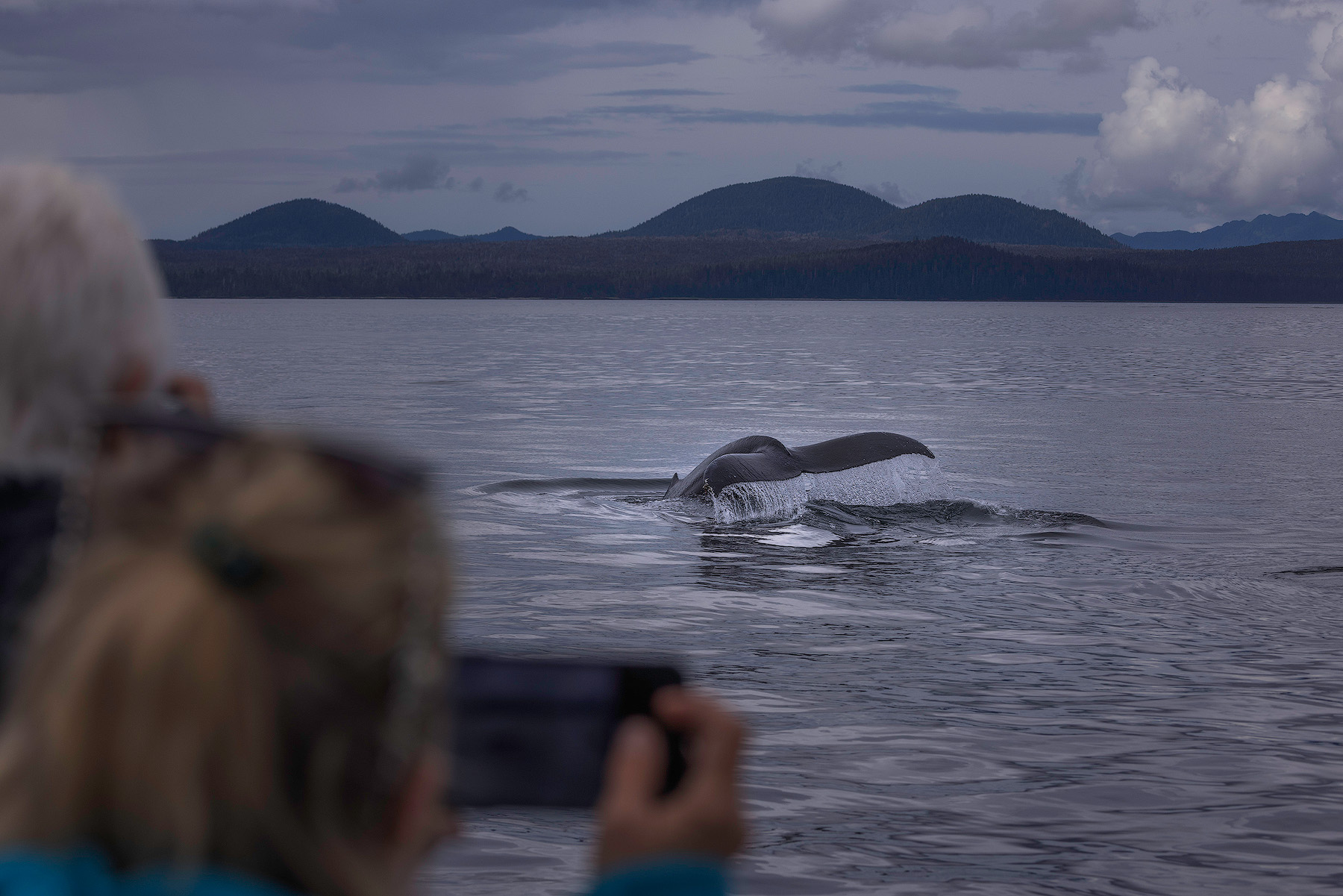
I scouted out of Sitka at the end of July and into early August, and my Sitka wildlife photography trip report covers what that stretch of the season looked like on the water.
My Southeast Alaska wildlife photography tour runs June 29 to July 6, 2027. It’s eight days by boat and on land through the Inside Passage from Petersburg to Sitka, photographing humpback whales and bears with six photographers on a 43-foot catamaran.
August
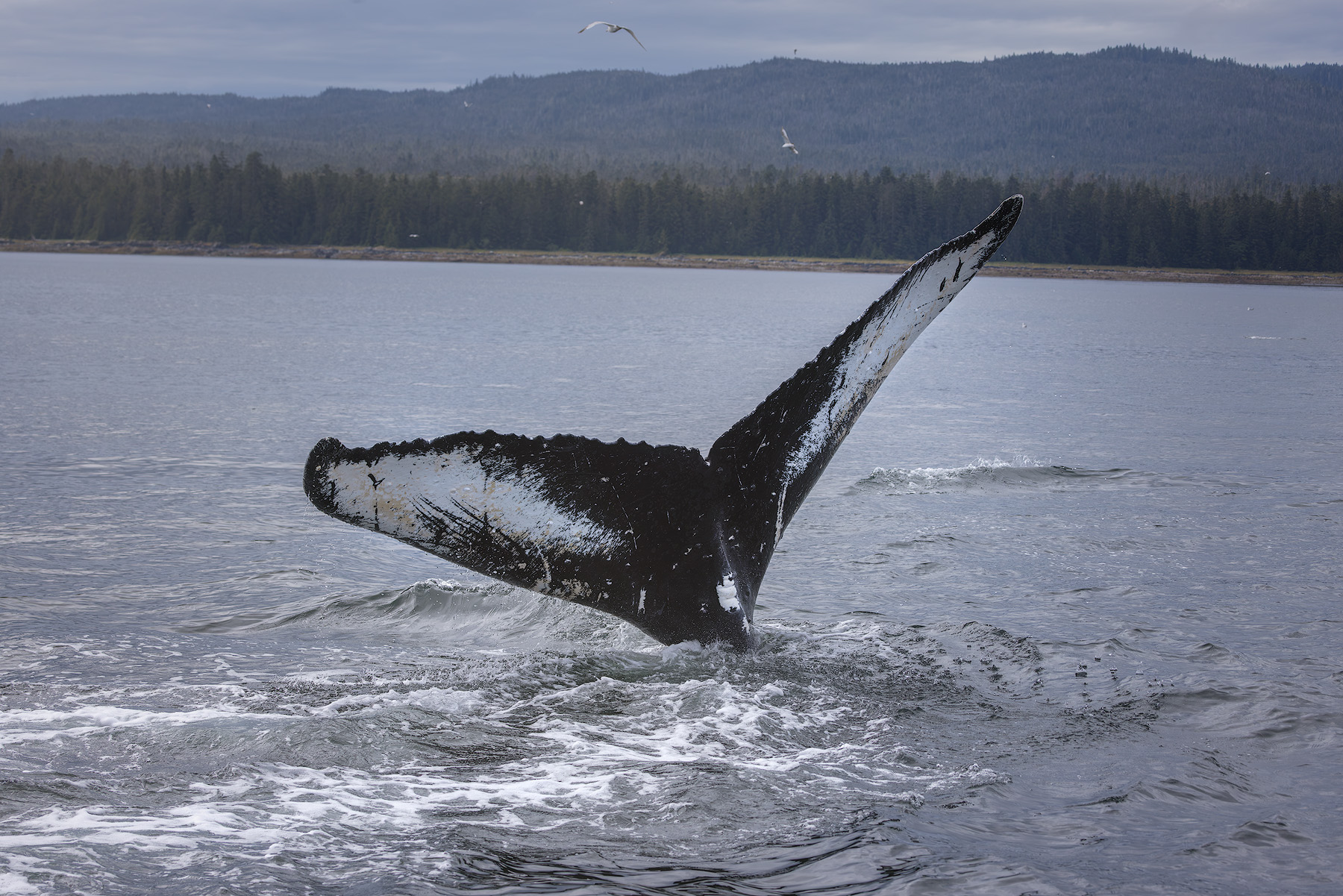
So is it worth going to Alaska in August for whales? August is still part of the peak, so the humpbacks are still feeding hard and the trip is well worth it. The cruise crowds start to thin toward the end of the month, and the weather gradually turns wetter as you head into September, which isn’t always a bad thing for photography because broken cloud and rain squalls give you more interesting light than a flat blue sky.
September
Whale watching season starts winding down through September. There are still plenty of humpbacks feeding early in the month, the days are noticeably shorter, and the low sun angle gives you warmer light for more of the day. If you don’t mind the weather, early September can be one of the quieter times to be on the water.
October to February
Humpbacks can be seen year-round in Alaska, and some stay through the winter, but most have headed south by now. The days are short, the weather is rough, and very few whale watching tours run. I wouldn’t plan a whale trip around these months unless you live here and can go out on the calm days.
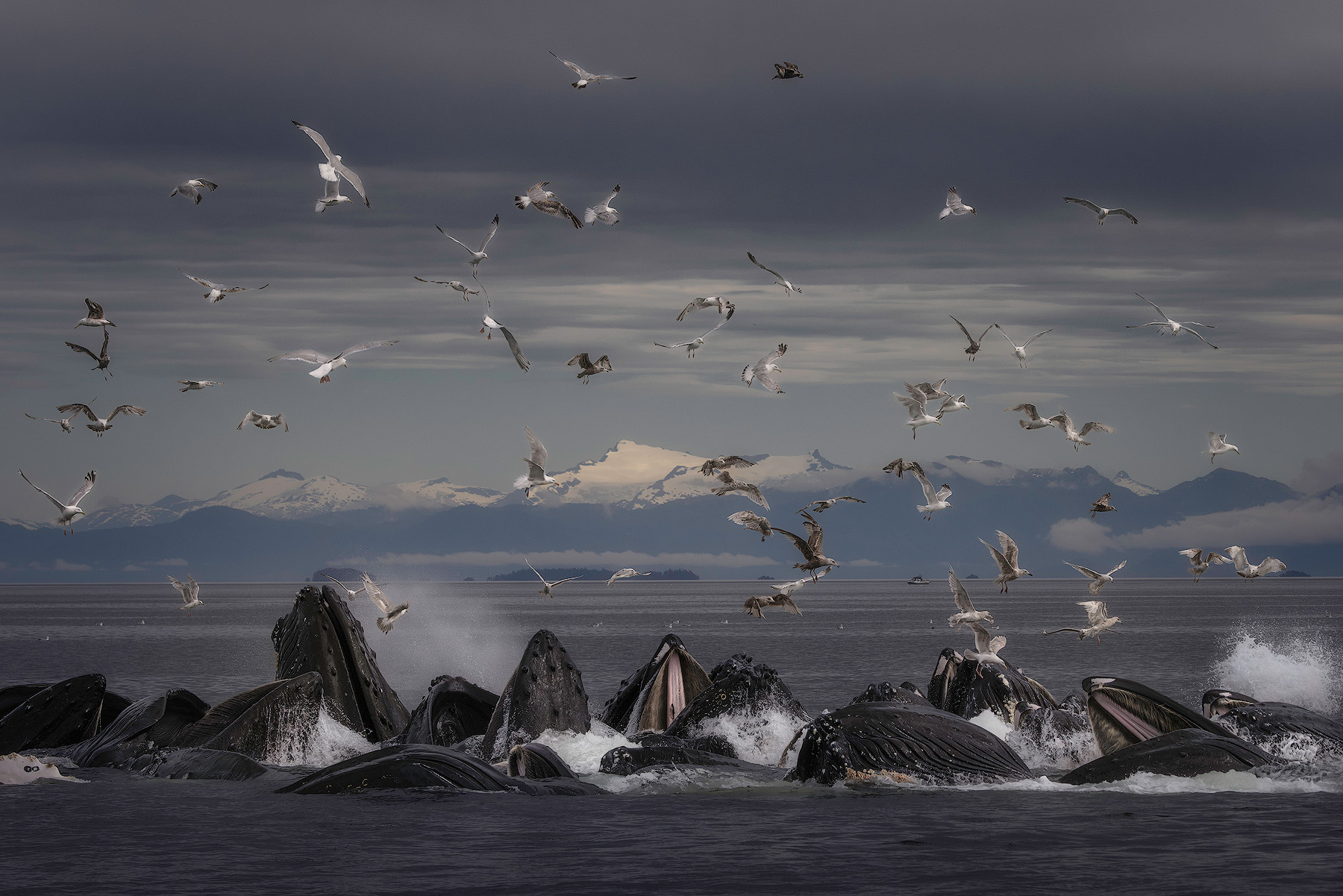
Best Time to See Humpback Whales in Alaska
The best time to see humpback whales in Alaska depends on which window you’re after. If you want the most whales across the most days, June through August is the peak, and that’s when most of the feeding population is spread through the Inside Passage. If you want whales feeding with snow on the mountains and almost no other boats around, the spring herring window in Sitka in March and April is the one to look at.
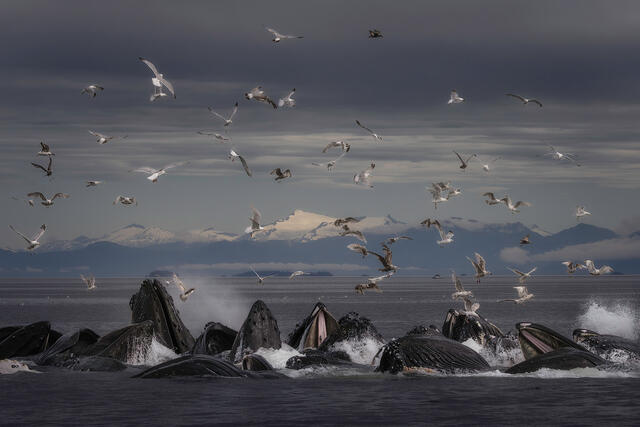
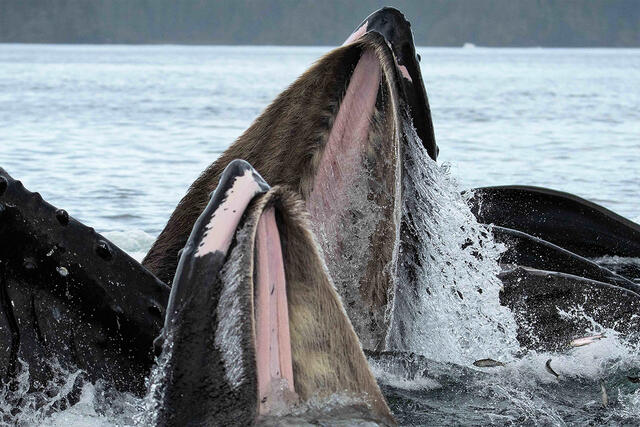
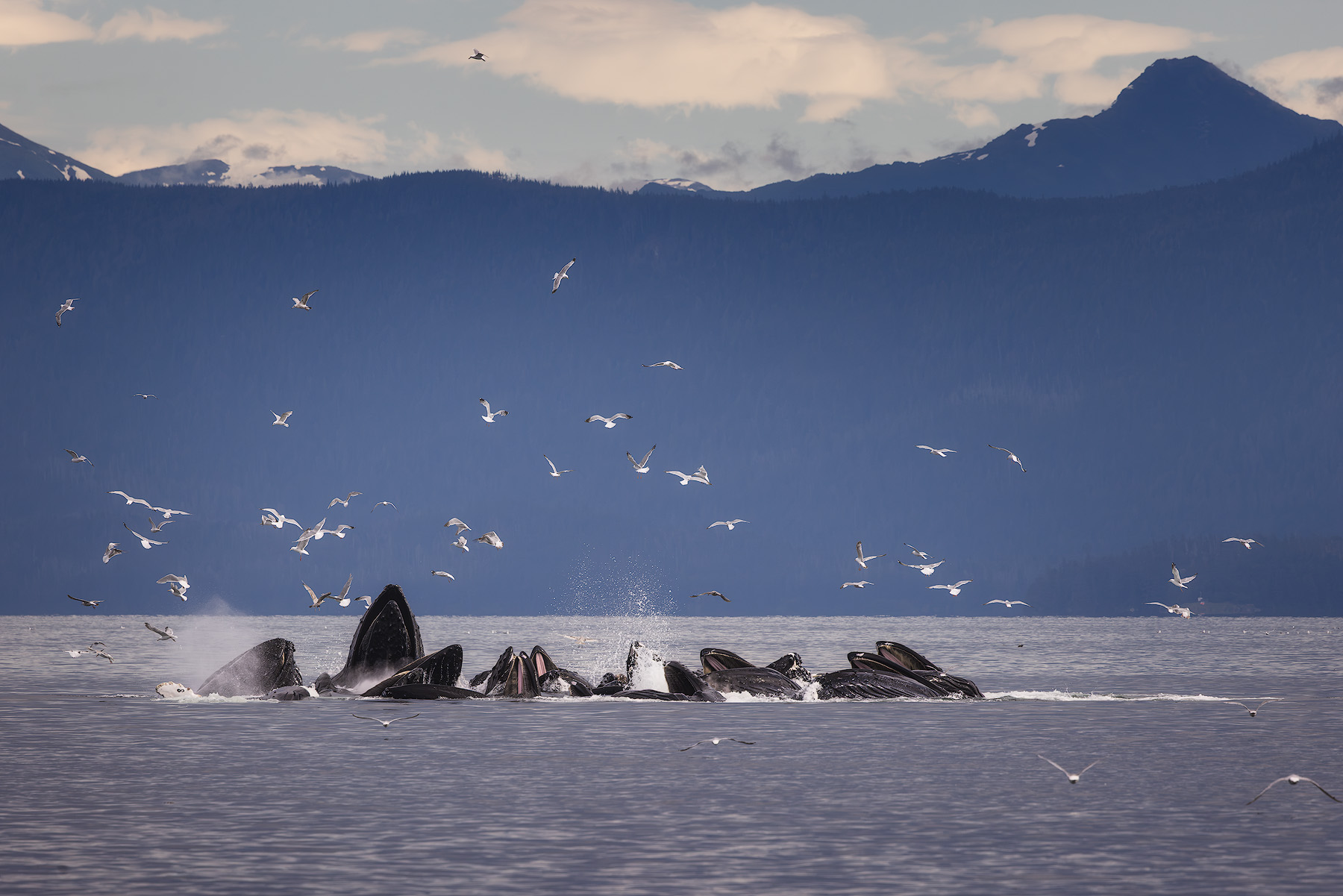
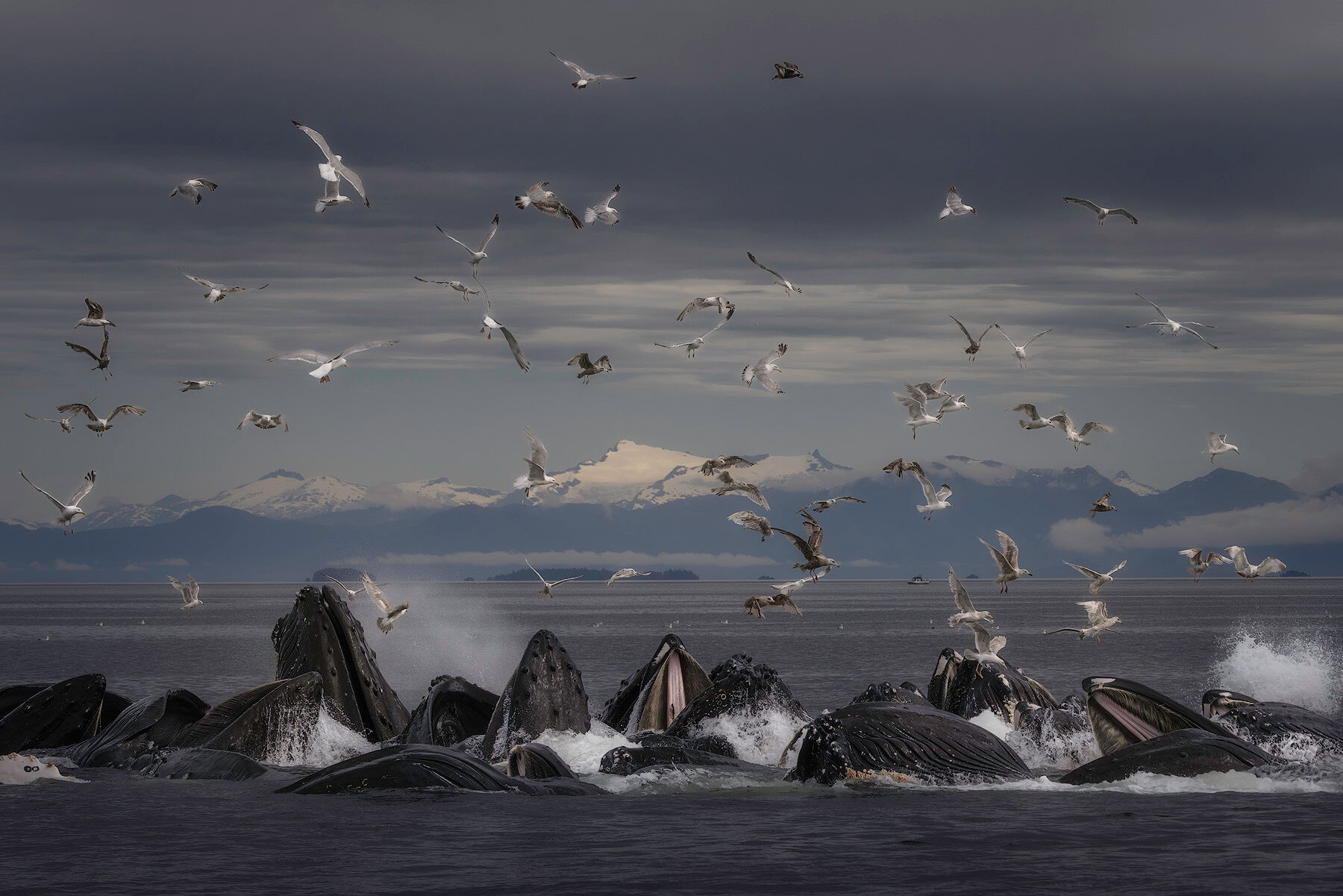
Humpbacks feed on herring, krill and small schooling fish, and where the food concentrates, the whales concentrate. That’s why the spawn draws them into Sitka Sound in spring, and why certain straits and sounds stay busy all summer. The behavior that gets most photographers excited is bubble-net feeding, where a group of humpbacks works together to trap fish in a ring of bubbles and then lunges up through the middle, and if you’re fortunate enough to see it, it’s an incredible thing to watch. I wrote a full post on bubble-net feeding in Alaska if you want the details on how it works and what to watch for.
People also ask what preys on humpback whales. The answer is orcas, which can hunt humpbacks, mostly calves, when they travel in large pods.
Orcas and Gray Whales by Season
Orcas are in Alaska waters year-round, and their activity peaks between May and June. Some pods follow the salmon and seals, so you can run into them at almost any point in the summer, but late spring is the stretch where people see them most often.
Gray whales are a spring story. They migrate through Alaska from mid-March to May, and booking tours in April and May is ideal for watching the gray whale migration. In Sitka Sound they’ve become a regular part of the spring season, feeding along the bottom in shallow water, which gives you a very different subject from a feeding humpback.
Best Time of Day for Whale Watching
Whales feed whenever the food is there, so there isn’t a single hour when they switch on. What changes through the day is the water and the light. Morning and evening tours typically feature calmer waters and fewer crowds, and calm water makes it a lot easier to hold a long lens steady from a moving deck.
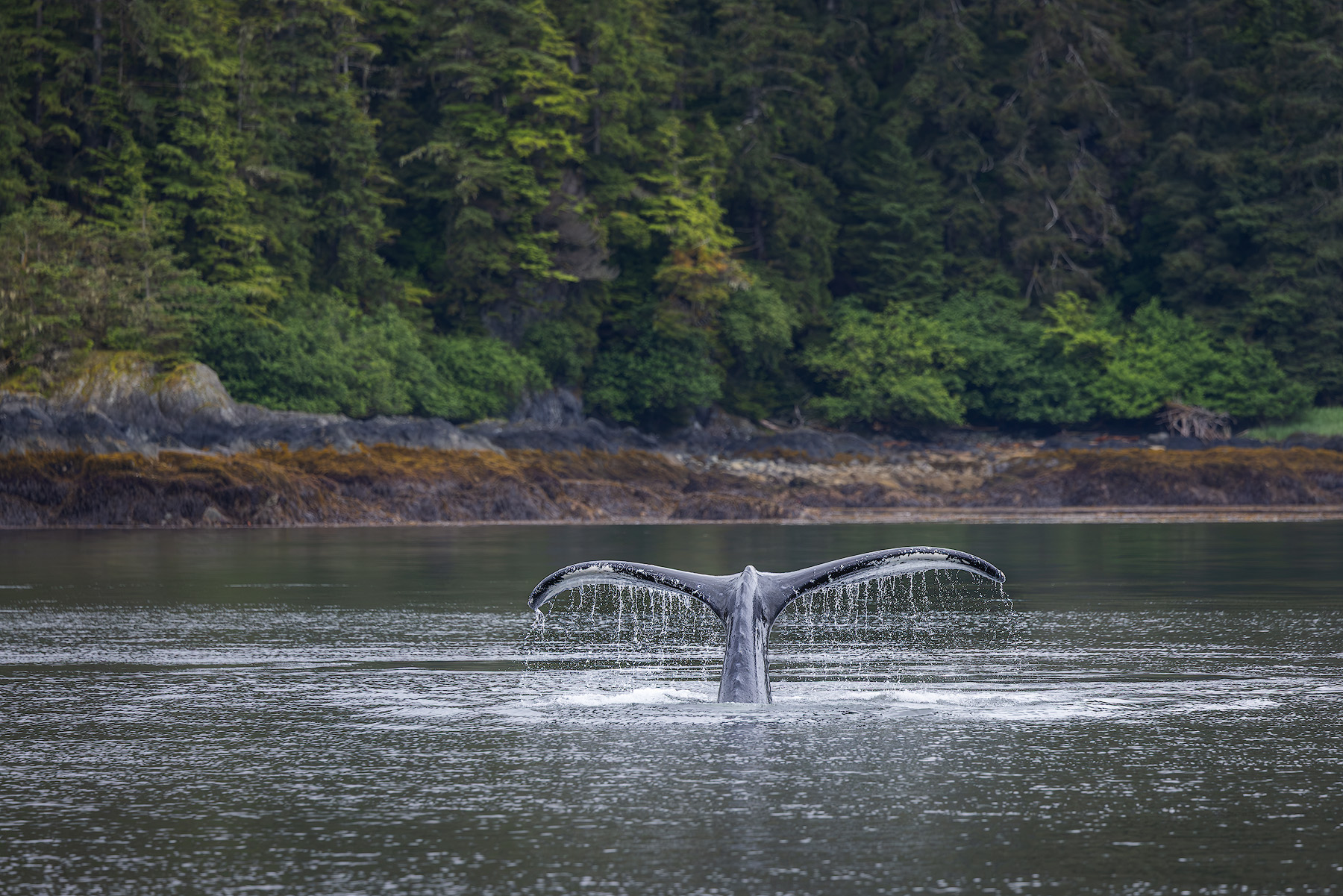
For photography, the low sun in the morning and evening gives you side light that brings out the texture on a fluke and lights up the spray when a whale blows. Midday light in summer is harsh and flat on dark subjects, so if you have a choice between a morning trip and a noon trip, take the morning. This also answers a question that comes up a lot about Icy Strait Point: the best time of day to see whales there is the same as anywhere else, which is when the water is calm and the light is low.
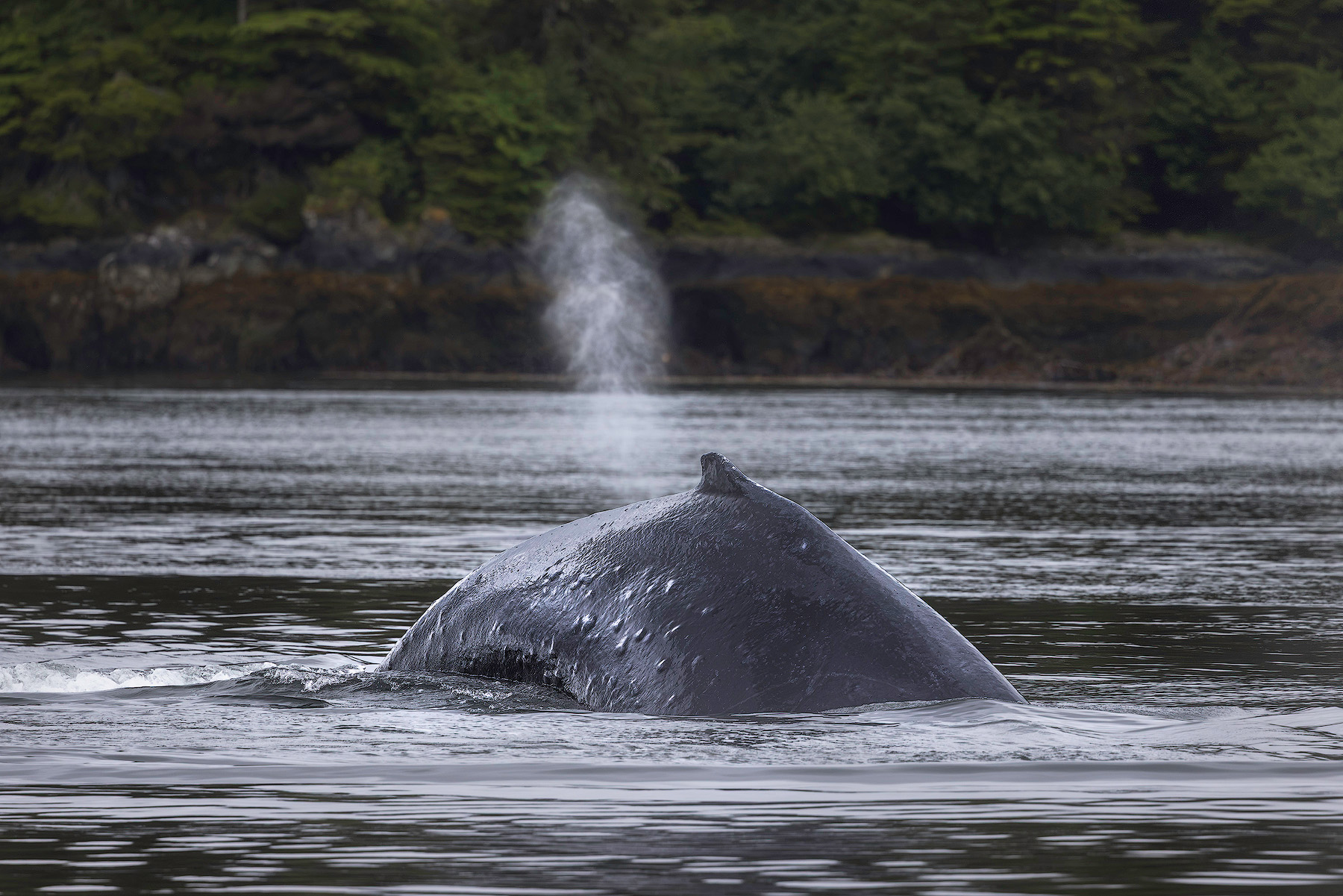
Best Whale Watching in Alaska: Juneau, Icy Strait and Seward
The best whale sighting locations in Alaska include Juneau, Icy Strait Point and Seward, and Juneau and Seward are among the most popular places for whale watching tours. Juneau and Icy Strait are both in Southeast Alaska and sit on productive summer feeding water for humpbacks. Ketchikan, the first stop on many Inside Passage cruises, runs whale watching tours too. Seward is the jumping-off point for Kenai Fjords in Southcentral Alaska, where you’ll find humpbacks and orcas in summer and gray whales passing through in spring.
So is whale watching better in Juneau or Icy Strait? Both see humpbacks through the summer, and on any given day it comes down to where the whales are feeding, not which port you’re leaving from. Juneau has a lot more tour operators running, so you’ll be sharing the water with more boats there. If you’re on a cruise, the port that falls on your itinerary during the June to August peak is the one to book.
Whale Watching Shore Excursions vs a Small-Group Boat
If you’re on a cruise, a whale watching shore excursion is how most people see whales in Alaska, and it’s one of the most popular Alaska experiences on any itinerary, right alongside a glacier day. These are usually a few hours long, they leave from the cruise port, and they’re a good way to see a humpback up close. Smaller vessels with 6 to 20 passengers offer better viewing angles than larger boats, and small boat tours give the captain more room to maneuver for a closer, cleaner look while keeping a legal distance for the whales’ safety and yours. Some ports also offer kayak tours, and a humpback seen from a kayak is something you won’t forget, but it’s a hard platform to photograph from.
The limit with a shore excursion for photography is time. Once you’re on board, you get a couple of hours on the water at whatever time of day the ship is in port, and you’re sharing the rail with the person next to you and everyone else on the boat. That’s a very different thing from spending several days on the water with a handful of photographers, where you can wait on feeding whales, work the light in the morning and evening, and come back to the same area the next day. That’s the reason both of my whale trips cap the group at six photographers.
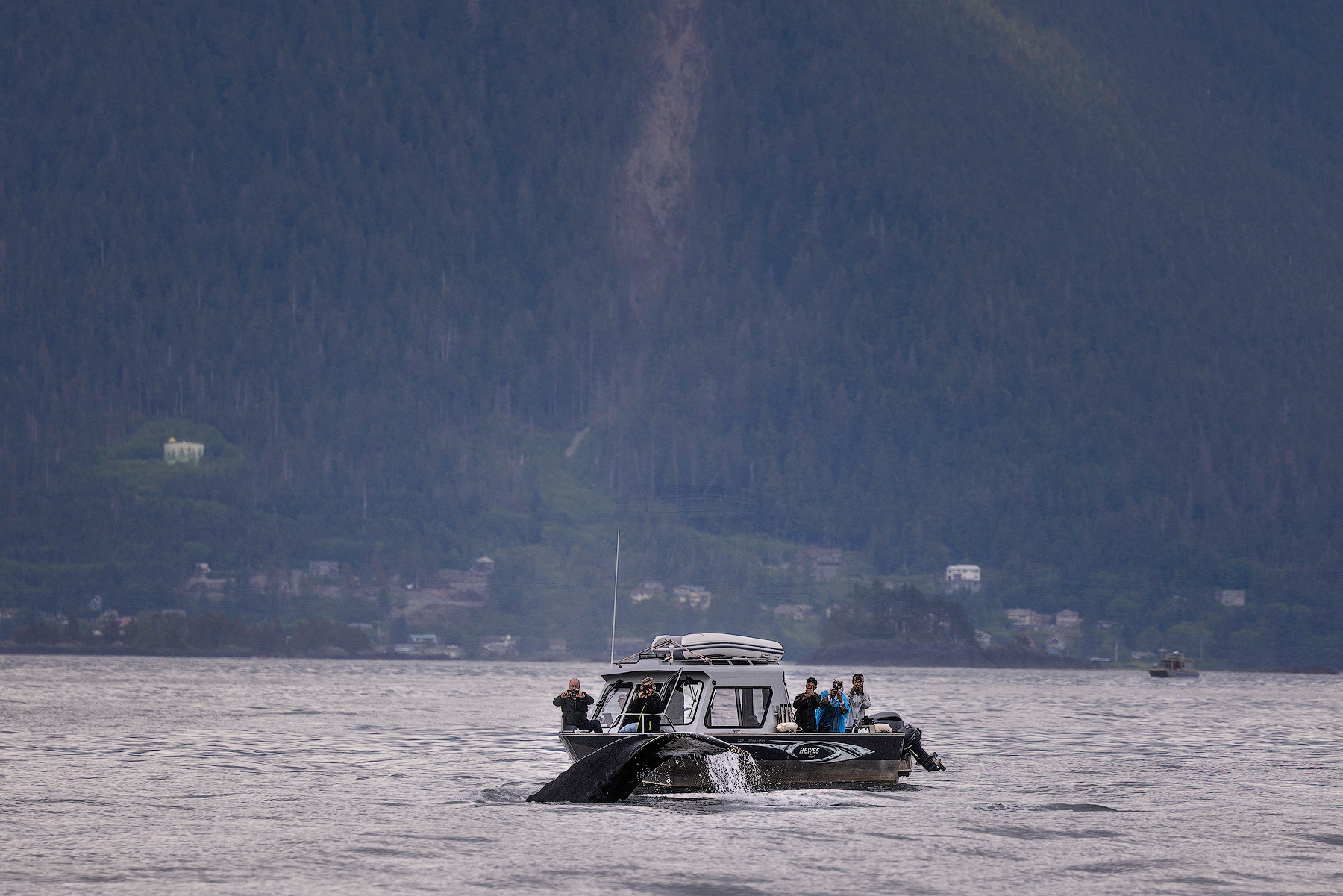
What Changes in Your Photos From Month to Month
There’s no perfect month, because each one gives you something different. In March you’re working with snow on the mountains, cold air and a lot of soft, grey light, and you’ll often have whales feeding close to shore with forest and peaks behind them. June and July give you the longest days of the year, more stable weather and plenty of time on the water, but the midday light is hard and you’ll get your best frames early and late. By August and September the sun sits lower for more of the day, the light warms up, and the weather gets moodier, which can give you rain squalls and broken light behind a blowing whale.
Whatever month you pick, shooting from a boat has its own set of problems, from the deck moving under you to salt spray on your front element. My free guide to photographing wildlife from a boat covers the technique side in detail.
Spring or Summer: Which Whale Window Fits Your Photography?
If you’re trying to decide between the two windows, here’s how I’d think about it.
Spring in Sitka is about whales feeding on herring in a landscape that still looks like winter. You’ll have snow on the mountains, very few other boats, cold weather and gray whales feeding in the shallows. It’s a shorter trip built around the herring spawn in Sitka Sound. My spring whale photography workshop in Sitka runs March 26 to 29, 2028.
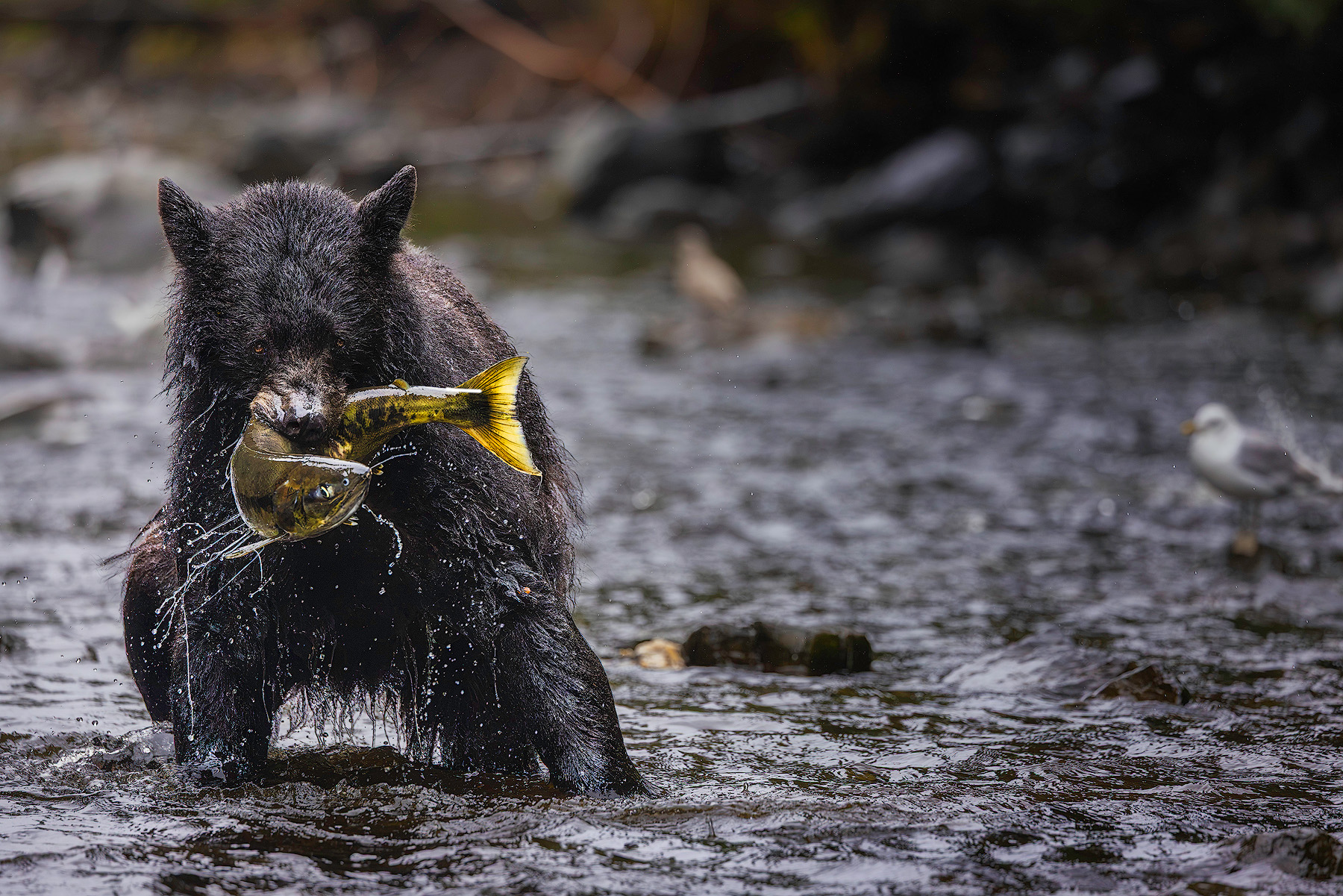
Summer is about the peak of the feeding season across the Inside Passage. The days are long, the weather is more stable, and you can photograph humpback whales and bears on the same route. Salmon runs occur from early May to September, and the bears come down to the creeks to feed on salmon swimming upstream. You’ll often read that bears are best seen from mid-July to mid-August, and that’s true for a lot of Alaska, but bears don’t all do the same thing at the same time across the state. The climate and the salmon runs change from one region to the next, so Southeast runs on its own calendar. It’s a longer trip that covers a lot more water. My Southeast Alaska wildlife photography tour runs June 29 to July 6, 2027.
If snow-covered mountains and feeding whales with nobody else around sounds like your kind of picture, spring is the one I’d pick, but if you want long days with whales and bears on the same trip, summer makes more sense.
Frequently Asked Questions
When can you see whales in Alaska?
You can see whales in Alaska from May through September, with humpbacks peaking in June, July and August. There’s also a spring window in March and April when the herring spawn brings humpbacks into Sitka Sound, and gray whales migrate through from mid-March to May.
What is the best time of year to see whales?
In Alaska, the best time of year to see whales is June through August for the summer feeding peak. For fewer boats and snow on the mountains, March and April in Sitka is the other window worth planning around.
What is the peak season for whale watching in Alaska?
Peak whale watching season in Alaska is from June through August. Whale watching is popular from late May to early September.
Is it worth going to Alaska in August?
August is worth it for whales, since it’s still part of the peak season for humpbacks. The cruise crowds start to thin later in the month, and the weather turns gradually wetter heading into September.
Are whale watching tours better in the morning or afternoon?
Morning and evening tours typically feature calmer waters and fewer crowds, and the low sun gives you better light for photography than midday.
Is whale watching better in Juneau or Icy Strait?
Both are on productive summer feeding water for humpback whales. On any given day it depends on where the whales are feeding, not which port you leave from, and Juneau has more tour operators running, so expect more boats there.
Which port in Alaska is the best for whale watching?
The best whale sighting locations in Alaska include Juneau, Icy Strait Point and Seward. In Southeast Alaska, the Inside Passage holds one of the largest concentrations of feeding humpback whales in the North Pacific during the summer.
What is the predator of a humpback whale?
Orcas are the main predator of humpback whales, and they mostly target calves when hunting in large pods.
Planning Your Whale Photography in Alaska
If you already know which window you want, the spring Sitka whale workshop and the summer Southeast Alaska wildlife photography tour both have the full information on dates and what’s included. If you’re still figuring out the timing, grab the free boat photography guide above and you’ll have it when you need it.
About the author: Michael Schultz is a photographer born and raised in Alaska and the owner of Face The Outdoors Photography, which has been featured in National Geographic. He runs small-group photography workshops in Alaska and around the world.
Updated November 2026