SITKA SOUND, SOUTHEAST ALASKA
Photograph Humpback Whales During the Sitka Herring Spawn
March 26 to 29, 2028. Six photographers max. A small-group, boat-based workshop on Sitka Sound during the spring herring spawn, with in-field coaching from Alaska-born photographer Michael Schultz.
SPRING 2028 PHOTO WORKSHOP
$6,950 lodging included, shared room
Questions? Email or 907-590-1567
“This trip to Alaska was probably one of the finest I have attended.”
Paul D. · Fall Aurora Workshop, Alaska
★★★★★ 5.0 · 34 five-star reviews
ABOUT THE WORKSHOP
How This Alaska Whale Photography Workshop Works
This humpback whale photography workshop in Alaska is four days on the water in Sitka Sound during the spring herring spawn, March 26 to 29, 2028. If you're into wildlife photography and want humpback whales feeding at the surface, it's built for you, because late March is when the herring come into Sitka Sound to spawn and the whales, sea lions and eagles come in after them.
It's capped at six photographers and costs $6,950 with lodging included. Here's what this page covers: how the week runs, what you can photograph in Sitka in March, how I teach on a moving deck, and what's included in the price.
THE WORKSHOP
4 nights
in Sitka during the spring herring spawn
Most whale photography in Alaska happens in summer, and most of it happens from a whale-watching boat with a lot of people on it. This Alaska whale photography workshop is different on both counts. It runs in March, when the herring spawn pulls the wildlife into Sitka Sound, and it's a small-group, boat-based workshop with six photographers on the deck and me working the rail with you. You stay in Sitka the whole week, so there's no moving between locations and no packing up every morning.
THE GROUP
6 max
photographers, so everyone has room at the rail
I cap it at six photographers because that's how many people can work the rail without anyone waiting for a clear angle, and it means I can get to everyone when something is happening instead of shouting settings across a crowded boat.
THE BOAT
Small-Group Boat
long days out on Sitka Sound
A lot of whale photography in Sitka is sold as a couple of hours on a boat or a private tour, and that's a fine way to see a whale. It's a hard way to learn to photograph one, though, so this workshop is four full days, and those long hours on the water are what give you real field time to put new photography skills to work. We head out from the harbor each day and search the sound for feeding whales, and the route follows the herring and the whales instead of a schedule, so if the light is good or a group of humpbacks is feeding, we stay with it.
THE PHOTOGRAPHER
Face The Outdoors in National Geographic
lifelong Alaskan with 22 years photographing this state
I'm a lifelong Alaskan and a professional photographer, and I've spent 22 years photographing this state, and Face The Outdoors has been featured in National Geographic. I'm not going to tell you I know Sitka Sound better than the captains who run it every spring, and that's the point of how this works, because the captain reads the water and the herring and I work the deck with you so you come home with the frame.
FREE DOWNLOAD
Coming for the whales? Free 45-page guide to shooting wildlife from a boat.
IN-FIELD INSTRUCTION
How I Teach on the Water
Shutter speed on a moving deck
Shooting from a boat changes almost everything you learned on land. The platform moves as much as the subject does, so most of what I teach on this workshop is shutter speed, how you stand and brace, and reading what a whale is about to do before it does it. On land, 1/1000 of a second is plenty to freeze most wildlife action, but on a moving deck I start around 1/2000 of a second and go faster, up to 1/4000, when a bubble-net group is about to break the surface, and I'll help you set up your autofocus so the focus tracks a moving subject from a moving platform.
Exposure and a clean background
For exposure I shoot in manual mode with auto ISO, because manual gives you better exposure control over bright water and dark whales while auto ISO handles the light as it changes. Aperture priority with auto ISO works too if that's what you're comfortable with, and I'll help you pick whichever one fits how you shoot. The other thing I work on with everyone is the background, because a clean background of dark water or a distant shoreline is what makes a whale photograph stand out instead of getting lost in clutter.
Handheld at the rail
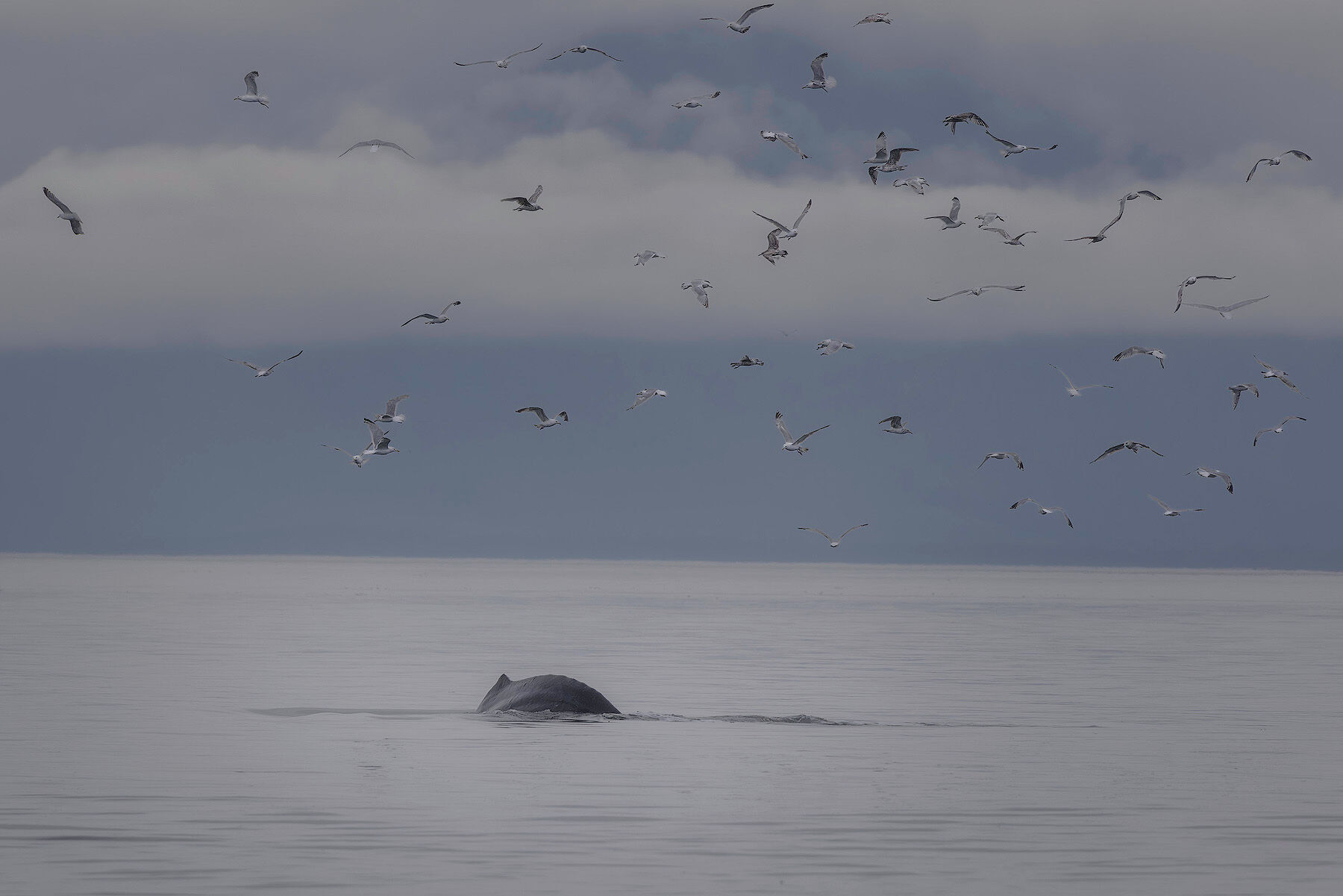
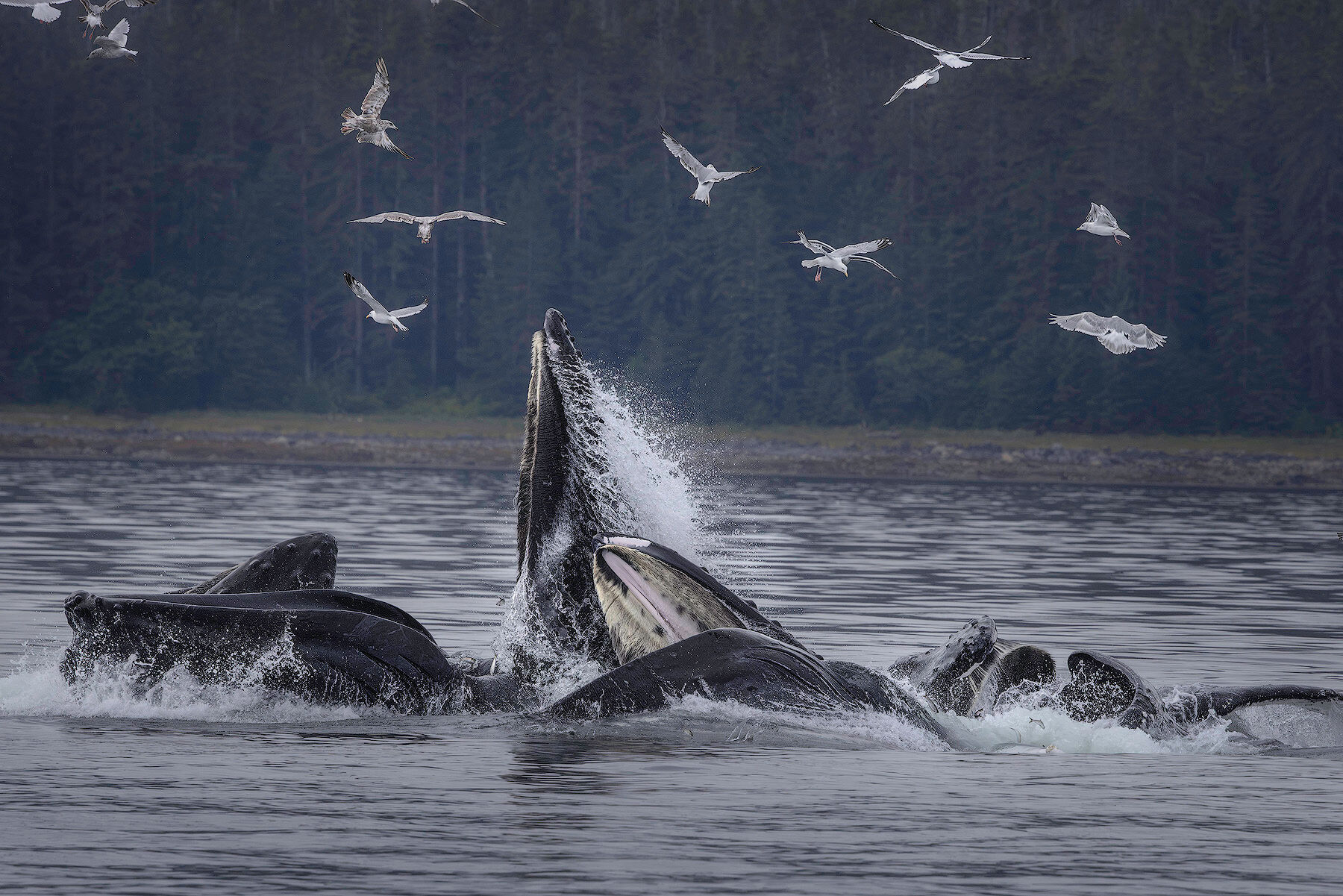
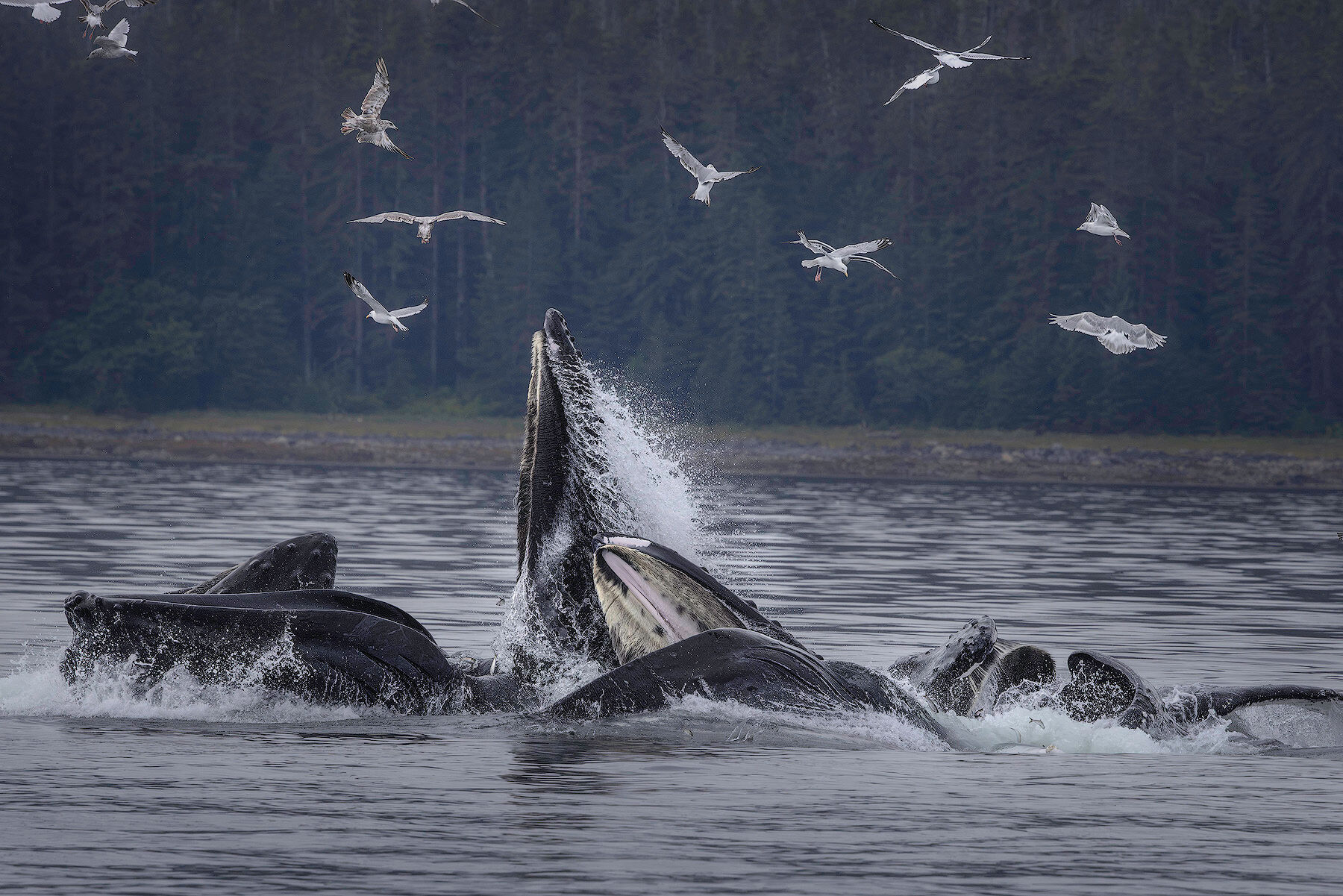
A tripod doesn't help you on a rocking deck, so everything is handheld, and a lot of the work is learning where to stand on the boat and how to hold a long lens steady when the water isn't. Bubble-net feeding gives you a few seconds of warning at most, so a big part of the week is learning to read the birds and the bubbles and be pointed at the right spot before the whales come up. Patience is most of it. There's a lot of waiting between surfacings, and the people who come home with the best pictures are the ones who stayed ready for the right time instead of firing at everything.
Small group and image review
With six photographers I can get to everyone during the action, which is why I keep the group small, so everyone gets personal attention when it counts and builds real photography knowledge on the water instead of just a card full of your own images. We finish with an image review session, either in Sitka or on a scheduled Zoom call after the trip, so you get feedback on the frames you made.
THE WEEK
The Week, Day by Day
Arrival, March 25
Fly into Sitka
Plan to be in Sitka the night before we start. That night is yours to cover, and you'll book it at the Aspen Suites where the group stays, so you're in the same room for the whole week.
Day 1, March 26
Out on Sitka Sound
We go out the first morning and get a read on where the herring are and where the whales are working, and I'll get everyone set up for shooting from a moving deck.
Days 2 and 3, March 27 and 28
Following the spawn
Full days on the water. Where we go depends on where the herring are spawning and where the whales are feeding, and that changes day to day, so the captain reads the water and we go where the action is.
Day 4, March 29
Last day on the water
One more full day out, and it's usually the day people shoot best, because by then holding a long lens on a rocking deck has stopped being new.
Departure, March 30
Fly home from Sitka
Wildlife ethics are part of what I teach, and responsible photography out here means giving the animals room and never pushing a whale to get a shot. It's also why I name towns and open water on this page and I don't name coves or haul-outs, because the animals using them don't need more boats showing up.
THE WILDLIFE
What You Can Photograph in Sitka in March
Humpback Whales
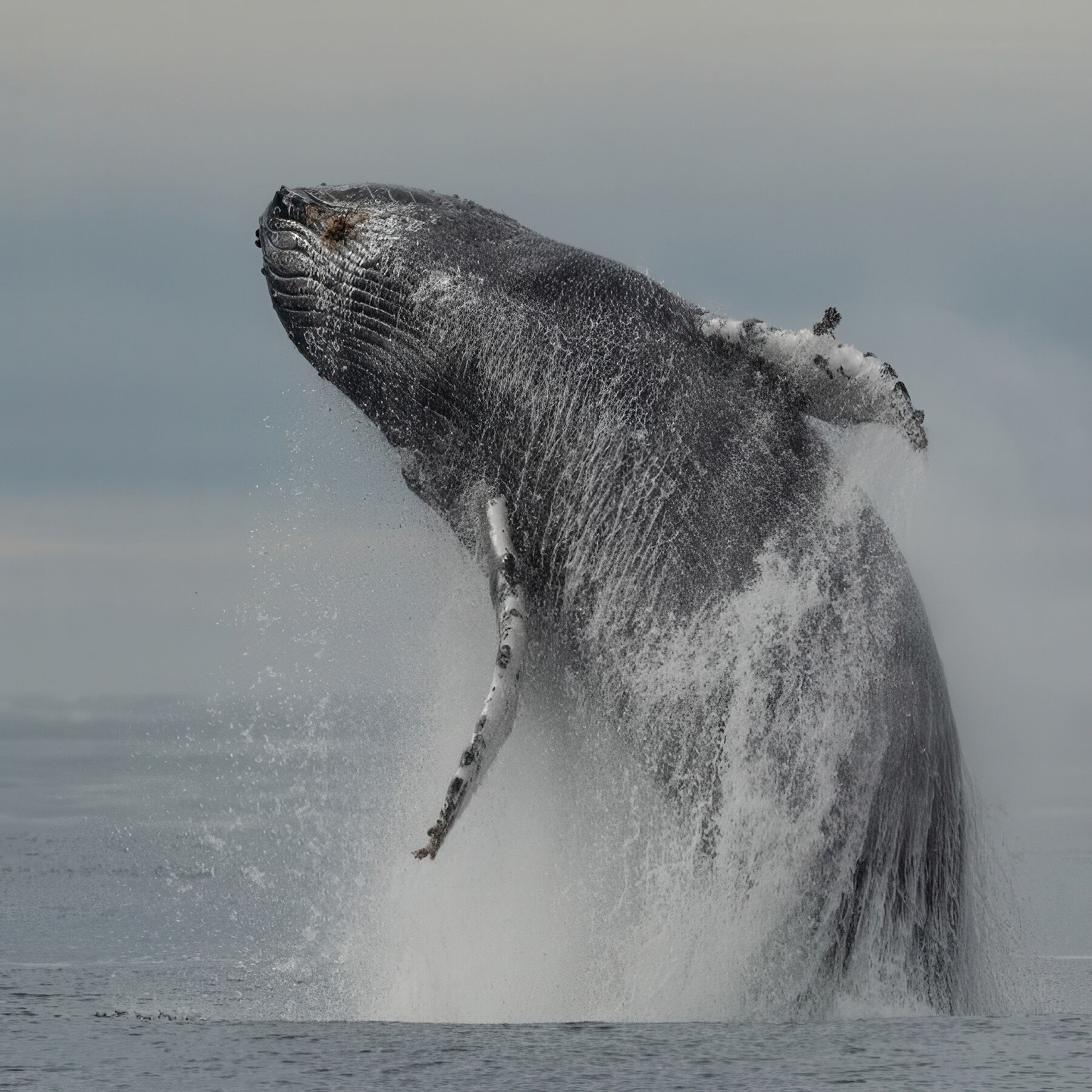
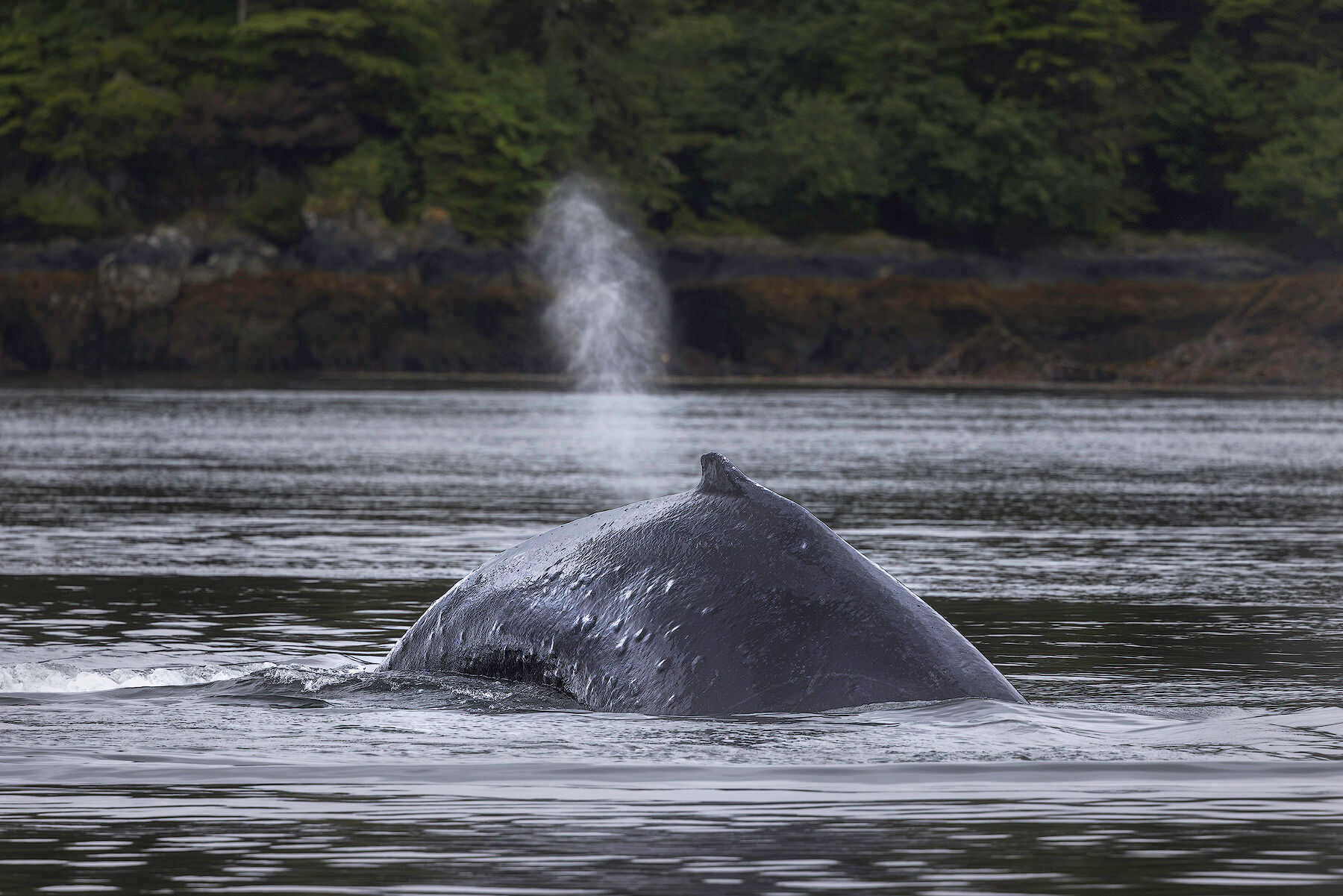
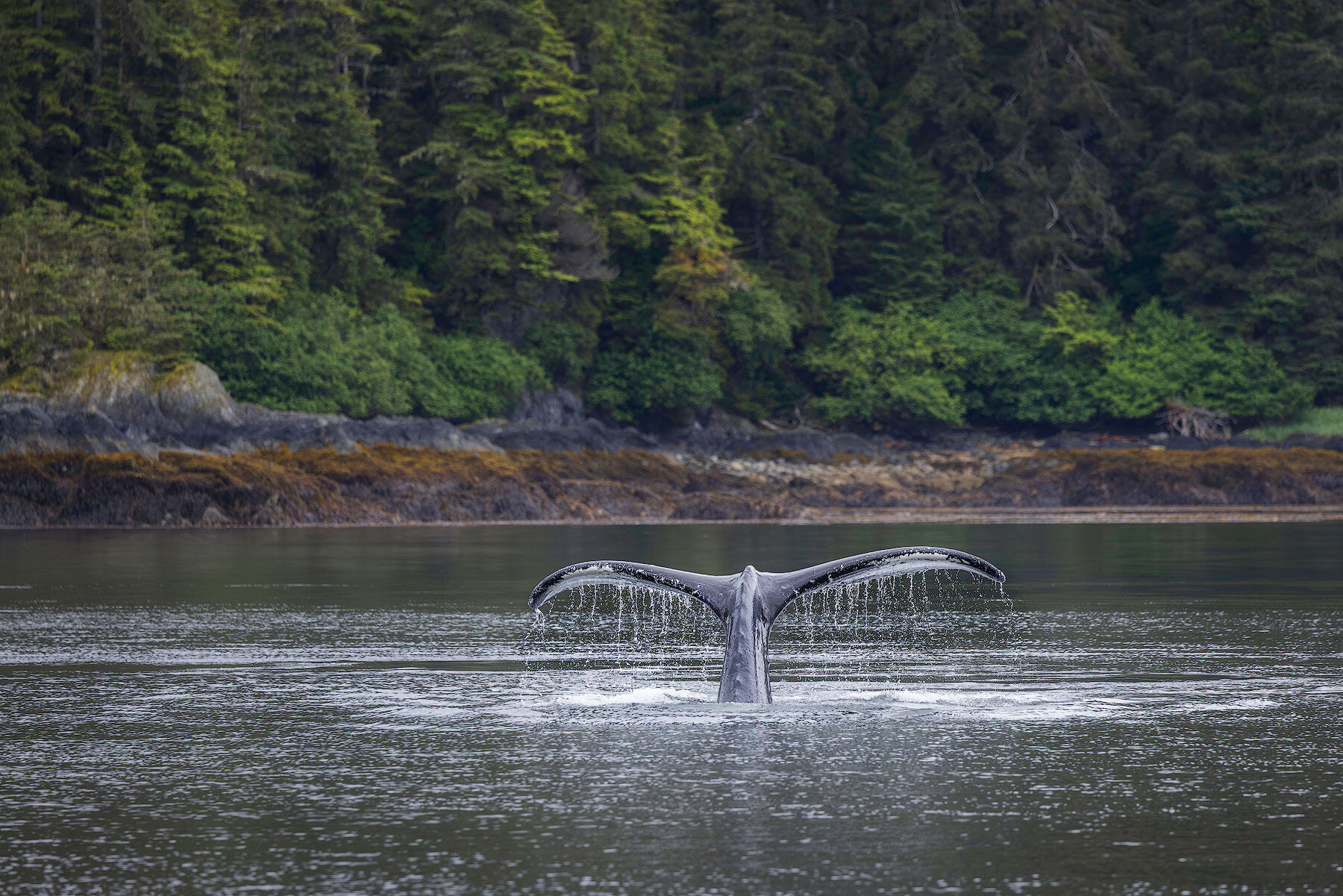
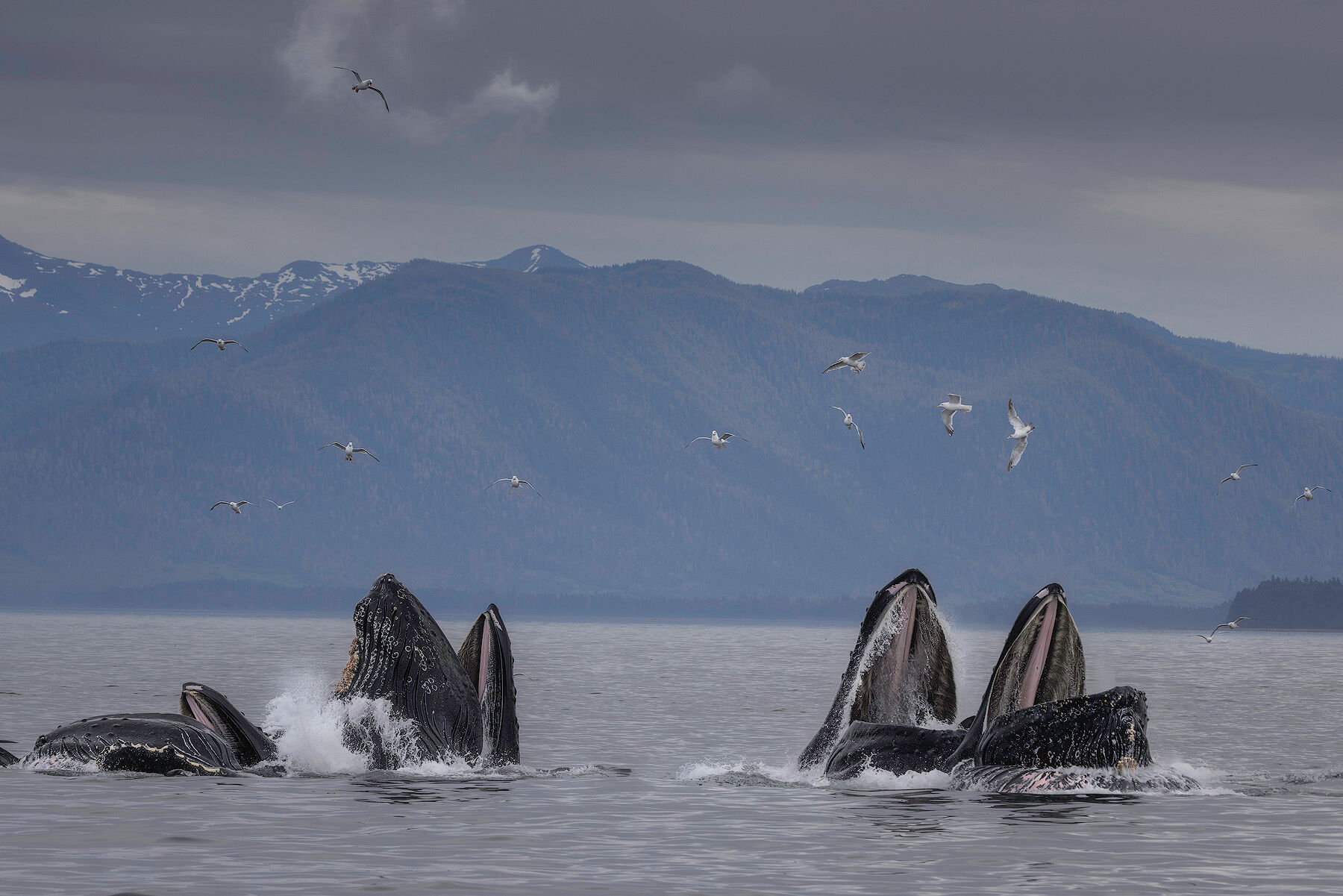
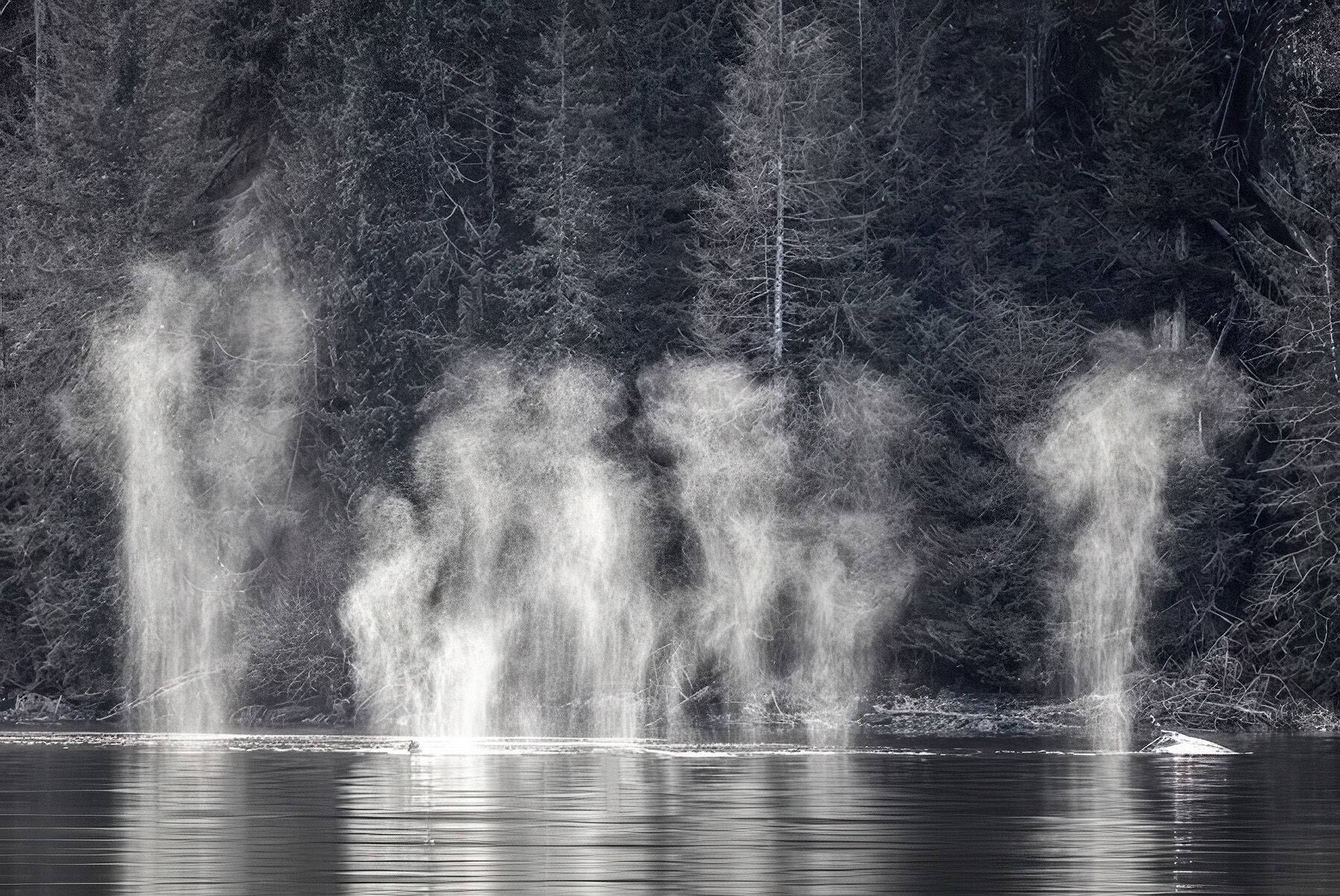
Humpback whales are why this trip exists. Not every humpback leaves Alaska for the winter, and the ones that are here in March come to Sitka Sound to hunt the herring. When they feed together, a group of humpbacks will blow a ring of bubbles under a school of fish and come up through the middle of it with their mouths open, and watching whales bubble-net feeding is what most people are hoping to photograph. It's the behavior I shoot for, and the captains who work Sitka Sound every spring will tell you March and April are when it happens here. I wrote up how humpback whales bubble-net feed if you want the background on the behavior itself.
Steller Sea Lions, Bald Eagles and the Herring Spawn
The herring spawn is the reason the whole sound comes alive in March. Millions of herring come into the shallows along the coast to spawn, and the water can turn a milky turquoise from the spawn itself. The herring fishing fleet is out working the same water, Steller sea lions chase the same fish the whales do, bald eagles gather in big numbers along the shoreline to catch what they can, and gulls and seabirds are everywhere the herring are, so there are photo opportunities in every direction.
Sea Otters, Gray Whales and Marine Wildlife
Sea otters live in Sitka Sound year-round, and they're one of the easier subjects to work from the boat because they tend to stay put. Gray whales move past Sitka in spring on their way north, orcas come through the sound some years, and harbor seals and seabirds round out the list. None of it is promised, and what shows up on a given day is up to the animals and nature, not me.
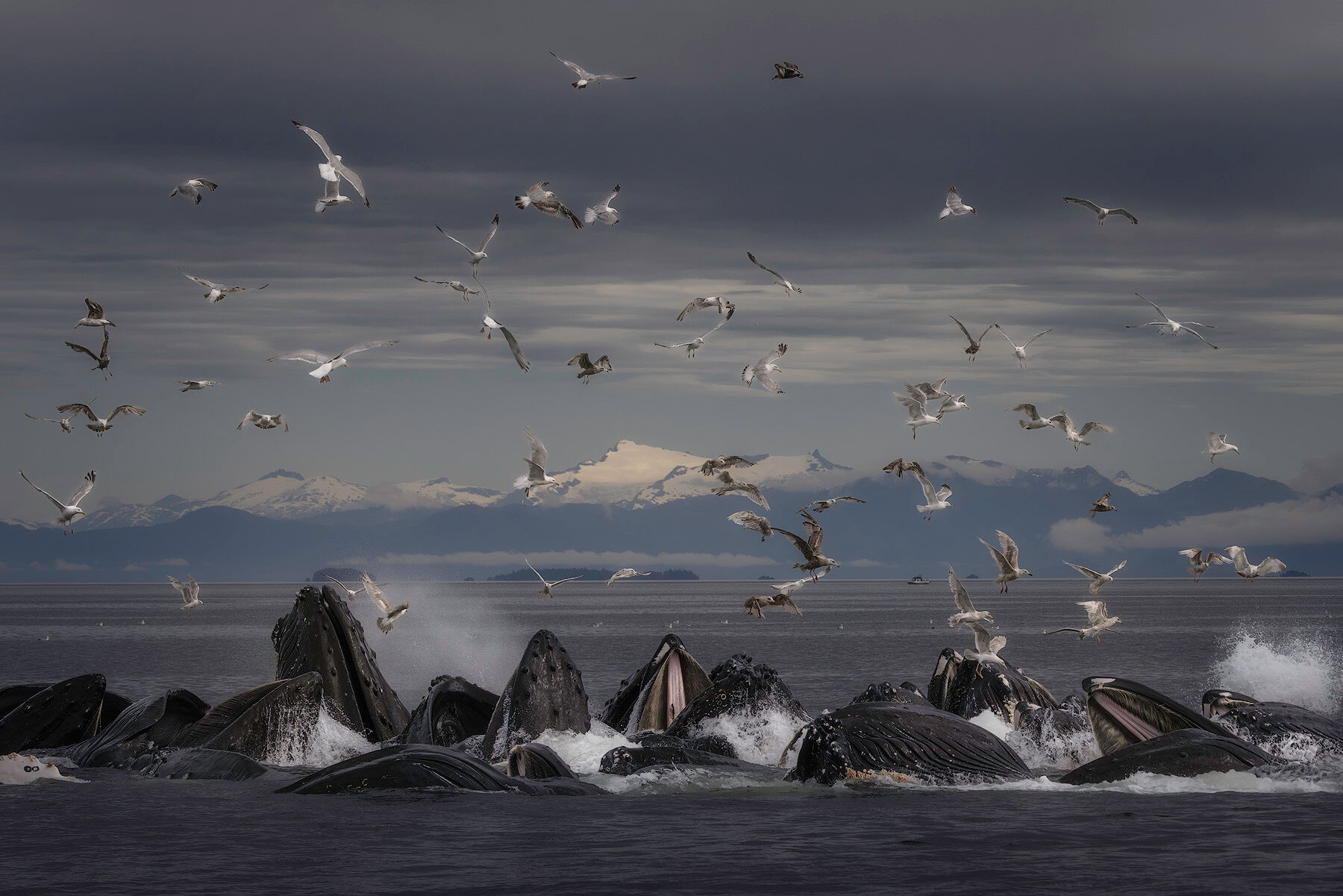
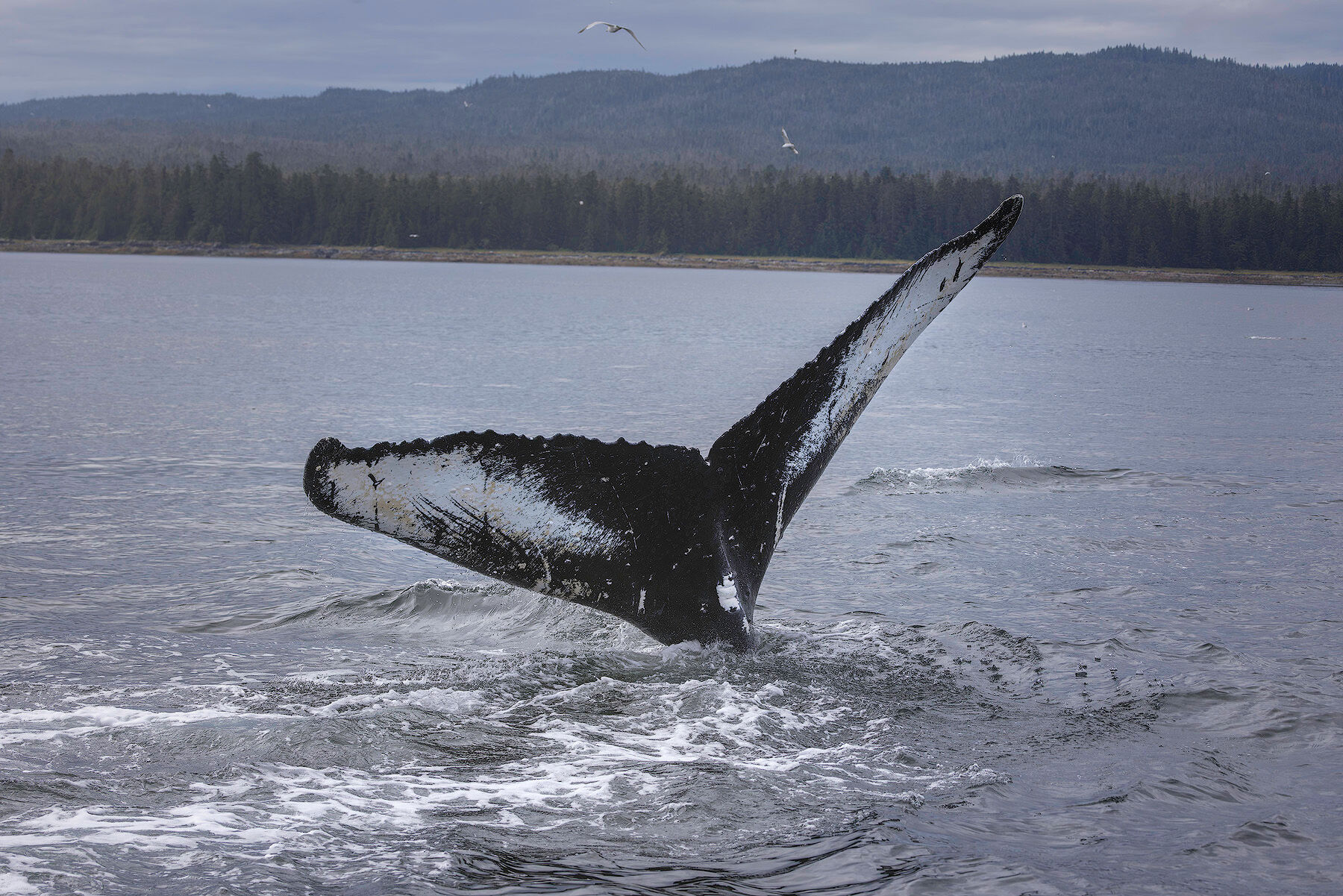
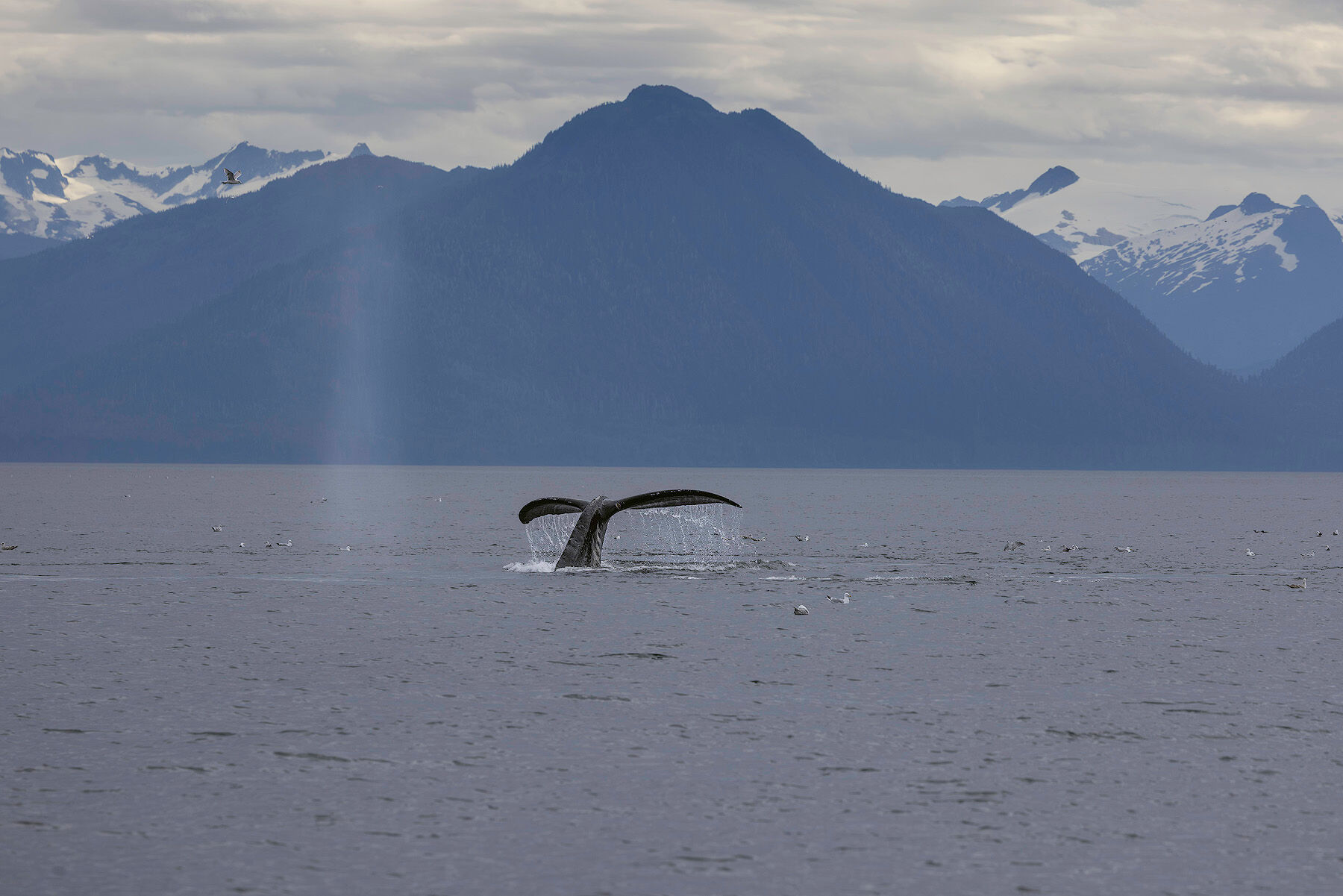
It isn't only wildlife either. Sitka sits between snow-covered mountains and the open Pacific, and Mount Edgecumbe, the volcano across the sound, is in a lot of frames if the clouds let it be. March still has snow down low on the mountains, so it's worth having a wider lens ready for the landscape between animals. Some of the best frames of the week put the whale in its environmental context, with the mountains or the volcano behind it, instead of filling the frame with a fluke.
FROM THESE WATERS
WHY THIS WINDOW
Why Late March
The herring spawn in Sitka Sound runs from roughly mid-March into April, and that's what sets the dates. Late March puts us inside that window, when the herring are in the shallows and the whales, sea lions and eagles are feeding on them. March in Sitka is also quiet. There are no cruise ships in town this time of year, so it's us and the working boats on the water.
The spawn doesn't keep a calendar, so read that as the window and not a forecast. What I can tell you is that we're out on the water every day for four days during the spawn, and that's the best way I know to stack the odds in your favor.
$6,950 per person, lodging included
Shared room | $2,000 deposit reserves your spot
MAKE IT A BIGGER TRIP
Add the Spring Aurora Workshop
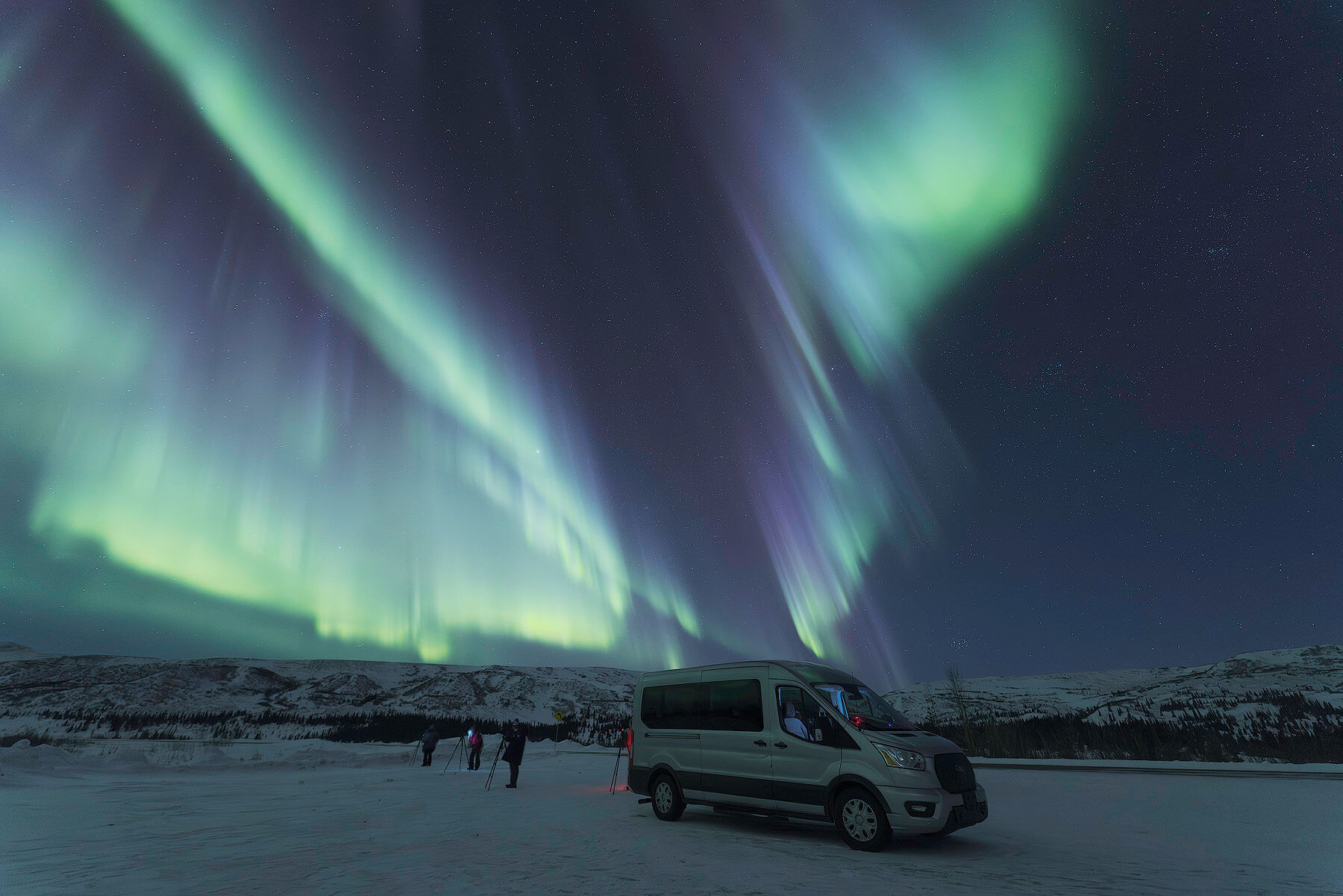
If you want to make a bigger trip out of it, my spring aurora workshop in Fairbanks runs the week before, with shooting nights March 19 to 24, 2028. You can add it to this workshop for $3,500, which covers the aurora workshop and your lodging in Fairbanks. Airfare isn't included, so you book your own flight into Fairbanks and your flight from Fairbanks to Sitka on March 25, the day before we head out on the boat. The add-on closes December 1, 2027, or sooner if the aurora workshop fills.
You can read how that week runs on the spring equinox aurora photography workshop page.
WHAT PHOTOGRAPHERS SAY
From Photographers Who've Been Out With Me
★★★★★
If you are trying to decide between going to Brooks Falls or choosing another Alaska location to photograph coastal brown bears, I would strongly encourage you to consider one of Michael Schultz's Face the Outdoors Photography trips. … I came home with photographs I love, but also with the feeling that I had experienced something really special.
I have attended many workshops in my journey to becoming a photographer. This trip to Alaska was probably one of the finest I have attended. It was organized, small enough group to benefit the talent and knowledge that Michael possesses. … Having been raised in the area he finds the best places for photographs. I am planning on attending more workshops that he promotes.
Face the Outdoors is the real deal! … He got us under clear skies every night, even if that meant a 3 hour drive (each direction)! His tips and help in framing and settings were a great learning opportunity, and the classroom portion was very helpful in learning how to process aurora pics.
He is very knowledgeable about auroras so he really knows how to put you in the best position to shoot them. I felt at ease with his relaxed style of teaching. In Norway we also had the benefit of two local photographers and guides, Klaus and Christian, who had excellent awareness of the Lofoten region and its weather patterns. … Between the three of them I learned a ton about composition, patience, and editing for impact.
Michael and the local guide David got us right on the bears every day and almost every outing (sometimes bears hide). We had the opportunity to photograph a mother and her two cubs on several occasions with many lighting and background options. Being so close to the bears while they were out on the mud flats clamming was just amazing! … I look forward to my next trip with Michael.
I took everything he taught me on our Fall 2025 Alaska workshop, balance, composition, leading lines, to a meetup at my local photography club, and … the instructor leading the critique told me they came through stronger than many of the Master of Fine Arts students' portfolios he's worked with. I honestly wouldn't be getting these shots without Michael's guidance.
Our photo tour of the Lofoten Islands was truly the trip of a lifetime. … Our caring local guides, Christian and Klaus were outstanding, deeply knowledgeable about both photography and the region they love, and knew exactly where to be for the perfect shot. … We returned home with some of our favorite images ever.
Michael's knowledge of the area, reading of the Aurora data, and ability to drive us safely in the van down gravel roads was impeccable. Alaska's weather didn't cooperate, so he had to work his butt off to find us photo opportunities. For his first workshop he knocked it out of the park. If you're on the fence, don't hesitate to book with Michael.
Face The Outdoors experience with the coastal brown bears in Alaska was fantastic! The bear viewing, photography coaching, the guide from the lodge, and the lodge itself were beyond my expectations. … I highly recommend Michael's company if you want an authentic and personalized photography experience.
Michael, Klaus and Christian were very helpful with giving technical, artistic and general advice on taking better pictures. It was a great learning experience, and I walked away with a lot of pictures, more confidence in my abilities, and a better understanding of the direction I want to take in my photographic journey.
Michael Schultz brings a unique blend of talents to this workshop. … With [his] work ethic, he continually put us in position to be wildly successful. This workshop is excellent for those looking for more than a simple tour and seeing the Northern Lights. … For that, it was beyond 5 stars.
GETTING THERE
Arrival and Getting Home
Fly into Sitka on March 25. The first day starts on the water, so a flight that lands on the 26th will miss it. The night of the 25th is yours to cover, and you'll book it at the Aspen Suites where the group stays, so you're already in your room when the week starts. The last day on the water is March 29, and you fly home from Sitka on March 30.
WORKSHOP DETAILS
Price and What's Included
The price is $6,950 per person with lodging included, based on a shared room, and a $2,000 deposit reserves your spot. The balance is split into three payments of $1,650, due June 1, September 1 and December 1, 2027. That covers four nights at the Aspen Suites in Sitka, the boat every day, instruction the whole week, and an image review session in Sitka or on a scheduled Zoom call afterward. Meals are on your own.
Rooms are shared doubles with two queen beds. If you'd rather have your own room, a single is $7,700 with a $2,750 deposit, and singles are reserved at the time of booking.
The Logistics
Dates
March 26 to 29, 2028, four days on the water. Arrive March 25, fly home March 30
Base
Sitka, Alaska, at the Aspen Suites
Group Size
Maximum 6 photographers
Difficulty
Easy (on the boat most of every day, dress for March cold)
Cost
$6,950 per person, lodging included, shared room
Deposit
$2,000
Payment Plan
Balance in three payments of $1,650: June 1, Sept 1 and Dec 1, 2027
Single Room
$7,700 with a $2,750 deposit, reserved at the time of booking
✓ Included
- ✓Four nights at the Aspen Suites in Sitka
- ✓The boat every day
- ✓Instruction the whole week
- ✓An image review session in Sitka or on a scheduled Zoom call afterward
✗ What's Not Included
- ✗Airfare to and from Sitka
- ✗Lodging on the night of March 25 in Sitka
- ✗Meals during the workshop
- ✗Travel insurance with emergency evacuation coverage (required)
- ✗Photography gear and equipment
- ✗Tips for the captain and crew (discretionary)
- ✗Alcoholic beverages
WHO IT'S FOR
Who This Workshop Is For
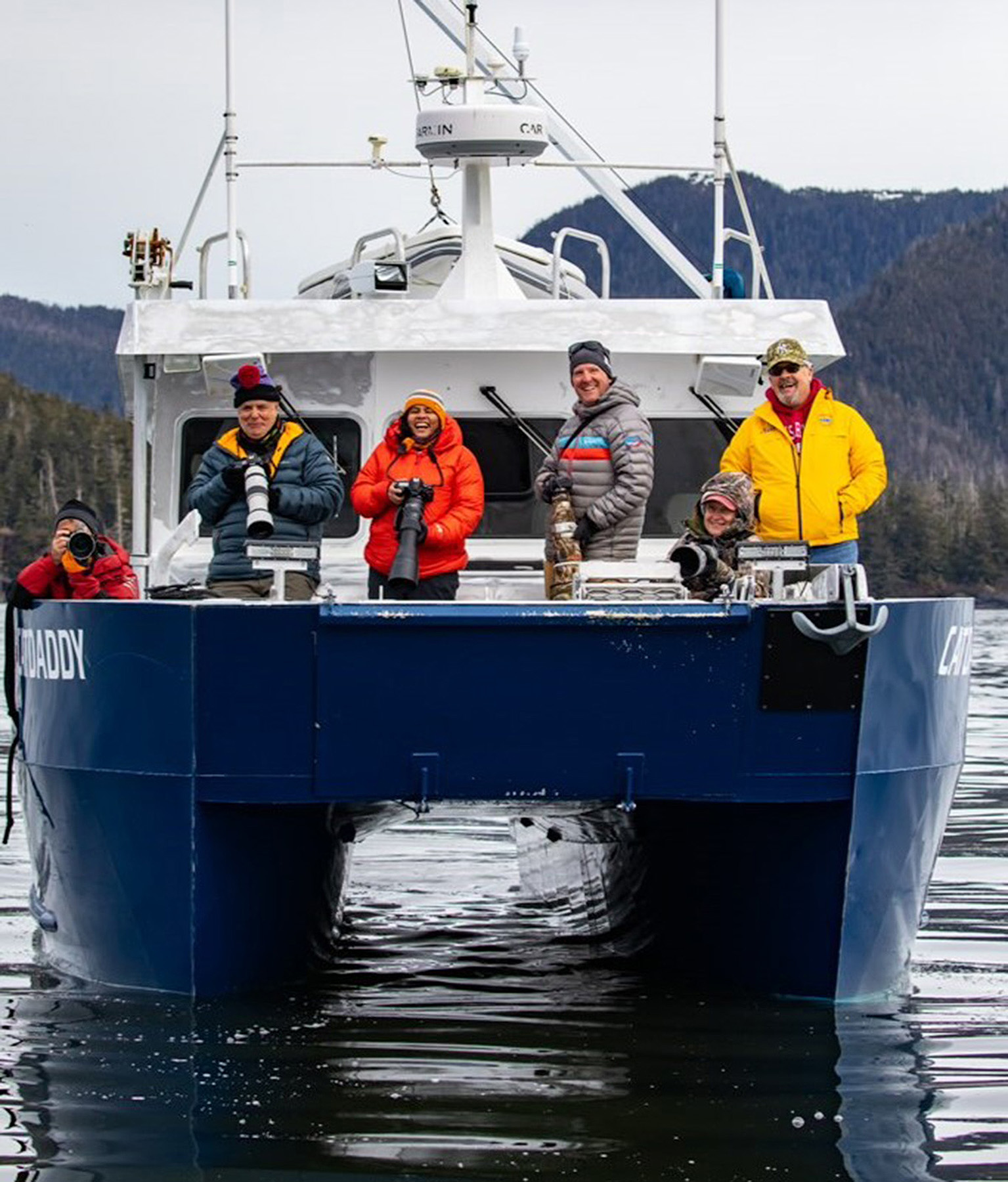
This humpback whale photography workshop is for intermediate and advanced wildlife photographers interested in whales who already know their camera and want to learn to shoot from a moving deck. You should be able to change settings without looking at the camera, and beyond that I'll help you with the part that's new.
Physical Requirements
Physically it's easy, but it's cold. You're on the boat most of every day, and the only thing that takes some getting used to is standing on a moving deck in March weather for a few hours at a time, so how you dress matters more than how fit you are.
GEAR & EQUIPMENT
Camera Gear for Wildlife Photography From a Boat
Your Camera
You don't need a particular camera for this, but a fast body helps. Whether you're shooting a Canon EOS R5 Mark II, a Nikon Z9 or something a few years older, what matters is a body with good autofocus tracking and a fast burst rate, and knowing it well enough to change settings without looking.
Your Distance
100 yards
Federal rules keep boats 100 yards from humpback whales, so the law sets your distance and the distance sets your lens.
Your Lenses
A versatile telephoto zoom in the 100-500mm class does most of the work, and a zoom beats a long prime on a boat because the distance to the whale changes constantly. At 100 yards you'll spend a lot of time at 400mm or longer, so whether it's a Canon 100-500mm or something similar, plan on shooting near the long end. A second body with something wider covers the landscape and the close sea otters, and it saves you from changing lenses on a wet deck.
The Weather
Sitka in March is cold and wet, so protecting your equipment is part of the job, and I'll show you how to keep salt spray and rain off your gear on deck. Weather-sealed gear helps and rain covers for both bodies aren't optional. Batteries drain faster in the cold, so bring more of them than you think you'll need, along with plenty of memory cards, and dress in warm layers with real rain gear on top and gloves you can work a camera in.
A complete packing list with clothing recommendations for Sitka in March will be sent after you register.
FAQ
Frequently Asked Questions
What is the best month to see humpback whales in Alaska?+
It depends on what you want to see. Summer is when most humpbacks are in Alaska, but in Sitka the spring herring spawn in March and April brings whales into Sitka Sound to feed, and that's when this workshop runs.
Is March a good time to see whales in Alaska?+
In Sitka it is. A lot of people assume every humpback is in Hawaii in March, but not all of them leave, and the ones that are here come into Sitka Sound for the herring spawn. It's also a quiet time of year, with no cruise ships in town.
Where can you see humpback whales in Alaska?+
Southeast Alaska is prime territory for whale photography, and humpbacks feed all through the Inside Passage in summer, with most workshops working the coastal waters near Juneau and Sitka. In spring, Sitka Sound is one of the best places to be, because the herring spawn concentrates the fish and the whales follow them in.
How do you photograph humpback whales?+
From a boat, with a fast shutter speed and a zoom lens. I start around 1/2000 of a second and go up to 1/4000 when whales are about to surface, and I use a 100-500mm class zoom because federal rules keep boats 100 yards from humpbacks. The rest is reading the birds and the water so you're pointed at the right spot before the whales come up.
How is this different from other Alaska photo tours?+
Most Alaska photo tours with whales run from June through August, and most whale trips in Sitka are a few hours on the water. This one runs during the March herring spawn, when humpbacks come into Sitka Sound to feed, and it puts six photographers on a small-group boat for four full days, with instruction the whole way, so it works more like a workshop than the photo tours people usually find.
Is the workshop led by a professional photographer?+
Yes. I'm a professional photographer and a lifelong Alaskan, and I'm on the deck with you every day teaching. The captain runs the boat and reads the water, and I work with you on the photography.
What's included in the $6,950?+
Four nights at the Aspen Suites in Sitka, the boat every day, instruction the whole week, and an image review session in Sitka or on a scheduled Zoom call afterward. That's based on a shared room, and a $2,000 deposit reserves your spot. Meals are on your own.
Will we see bubble-net feeding?+
I can't promise it. What I can tell you is that the herring spawn is when humpbacks come into Sitka Sound to feed, and we're out on the water every day for four days while it's happening, which is the best way I know to stack the odds in your favor.
What other wildlife might we see?+
Steller sea lions, bald eagles, sea otters, harbor seals, gray whales moving north, and gulls and seabirds working the herring. What shows up on any given day is up to them.
How long is the workshop?+
Four days on the water, March 26 to 29, 2028. You fly into Sitka on March 25 and home on March 30, and the four nights from the 26th through the 29th are covered.
What experience level do I need?+
Intermediate and advanced skill levels both do well here, as long as you know your camera well enough to change settings without looking at it. Beyond that I'll help you with the part that's new, which for most people is shooting from a moving deck.
What's the weather like in Sitka in March?+
Cold and wet. Sitka sits in a temperate rainforest, so plan on rain some days and dress in warm layers with real rain gear on top.
Can I get a single room?+
Yes. A single is $7,700 with a $2,750 deposit, and singles are reserved at the time of booking.
Can I combine this with the aurora workshop?+
Yes. My spring aurora workshop in Fairbanks runs the week before, with shooting nights March 19 to 24, 2028, and you can add it to this workshop for $3,500. That covers the aurora workshop and your lodging in Fairbanks, and airfare isn't included, so you book your own flight into Fairbanks and your flight from Fairbanks to Sitka on March 25. The add-on closes December 1, 2027, or sooner if the aurora workshop fills.
Have another question? Send me a message and I'll get back to you.
MARCH 26 TO 29, 2028
Reserve Your Spot
It's capped at six photographers, and a $2,000 deposit holds your spot. If you have a question before you book, send me a message and I'll get back to you myself.
Humpback Whale Photography Workshop, Alaska
$6,950 per person, lodging included
Shared room | $2,000 deposit | Six photographers max
Or reach me directly: