INSIDE PASSAGE, SOUTHEAST ALASKA
Photograph Humpback Whales and Bears in Southeast Alaska
June 29 to July 6, 2027. Six photographers max. Eight days by boat and on land through the Inside Passage from Petersburg to Sitka, with in-field coaching from Alaska-born photographer Michael Schultz.
SUMMER 2027 PHOTO TOUR
Questions? Email or 907-590-1567
ABOUT THE TOUR
How This Alaska Photo Tour Works
This Southeast Alaska wildlife photography tour is an eight-day photo tour by boat and on land through the Inside Passage, Petersburg to Sitka, June 29 to July 6, 2027. If you photograph wildlife and want humpback whales and bears on one trip, it's built for you, because late June puts bears on the salmon streams while humpbacks feed nearby, so you get both in one week.
It's capped at six photographers and costs $11,250 with lodging and meals included. Here's what this page covers: the route day by day, what you can photograph, how I teach on a moving deck, and what's included in the price.
THE TOUR
8 days
by boat and on land through the Inside Passage, Petersburg to Sitka
Alaska photo tours run anywhere from a single day to a week or more, and this one is a full eight days, which is what it takes to work whales and bears properly. You sleep on land in four towns and spend most of every day on the boat, with time on land in Kake for the black bears and in Hoonah for some land photography. We start in Petersburg, Alaska, run to Kake, then Hoonah, and finish in Sitka, and the route bends around wildlife, weather and tide instead of a clock, so every day is an immersive field session that adapts to conditions.
THE GROUP
6 max
photographers, so everyone has room at the rail
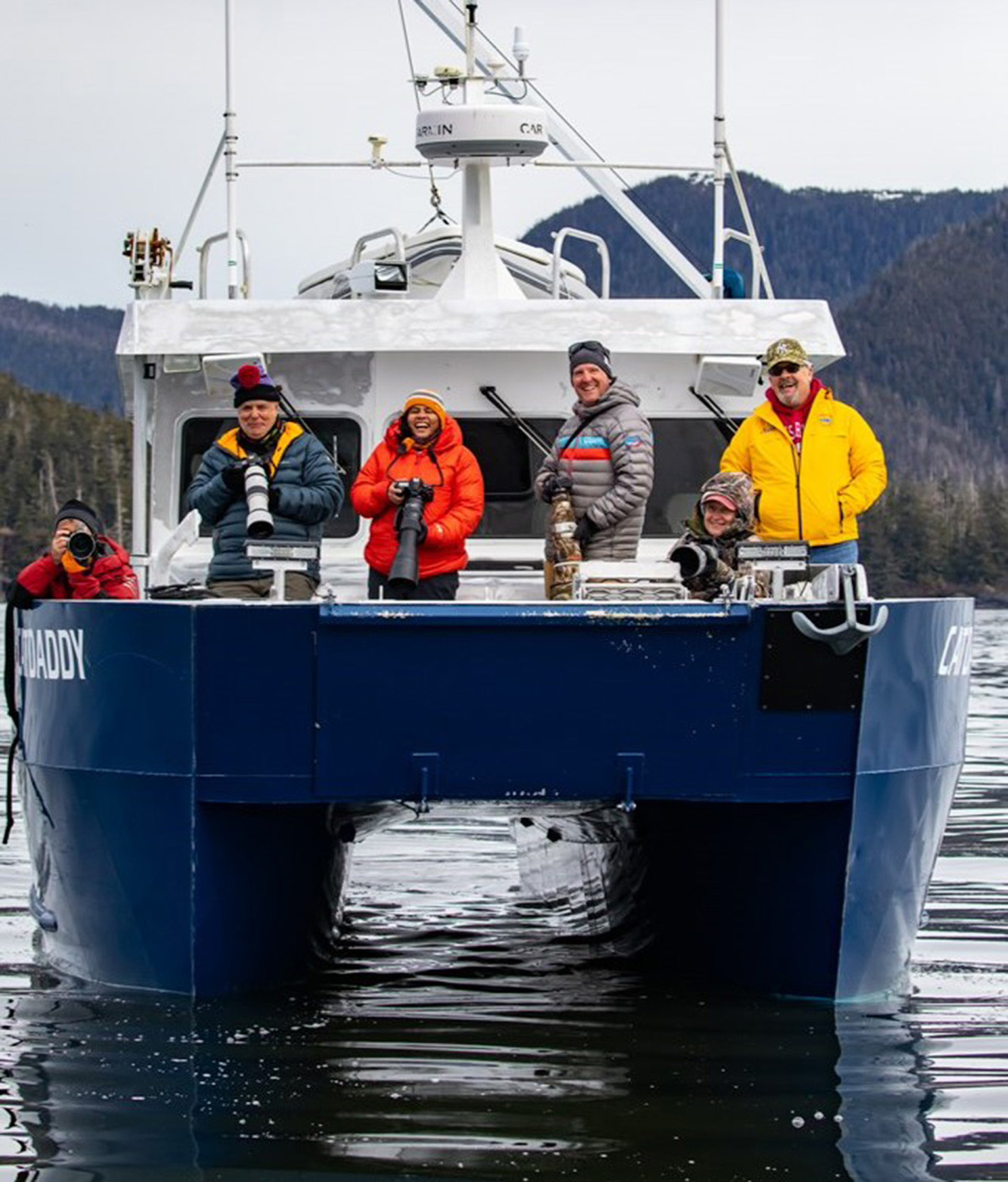
It's a small group on purpose. Group sizes stay small because I cap this Southeast Alaska wildlife photography tour at six photographers, and that's how many people can work the rail without anyone waiting for a clear angle. It's a photography-first trip rather than a fixed-route sightseeing cruise, so if the light is good or a whale is feeding, we stay with it.
THE BOAT
43-Foot Catamaran
reaching the coast that roads don't
The boat is what gives you access to most of these locations. A lot of this coast has no road to it, and we work it from a 43-foot catamaran with plenty of deck space for six photographers, which puts you a lot closer to eye level with a sea otter or a whale's back than you'd ever get from a viewing deck on land.
THE PHOTOGRAPHER
Face The Outdoors in National Geographic
lifelong Alaskan with 22 years photographing this state
I'm a lifelong Alaskan and a professional photographer, and I've spent 22 years photographing this state, and Face The Outdoors has been featured in National Geographic. I'm not going to tell you I know Southeast waters better than the captain who runs them every season, and that's the point of how this works, because he reads the water and the weather and I work the deck with you so you come home with the frame.
FREE DOWNLOAD
Coming for the whales? Free 45-page guide to shooting wildlife from a boat.
45 pages on the settings, autofocus, lenses and salt-air gear care that hold up on a moving deck in Southeast Alaska.
IN-FIELD INSTRUCTION
How I Teach on the Water
Shutter speed on a moving deck
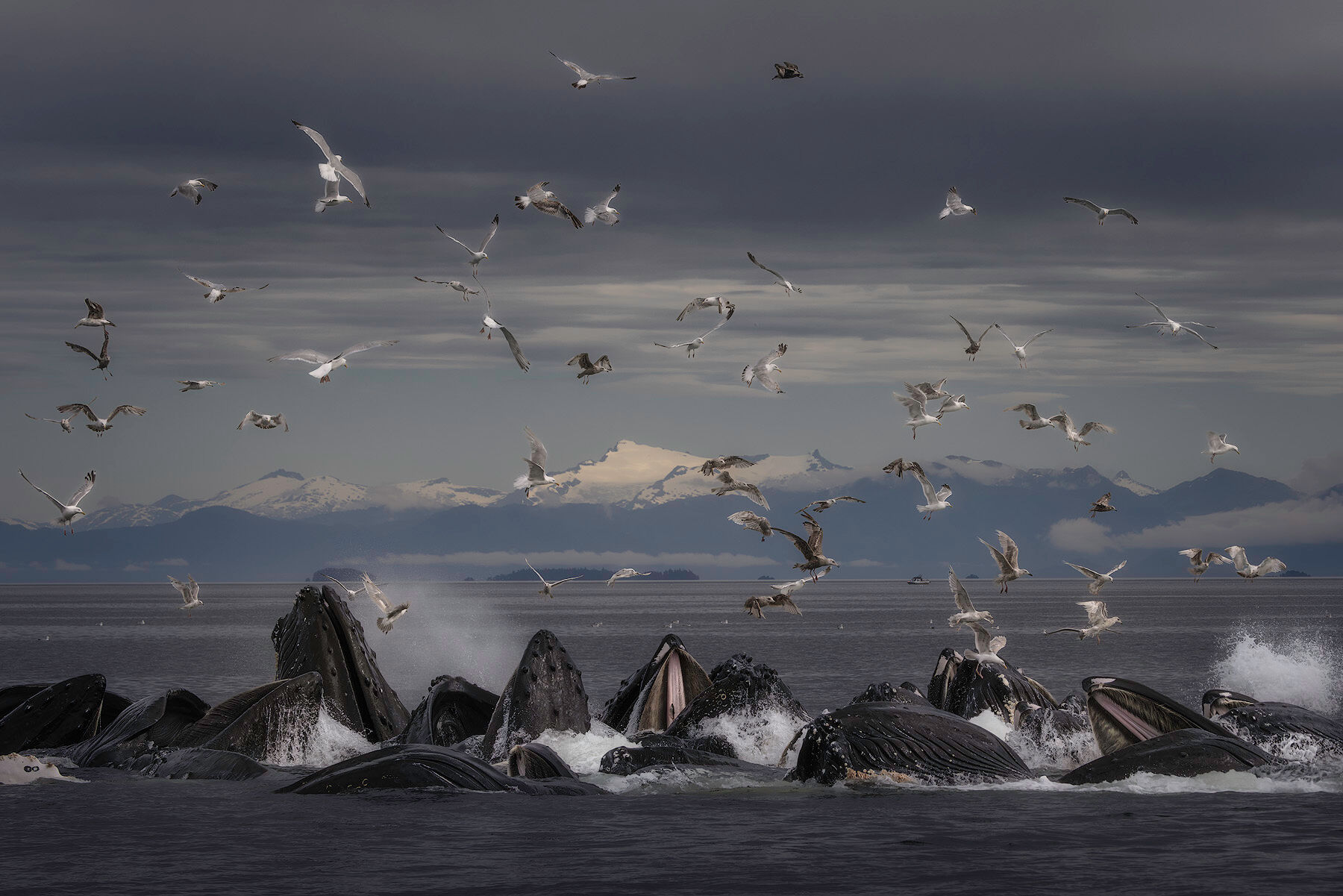
Shooting from a boat changes almost everything you learned on land. The platform moves as much as the subject does, so most of the photography instruction out there is shutter speed, how you stand and brace, and reading what an animal is about to do before it does it, plus the patience to wait for the right moment instead of firing at everything. I start around 1/2000 of a second on the deck and go faster, up to 1/4000, when a bubble-net group is about to break the surface, and I'll help you set up your autofocus to track a moving subject from a moving platform.
Handheld at the rail
A tripod doesn't help you on a rocking deck, so everything is handheld, and a lot of the work is learning where to stand on the boat and how to hold a long lens steady when the water isn't. With six photographers I can get to everyone during the action, which is why I keep the group small, so everyone gets personal attention and personalized instruction when it counts.
Land days and image review
On the land days it's a different kind of focus. Bears on a salmon stream in their natural environment give you time to think about composition and background, and I'll work with you on reading a bear's behavior so you're ready before the fish comes up and you come home with images instead of near misses. We finish with an image review session, either in Sitka or on a scheduled Zoom call after the trip, so you get feedback on the frames you made.
THE ROUTE
The Route, Day by Day
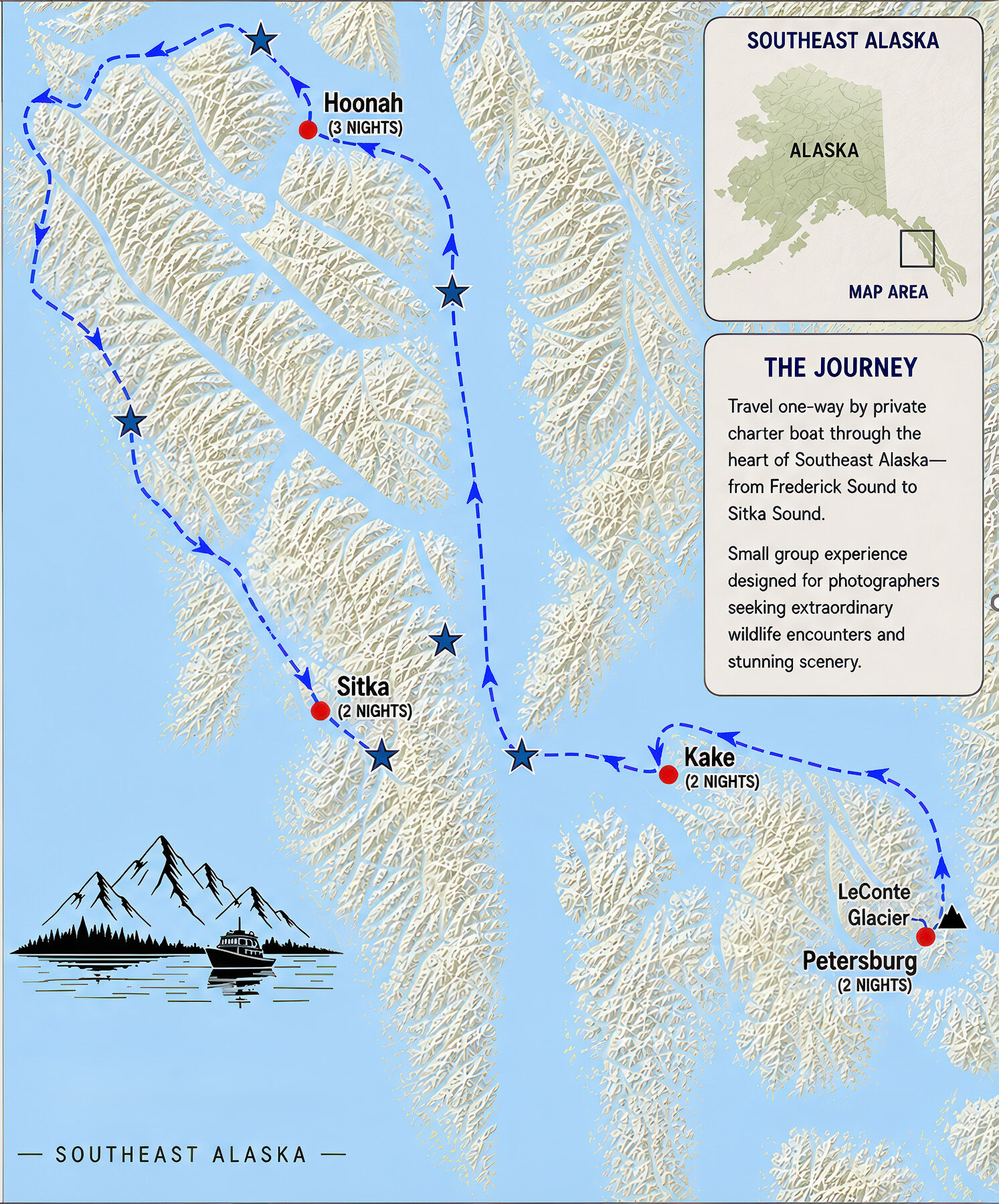
Day 1, June 29
Petersburg and LeConte Glacier
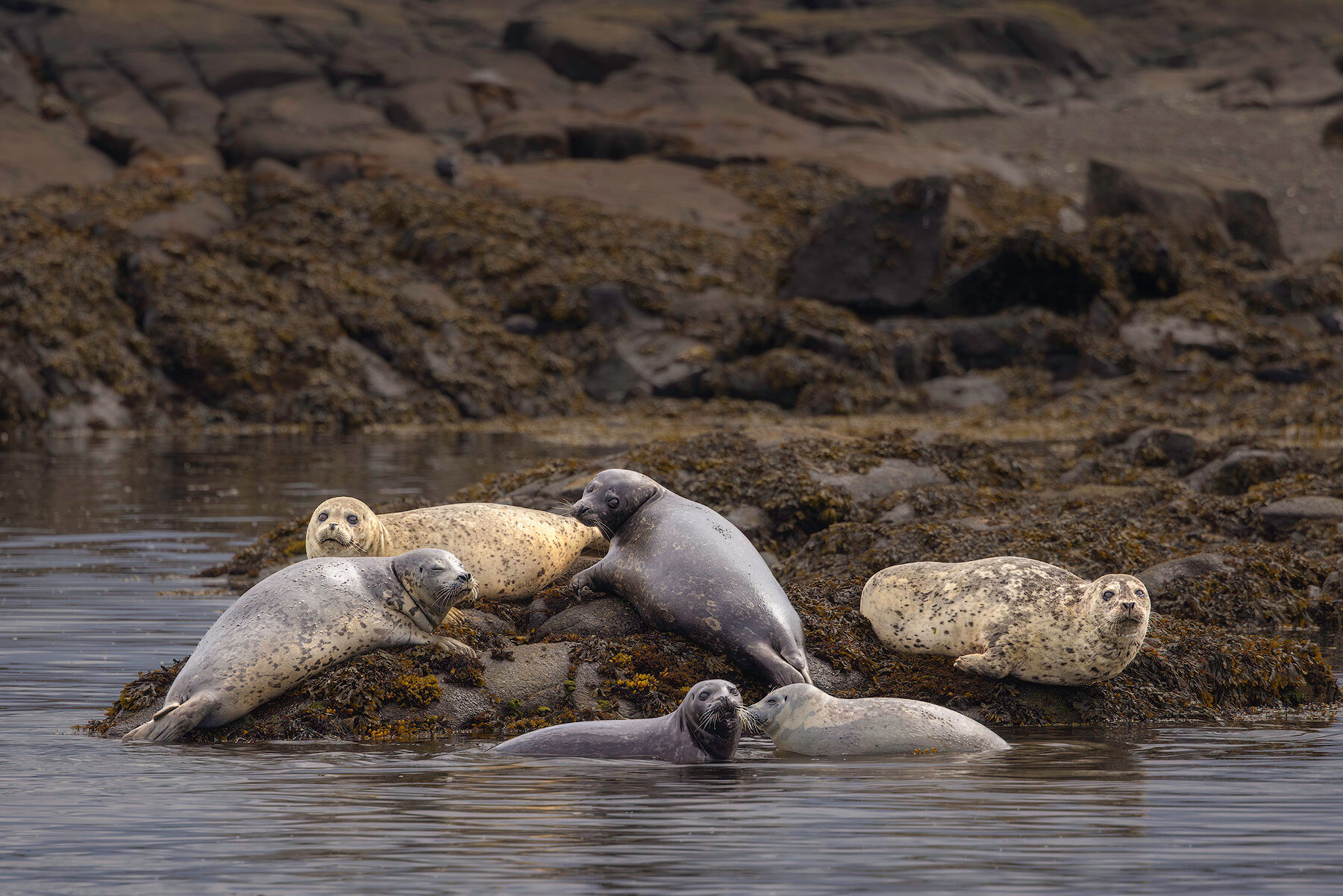
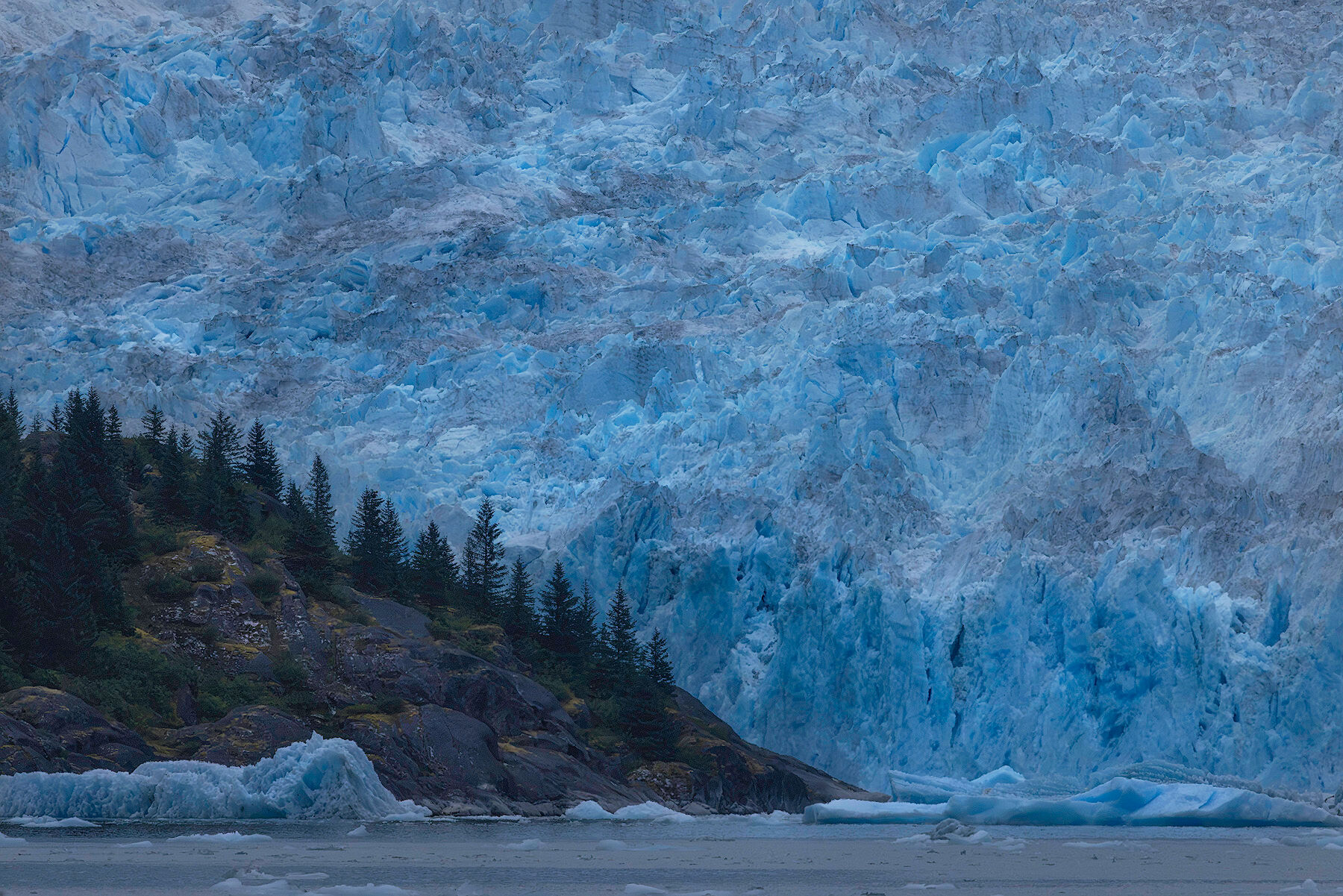
We head straight out to LeConte, the tidewater glacier just outside Petersburg, where the ice comes all the way down to the water and harbor seals rest on the floating ice.
Day 2, June 30
Sumner and Clarence Straits
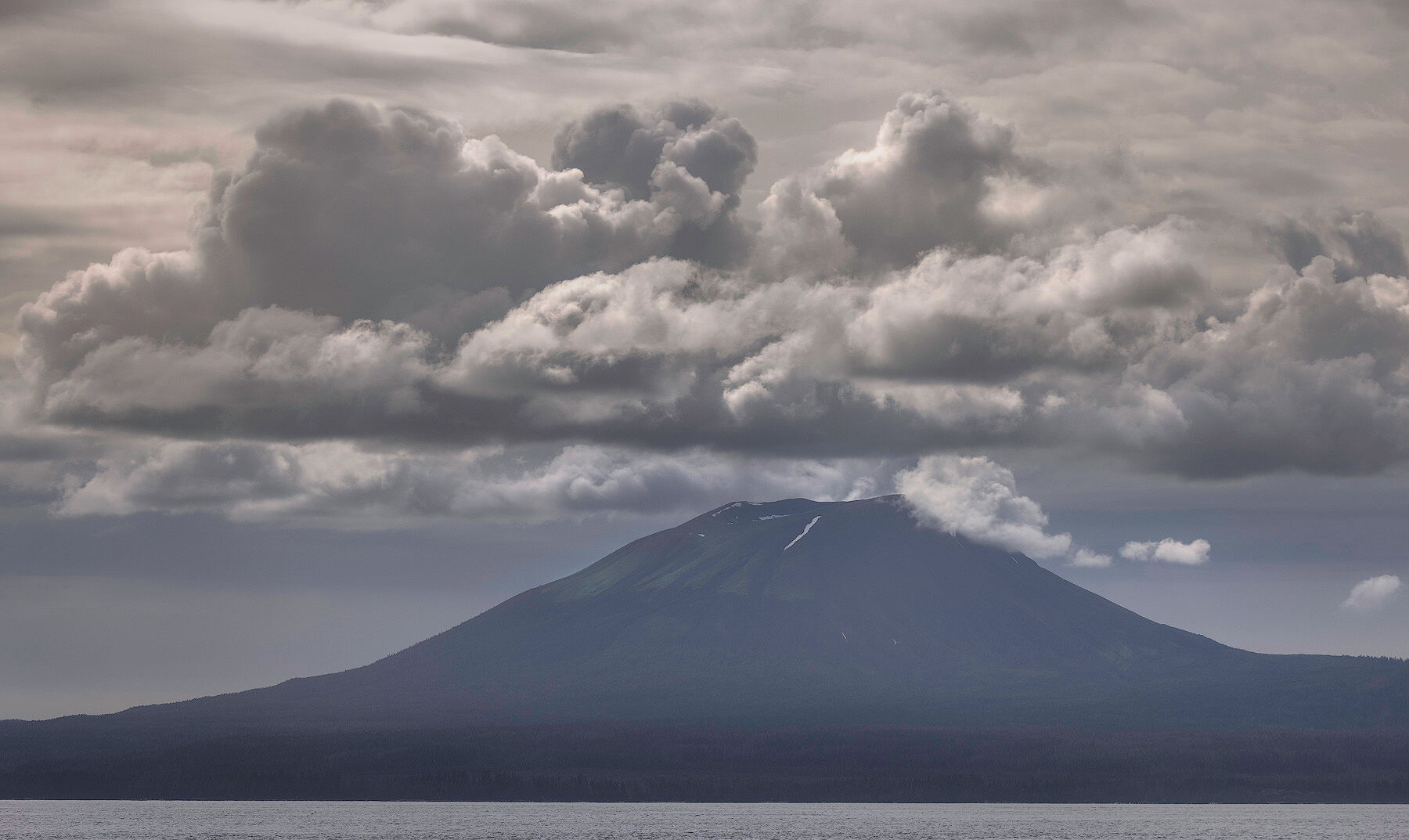
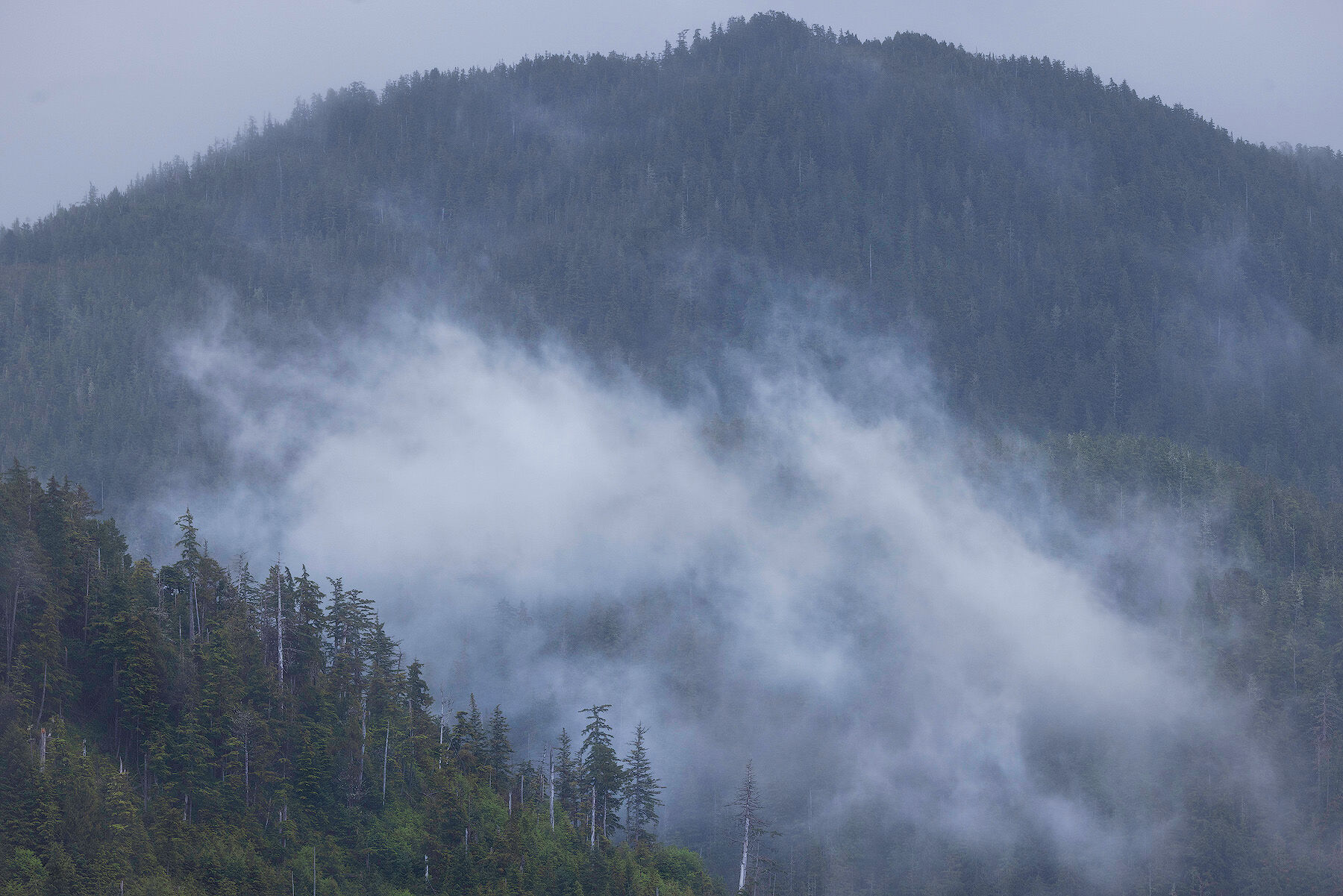
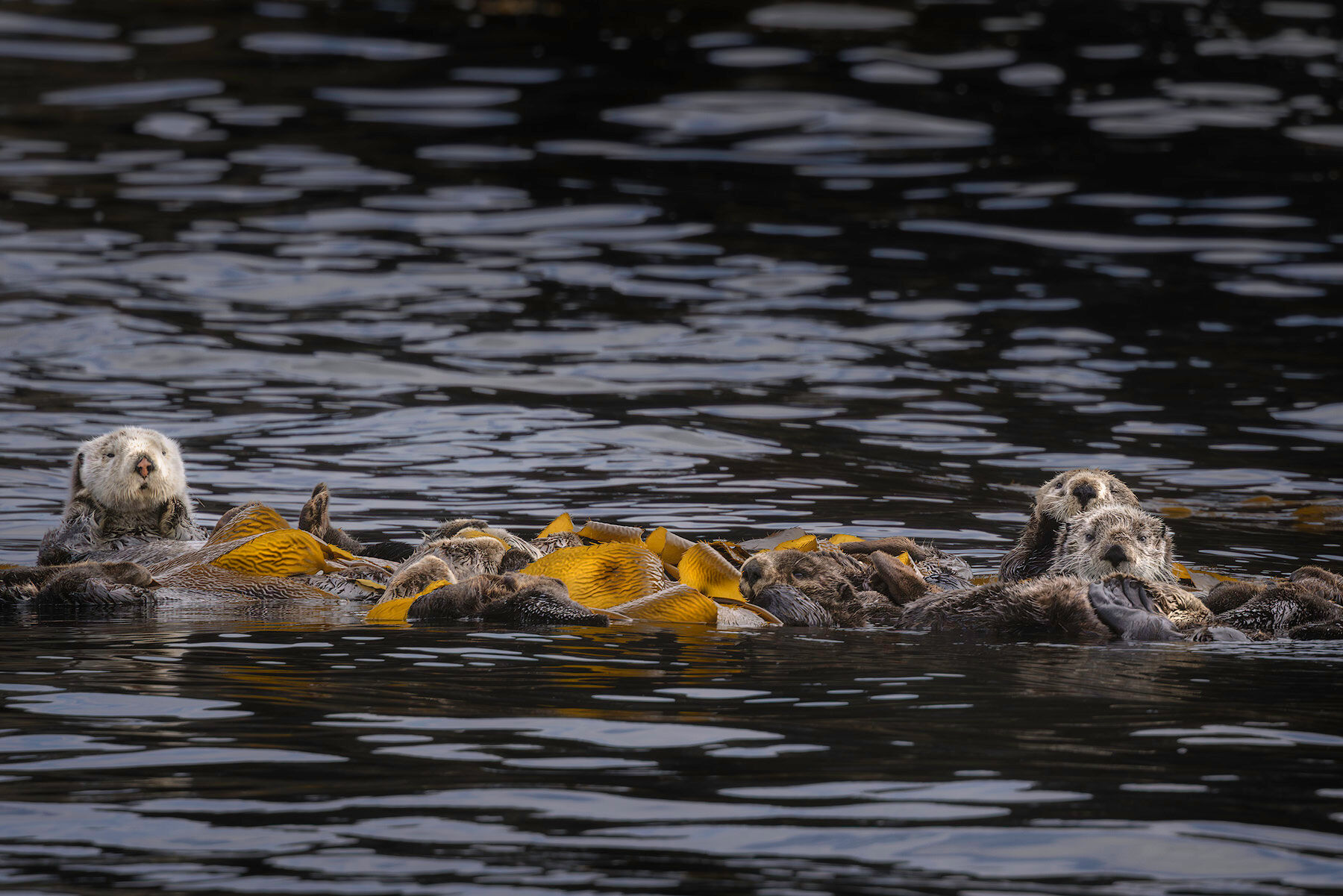
Open water and the remote islands of the Tongass National Forest, where the temperate rainforest runs right down to the tideline. Humpbacks, orcas, Dall's porpoises, Steller sea lions and sea otters all work these straits.
Day 3, July 1
Petersburg to Kake
North across Frederick Sound and through the Alexander Archipelago, and it's a wildlife day searching the whole way rather than a transfer.
Day 4, July 2
Kake
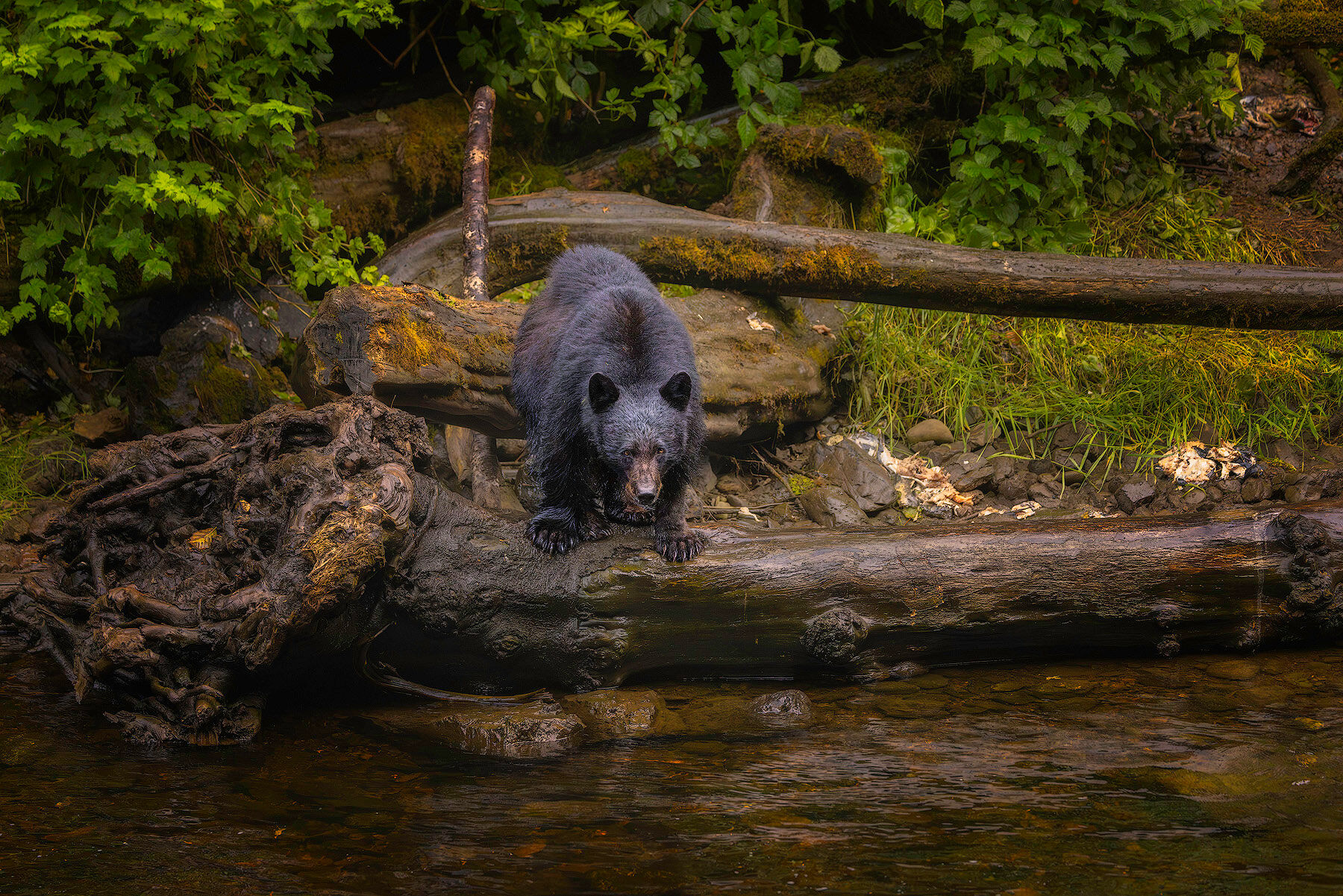
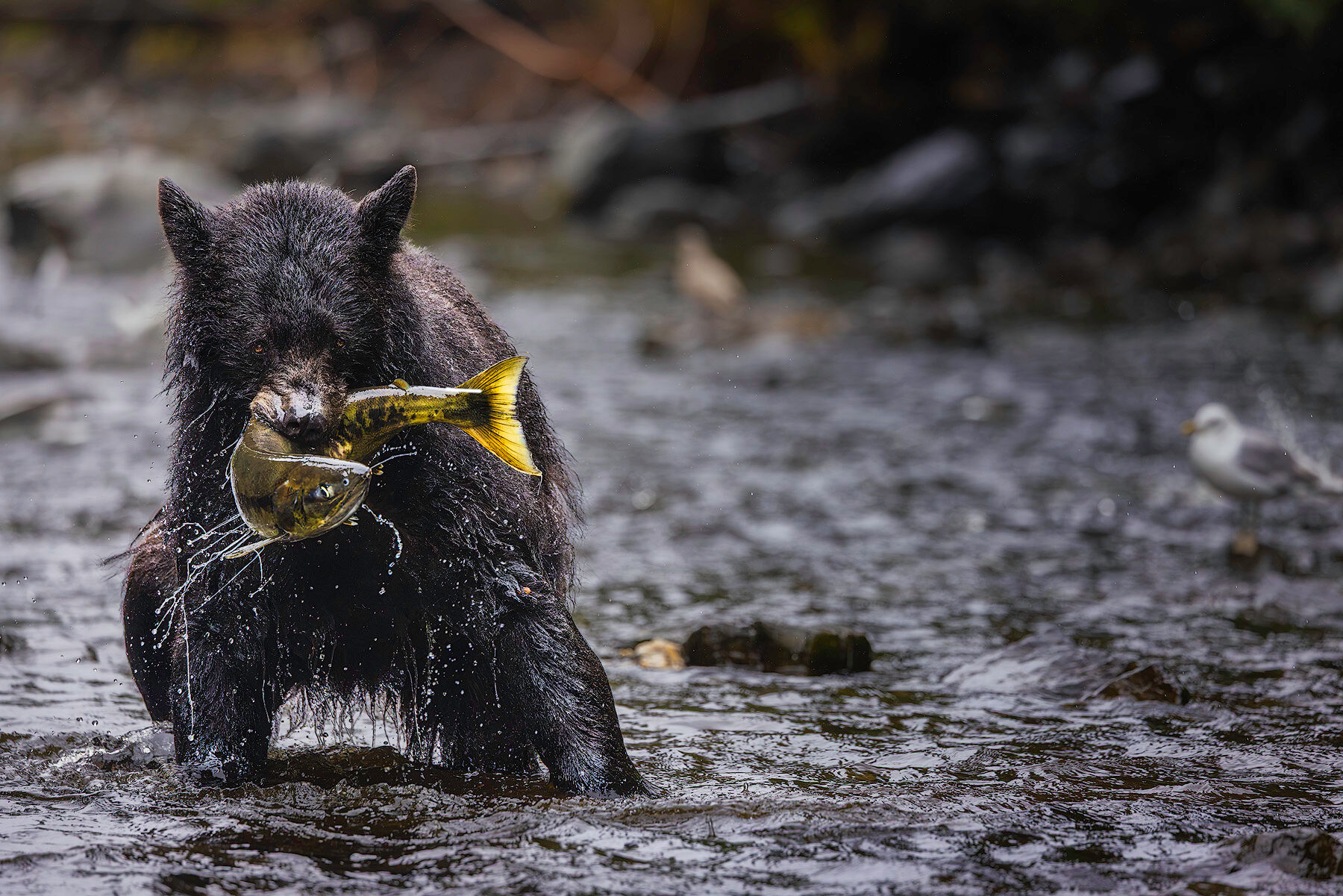
A day on land photographing black bears fishing the salmon streams, with ground transport on the island. Kake is a Tlingit village and we're there as guests.
Day 5, July 3
Kasnyku Bay and the Waterfall Coast
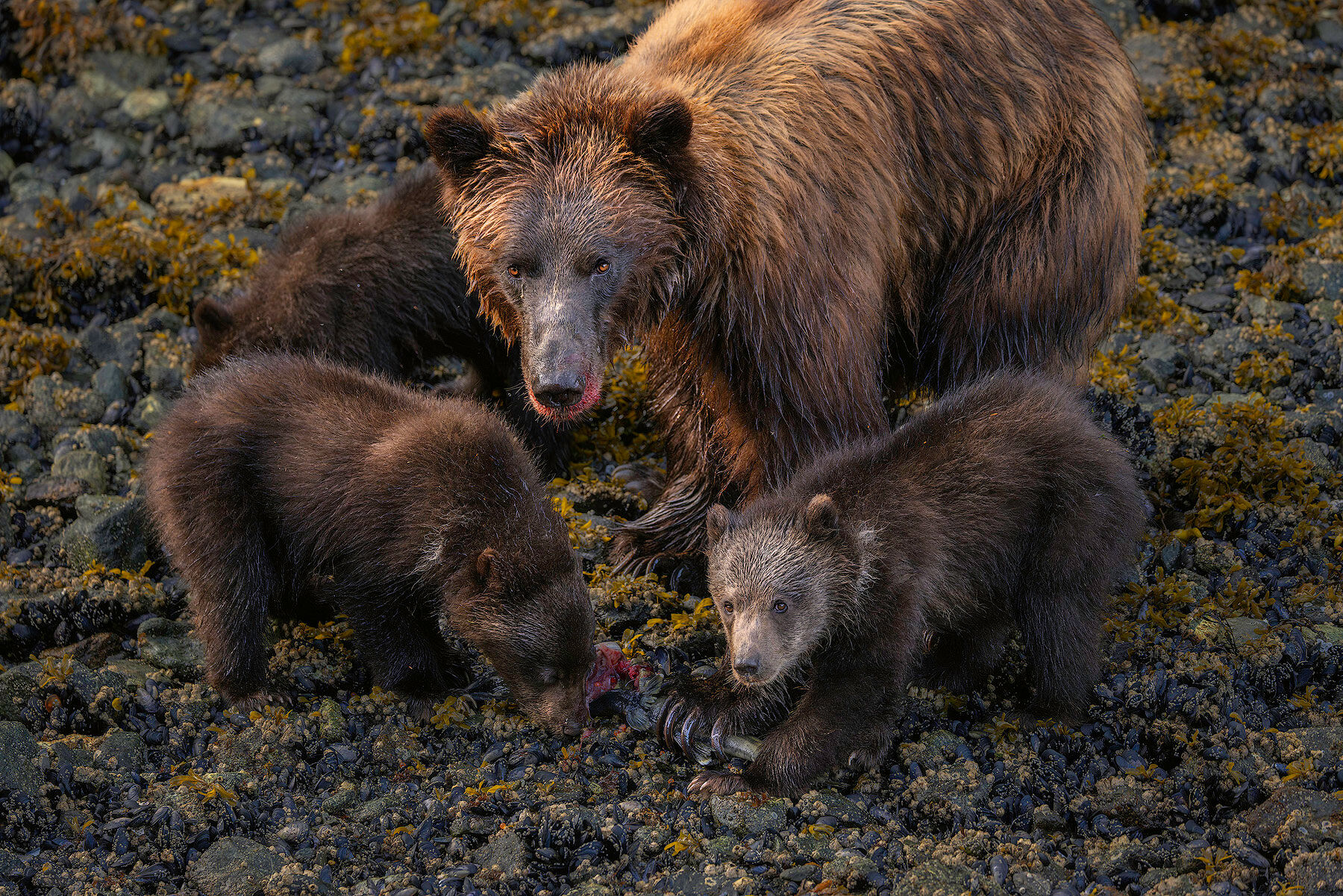
We leave Kake for Hoonah and stop in Kasnyku Bay for coastal brown bears, then run the Waterfall Coast.
Day 6, July 4
Port Frederick and Chatham Strait
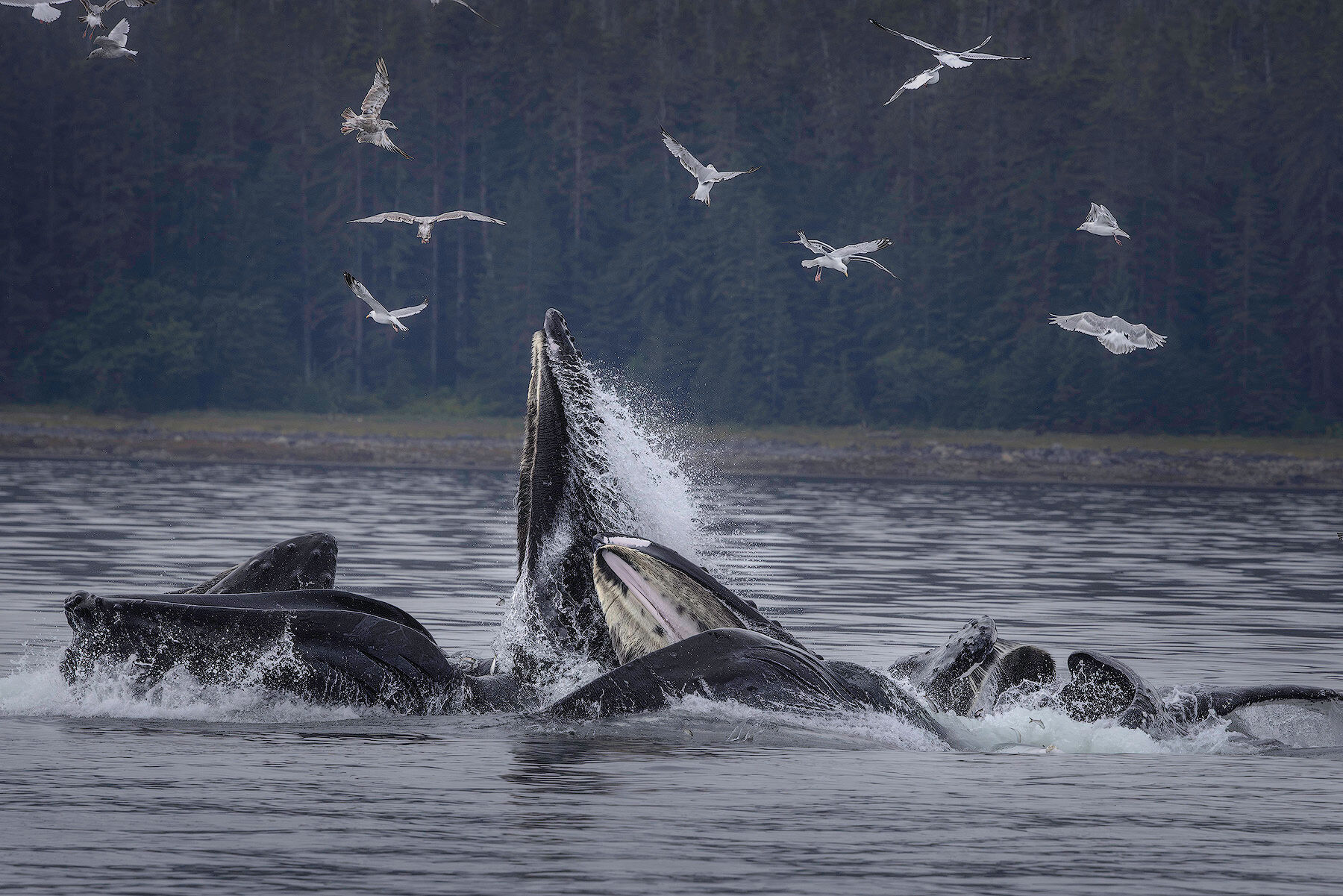
This is bubble-net water, and the hydrophone goes over the side so you can hear what's happening below the boat.
Day 7, July 5
Hoonah to Sitka
The last full day on the water, looking for humpbacks, sea otters and seabirds like puffins on the way into Sitka Sound.
Day 8, July 6
Fly home from Sitka
I name towns and open water on this page and I don't name coves, creeks or haul-outs, because the animals using them don't need more boats showing up.
THE WILDLIFE
What You Can Photograph
Humpback Whales
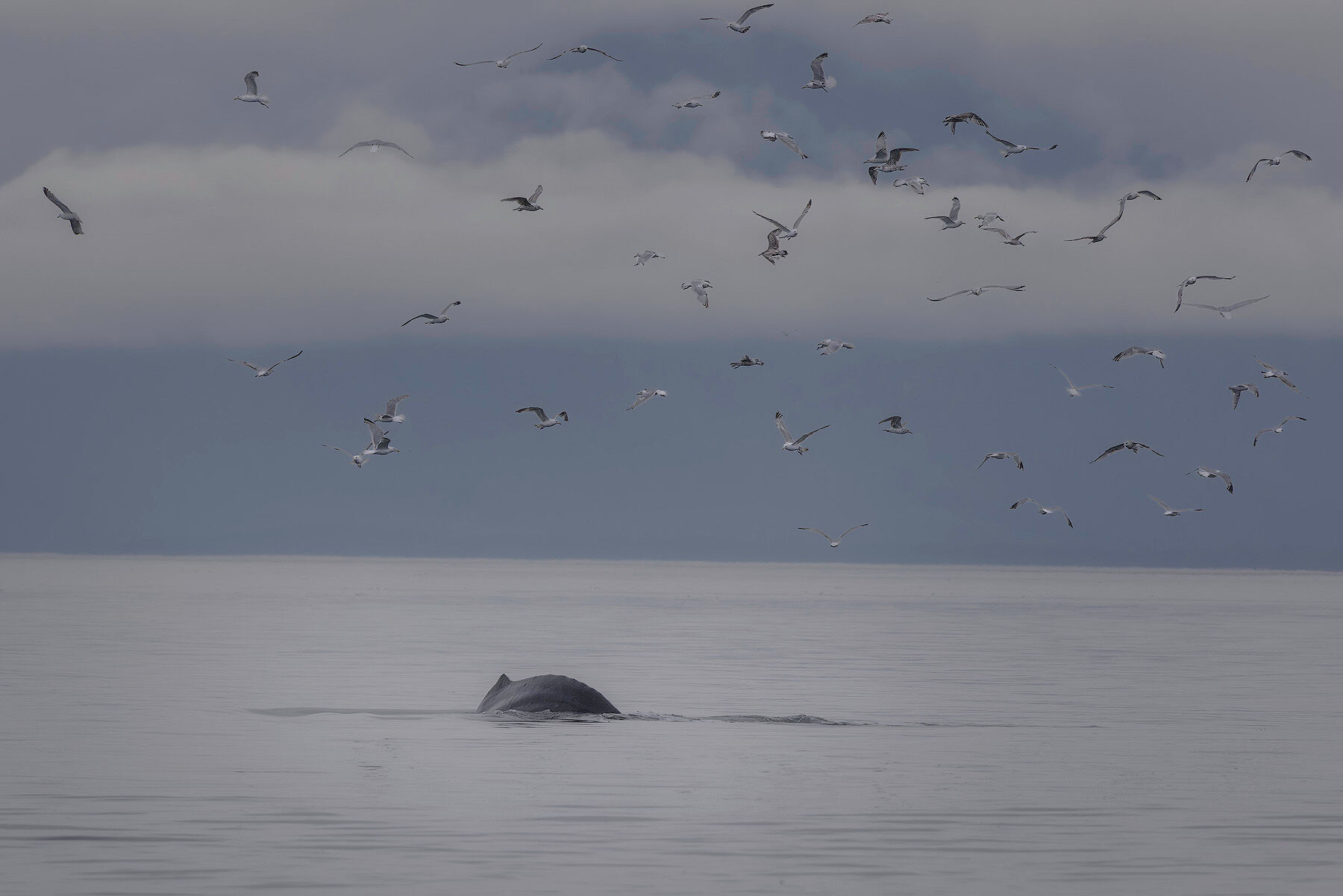
Humpback whales are the reason a lot of people look at this trip. Port Frederick is a common place for groups of humpbacks to gather and bubble-net feed, and the hydrophone lets us hear the feeding calls under the surface, which sometimes gives us a little warning before the group comes up. Orcas move through these waters too, and you never know which day they'll show.
Coastal Brown Bears and Black Bears
Bears are the other half. Black bears come out of the forest in Kake to feed on the returning salmon, and coastal brown bears use the streams and tidal flats in Kasnyku Bay. Brown and black bears both feed on salmon along the rivers and coastal streams from June through August, and this trip sits right inside that window.
Bald Eagles, Sea Otters and Marine Wildlife
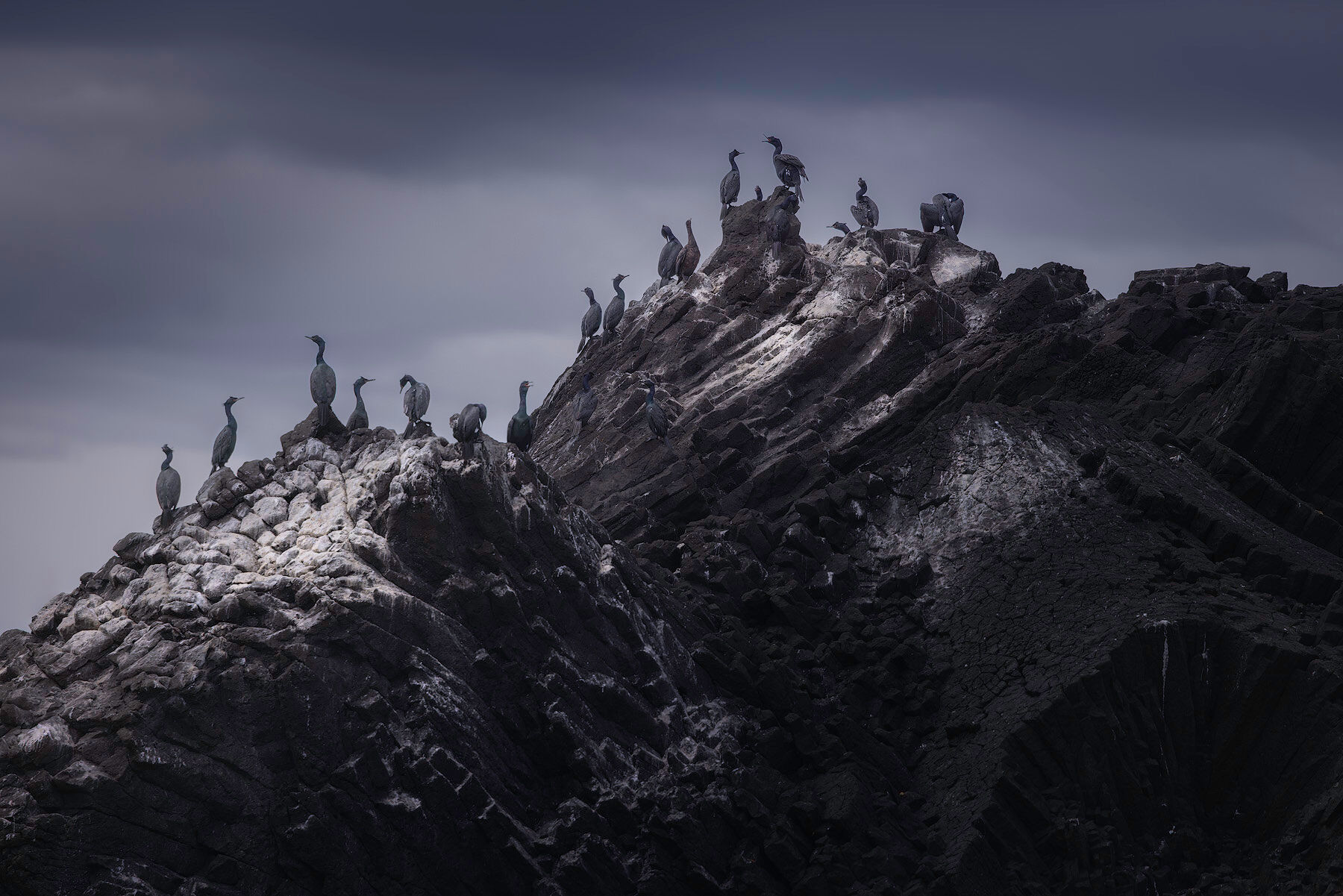
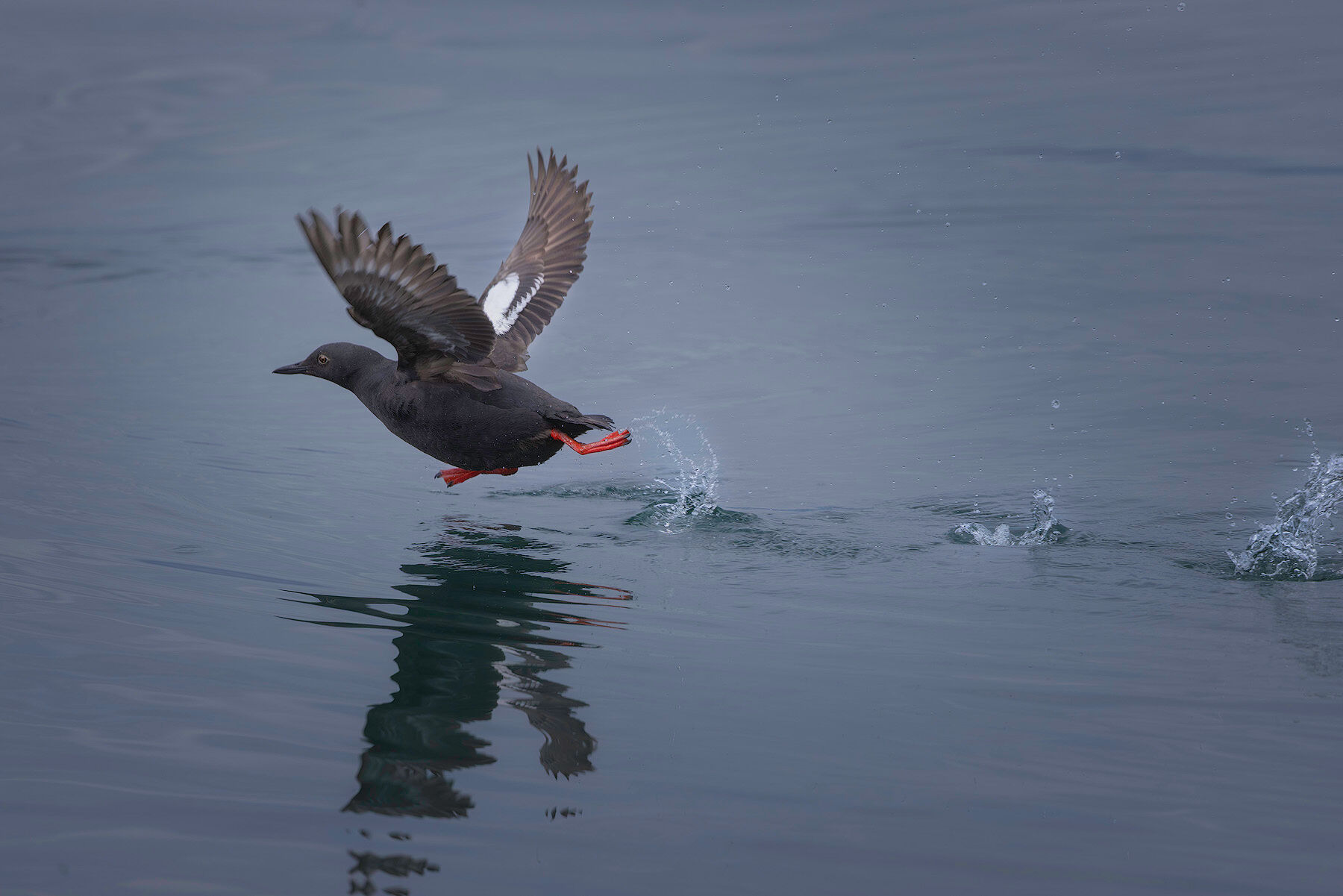
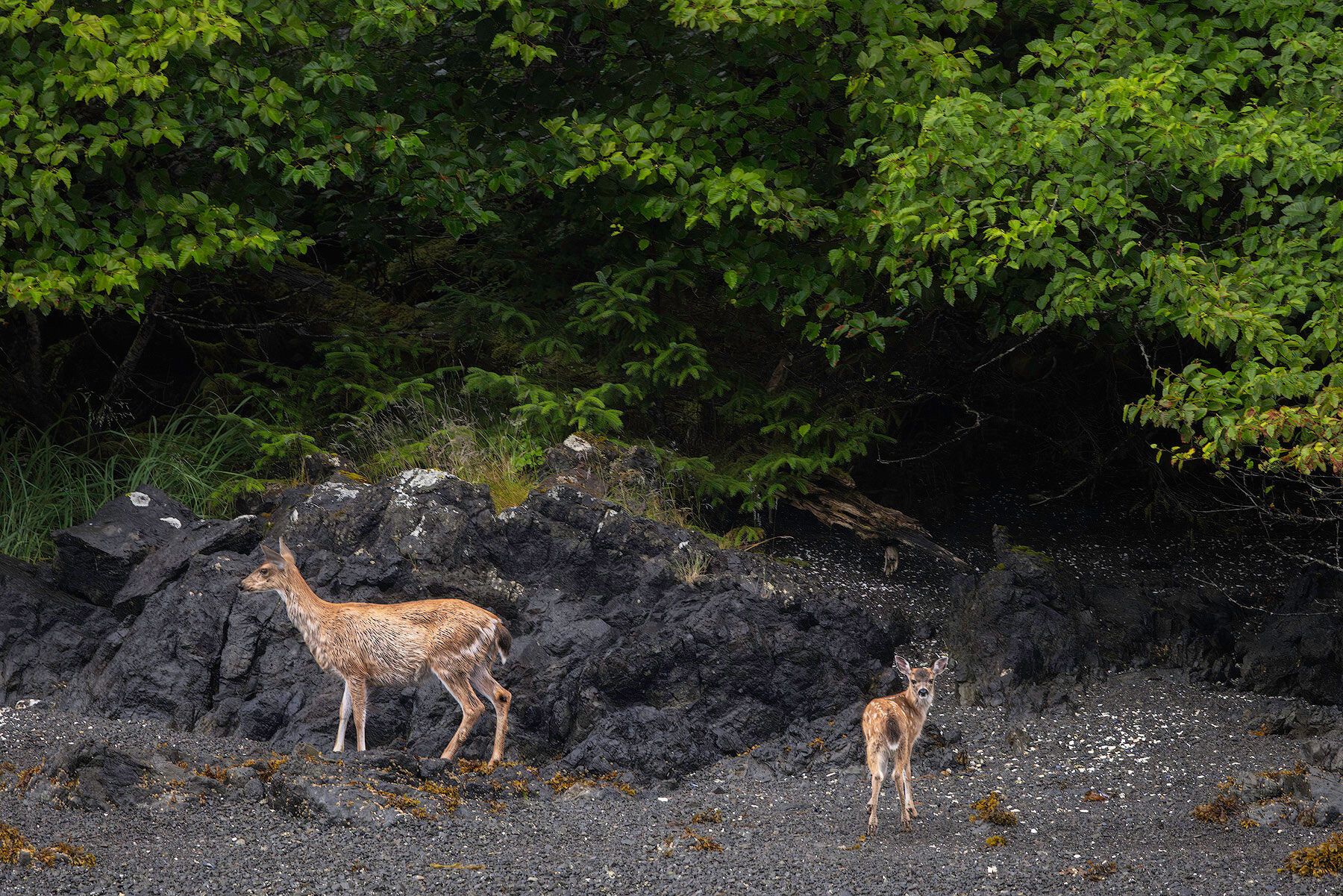
The wildlife to expect includes humpback whales, coastal brown bears and bald eagles, and beyond that you've got Steller sea lions, sea otters, harbor seals and Dall's porpoises in the straits, and bald eagles pretty much everywhere, because Southeast Alaska has one of the highest concentrations of bald eagles anywhere. The run from Hoonah to Sitka adds seabirds like puffins, murrelets and auklets. None of it is promised, and what shows up on a given day is up to the animals.
It isn't only wildlife either. Photo opportunities here include glaciers, mountains and wildlife in the same frame, and LeConte Glacier, the Waterfall Coast and the rainforest islands of the Tongass give you immersive landscape photography between animals, so you get wildlife viewing and landscape access on the same trip, and it's worth having a wider lens ready, and a long lens isn't mandatory for every frame out here.
WHY THIS WINDOW
Why Late June and Early July
There's no single right time for everything in Southeast Alaska, and the wildlife viewing season runs roughly May through September. Late June and early July puts us inside that season when the bears are on the salmon streams and the humpbacks are feeding through the summer, with long daylight hours that give you working light early and late, and the best light usually comes in the golden hour at twilight.
Wildlife doesn't run on a schedule, so read that as the window and not a forecast. What I can tell you is that we're out every day for eight days, and that's the best way I know to stack the odds in your favor.
$11,250 per person, all-inclusive
Shared room | $3,000 deposit reserves your spot
FROM THE FIELD
What These Waters Can Hold
In a single week running Sitka to Kake to Petersburg, I've seen more than seventy humpbacks, and on one afternoon a bubble-net group surfaced 51 times, after an hour of searching. That was one of only two days of bubble-net feeding that week. Bears showed up on four of the seven days, and the eagles were there every day but fat and happy in the trees rather than fishing, and one day the weather kept us off the water completely.
That was one week on this water, so read it as the kind of photo opportunities these waters can hold and not as a forecast. The full day-by-day is in my Sitka wildlife photography trip report, and if you want the background on the behavior itself, I wrote up how humpback whales bubble-net feed.
GETTING THERE
Arrival and Getting Home
Plan to be in Petersburg, Alaska on the night of June 28. Day one starts early and goes straight out to LeConte Glacier, so a flight that lands on the 29th will miss it. That night is yours to cover, so book it at Scandia House, which runs a free shuttle from the airport and keeps you in the same room for all three nights so you're not moving bags on the first morning. The trip ends in Sitka and you fly home from there on July 6.
TOUR DETAILS
All-Inclusive Price and What's Included
The price is $11,250 per person, all-inclusive for the eight days, based on a shared room, and a $3,000 deposit reserves your spot. The balance is split into three payments of $2,750, due December 1, 2026, then February 1 and March 15, 2027. That covers seven nights of lodging across Petersburg, Kake, Hoonah and Sitka, your meals on the trip, the boat every day, ground transport in Kake and Hoonah, instruction for all eight days, and an image review session in Sitka or on a scheduled Zoom call afterward.
Rooms are shared doubles, and that's because of where we are. Kake, Hoonah and Petersburg are small, remote towns with only a handful of places to stay, and there's not much lodging to go around in summer, so double occupancy is what lets the whole group stay together. Kake only has shared rooms, so everyone doubles up there. In Petersburg, Hoonah and Sitka a single room is sometimes possible for a $1,150 supplement, but it depends on what the lodging has open, so ask me before you book and I'll tell you if one's available. A single is $12,400 with a $4,150 deposit, and singles are reserved at the time of booking. If you've been out with me before, your alumni rate comes off the balance.
The Logistics
Dates
June 29 to July 6, 2027 (8 days, 7 nights)
Start and Finish
Petersburg to Sitka
Group Size
Maximum 6 photographers
Difficulty
Easy (on the boat most days, easy walking on land days)
Cost
$11,250 per person, all-inclusive, shared room
Deposit
$3,000
Payment Plan
Balance in three payments of $2,750: Dec 1, 2026, Feb 1 and Mar 15, 2027
Single Room
$12,400 with a $4,150 deposit, reserved at the time of booking
✓ Included
- ✓Seven nights of lodging across Petersburg, Kake, Hoonah and Sitka
- ✓Your meals on the trip
- ✓The boat every day
- ✓Ground transport in Kake and Hoonah
- ✓Instruction for all eight days
- ✓An image review session in Sitka or on a scheduled Zoom call afterward
✗ What's Not Included
- ✗Airfare to Petersburg and home from Sitka
- ✗Lodging and meals on the night of June 28 in Petersburg
- ✗Travel and equipment insurance (strongly recommended)
- ✗Photography gear and equipment
- ✗Tips for the captain and crew (discretionary)
- ✗Alcoholic beverages
WHO IT'S FOR
Who This Trip Is For
This Southeast Alaska wildlife photography workshop is for intermediate and advanced wildlife photographers who already know their camera and want to build their photography skills on a moving deck. You should be able to change settings without looking at the camera, and beyond that I'll help you with the part that's new.
Physical Requirements
Physically it's easy. You're on the boat most of every day, and the land time in Kake and Hoonah is easy walking with ground transport to get us there, so the only thing that takes some getting used to is standing on a moving deck for a few hours at a time.
GEAR & EQUIPMENT
Camera Gear for Photographing Wildlife From a Boat
Your Distance
100 yards
Federal rules keep boats 100 yards from humpback whales, so the law sets your distance and the distance sets your lens.
Your Lenses
A 100-500mm class zoom does most of the work, and a zoom beats a long prime on a boat because the distance to the animal changes constantly. A second body with something wider covers the glaciers and landscape, and it saves you from changing lenses on a wet deck. On the land days a 200-400mm lens is plenty for the bears.
The Weather
Bring a camera you can run in manual and versatile lenses that cover both the wildlife and the landscape. Weather in Southeast is wet and changes fast, so weather-sealed gear helps and rain covers for both bodies aren't optional. Bring more batteries and memory cards than you think you'll need, and a rain jacket and rain pants you can actually move in.
A complete packing list with clothing recommendations for Southeast Alaska's summer weather will be sent after you register.
Frequently Asked Questions
When should I arrive in Petersburg?
The night of June 28, because day one goes out to LeConte Glacier early and a June 29 flight will miss it. Book that night at Scandia House, where the group stays, so you're already in the same room for all three nights, and they run a free shuttle from the airport.
What's included in the $11,250?
Seven nights of lodging in Petersburg, Kake, Hoonah and Sitka, your meals on the trip, the boat every day, ground transport in Kake and Hoonah, instruction the whole way, and an image review session in Sitka or on a scheduled Zoom call afterward. That's based on a shared room, and a $3,000 deposit reserves your spot.
How is this different from other Alaska photo tours?
It isn't a cruise. You sleep on land in four towns and the boat carries six photographers, so it works nothing like a cruise ship or a big whale-watching tour. A dedicated photo tour gives you more time for composing images than a standard tour does, because the route follows the wildlife and if something good is happening we stay with it.
Will we see whales and bears?
I can't promise either. What I can tell you is that this route puts us in water where humpbacks feed through the summer and near streams where bears come for salmon, and we're out there every day for eight days, which is the best way I know to stack the odds in your favor.
What other wildlife might we see?
Orcas, Steller sea lions, sea otters, harbor seals, Dall's porpoises, bald eagles and seabirds like puffins, murrelets and auklets all use these waters. What shows up on any given day is up to them.
Are coastal brown bears the same as grizzly bears?
Same species, Ursus arctos. The difference is diet and geography. An Alaska grizzly living inland eats berries, roots and whatever else it can find, while the coastal brown bears in Southeast eat salmon and grow bigger on it.
How physically demanding is it?
Not very. You're on the boat most of every day, and the land time in Kake and Hoonah is easy walking with ground transport to get us there, so the only thing that takes some getting used to is standing on a moving deck.
What experience level do I need?
Intermediate and advanced skill levels both do well here, as long as you know your camera well enough to change settings without looking at it. Beyond that I'll help you with the part that's new, which for most people is shooting from a moving deck.
What lens should I bring?
A 100-500mm class zoom does most of the work, because federal rules keep boats 100 yards from humpback whales. A second body with something wider covers the glaciers and landscape. Bring rain covers for both, because this is a rainforest and the deck gets wet.
What's the weather like?
Wet and changeable. Southeast Alaska is a temperate rainforest, so plan on rain some days and dress in layers with real rain gear on top.
Can I get a single room?
Sometimes, but plan on sharing. These are small, remote towns with limited lodging, which is why the trip is built on double occupancy. Kake only has shared rooms, so everyone doubles up there. In Petersburg, Hoonah and Sitka a single is sometimes possible for a $1,150 supplement, depending on what the lodging has open, so ask me before you book and I'll tell you if one's available. A single is $12,400 with a $4,150 deposit, and singles are reserved at the time of booking.
FROM THESE WATERS
WHAT PHOTOGRAPHERS SAY
From Photographers Who've Been Out With Me
★★★★★
If you are trying to decide between going to Brooks Falls or choosing another Alaska location to photograph coastal brown bears, I would strongly encourage you to consider one of Michael Schultz's Face the Outdoors Photography trips. … I came home with photographs I love, but also with the feeling that I had experienced something really special.
I have attended many workshops in my journey to becoming a photographer. This trip to Alaska was probably one of the finest I have attended. It was organized, small enough group to benefit the talent and knowledge that Michael possesses. … Having been raised in the area he finds the best places for photographs. I am planning on attending more workshops that he promotes.
Face the Outdoors is the real deal! … He got us under clear skies every night, even if that meant a 3 hour drive (each direction)! His tips and help in framing and settings were a great learning opportunity, and the classroom portion was very helpful in learning how to process aurora pics.
He is very knowledgeable about auroras so he really knows how to put you in the best position to shoot them. I felt at ease with his relaxed style of teaching. In Norway we also had the benefit of two local photographers and guides, Klaus and Christian, who had excellent awareness of the Lofoten region and its weather patterns. … Between the three of them I learned a ton about composition, patience, and editing for impact.
Michael and the local guide David got us right on the bears every day and almost every outing (sometimes bears hide). We had the opportunity to photograph a mother and her two cubs on several occasions with many lighting and background options. Being so close to the bears while they were out on the mud flats clamming was just amazing! … I look forward to my next trip with Michael.
I took everything he taught me on our Fall 2025 Alaska workshop, balance, composition, leading lines, to a meetup at my local photography club, and … the instructor leading the critique told me they came through stronger than many of the Master of Fine Arts students' portfolios he's worked with. I honestly wouldn't be getting these shots without Michael's guidance.
Our photo tour of the Lofoten Islands was truly the trip of a lifetime. … Our caring local guides, Christian and Klaus were outstanding, deeply knowledgeable about both photography and the region they love, and knew exactly where to be for the perfect shot. … We returned home with some of our favorite images ever.
Michael's knowledge of the area, reading of the Aurora data, and ability to drive us safely in the van down gravel roads was impeccable. Alaska's weather didn't cooperate, so he had to work his butt off to find us photo opportunities. For his first workshop he knocked it out of the park. If you're on the fence, don't hesitate to book with Michael.
Face The Outdoors experience with the coastal brown bears in Alaska was fantastic! The bear viewing, photography coaching, the guide from the lodge, and the lodge itself were beyond my expectations. … I highly recommend Michael's company if you want an authentic and personalized photography experience.
Michael, Klaus and Christian were very helpful with giving technical, artistic and general advice on taking better pictures. It was a great learning experience, and I walked away with a lot of pictures, more confidence in my abilities, and a better understanding of the direction I want to take in my photographic journey.
Michael Schultz brings a unique blend of talents to this workshop. … With [his] work ethic, he continually put us in position to be wildly successful. This workshop is excellent for those looking for more than a simple tour and seeing the Northern Lights. … For that, it was beyond 5 stars.
JUNE 29 TO JULY 6, 2027
Reserve Your Spot
There are six seats on this trip. If you want to join, ask me about a seat and I'll get back to you myself.
Southeast Alaska Wildlife Photography Tour
$11,250 per person, all-inclusive
Shared room | $3,000 deposit | Six photographers max
Or reach me directly: