Lofoten Winter Photography Workshop 2028

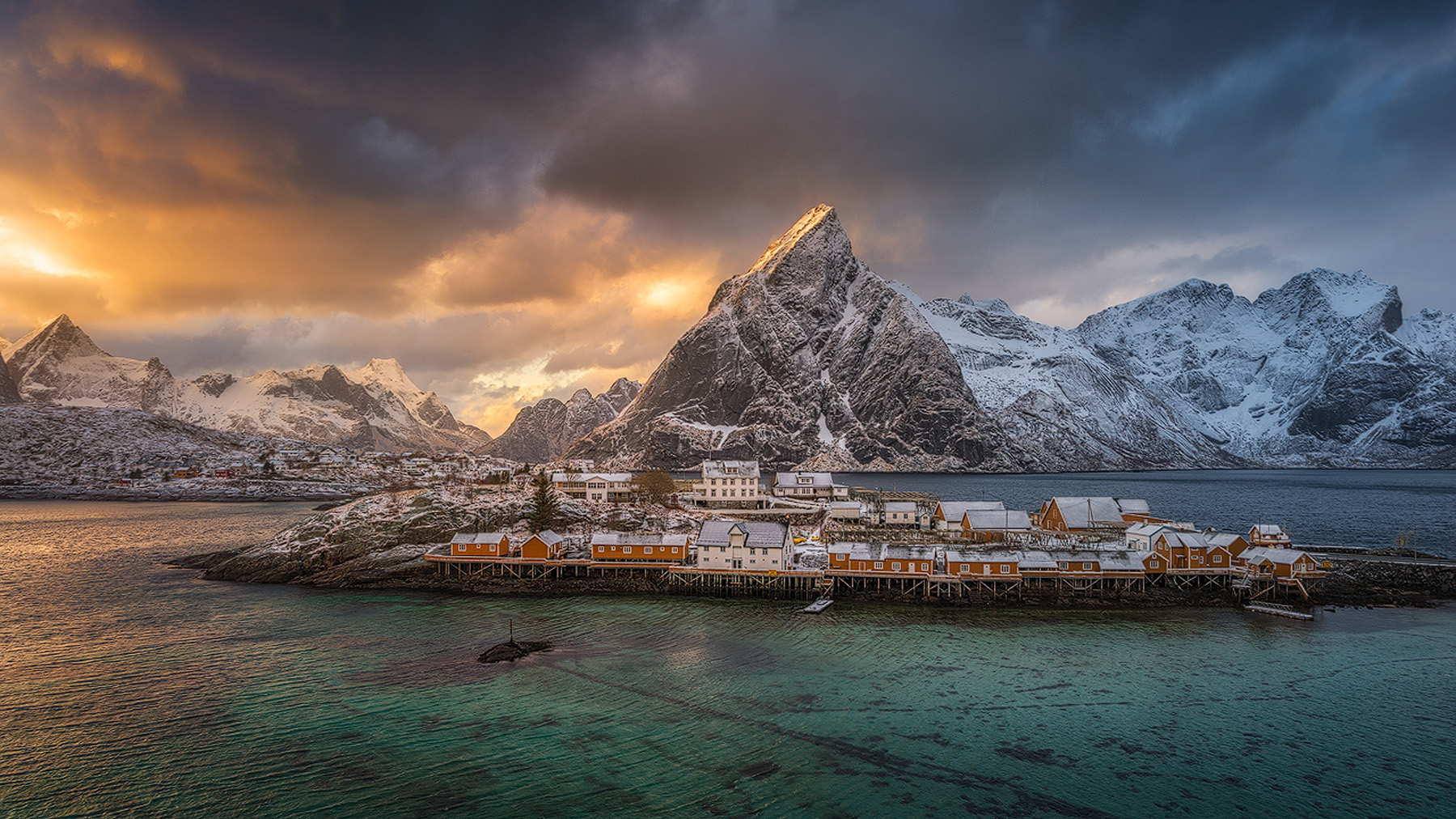
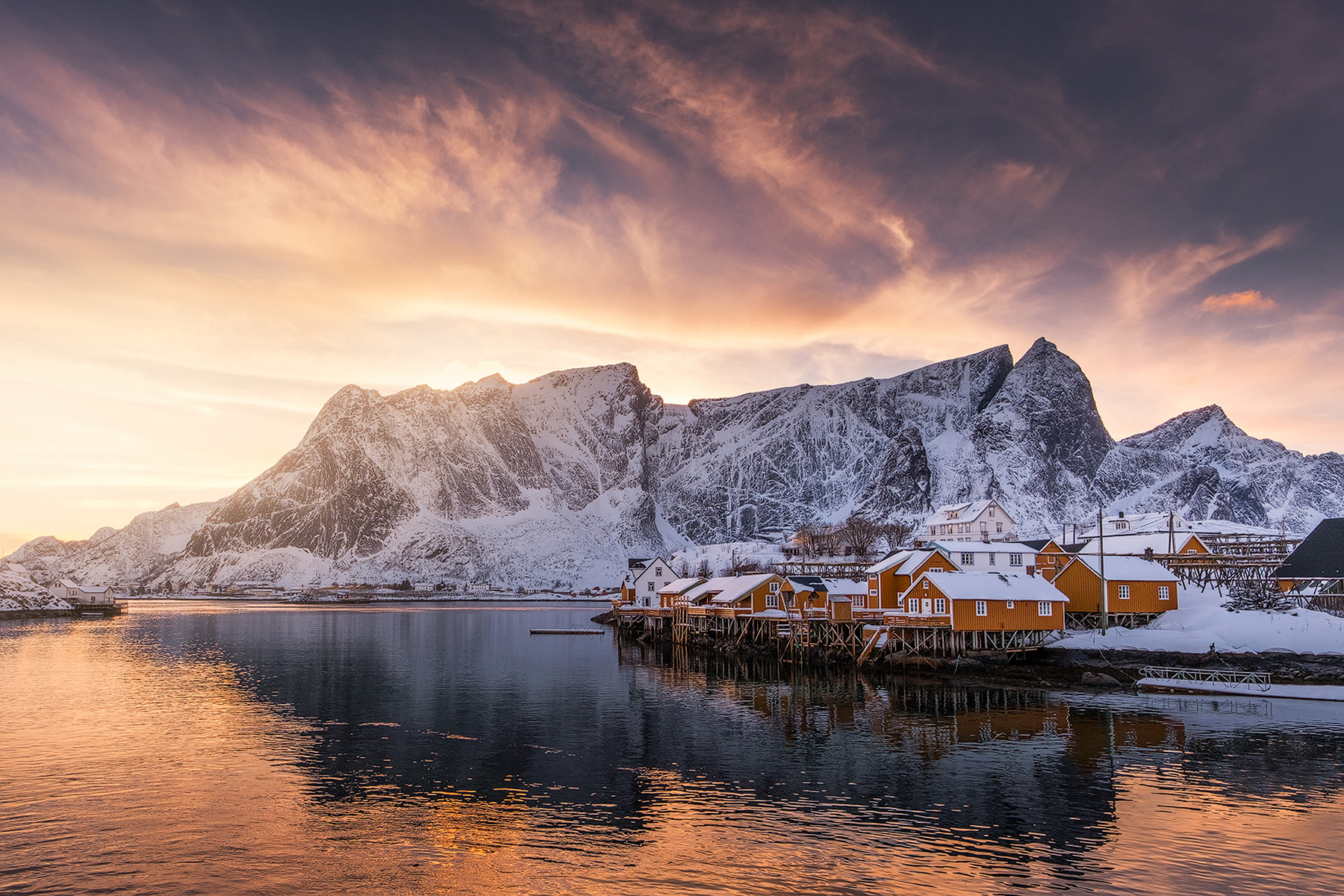
Yellow rorbuer cabins at Sakrisøy reflecting in the water under snow-covered mountains at sunset, Lofoten winter photography workshop in Norway

Lofoten Islands, Norway

Seven Nights Under the Auroral Oval in Norway's Arctic Islands

February 25 to March 3, 2028

This Lofoten winter photography workshop is seven nights in Norway's Lofoten Islands, February 25 to March 3, 2028, led by me with local guides who live and work in the islands. If you shoot landscapes and you've wanted snow on the mountains, the sea and the northern lights in one week, it's built for you, because late February is when Lofoten has deep winter snow, longer days than January and long dark nights for the aurora.

It's a small group of six to ten photographers and costs $6,900. Here's what this page covers: how the week runs, what the Lofoten Islands look like in late winter, how I teach the northern lights and the landscape, what's included in the price, and what to bring.

The Workshop

$6,900 per person, shared room

A $1,725 deposit reserves your spot

Dates

February 25 to March 3, 2028, seven nights

Group

Six to ten photographers

Single Room

$7,400 with a $1,850 deposit

Ask Michael a question

★★★★★  5.0 · 34 five-star reviews


The Week

This is the same route I ran in October 2025, all of it in Lofoten. The actual plan shifts day to day with the weather, the light and the tides, but these are the anchor stops the week rotates through: Reine, Hamnøy and Sakrisøy in the south, the beaches at Uttakleiv and Skagsanden, and fjords like Mærvoll and Solbjørn on Vestvågøy.
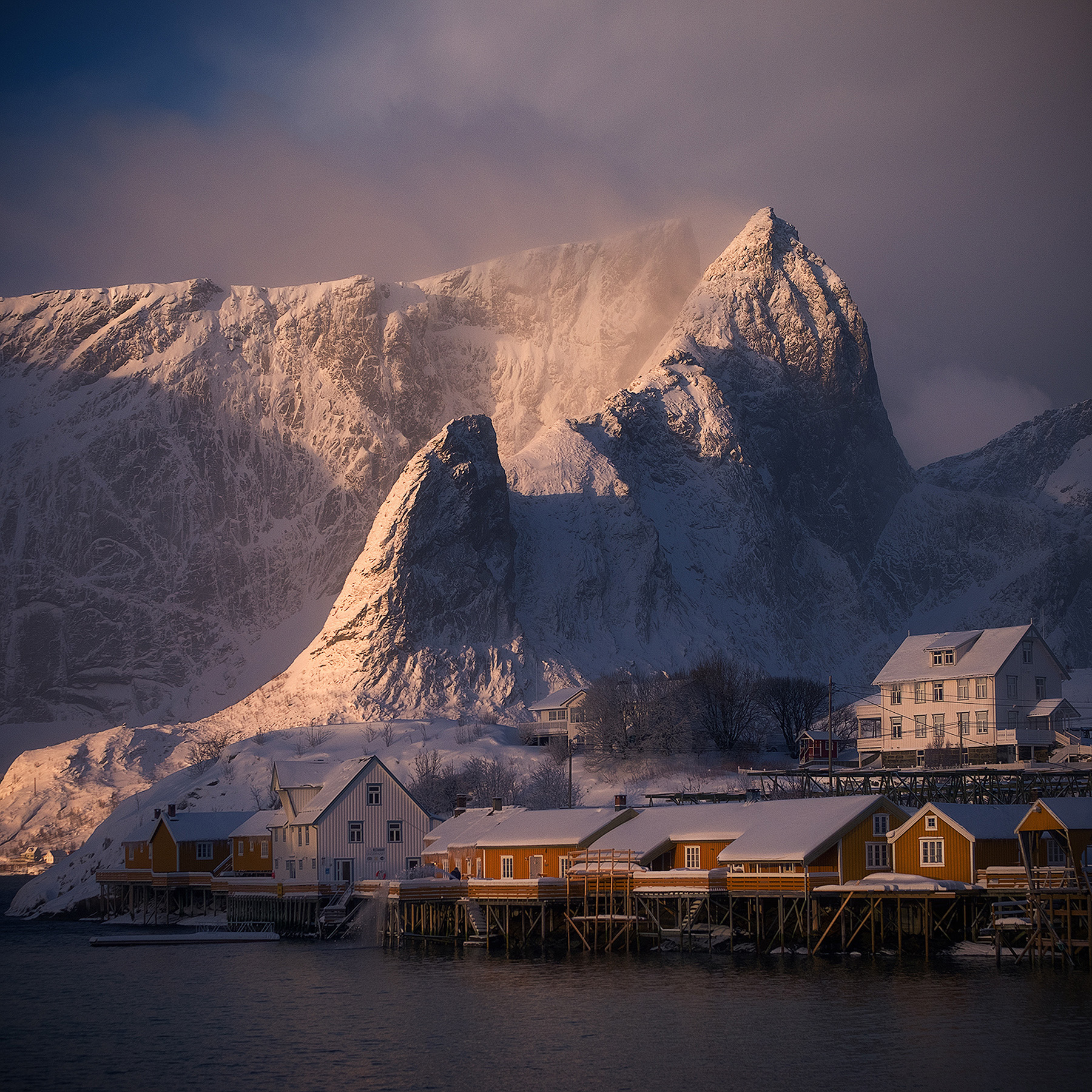
Snow-covered peaks lit by low winter sun above houses in a Lofoten village, on the route of the Lofoten winter photography workshop

Arrival, February 24, 2028:Fly into Harstad/Narvik Evenes Airport (EVE) the day before the workshop starts and book your own room in Narvik that night. The journey out to the islands starts the next morning.

February 25 to March 3:Seven nights in fishermen's cabins and hotels across the Lofoten Islands, with each day planned around the weather and the light.

Departure, March 4, 2028:Fly home from Evenes (EVE).


The Lofoten Islands in Winter
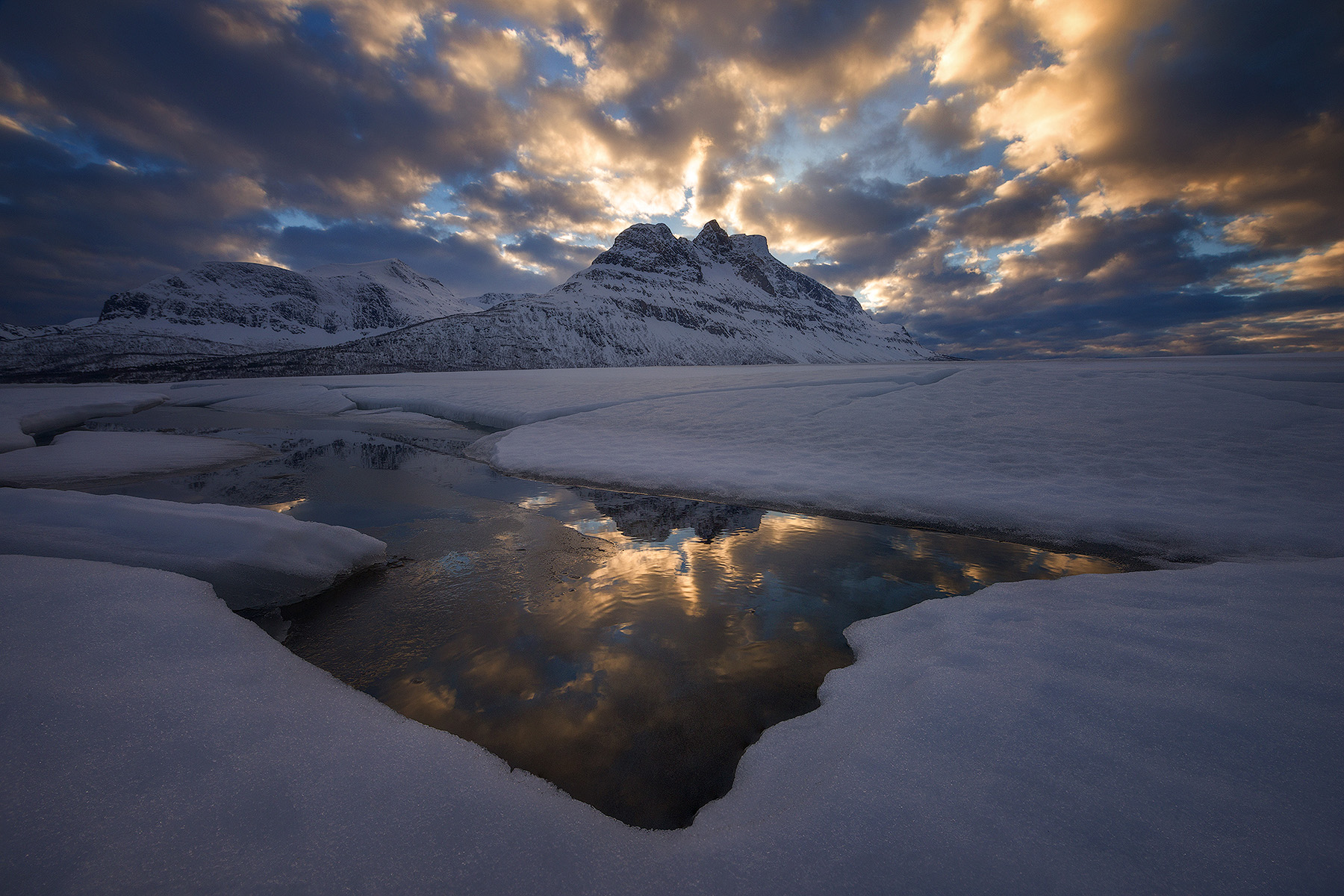
Golden storm clouds reflecting in open water on a snow-covered shore below a mountain in Lofoten, Norway in winter

The Lofoten archipelago sits off the coast of Northern Norway, well above the Arctic Circle, and they're about as close to a photographer's paradise as I've found outside of Alaska. The mountains rise almost straight out of the sea, so you get towering mountains, rugged coastlines and dramatic seascapes in the same frame, and in winter all of it has snow on it. We'll work the fjords too, where the water is calm enough for reflections of the peaks, and a lot of the week is about being in the right location when the light shows up. If you've photographed Iceland in winter, Lofoten has a lot of the same feel, with the mountains packed much closer to the sea.

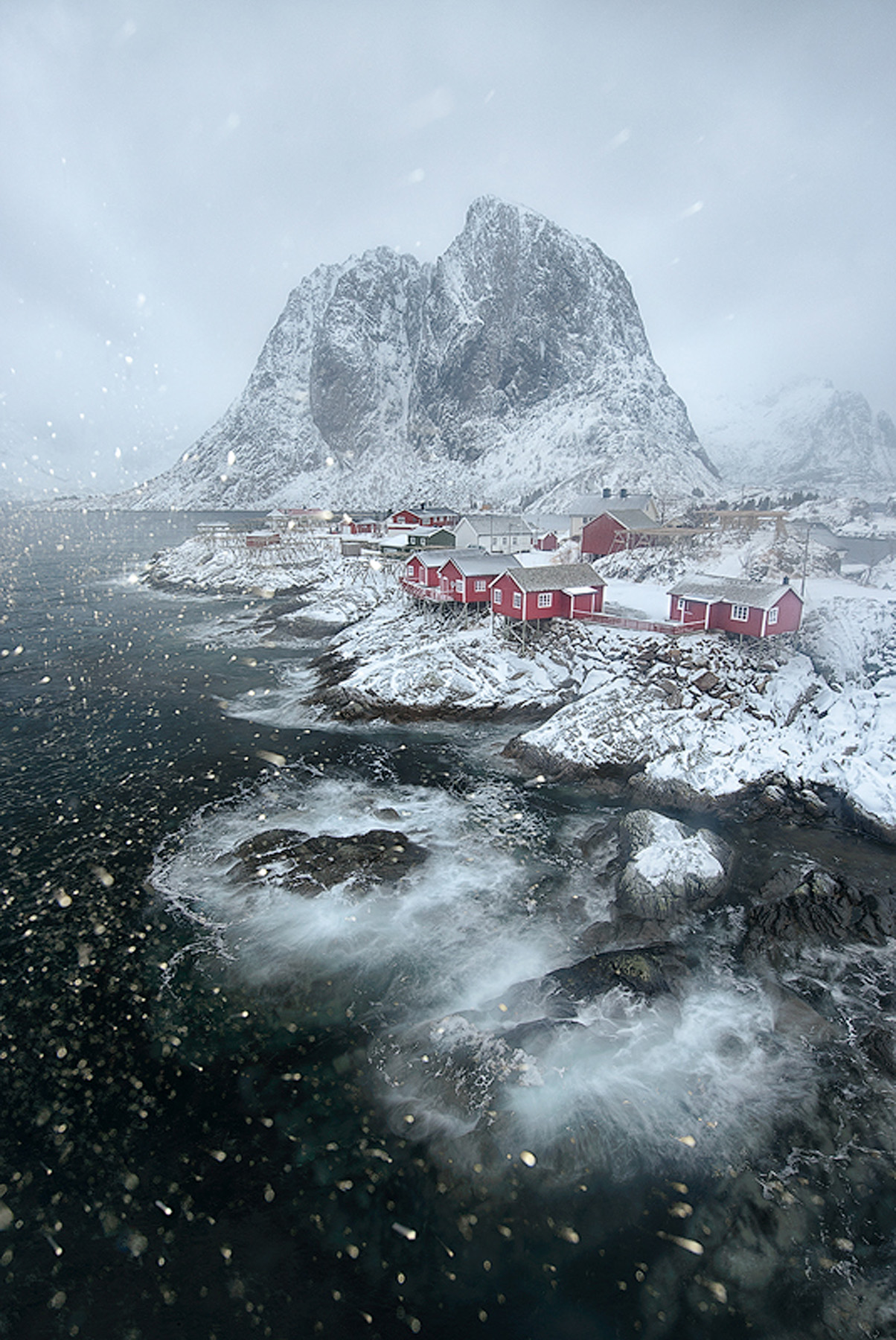
Lofoten's best-known winter locations are the traditional fishing villages and the beaches. Reine and Hamnøy are the villages most people picture, with red fishermen's cabins sitting on the water under the peaks and Olstind reflecting in Reinefjord, and Sakrisøy, between them, has the ochre and yellow cabins. Nusfjord is one of the oldest fishing villages in the islands. On the outer coast, beaches like Skagsanden beach, Uttakleiv and Haukland have golden sand running straight into the Arctic Ocean, and in winter the waves, the snow on the sand and the reflections in the wet beach give you a lot to work with. Which of these we shoot, and when, depends on the weather and on what we're seeing that morning, and there are a few favorite places along the way that most visitors never find.
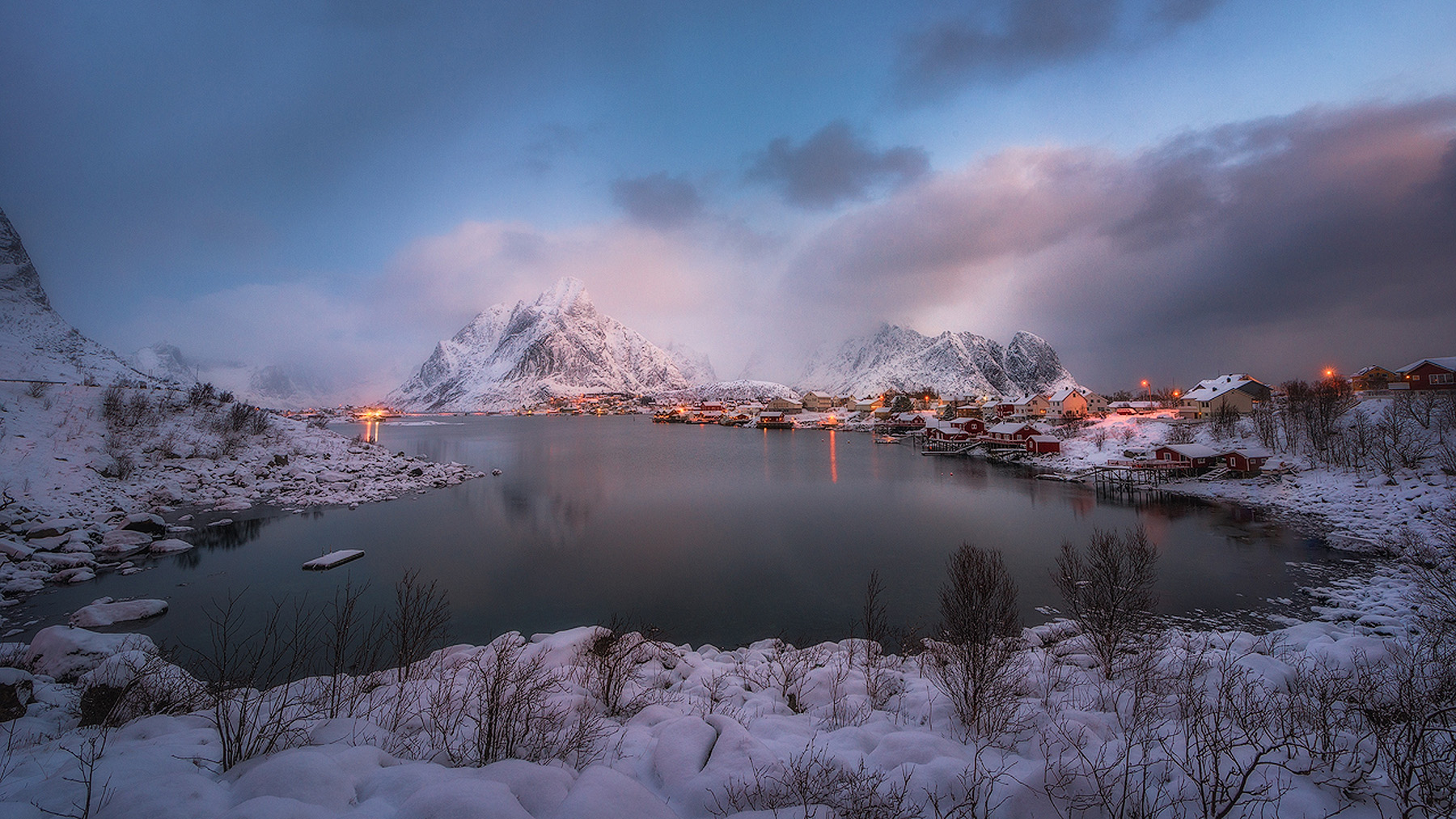
Reine fishing village in Lofoten at dawn in winter, with snow-covered peaks, glowing cabin lights and a calm fjord
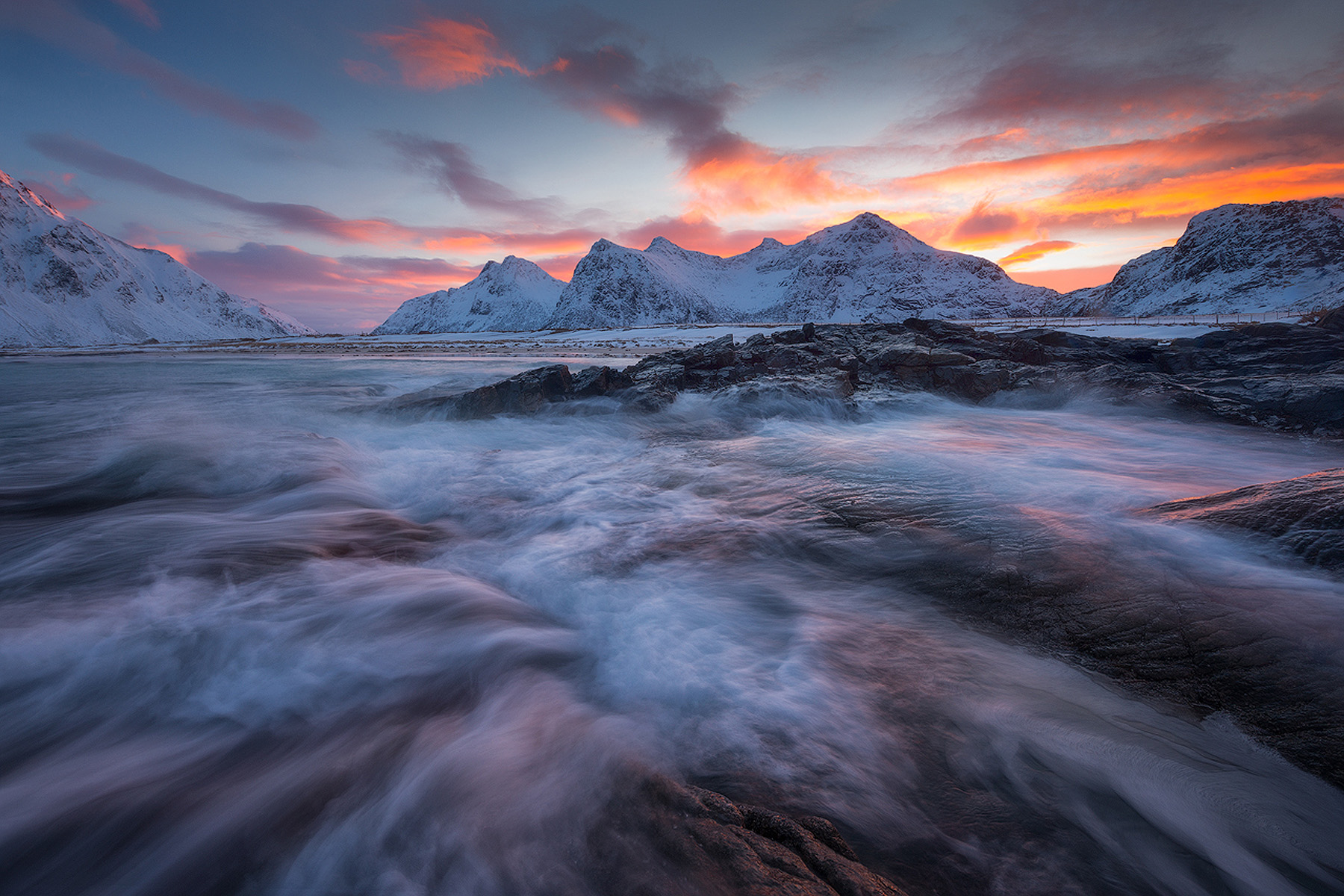
Long exposure of waves washing over rocks under a pink winter sunset with snow-covered peaks in Lofoten, Norway

What makes the light here different is the latitude. In late winter the sun stays low in the sky all day, so the golden hour and the blue hour stretch out much longer than you're used to at home, and the light on the snow and the mountains can stay good for hours instead of minutes. Storms and rain roll through and clear skies follow, and some of the most amazing light of the week comes right as a storm is breaking up, so every change in the weather is another photographic opportunity.

Why Late February

The winter months, January through March, are when Lofoten has snow down to the sea, and late February into early March is the part of that window I picked on purpose. January has the long blue twilight, but the days are short. By late February the days are longer, the snow is usually at its deepest and the nights are still long and dark enough for the northern lights.

Winter in Lofoten is an adventure on its own, and the weather is variable, and there's no week of the year that guarantees clear skies, so read this as the window and not a forecast. What I can tell you is that I have you out every day for seven nights and we go where the weather is breaking, and that's the best way I know to stack the odds in your favor.


Northern Lights in Lofoten

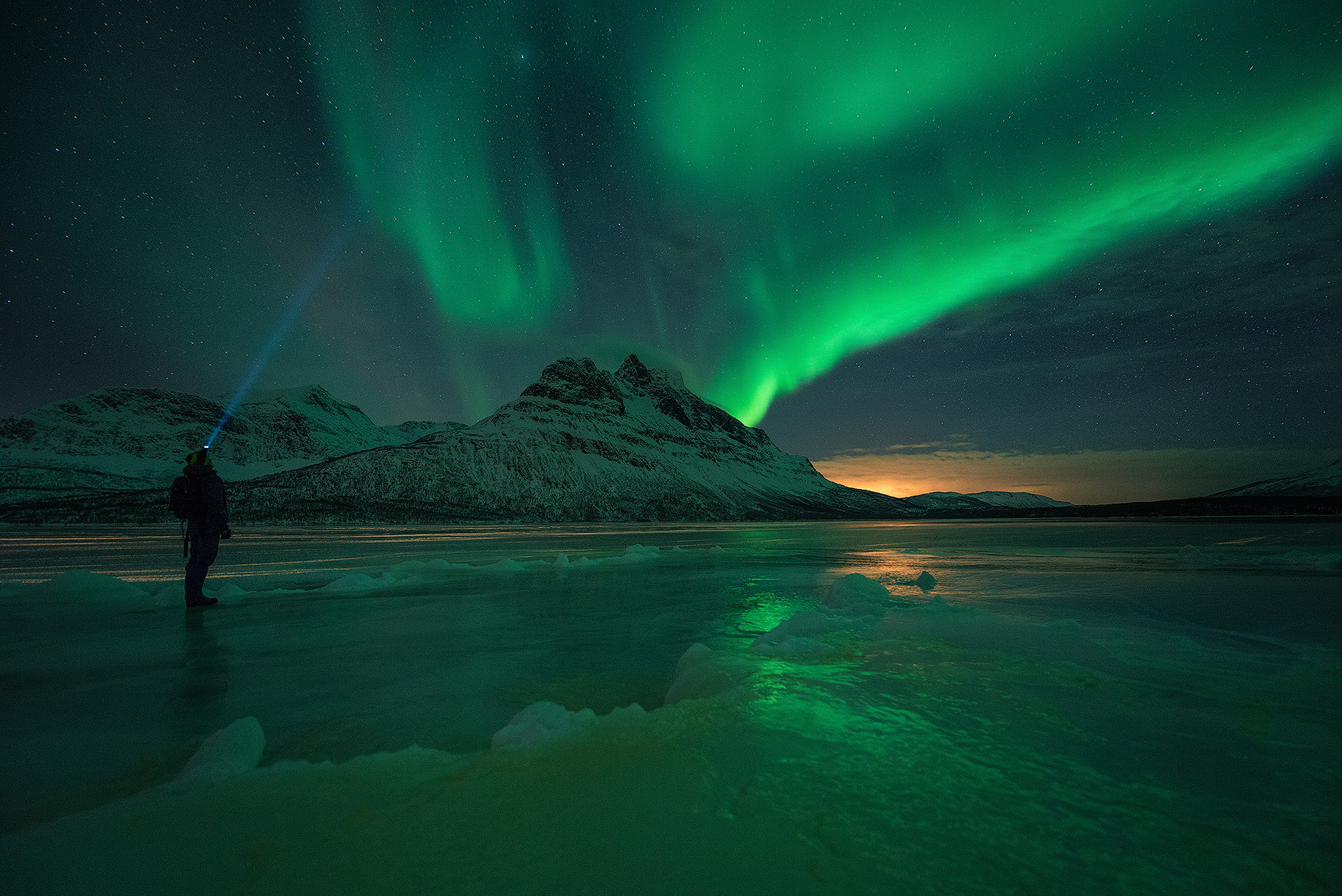
Photographer standing on a Lofoten beach under a green arc of northern lights during a winter photography workshop in Norway

The aurora borealis is the other reason people come to Lofoten in winter. The auroral oval is the ring around the top of the earth where the aurora is most active, and the Lofoten Islands sit at about the 68th parallel, which puts them under it instead of south of it. That matters, because when the aurora is active here it can be right overhead and not just a glow low on the northern horizon. It also means a low Kp number doesn't rule out a good night. I get asked about Kp on every aurora trip I run in Alaska, and at this latitude it just isn't the number to watch. Clear skies are what matter, and a lot of our night planning is chasing clear sky, the same way I do it at home in Alaska.

I can't promise the aurora on any given night, and nobody honestly can. What I can tell you is that late February and early March give you long nights under the oval, we go out when it's clear, and we know which spots have open sky to the north.

Snow changes how you photograph the aurora. A bright display lights the foreground on its own, and the snow reflects that light back, so the mountains and the beach hold detail even without the moon. If the moon is up, it lights the whole landscape and lets you shoot shorter exposures at a lower ISO, and if it's down, faint displays stand out more against a dark sky. I'll show you how to use both.
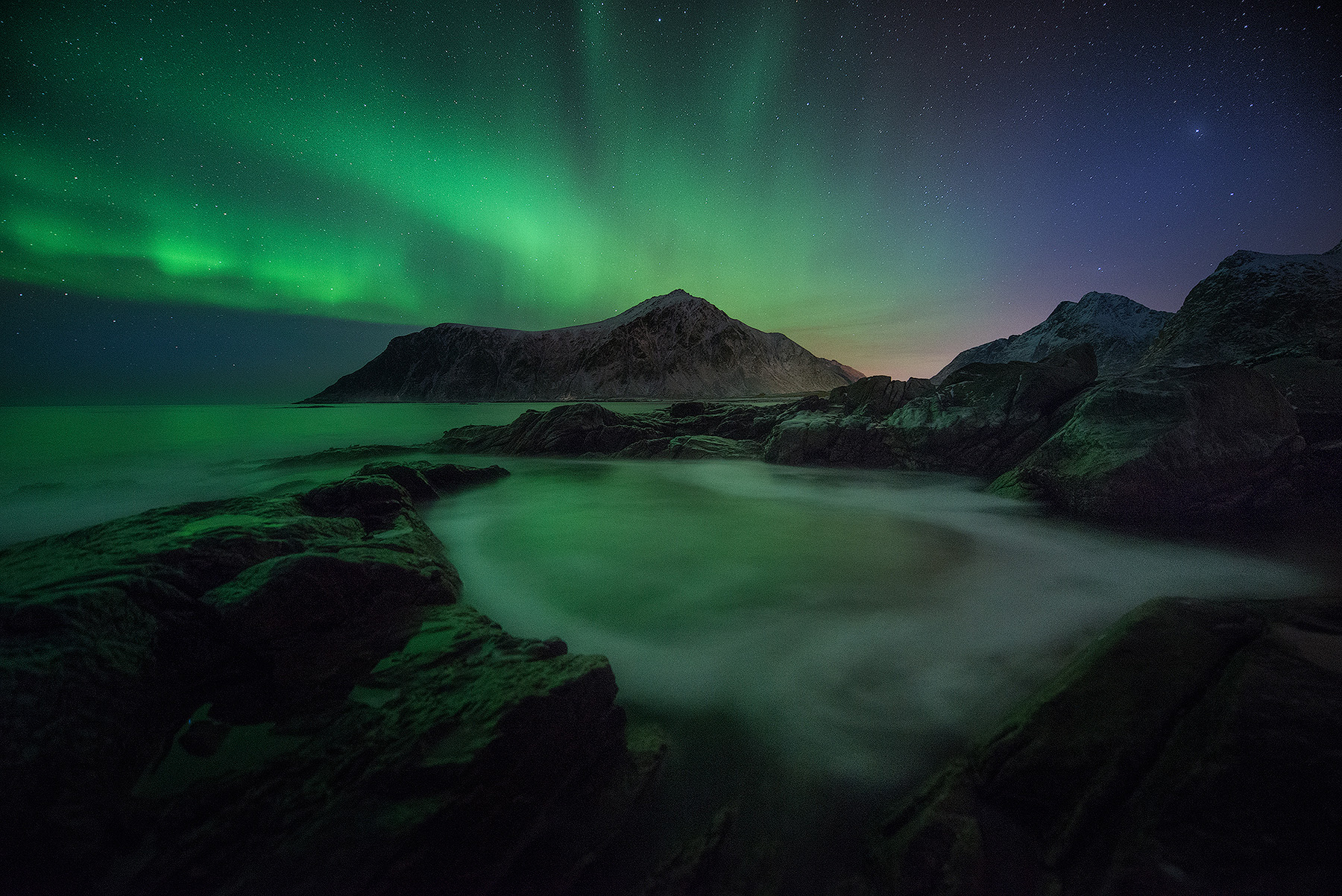
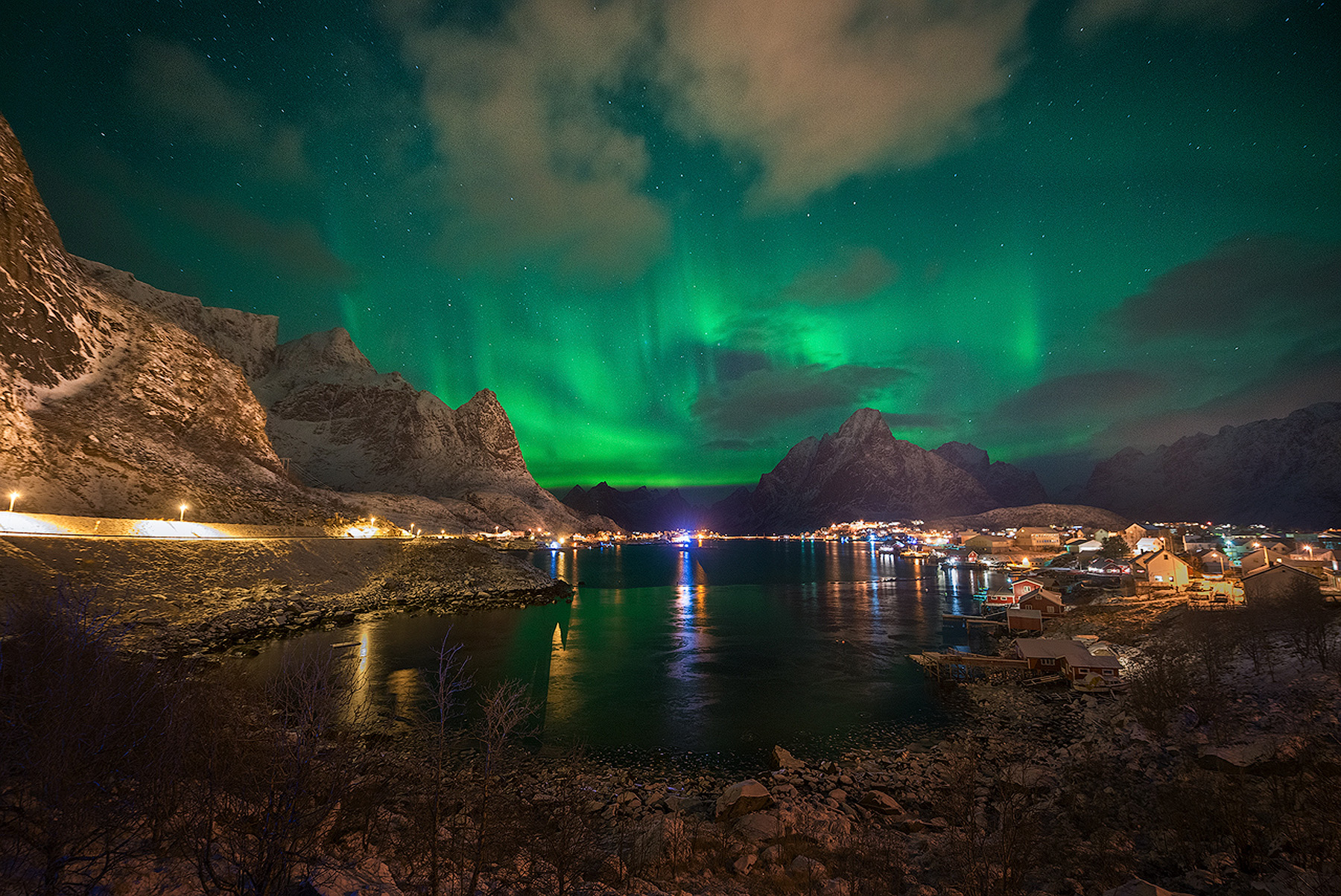
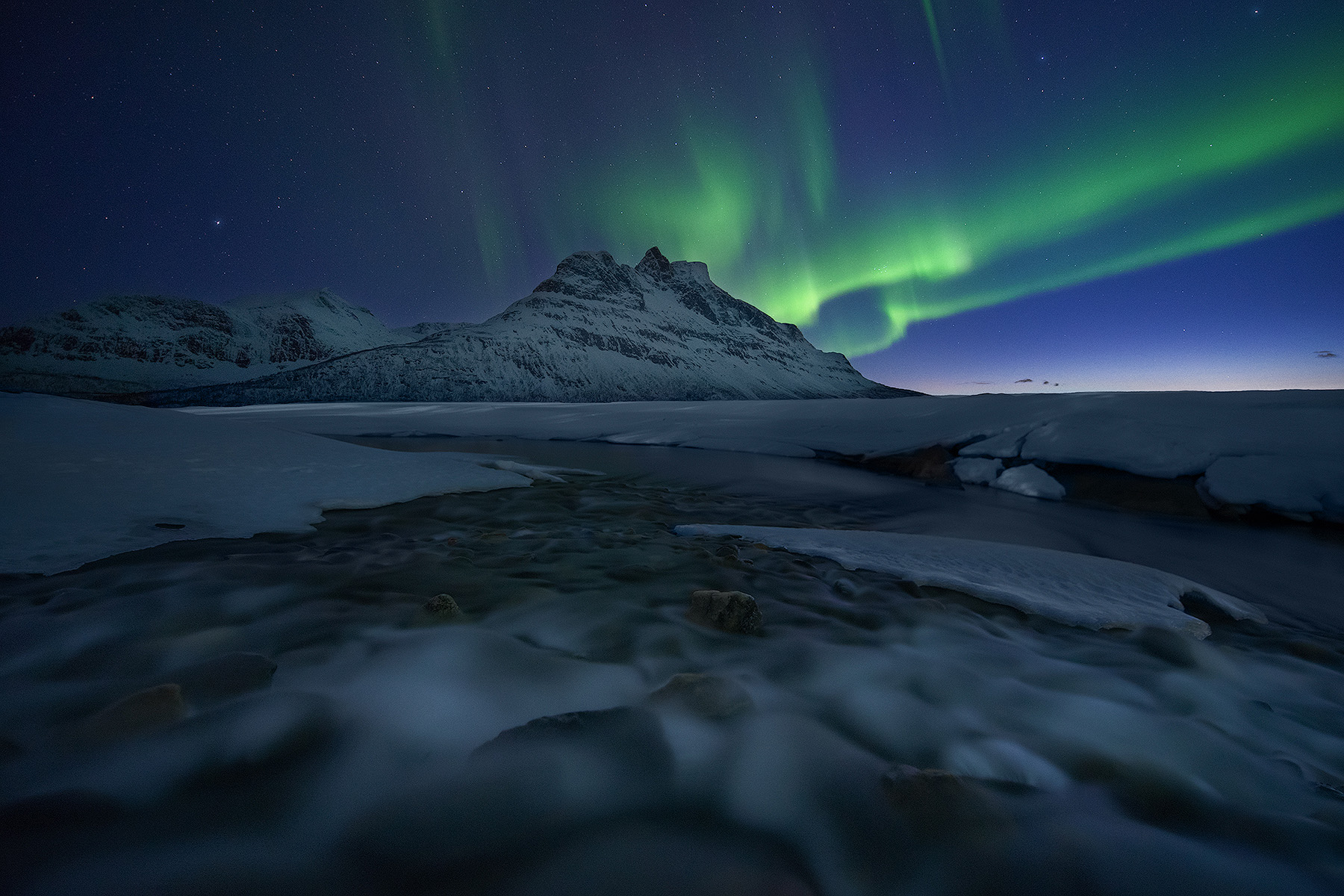
Northern lights over snow-covered mountains reflecting in a tidal pool in Lofoten, Norway on a winter aurora photography workshop
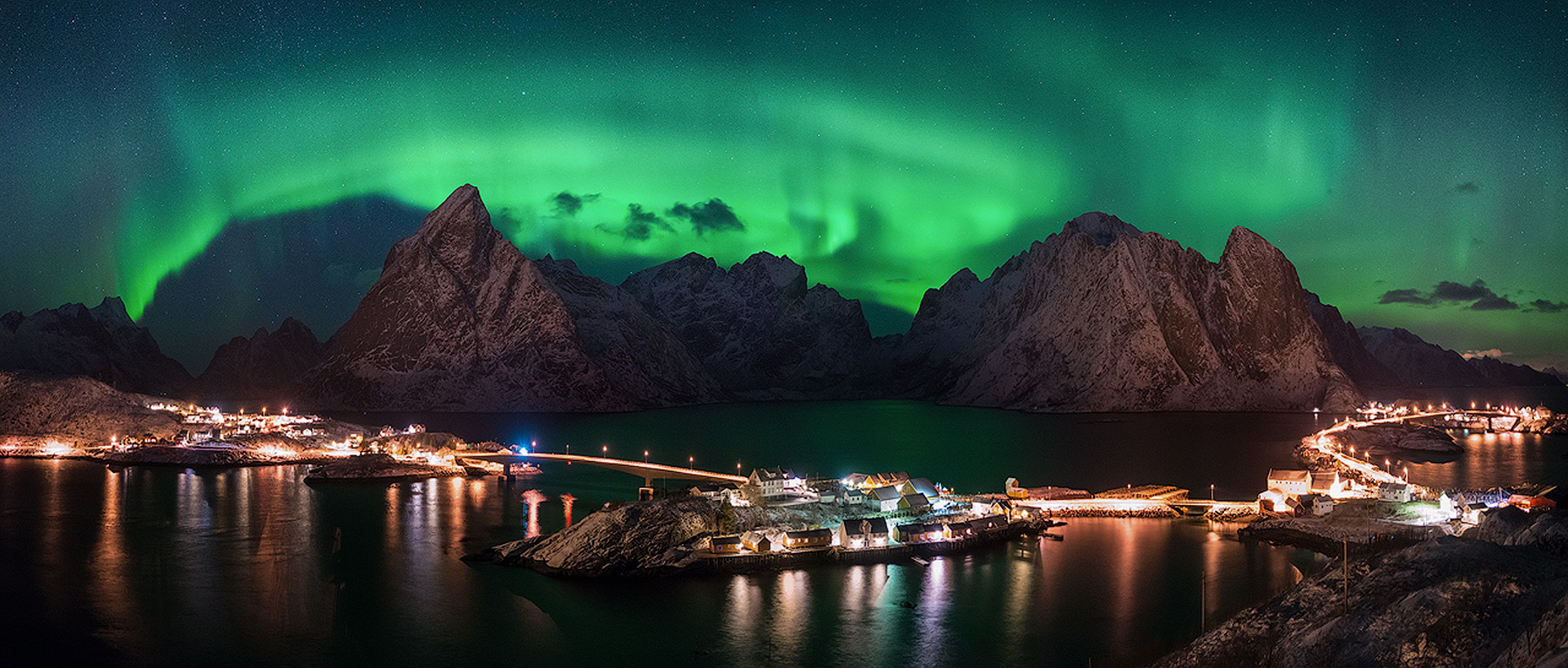
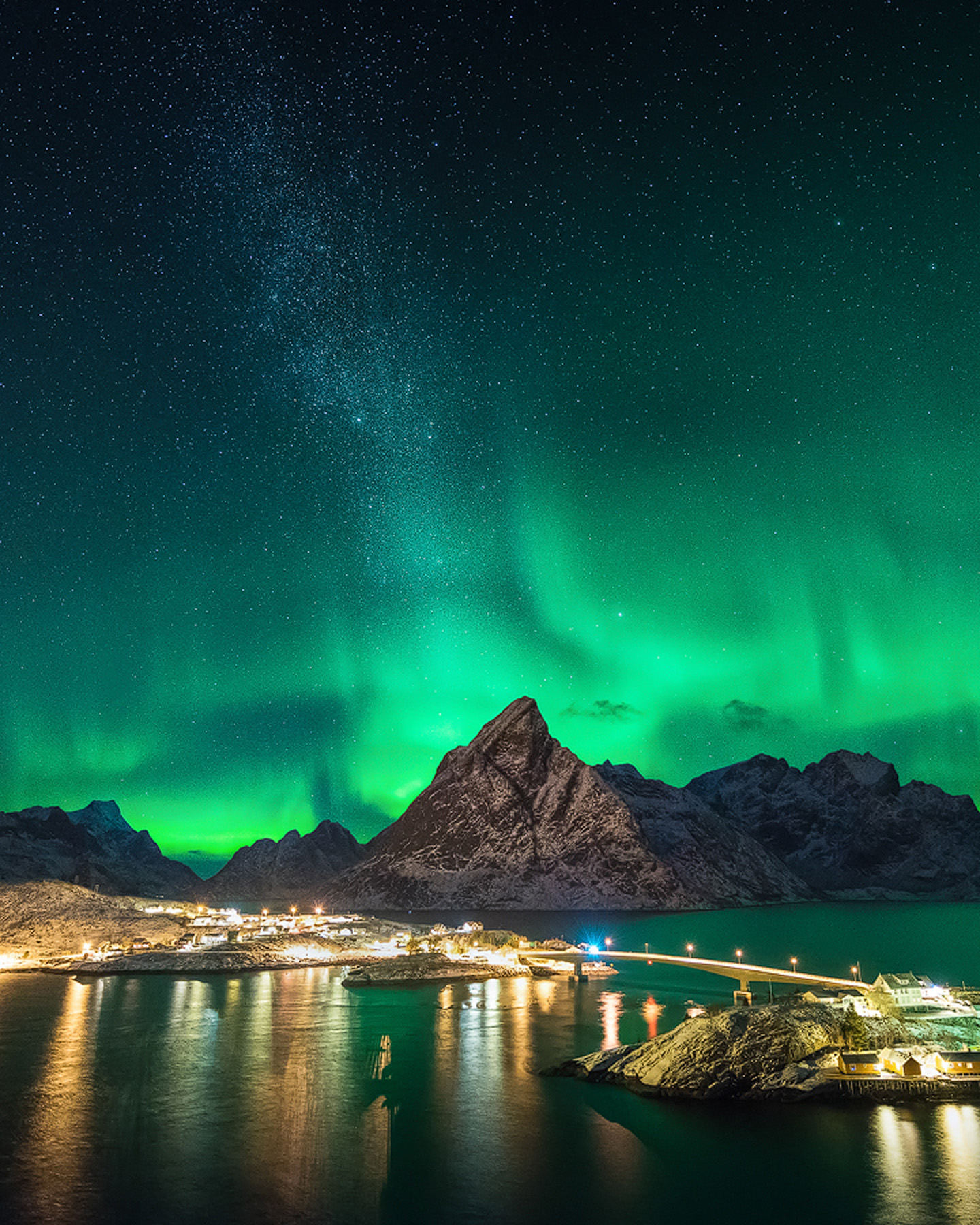
Northern lights over a Lofoten harbor village and mountains on a winter night during a photography workshop

FREE DOWNLOAD

My guide to photographing the northern lights

41 pages on the settings, focus, gear and cold-weather prep you need to sort out before the sky starts moving.

Panorama of the northern lights over a Lofoten fishing village and its lights on a winter night in Norway
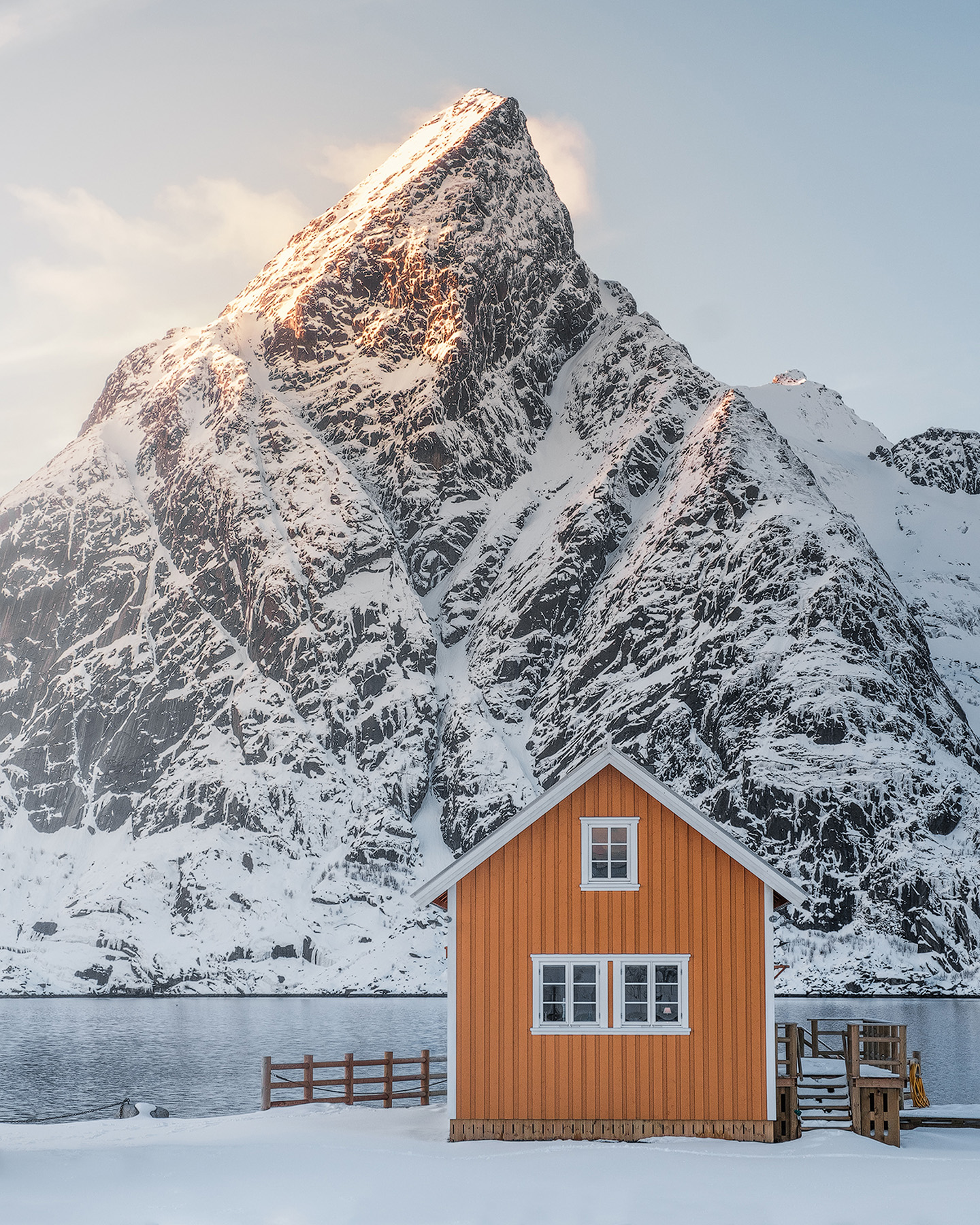
Orange fishermen's cabin at Sakrisøy below the snow-covered peak of Olstind in Lofoten winter light
Golden sunrise over snow-covered Olstind and the yellow rorbuer of Sakrisøy in Lofoten in winter
Green northern lights and the Milky Way over Olstind and the lights of Sakrisøy village in Lofoten
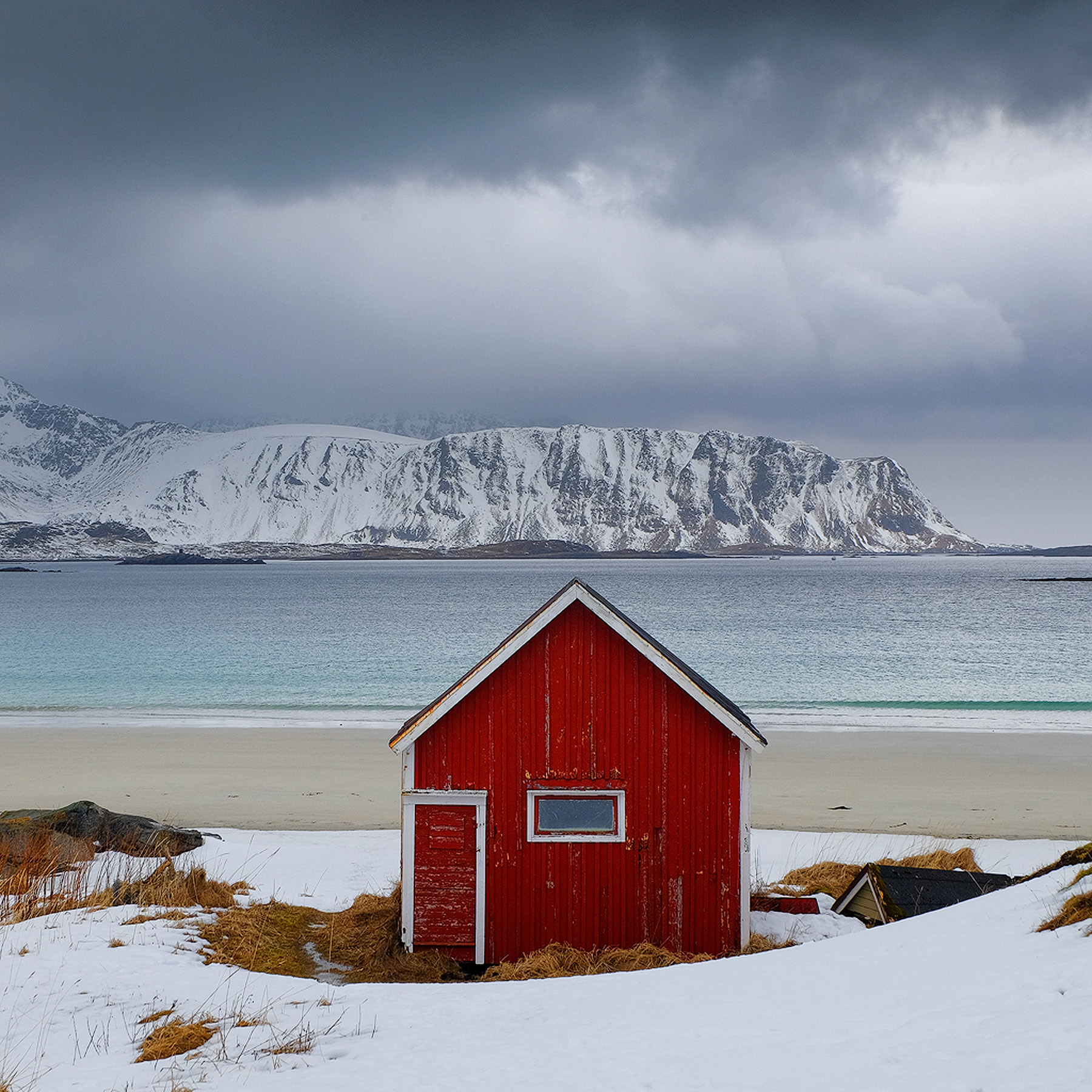
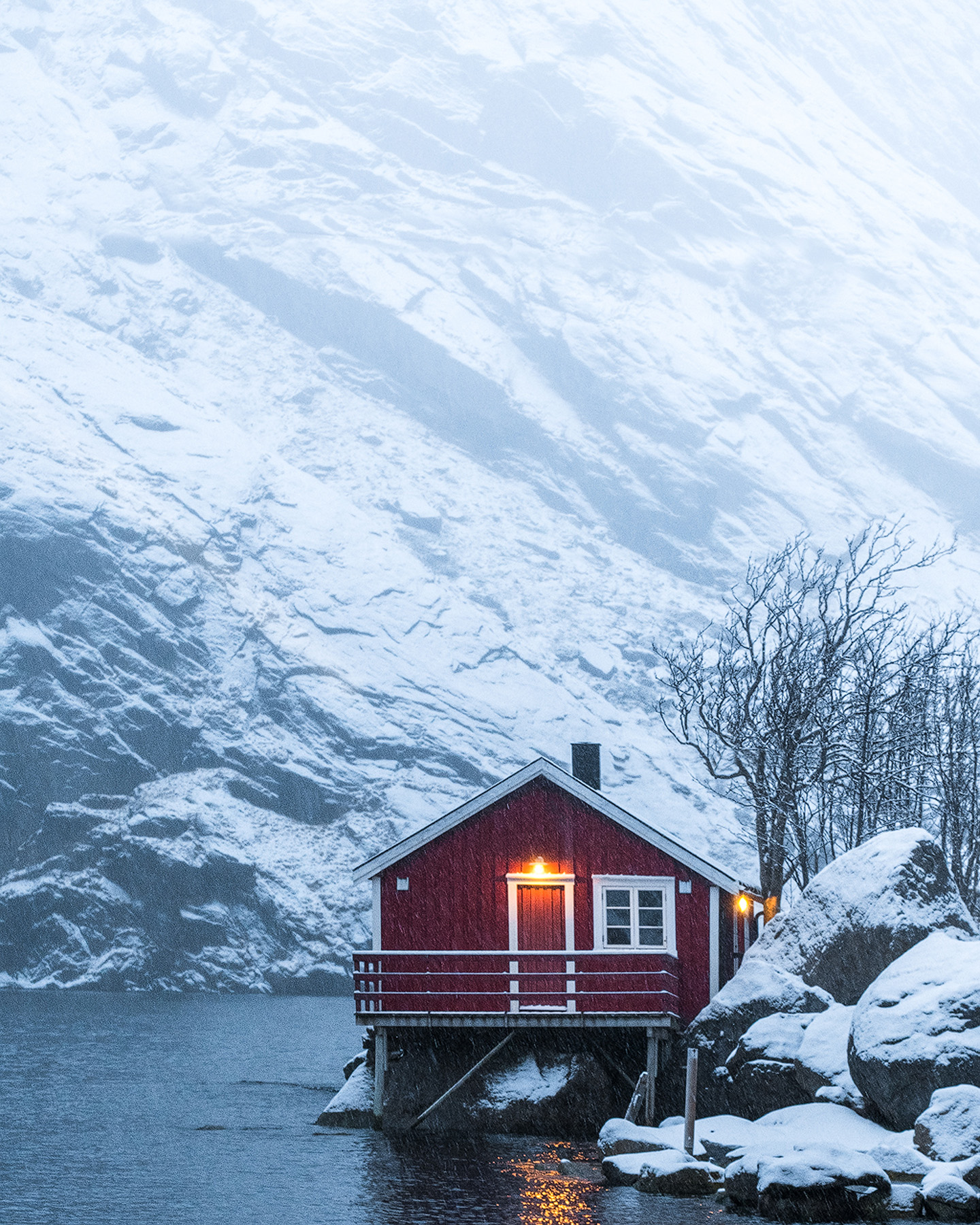
Red cabin on a snow-covered beach below Lofoten mountains under a gray winter sky
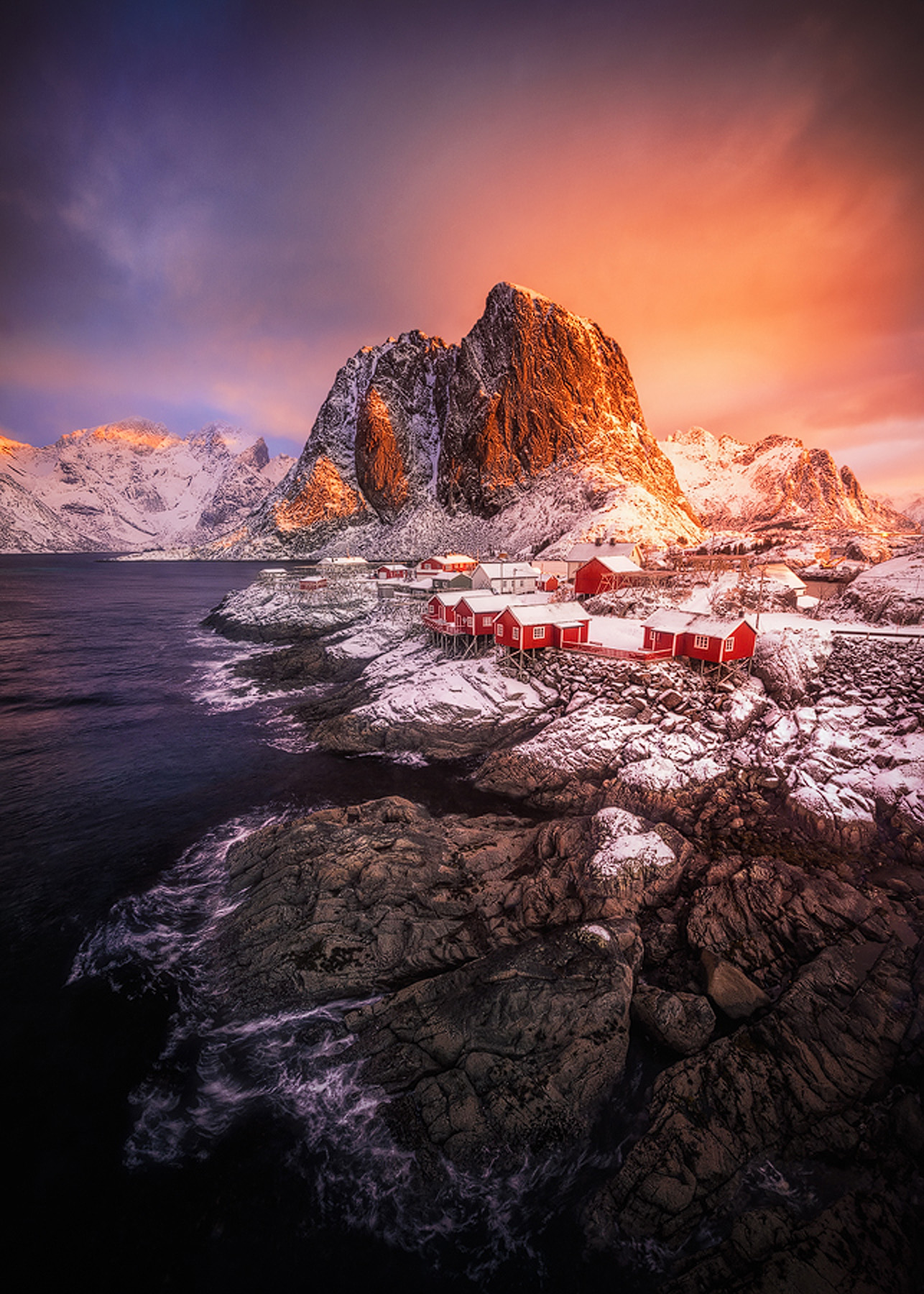
Pink sunrise over snow-covered peaks and the rorbuer cabins at Hamnøy in Lofoten in winter
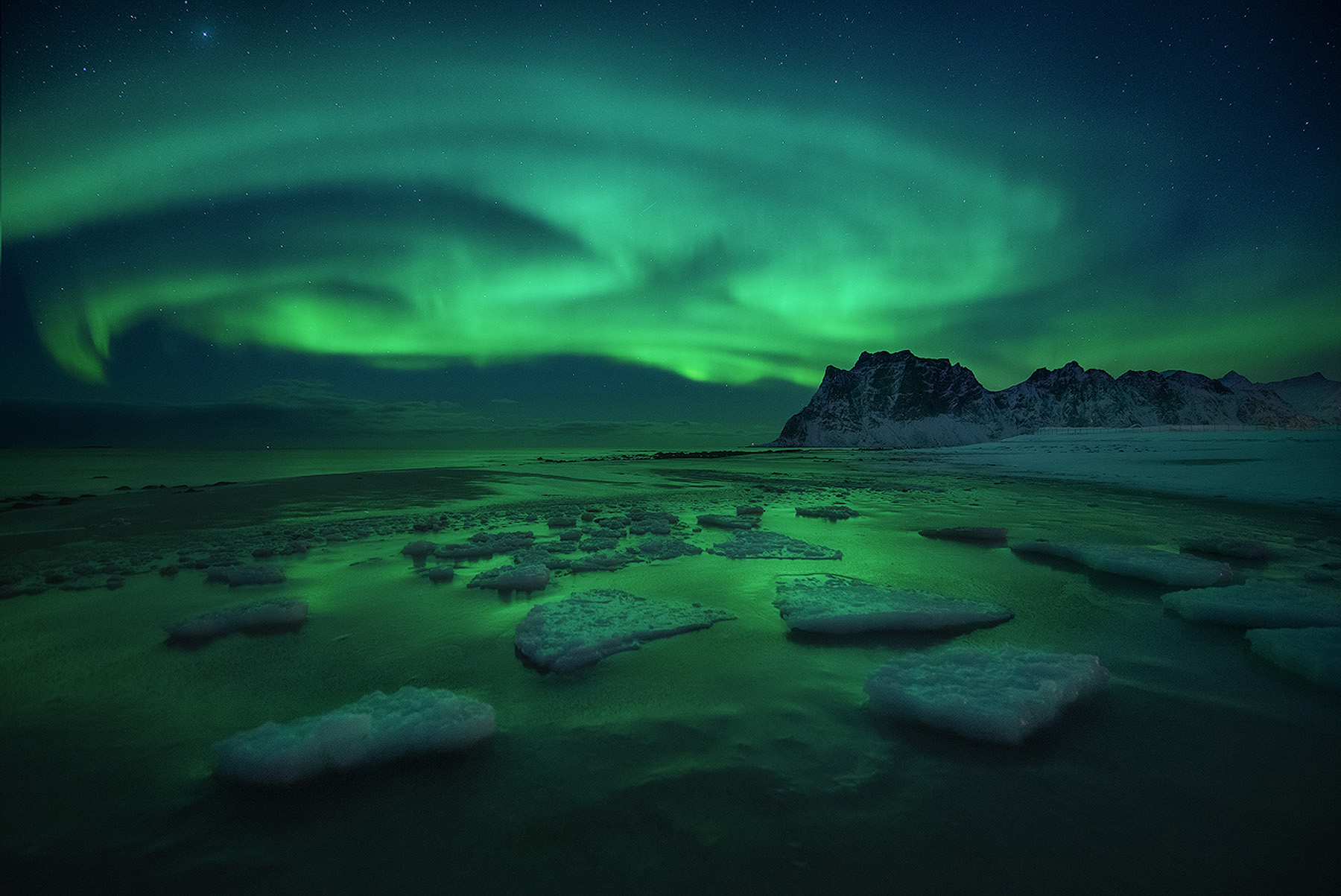
Swirling northern lights over an icy beach below snowy mountains in Lofoten, Norway in winter
Red house in the snow below a steep snow-covered mountain at Nusfjord in Lofoten
Snow falling over a Lofoten fishing village below a snow-covered mountain in winter
 

How I Teach in the Field

Most of the teaching happens on location, with my camera set down next to yours, and we also sit down for classroom sessions indoors when the weather shuts us down or between shoots, so the field work and the classroom work build on each other. For the aurora I start people at ISO 1600 to 3200 with a wide-open aperture and long exposure times somewhere around 5 to 25 seconds, and then we adjust shutter speed to how fast the aurora is moving, because a fast display needs a shorter exposure to keep its shape. You need a camera with manual control, because the camera settings are on you, and I'll go over manual focus at night too, since autofocus can't lock on anything in the dark.
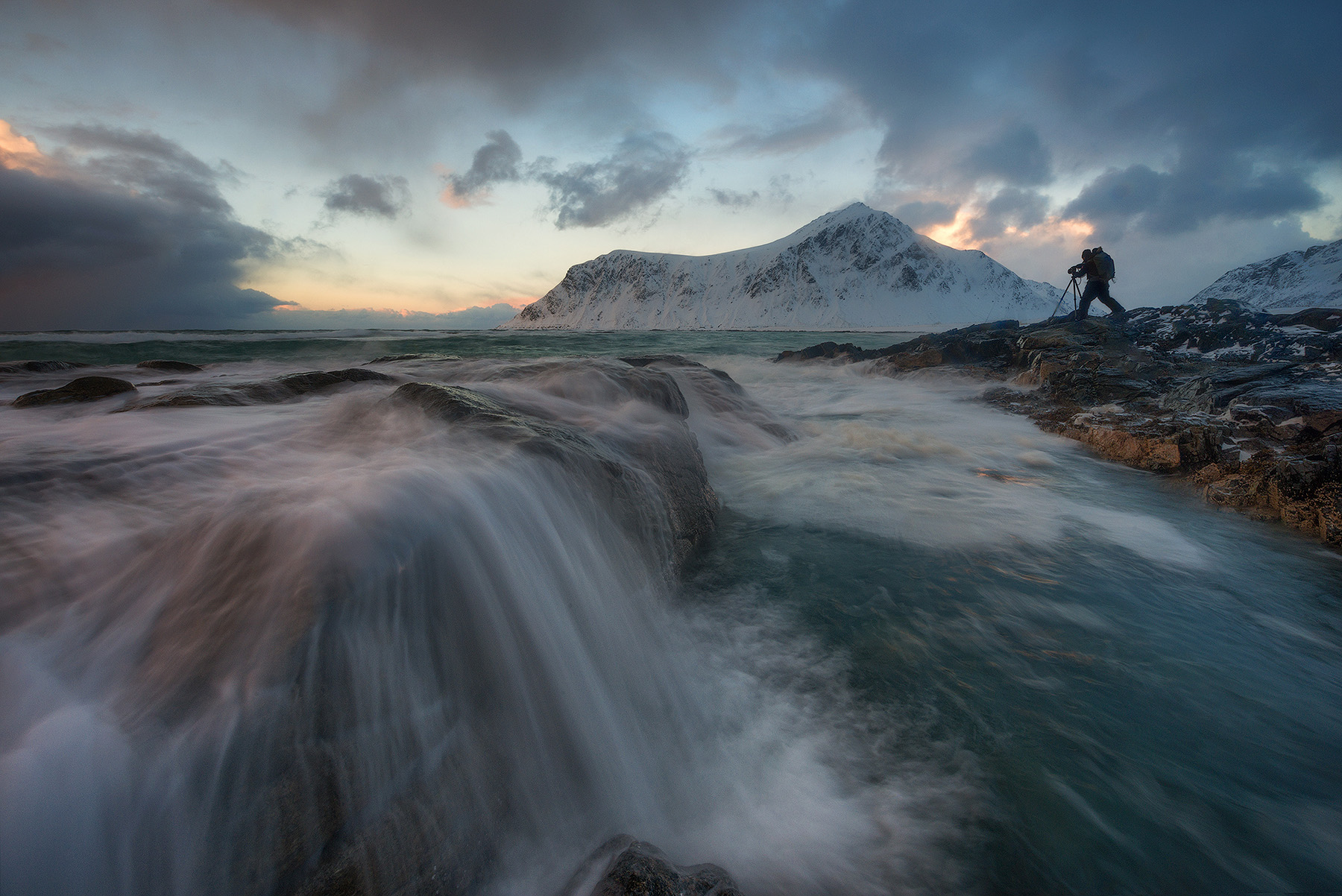
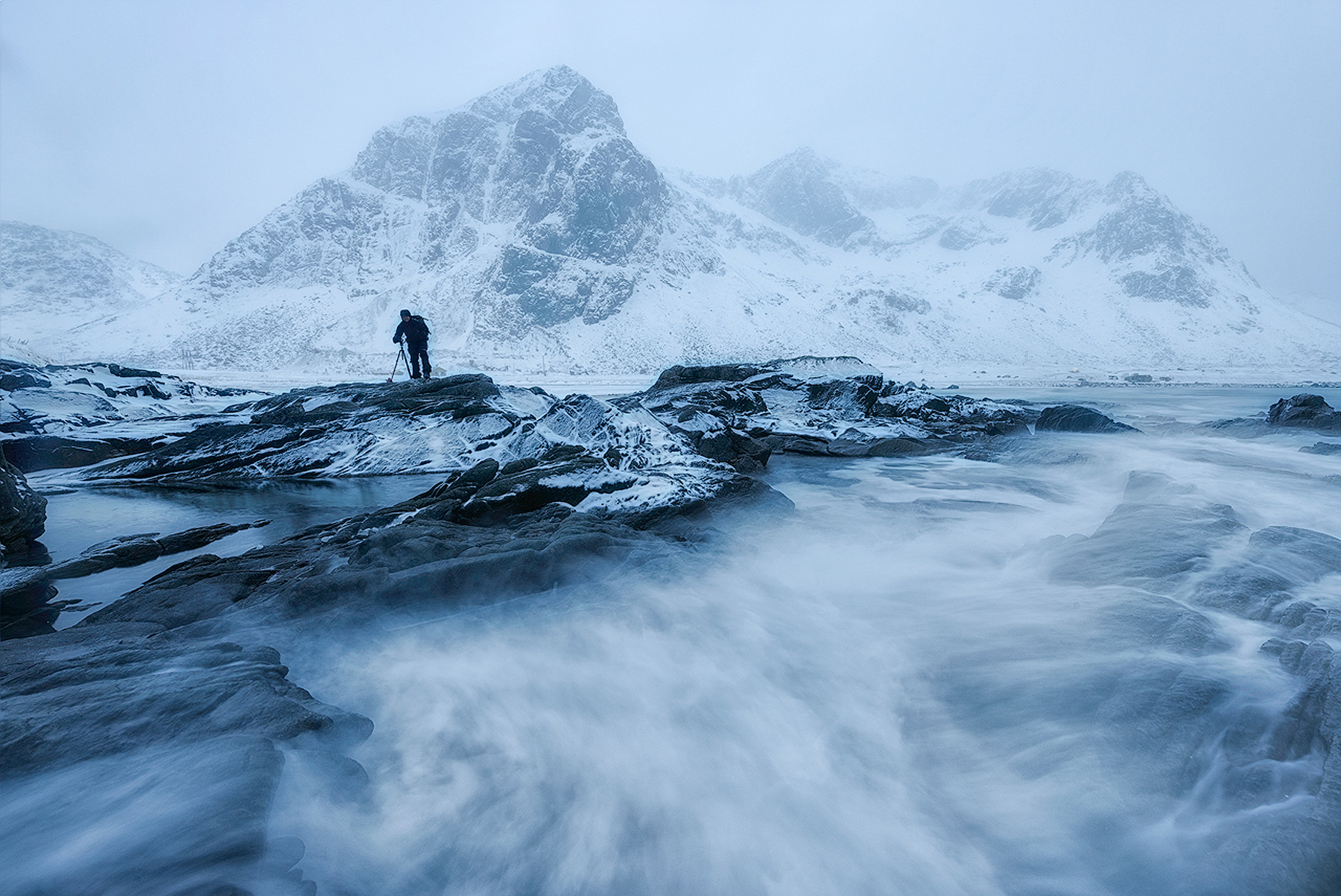
Workshop photographer on the rocks shooting a long exposure of waves on the Lofoten coast in winter, Norway

During the day the work is composition and exposure in conditions that change fast. A snowy beach with bright sky and dark rock is a hard exposure, and moving water at the shoreline gives you a choice between freezing a wave and letting it blur, so a lot of what I teach is picking the shutter speed for the picture you want. Participants learn to adapt to the weather instead of fighting it, and with six to ten photographers there's always someone close by when the light is good, so everyone builds real knowledge in the field instead of just a card full of shots.

Post Processing

Post processing is part of the classroom sessions, so you'll edit your own images during the week with me working through them with you. We do most of that on the days when the weather keeps us inside, because getting you good images while the conditions are right comes first, and when the light is good we're out shooting in it instead of sitting indoors. If the conditions keep us out in the field and we run short on time for editing, we'll schedule an image review and post processing session over Zoom after the trip or plan on it for our final night together.

A lot of what I teach in the field is about the file you bring home. Winter scenes in Lofoten have a huge range of light, from bright snow to dark rock to a night sky, so we'll talk about exposing to protect the highlights in the snow, shooting raw, and when to bracket or blend exposures instead of trying to get everything in one frame. Post processing is where an aurora image gets its color and its depth back, so I'll walk through how I edit the night shots and the landscape so the snow looks like snow and the sky doesn't turn into mud.

In Their Own Words

Reviews From the Lofoten Workshop

“Our photo tour of the Lofoten Islands was truly the trip of a lifetime.”

Boris and Claire D. · Lofoten Norway Workshop, 2025

★★★★★

Our photo tour of the Lofoten Islands was truly the trip of a lifetime. The entire experience was well organized, from rustic Fishermans' cabins and tasty local food to well-planned shooting locations that captured the best of Lofoten's amazing light and landscapes.

Our caring local guides, Christian and Klaus were outstanding, deeply knowledgeable about both photography and the region they love, and knew exactly where to be for the perfect shot. We learned new techniques and refined our composition skills. We returned home with some of our favorite images ever. Every day offered something awesome: dramatic peaks rising from the sea, quiet fishing villages glowing in the Arctic twilight, and the unforgettable thrill of chasing and photographing the Northern Lights.

Whether you're a serious photographer or passionate about capturing beauty, this experience will inspire you to take your photography to a new level. We certainly can recommend Michael Schultz's tours, Face the Outdoors.

Read full reviewShow less
BCBoris and Claire D.Lofoten Norway Workshop, 2025

★★★★★

I've joined Michael on one of his nightly aurora tours as well as a workshop in Norway. He is very knowledgeable about auroras so he really knows how to put you in the best position to shoot them. I felt at ease with his relaxed style of teaching. In Norway we also had the benefit of two local photographers and guides, Klaus and Christian, who had excellent awareness of the Lofoten region and its weather patterns, which truly maximized our photographic opportunities in ways I didn't think possible. Between the three of them I learned a ton about composition, patience, and editing for impact.

Read full reviewShow less
VRValerie R.Lofoten Norway Workshop, 2025

★★★★★

We just concluded our photo workshop on October 12, 2025 in Lofoten, Norway. This was my 2nd consecutive time attending a photo workshop with Michael, and for this Norway trip my wife was able to join us. Overall, it was another great workshop!! First of all the choice of the venue (Lofoten, Norway) was already a plus because it's a beautiful place to photograph. Another great and important factor here was having two great local guides/mentors (Christian & Klaus) who were both of great resource, not only on technical photographic issues but especially in choosing the sites to be photographed.

We were mentored according to our level of expertise, and for me I think at this point of my photographic skills and experience, I had improved significantly and more confident to shoot and process my photos. Lastly, I can't ignore the dynamics that went around in our whole group. It was so much fun dealing with other people sharing the same interest in photography. Michael had organized and put this photo workshop not just a fun learning experience but also personally rewarding for me. Looking forward to joining future workshops.

Read full reviewShow less
APAbby P.Lofoten Norway Workshop, 2025

★★★★★

Another great workshop (my second). Norway what a beautiful place, so many opportunities for great pictures. Michael did a great job picking Norway and our two guides, Klaus and Christian, what knowledgeable and interesting guys. Michael, Klaus and Christian were very helpful with giving technical, artistic and general advice on taking better pictures. It was a great learning experience, and I walked away with a lot of pictures, more confidence in my abilities, and a better understanding of the direction I want to take in my photographic journey. If you have never been on a photographic workshop I would highly recommend Michael and Face the Outdoors Photography. Michael I will see you in February for the Aurora workshop.

Read full reviewShow less
JBJerry B.Lofoten Norway Workshop, 2025

★★★★★  5.0 · 34 five-star reviews


Price and What's Included

The price is $6,900 per person based on a shared room, and a $1,725 deposit reserves your spot. If you'd rather have your own room, a single is $7,400 with a $1,850 deposit. The balance is due 120 days before the workshop starts, which is October 28, 2027.

What's Included

  • ✓Seven nights in fishermen's cabins and hotels, shared rooms
  • ✓Ground transportation for the whole week, driven by local guides (two when the group is full)
  • ✓Me leading and teaching the whole week
  • ✓Instruction in the field and in classroom sessions the whole week
  • ✓All necessary licenses and permits
  • ✓Fuel, parking and entrance fees
  • ✓Image review and post processing session, during the week, on the final night or over Zoom after the trip

What's Not Included

  • –Airfare to and from Evenes (EVE)
  • –Meals, so you can eat what you like as we move through the islands
  • –Travel insurance (required, comprehensive coverage for international trips)
  • –Photography gear and equipment
  • –Tips for the guides (discretionary)
  • –Alcoholic beverages
  • –Your room in Narvik the night of February 24

Who This Workshop Is For

Photographer standing on snowy rocks in a winter snowstorm on the Lofoten coast during a winter photography workshop in Norway

This Lofoten winter photography workshop is for intermediate and advanced landscape photographers who know their camera and want to work on winter landscapes and the northern lights in one of the best places in the world to do it. It isn't a travel photography trip where you grab what you can from a bus window. It's a week built around being out in the wild, in the right light, with people who share the same passion for it. You should be able to change settings without looking at your camera, and I'll help you with the rest.

Physically it's easy, but you'll be standing on snow and ice in the wind for a while at a time, so how you dress matters more than how fit you are.


Camera Gear and What to Bring
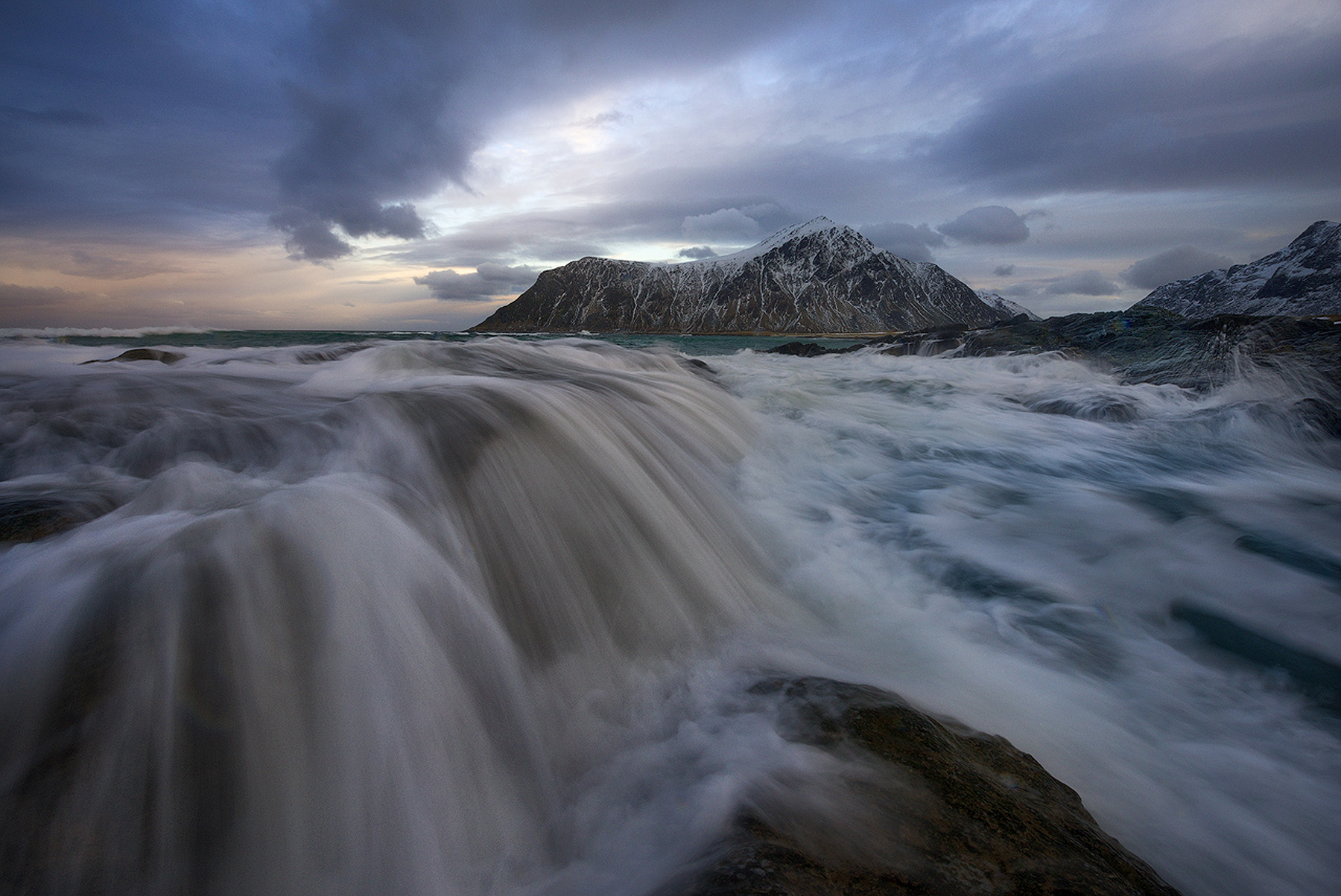
Long exposure of waves washing over a rocky shore below snowy mountains in Lofoten, Norway, shot on a tripod during a winter photography workshop

You don't need a particular camera, but plan on bringing the following gear. You need a DSLR or mirrorless body with manual control. A wide-angle lens does most of the work here, something in the 16-35mm or 14-24mm range, and a fast wide lens helps a lot for the aurora. A mid-range zoom or a short telephoto is worth bringing for picking out details in the mountains and any sea birds we come across along the coast.

A sturdy tripod is essential, because it's windy on the coast and a light tripod will shake through a long exposure. Bring extra batteries, more than you think you'll need, because cold drains them fast and night photography eats them. A remote shutter release, a headlamp with a red light, and lens cloths for spray and snow round out the camera bag.

For yourself, layering clothing is what keeps you warm in Arctic conditions. You'll want a warm base layer, an insulated middle layer and a windproof, waterproof shell on top, plus warm gloves you can work a camera in. Waterproof boots matter for shooting along the shoreline, where the snow and the waves meet, and traction spikes help on icy rock. A complete packing list will be sent after you register.

About Michael
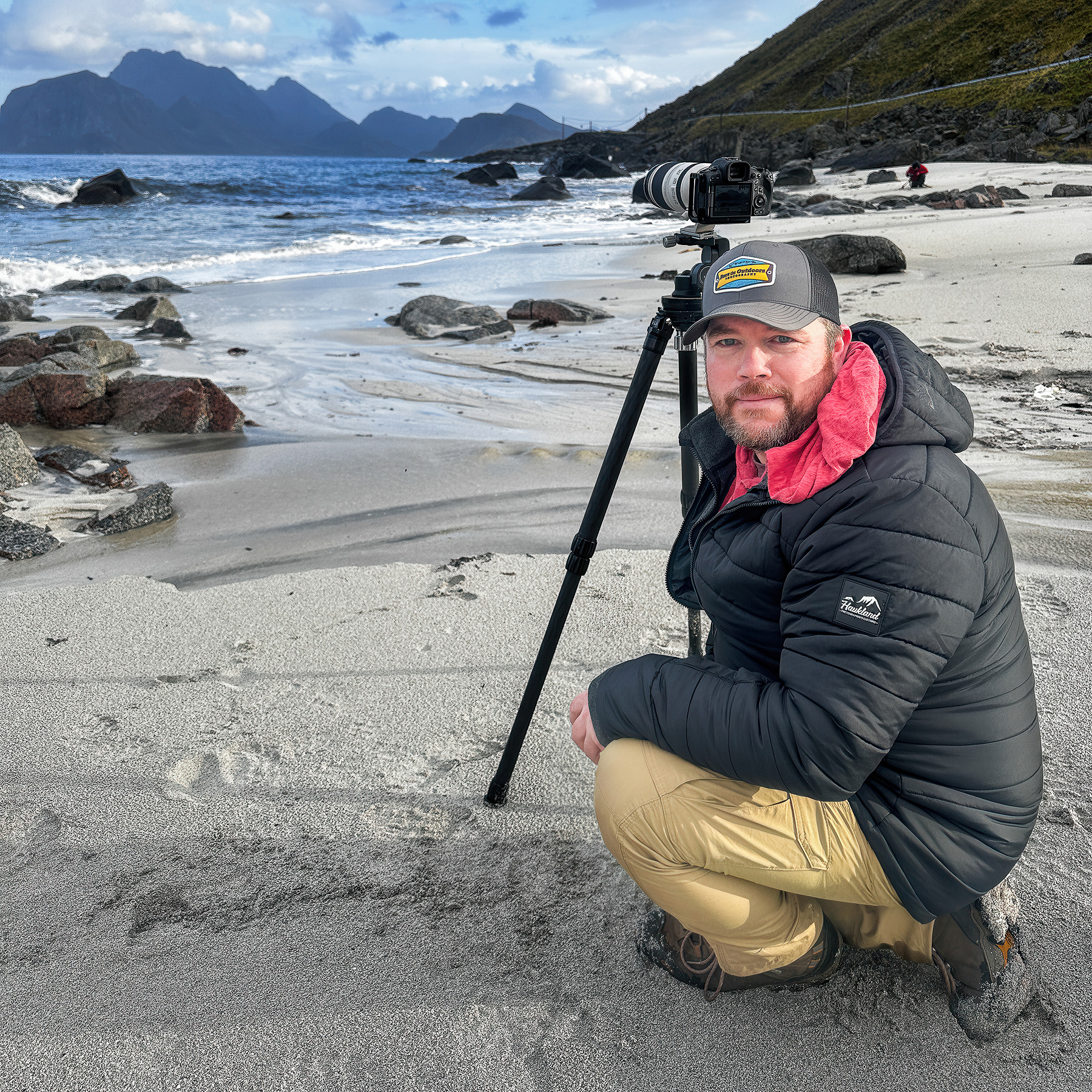
Michael Schultz, Lofoten photography workshop instructor, kneeling on a beach in Lofoten, Norway next to his camera and tripod with the sea and mountains behind him

I'm a lifelong Alaskan and a professional photographer, and I've spent more than two decades photographing Alaska, including a lot of nights under the aurora. Photographing the aurora has been a big part of my life in Alaska, and it's still where a lot of my inspiration comes from. Face The Outdoors has been featured in National Geographic. I've already led a group through these same islands, so I know how the week runs and where the frames are, and you come home with the frame and a week you won't forget. You can read about our last trip in my Lofoten Islands trip report, and my Lofoten Islands photography guide has more on the locations.
Other Workshops in 2028

If you want to make a bigger winter of it, my spring equinox aurora workshop in Fairbanks runs March 19 to 24, 2028, and my humpback whale photography workshop in Sitka runs March 26 to 29, 2028, during the spring herring spawn. You can see all of my other workshops on the workshops page.


Frequently Asked Questions

When is the best time to photograph Lofoten in winter?

+

January through March. January has the longest blue twilight but short days, and late February into March has more daylight, deep snow and still-long nights for the northern lights, which is why this workshop runs February 25 to March 3, 2028.

Can you see the northern lights in Lofoten in late February?

+

Yes, it's well within the season. Lofoten sits under the auroral oval, so when the aurora is active it can be overhead. Clear skies are the limiting factor, and nobody can promise the aurora on a given night, so we go out whenever it's clear.

How many days in Lofoten is enough for photography?

+

A week is about right in winter, because the weather changes so fast that you need extra days to catch the clear ones. This workshop is seven nights, which gives you room for a few bad-weather days and still plenty of time in good light.

What camera settings do you use for the northern lights in Lofoten?

+

I start at ISO 1600 to 3200, the lens wide open and exposures around 5 to 25 seconds, then adjust to how fast the aurora is moving. If the moon is lighting the snow you can drop the ISO and shorten the exposure. Focus manually, because autofocus won't work in the dark.

What's the weather like in Lofoten in winter?

+

Variable. The Gulf Stream keeps the coast milder than you'd expect for the latitude, and the temperature usually sits somewhere around freezing, but wind off the sea makes it feel colder and storms can come through fast. Dress in layers and expect the plan to change with the weather.

How big is the group?

+

The group is six to ten photographers, led by me with local guides helping in the field, so there's always someone close by to help when the light is good.

Do I need to be able to hike?

+

No. Nothing on this trip is a hike. Expect short walks on snow and icy rock at the beaches, so good boots and traction spikes matter more than fitness.

Where does the workshop start and end?

+

You fly into Harstad/Narvik Evenes Airport (EVE) on February 24, the day before the workshop starts, and spend that night in Narvik on your own, and you fly home from Evenes on March 4. A lot of winter trips here fly into Leknes Airport, but Evenes is easier to get flights into, with connections through Oslo on SAS and Norwegian, so that's where we start.

Are meals included?

+

Meals aren't built into the price, so you're free to pick your own meals as we move through the islands, and that keeps the cost down and leaves it up to you where you eat and how much you spend.

Is it expensive to go to the Lofoten Islands?

+

Norway isn't a cheap country to travel in, and lodging and transport in the islands add up fast if you're doing it on your own. This workshop puts lodging, transport, local guides and permits into one price, $6,900, so you know the cost up front.

What is Lofoten famous for?

+

The mountains rising straight out of the sea, the red fishermen's cabins in villages like Reine and Hamnøy, the beaches on the outer coast and the northern lights in winter. It's one of the most photographed places in Norway for a reason.

Can I get a single room?

+

Yes. A single is $7,400 with a $1,850 deposit.

 
Northern lights over the Lofoten coast with waves washing over rocks on a winter night, Lofoten winter photography workshop in Norway

Reserve Your Spot

There are ten seats on this workshop, February 25 to March 3, 2028, and I'll be there with you when you arrive.

Ask Michael a question