
Fall Bear Photography Workshop Trip Report: A Week at Lake Clark
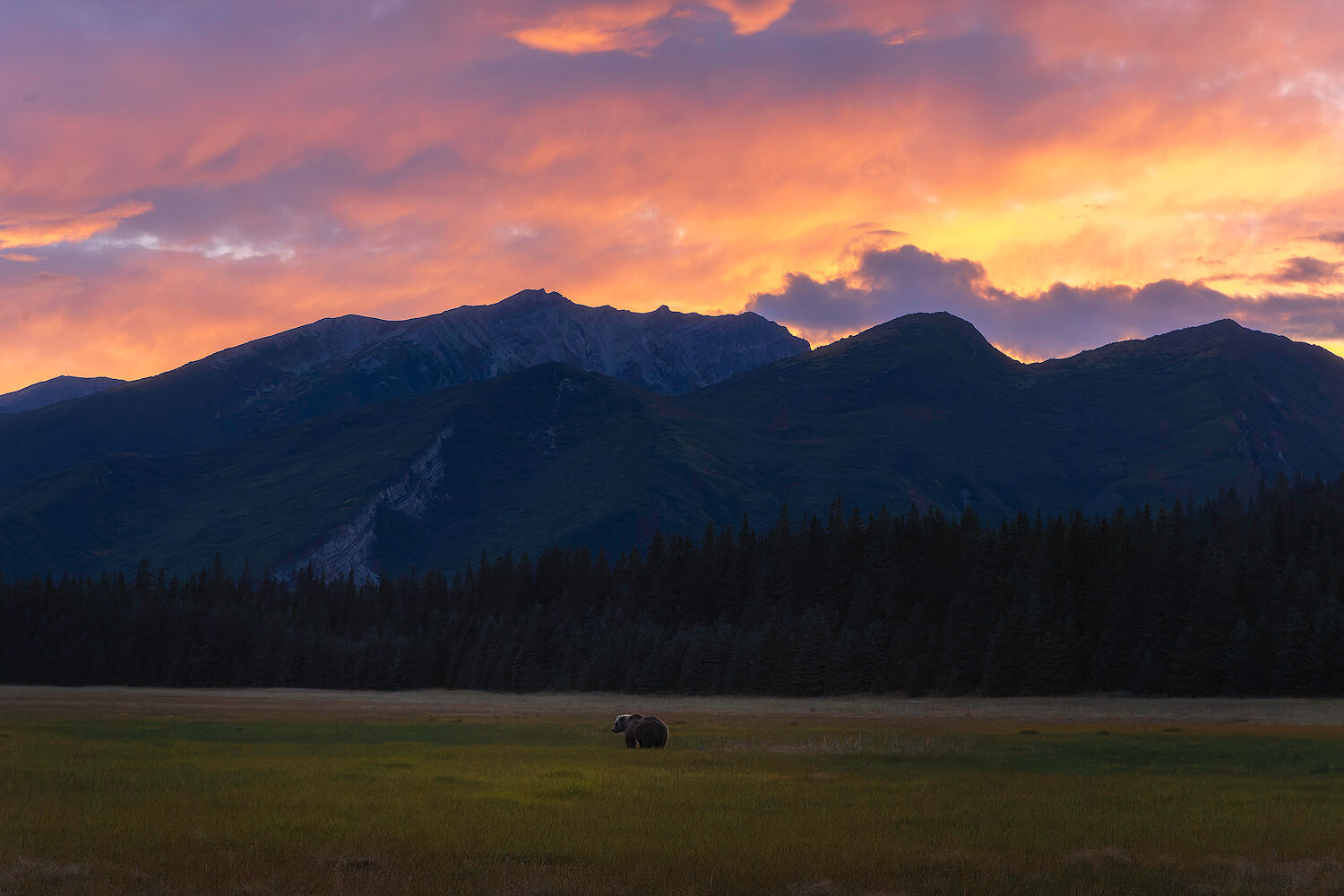
This fall bear photography workshop trip report covers a September week photographing coastal brown bears at Silver Salmon Creek in Lake Clark National Park, Alaska, with five photographers and bears in front of us every day. If you photograph wildlife and you're weighing a fall bear workshop, this report is written for you. It matters because a fall week on the Alaska coast isn't nonstop action, and knowing what the weather, the slow stretches and the close encounters are like before you book is what lets you pick the right trip and come home with the frames you came for. Here's what this report covers: the eight-hour weather delay getting in, the bears on the tidal flats and in the meadows and around camp, a sow with two cubs of the year, the fall light, the birds migrating through, the camera gear that worked best and what the group said.
Lake Clark Fall Bear Photography Trip Report: The Week at a Glance
Silver Salmon Creek Lodge sits on the Cook Inlet coast inside Lake Clark National Park, about 4 million acres of Alaskan wilderness with no roads in, so everyone flies in by small plane from Anchorage. The workshop runs at five photographers at most, with a local bear guide out with us every time we're in bear country. Back at the lodge there are hot showers and great meals between sessions, with all the national park fees paid out of your tuition, so there's nothing to sort out with the park yourself. We get around on foot and by ATV trailer across the tidal flats and grassy meadows, so expect some uneven terrain and wet ground. The lodge has knee boots and hip waders for everyone and a few pairs of chest waders, and the creek itself is named for the silver salmon, also called coho salmon, that run there in late summer and fall.
Getting In: Eight Hours in Anchorage Waiting on the Weather
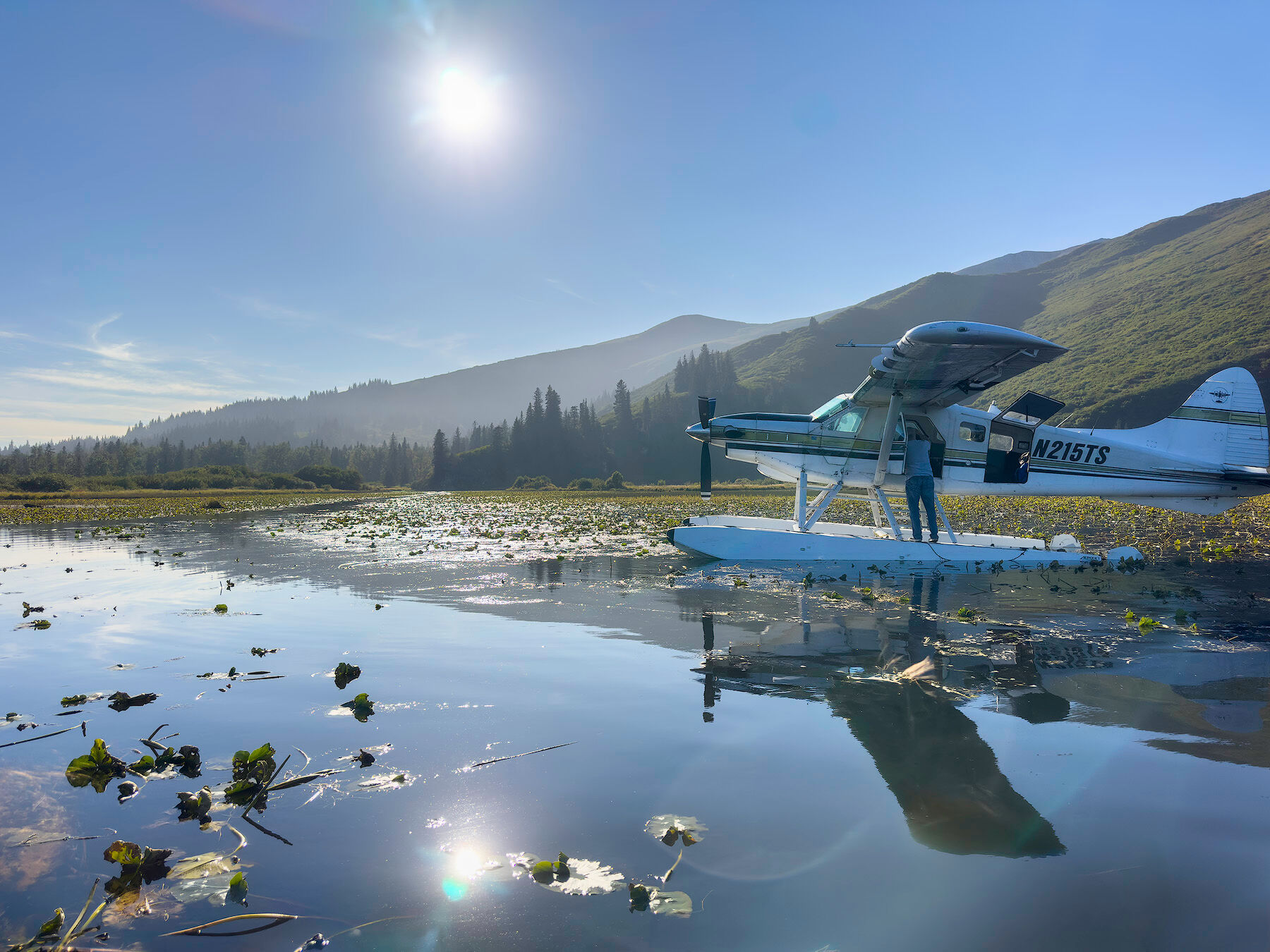
The week started with a lesson in how Alaska works. On the morning we were supposed to fly out to the lodge, the weather on the coast wasn't good enough for the charter, so we sat in Anchorage for eight hours waiting for it to clear. When it finally cleared enough to go, fog was still sitting on the beach where the planes usually land, so we went in by floatplane instead.
That's part of flying into Lake Clark. You can only get to Silver Salmon Creek by small plane, and the pilots don't go until they're comfortable with the weather on the other side of Cook Inlet, which is exactly how you want it to work. I'd much rather lose a day in town than push a flight that shouldn't go. If you're planning a fly-in trip like this one, it's worth building some slack into your travel on both ends because the weather sets the schedule out here.
Coastal Brown Bears Every Day, From the Tidal Flats to Camp
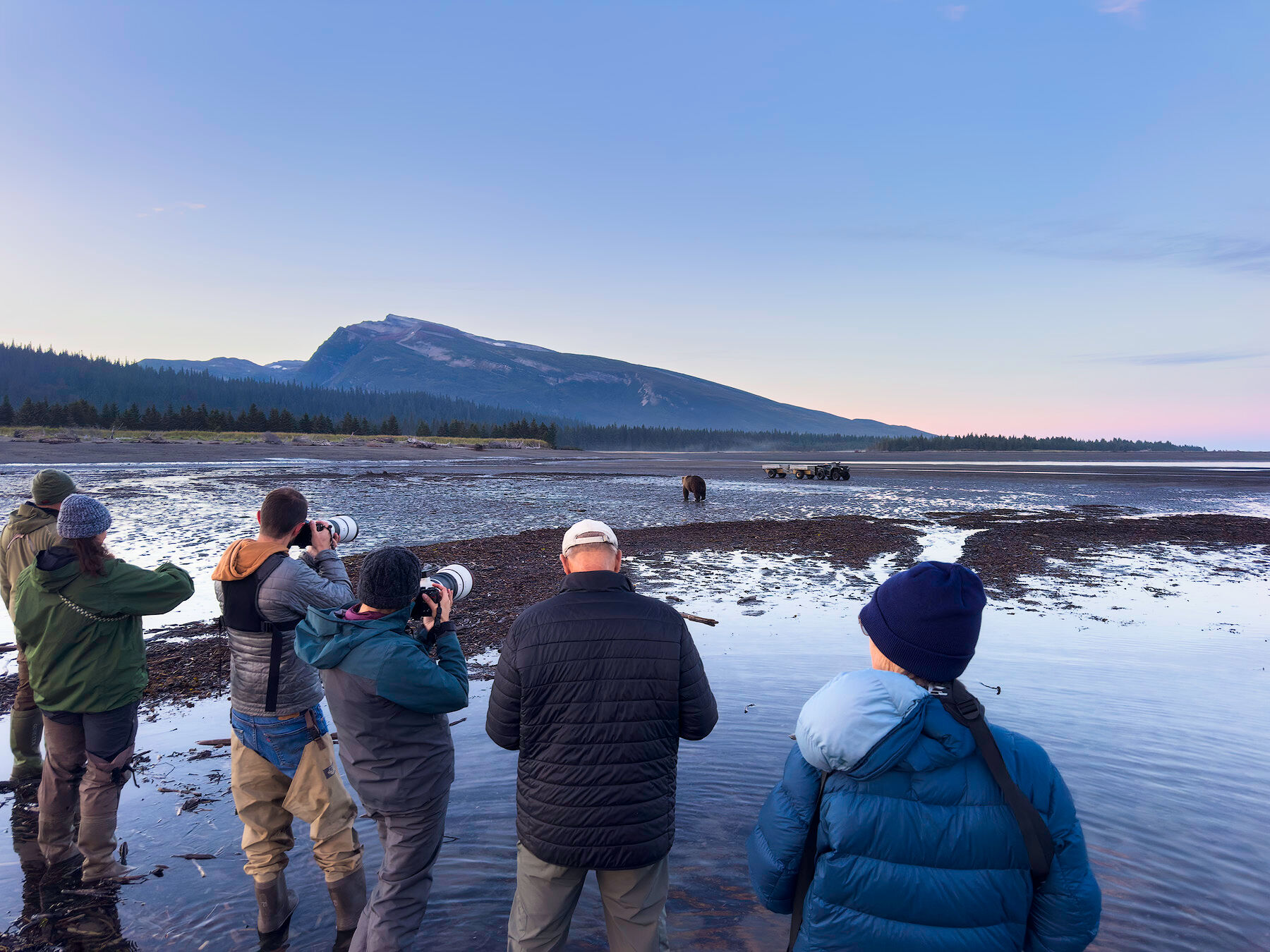
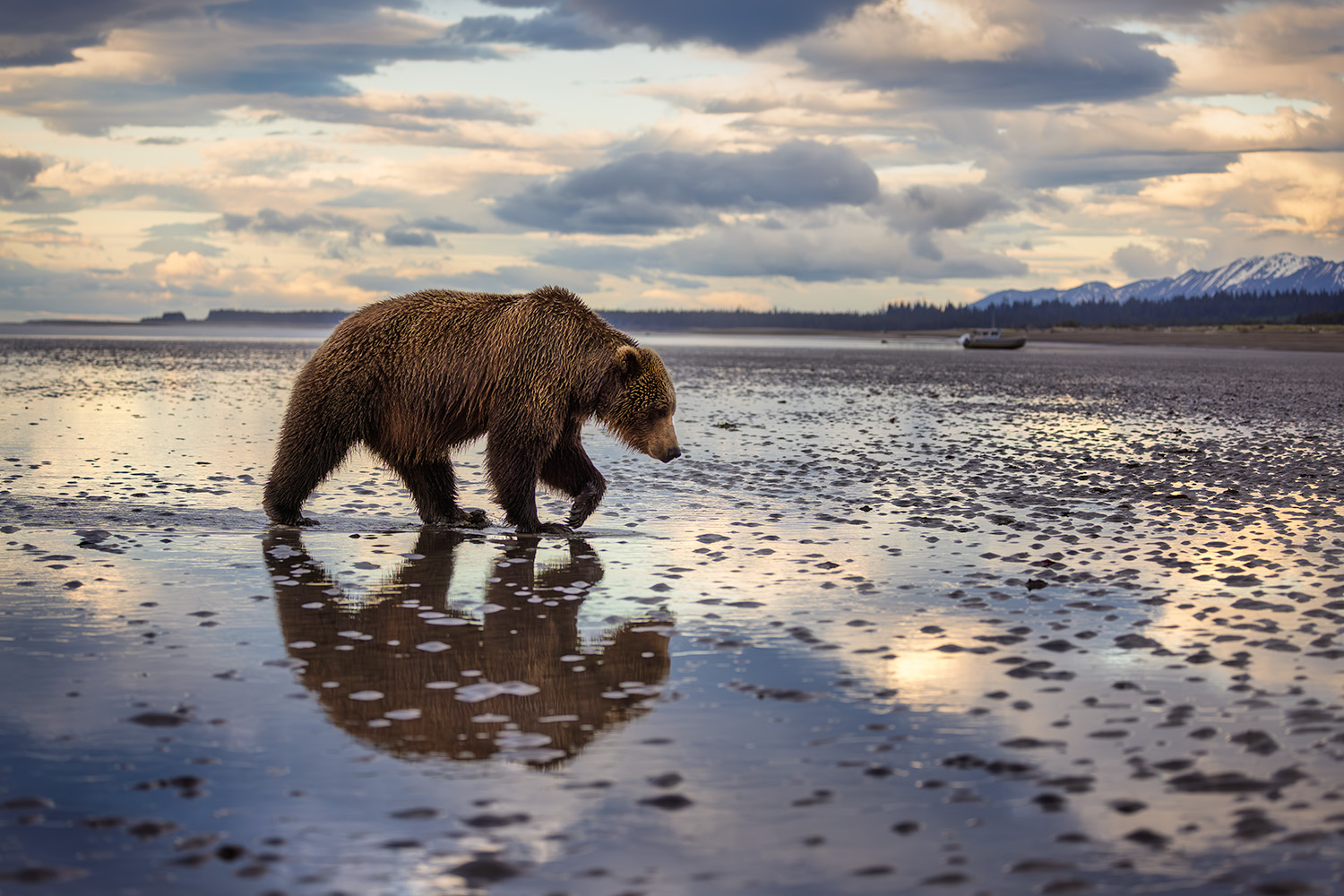
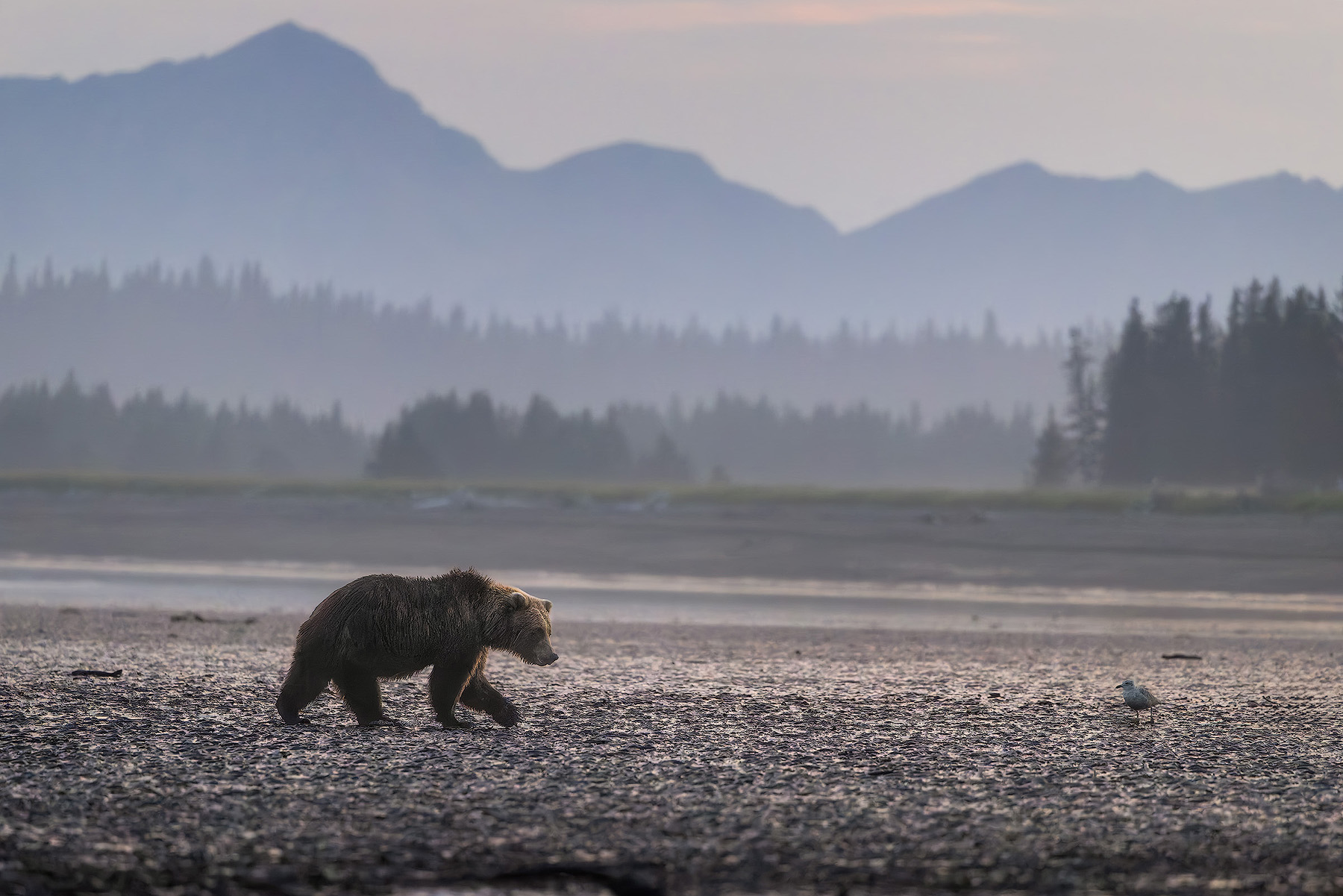
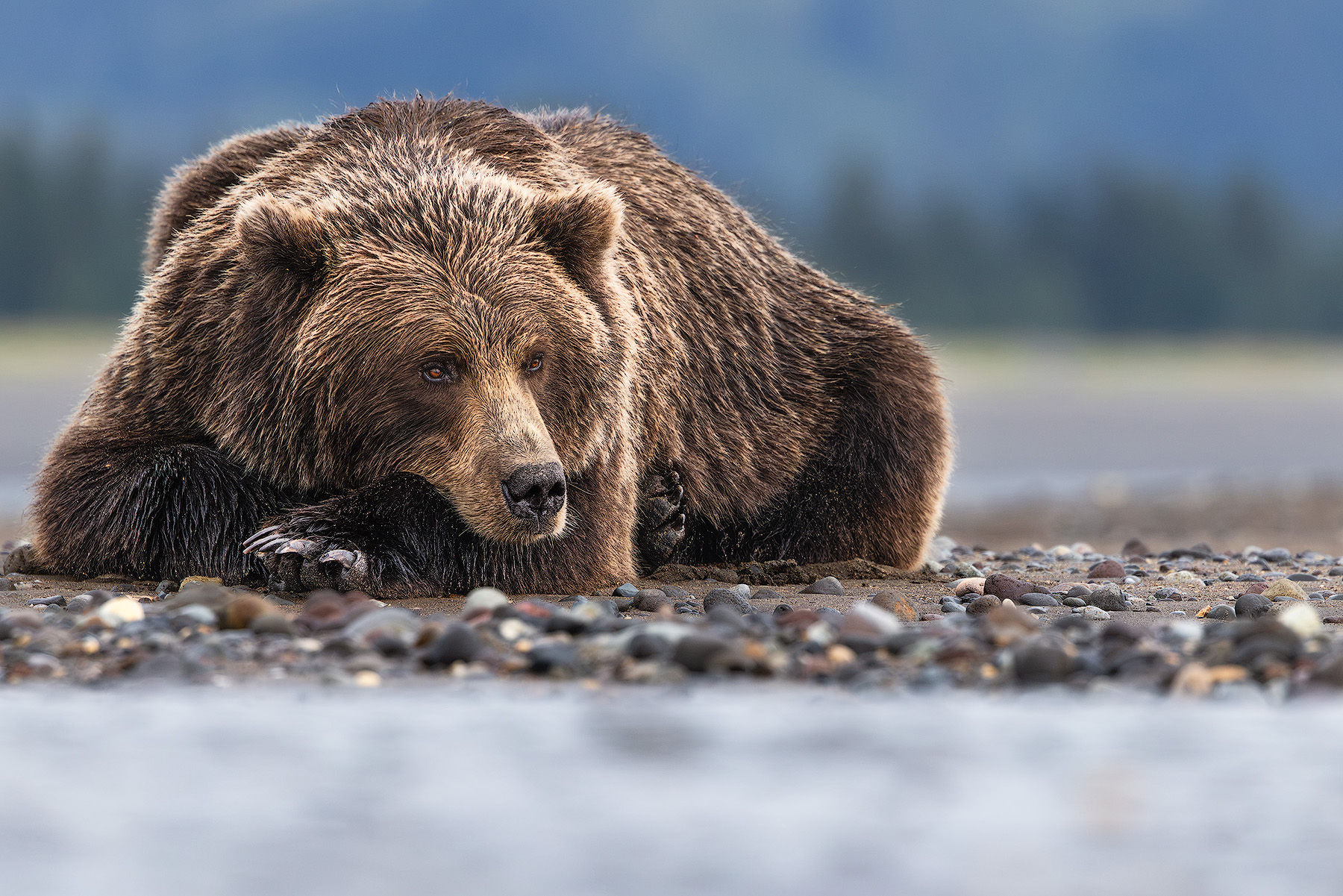
We had bears every day of the week. They were out on the tidal flats and in the sedge meadows behind the beach, and a few of them walked right through camp, which gets everyone's attention in a hurry.
These are coastal brown bears, the same species as grizzly bears, but the ones on the coast grow bigger on the food they get here, and the big males can top 1,000 pounds. Some of the bears were out looking for fish. The fall is the peak of the salmon run here, and late August and September are the peak times for salmon fishing behavior in bears, so during the salmon runs, fishing bears are the ones that give you action shots to work with. Lake Clark also offers clamming behavior photography opportunities in both the fall and the spring, with bears digging for clams out on the mud flats, so the tidal flats stay busy. How many bears are around at any one time varies with the time of year and the food source, so it's never the same week twice. Other times the bears were just being bears, and that meant some of them were lazy and didn't do much of anything for long stretches. In September they're in hyperphagia, putting on as much weight as they can before winter hibernation, so a bear lying in the grass with a full belly is a pretty normal sight this time of year.
I tell people that up front because that's what photographing bears in their natural habitat looks like. Nobody can script what a bear does next, so patience and low-impact positioning matter more than anything else out there. We stay low and quiet and let the bears go about their day, and the slow stretches are when you learn to read bear behavior and get your position and settings worked out so you're ready to start capturing images when a bear finally decides to move.
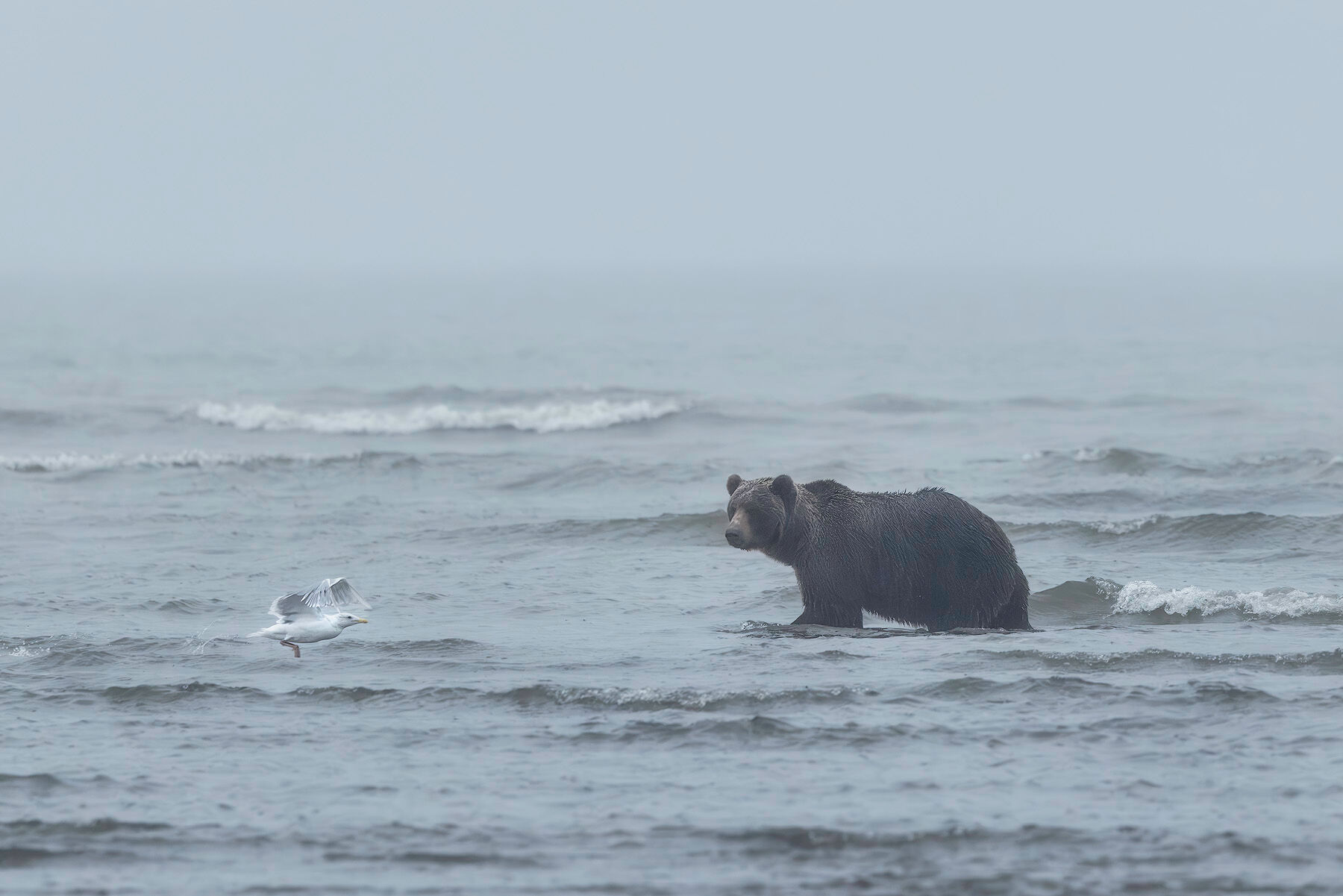
The Rain Day That Brought a Sow and Her Two Cubs
We had great weather for most of the week, with one exception. One day it rained from start to finish, and that turned out to be the day a sow with two cubs of the year showed up.
Cubs of the year were born in the den last winter, so by September they're still small and sticking close to their mother while they learn how all of this works. They don't do much fishing themselves at that age. Mothers teach cubs to fish during the salmon runs mostly by example, so the cubs watch mom fish and learn from her. June is when most people think of photographing mothers and cubs, and it's the heart of my spring trip, but this family showed up in September. She wasn't a one-day visit either. She and the cubs gave us a few days of chances through the rest of our stay, which isn't something I can plan for or promise anyone ahead of time. Spending a few days with the same family, you start to see them as individual bears instead of just bears, and that changes how you photograph them.
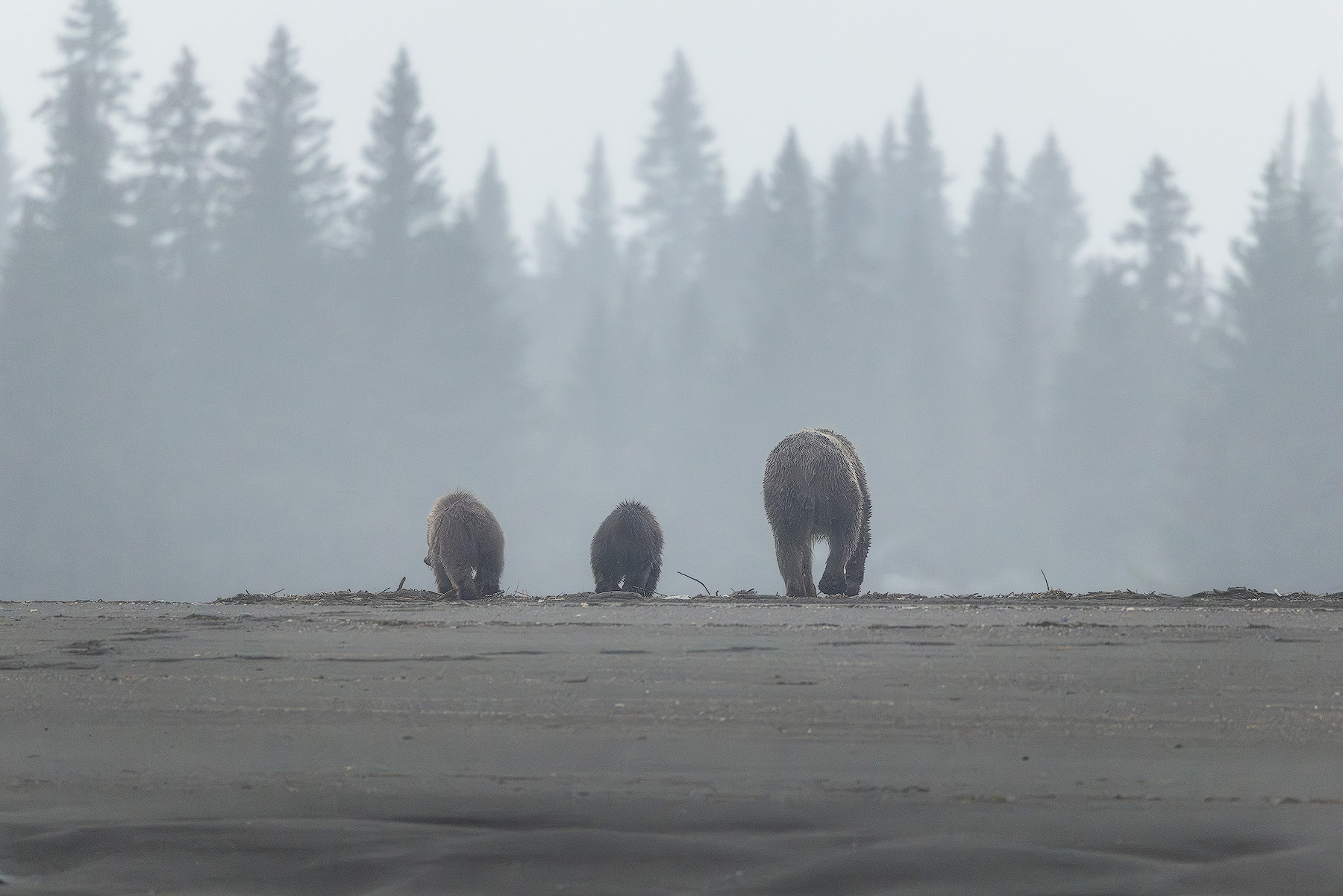
If she'd shown up on a sunny day nobody would have thought twice about it, but she came on the wettest day of the week and the bears don't wait for better weather. That's why rain covers for your camera and lenses are on the gear list for every bear trip I run.
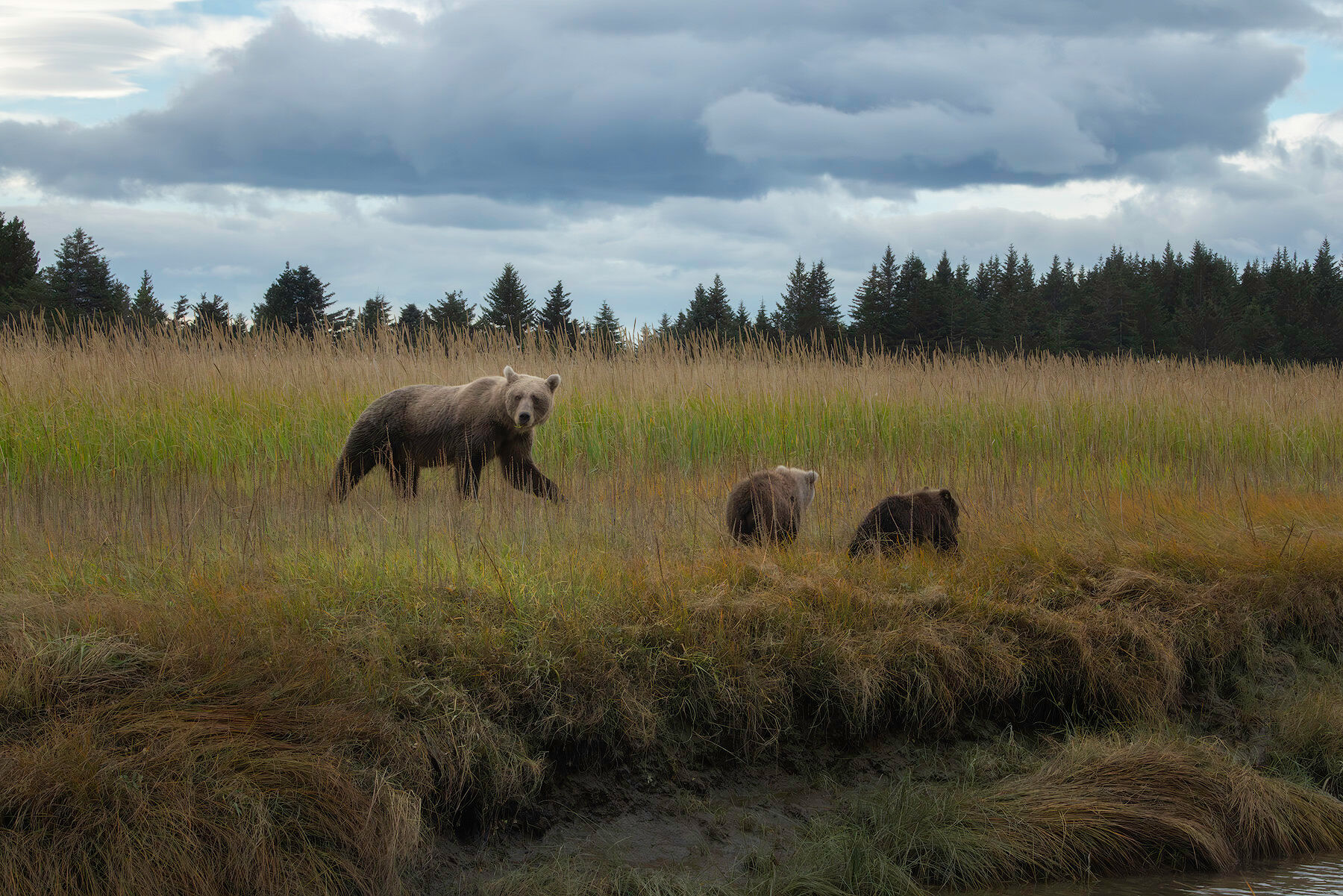
Fall Light and Color at Silver Salmon Creek
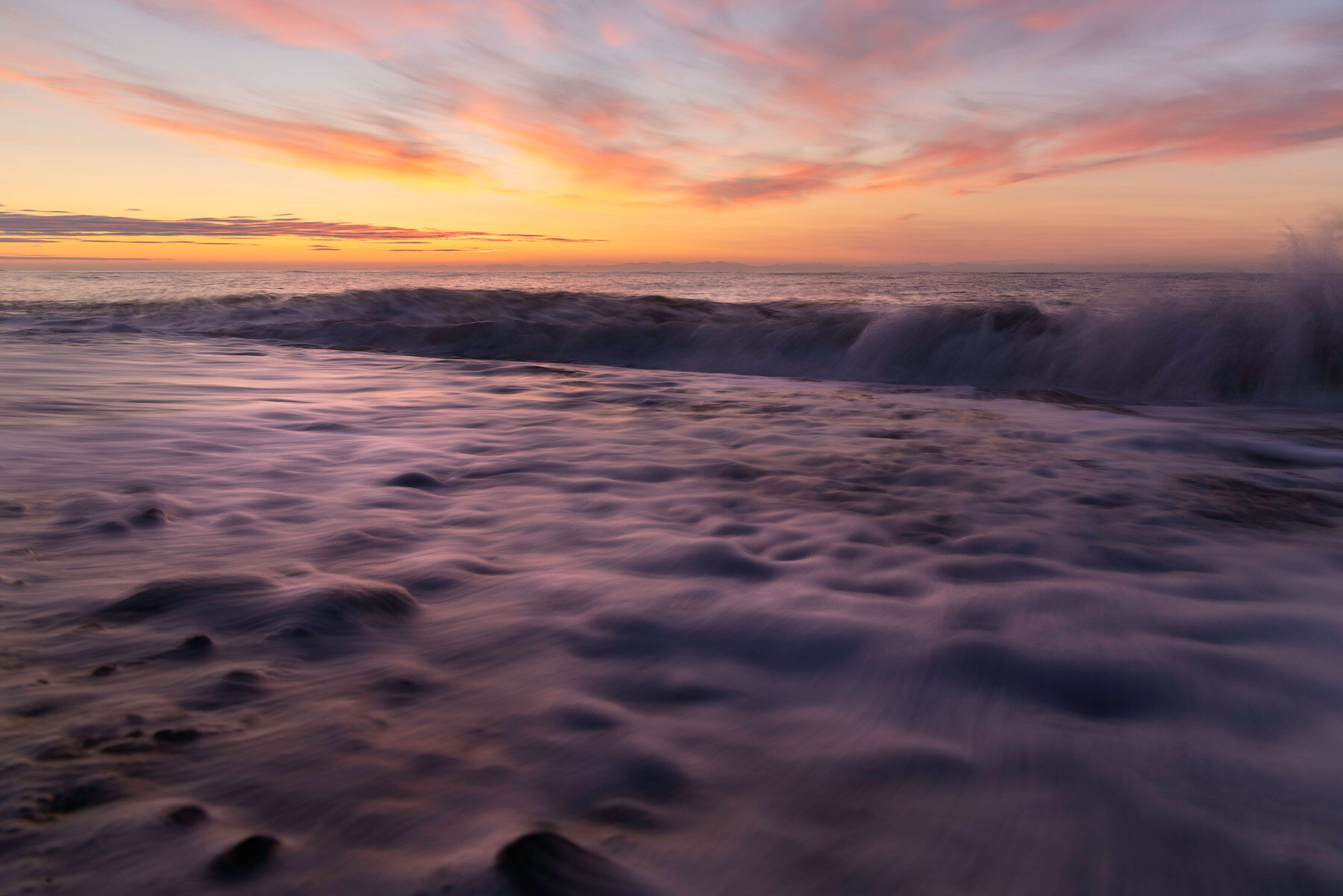
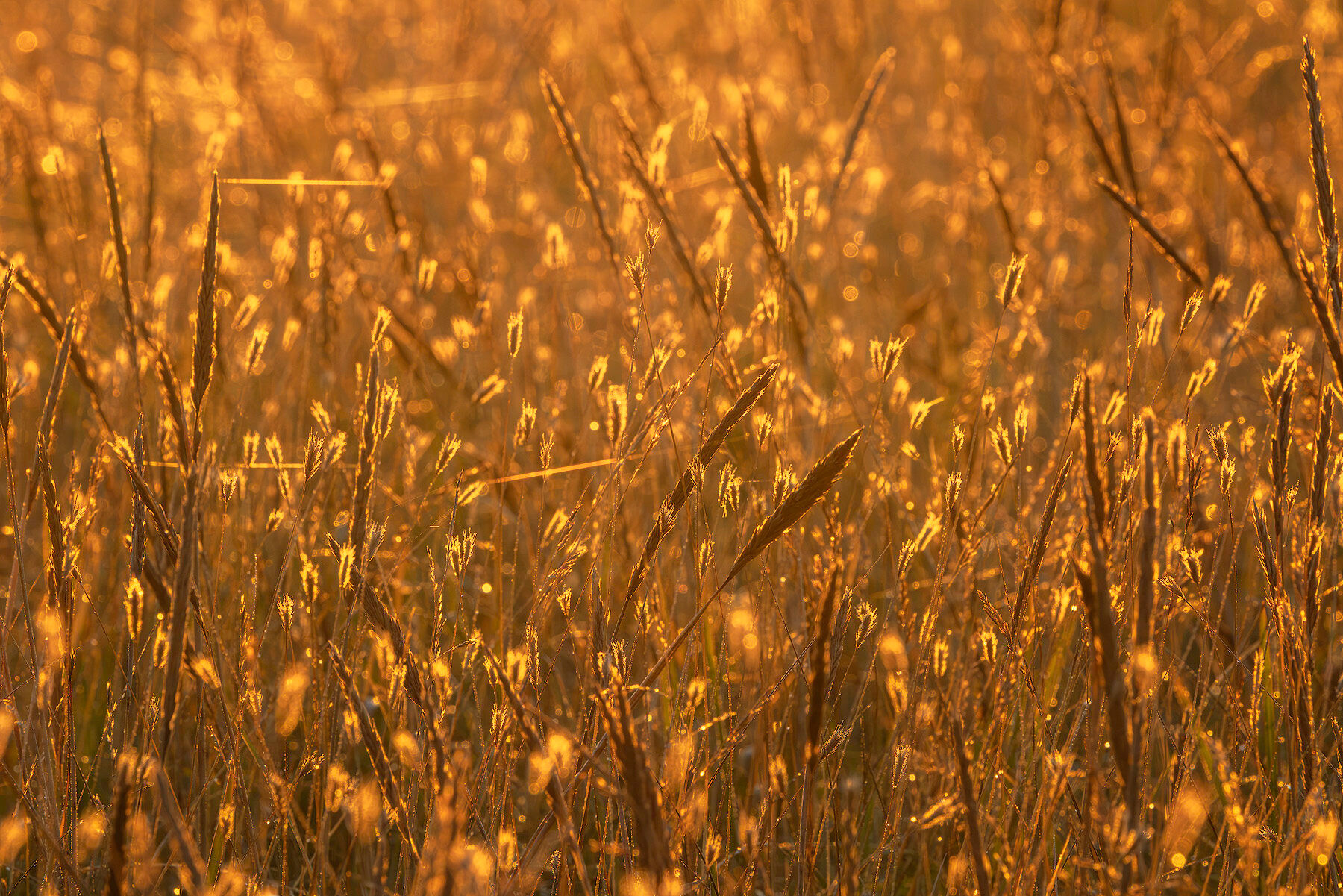
The sunrises and sunsets this time of year are always a bonus. In the fall the meadows and brush turn gold, red and orange, the sky can put on a lot of color at both ends of the day, and the light on the coast can change quickly when weather moves through, so when you add bears to the frame it makes a good combination.
In September the sun sits lower and the days are shorter than they are in June, so the good light comes at more reasonable hours and you're not up at three in the morning chasing it. Those are the frames I push people to be ready for, because the color doesn't last long and a bear isn't going to wait while you change lenses or dig through your settings. That's also why a lot of wildlife photographers carry a backup camera body, so a lens change never costs you the moment, with one body on the long lens and the other ready for a wider frame.
Swans, Bald Eagles and the Last of the Rookery
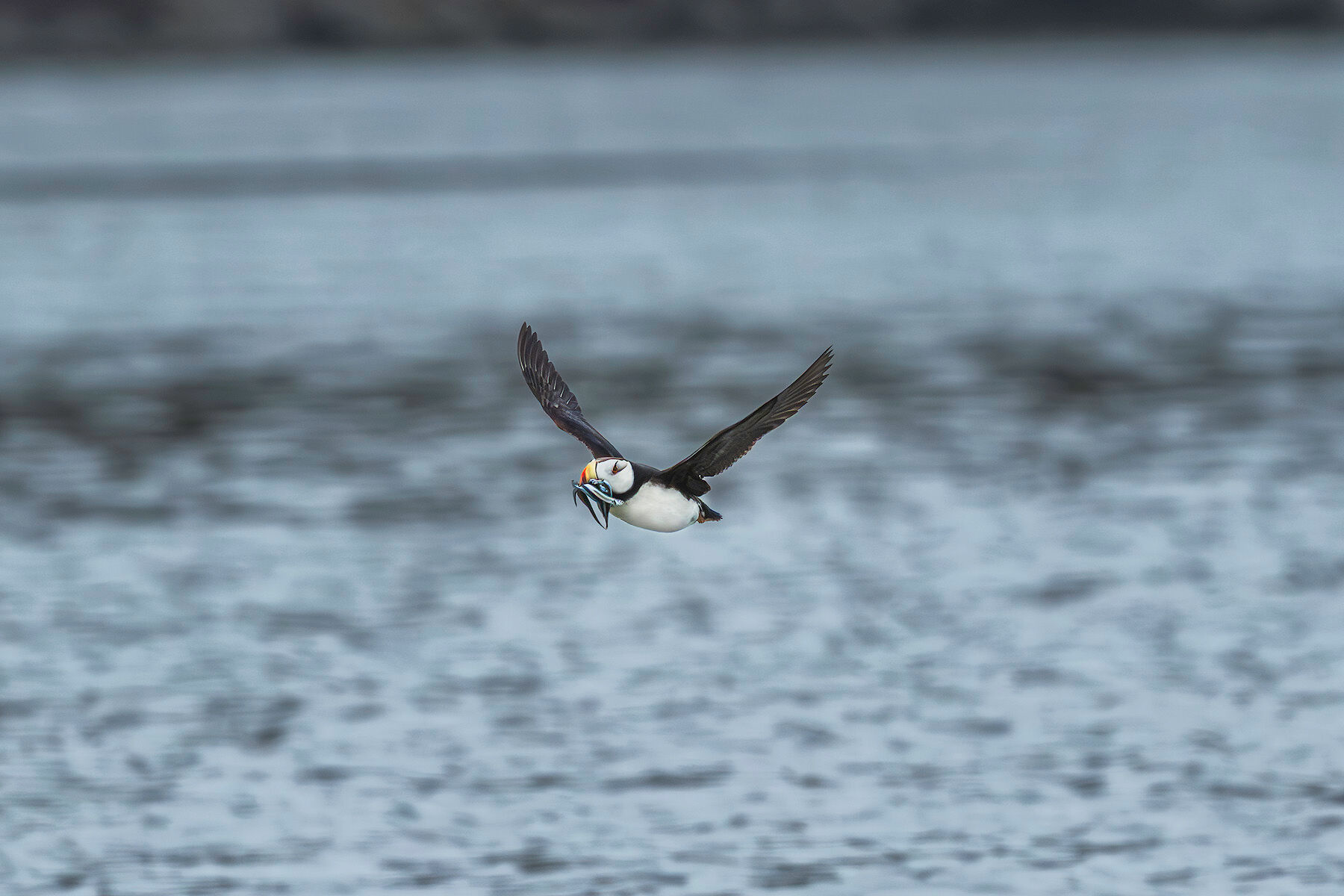
The fall migration was underway while we were there, so there were birds moving through the area all week. Swans, bald eagles and ducks were everywhere, and there were still some puffins, murres and cormorants hanging around the rookery this late in the season.
When the bears are slow, the birds give you something else to work on and some good nature photography in its own right, and birds in flight are good practice for tracking any fast-moving subject before the bears give you a reason to.
Camera Gear for Brown Bear Photography: Why a Zoom Beats a Prime
The thing everyone talked about most was how close the bears got. We don't approach them. The bears decide where they go, and at Silver Salmon Creek they're used to people moving slowly and quietly. There's no hunting in the national park, which is a big part of why the bears here let us get as close as they do, and sometimes they come a lot closer than you'd expect.
A lot of people come into a bear trip worried they won't have enough lens, and this group was no different. Then the bears came close enough that reach was the last thing anyone needed.
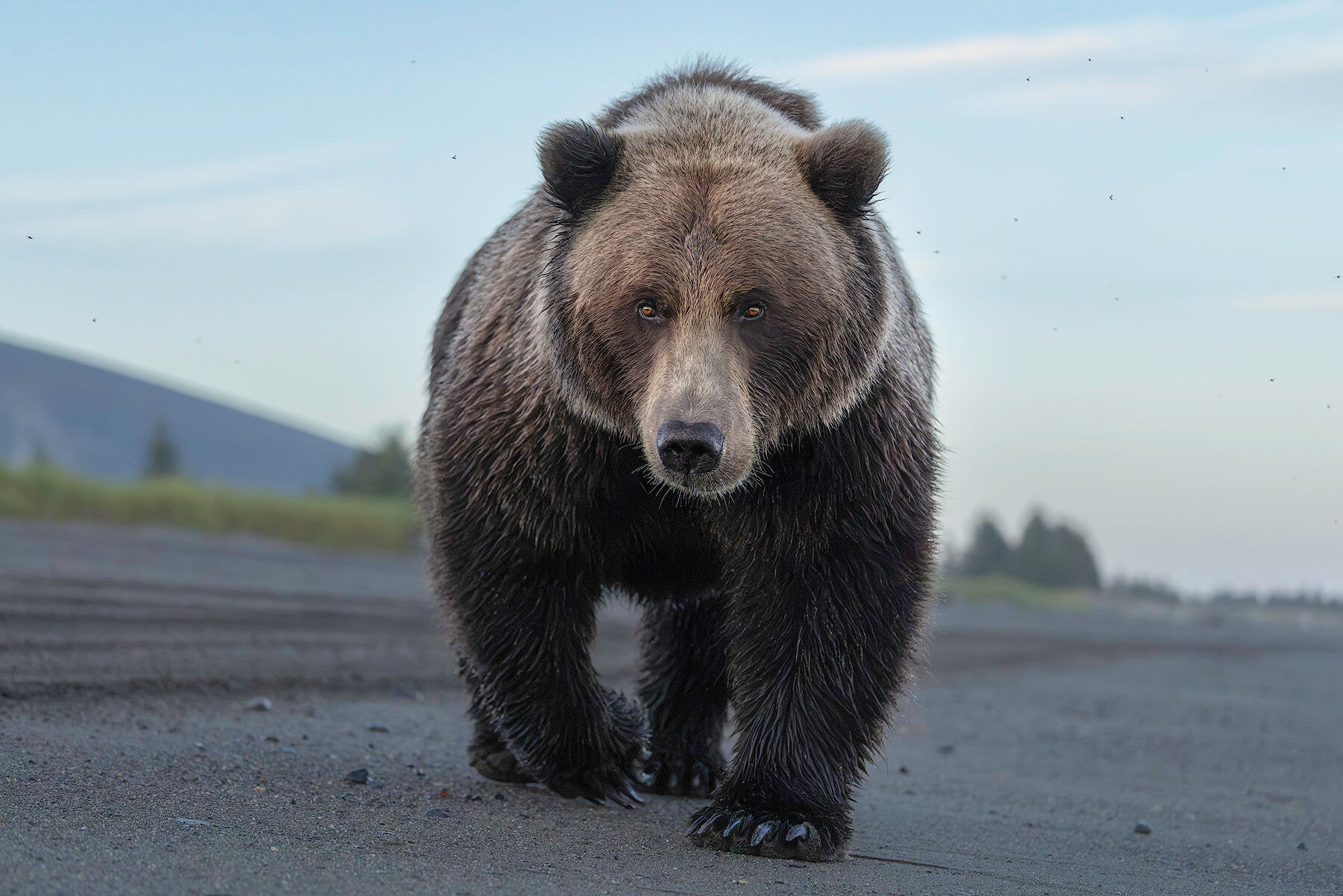
That's where a zoom earns its place over a prime. A telephoto lens is still the core of the kit, but with a long prime a bear that walks in close fills the whole frame and you can't fit the animal in, let alone any of the meadow or sky around it. With a telephoto zoom like a 100–500mm or a 200–600mm, you can pull back as the bear gets closer and still frame the whole scene, then push back in when it moves off. If you do want more reach for the bears farther out, a teleconverter on a zoom is a lighter way to get it than carrying a big prime. A tripod or monopod helps with that kind of glass when the light gets low early and late. If you're deciding what to bring for bear photography in Alaska, that flexibility matters more than the last bit of reach.
What the Group Said
It was a great week, and a couple of people from this group left reviews after the trip, and I'll let them speak for themselves. Eliza came in as a complete beginner on a borrowed camera, and her photography goal was to come home with a bear in focus.
"Was not eaten by a bear. … He was very good at explaining the fundamentals of photography to a complete novice using a borrowed camera and by the end I did get a bear photograph in focus which was my goal. … The photography editing class at the end of the trip was invaluable. … Silver Salmon Lodge had amazing hospitality and Chef Andrew is a genius in the kitchen." Eliza B.
"We had a great time at the bear workshop. The lodge and food there was fantastic, the bear viewing was incredible, and we're really glad we went. Michael did a good job getting the group into some great photography opportunities, and overall it was a really memorable experience." Crystal J.
Lake Clark Fall Bear Photography in September
This workshop runs in September at Silver Salmon Creek, with five photographers at most and the charter and the lodge included. It's a small-group bear photo tour and workshop, so you're out photographing coastal brown bears with instruction in the field while it's happening. If you want to photograph brown bears in September and your next trip is a week like this one, the fall bear workshop page has the dates, what's included and how to reserve a seat.
Frequently Asked Questions
When is the fall bear photography workshop at Lake Clark?
It runs in September at Silver Salmon Creek Lodge on the Cook Inlet coast of Lake Clark National Park. The workshop page has the current dates.
How close do you get to bears at Silver Salmon Creek?
We don't approach the bears, so they decide how close they come. There's no hunting in the national park, so the bears here aren't wary of people. Typical shooting distance is 50 to 100 yards, but the bears here are used to people moving slowly and quietly, and on this trip some of them walked a lot closer than that, including right through camp.
What lens should I bring for fall bear photography in Alaska?
Bring a telephoto zoom, something like a 100–500mm or a 200–600mm. A long prime gives you reach, but when a bear walks in close you can't pull back, and a zoom lets you frame the whole bear and the scene around it.
Is this a bear viewing trip or a photography workshop?
It's a photography workshop. You see plenty of bears, but the days are built around getting you in position for the light and helping you with the camera while it's happening, not just watching from a distance.
What happens if the weather delays the flight to Lake Clark?
You wait in Anchorage until the pilots say it's safe to fly. On this trip the charter held for eight hours on the way in, so build some slack into your travel plans on both ends because the weather sets the schedule.
What else can you photograph at Lake Clark in the fall?
The fall migration brings swans, bald eagles and ducks through the area, and on this trip there were still puffins, murres and cormorants around the rookery. The sunrises and sunsets in September can put a lot of color in the sky, which works well with bears in the frame.
Can you fly a drone at Lake Clark?
No. Drones aren't allowed in Lake Clark National Park, so plan on long glass instead.
Do I need to be an experienced photographer?
No. The group is capped at five so everyone gets instruction in the field, whether you're new to wildlife photography or have been at it for years. One photographer on this trip came as a complete beginner on a borrowed camera and went home with the in-focus bear photo she came for.
How many photographers are on the fall bear workshop?
Five at most, so there's room to work and time with each person in the field.