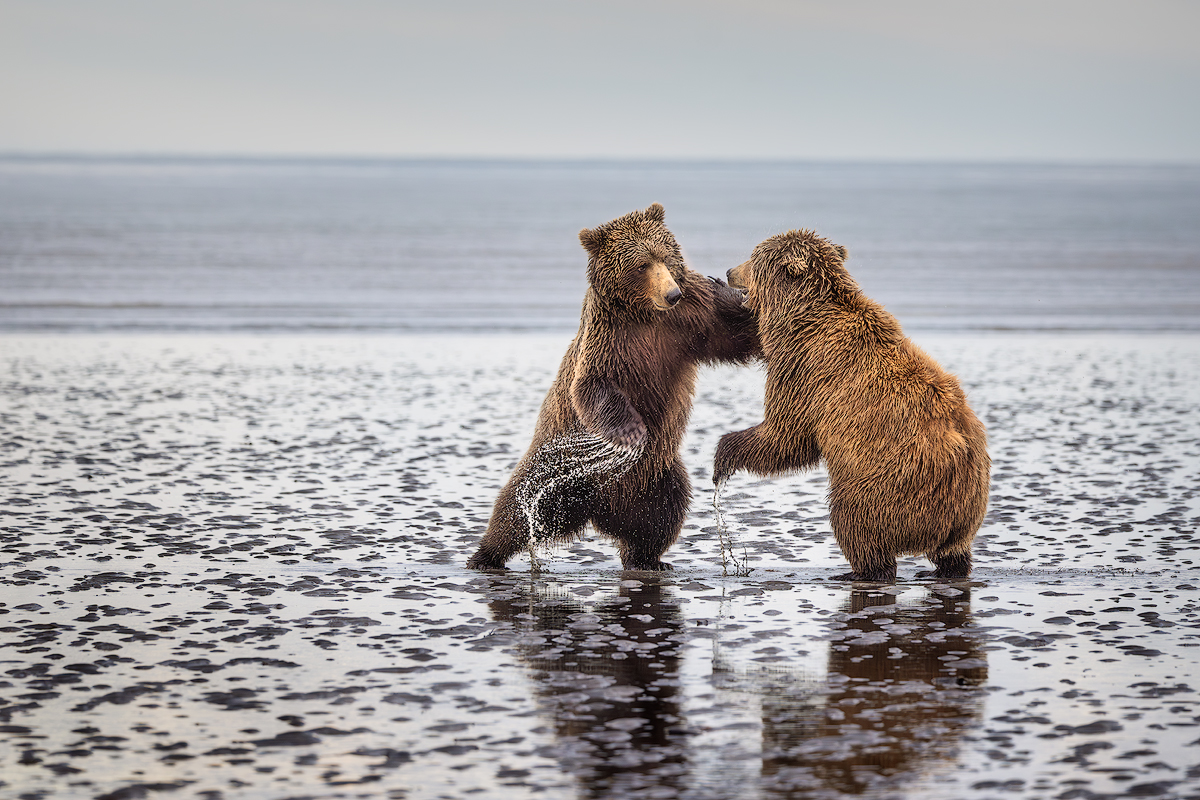
LAKE CLARK NATIONAL PARK, ALASKA
Lake Clark National Park: Where Coastal Brown Bears, Salmon Streams, and Alaska Wilderness Converge
September 11–18, 2026. Five photographers max. Salmon-run action, fall color, in-field coaching from Alaska-born wildlife photographer Michael Schultz.
FALL 2026 WORKSHOP
Questions? Email or 907-590-1567
ABOUT THE WORKSHOP
A small-group photography workshop in true Alaskan wilderness
This is a fall Alaska brown bear photography workshop at Lake Clark National Park, timed to the September salmon run. It's built for photographers of any level who want portfolio-quality coastal brown bear images — peak-hyperphagia salmon-fishing action, multiple bears in frame, and golden autumn tundra — and it matters because September is the one week those conditions overlap at Silver Salmon Creek, photographed at a five-person maximum so every participant gets real in-field instruction.
THE PLACE
200+
coastal brown bears per 50 square miles in Lake Clark National Park
Lake Clark National Park spans 4 million acres of roadless wilderness on the western shore of Cook Inlet — accessible only by float plane or charter from Anchorage. The park supports one of the highest concentrations of coastal brown bears anywhere on earth, with an estimated 200+ bears per 50 square miles drawn to the salmon streams, tidal flats, and sedge meadows along the Chigmit Range. This is where I bring photographers every September to shoot peak fall salmon-run action without the platform crowds at Brooks Falls. This is wildlife photography in true Alaskan wilderness — natural habitat, no roads, no boardwalks, no fences. Just bears in their natural environment doing what bears have done here for thousands of years.
THE PHOTOGRAPHER
Face The Outdoors in National Geographic
Alaska-born wildlife photographer with two decades photographing this state
I was born and raised in Alaska. Years in this state taught me how to read these bears — how they position in the current, when they'll commit to a strike, where the light will be when they do. That's not something you pick up flying in for a season. The Alaska Peninsula and Lake Clark National Park aren't sites I visit; they're where I work. Face The Outdoors has been featured in National Geographic, and I've led photography workshops from Alaska to abroad.
THE BASE
Silver Salmon Creek Lodge
Cook Inlet coast, inside Lake Clark National Park
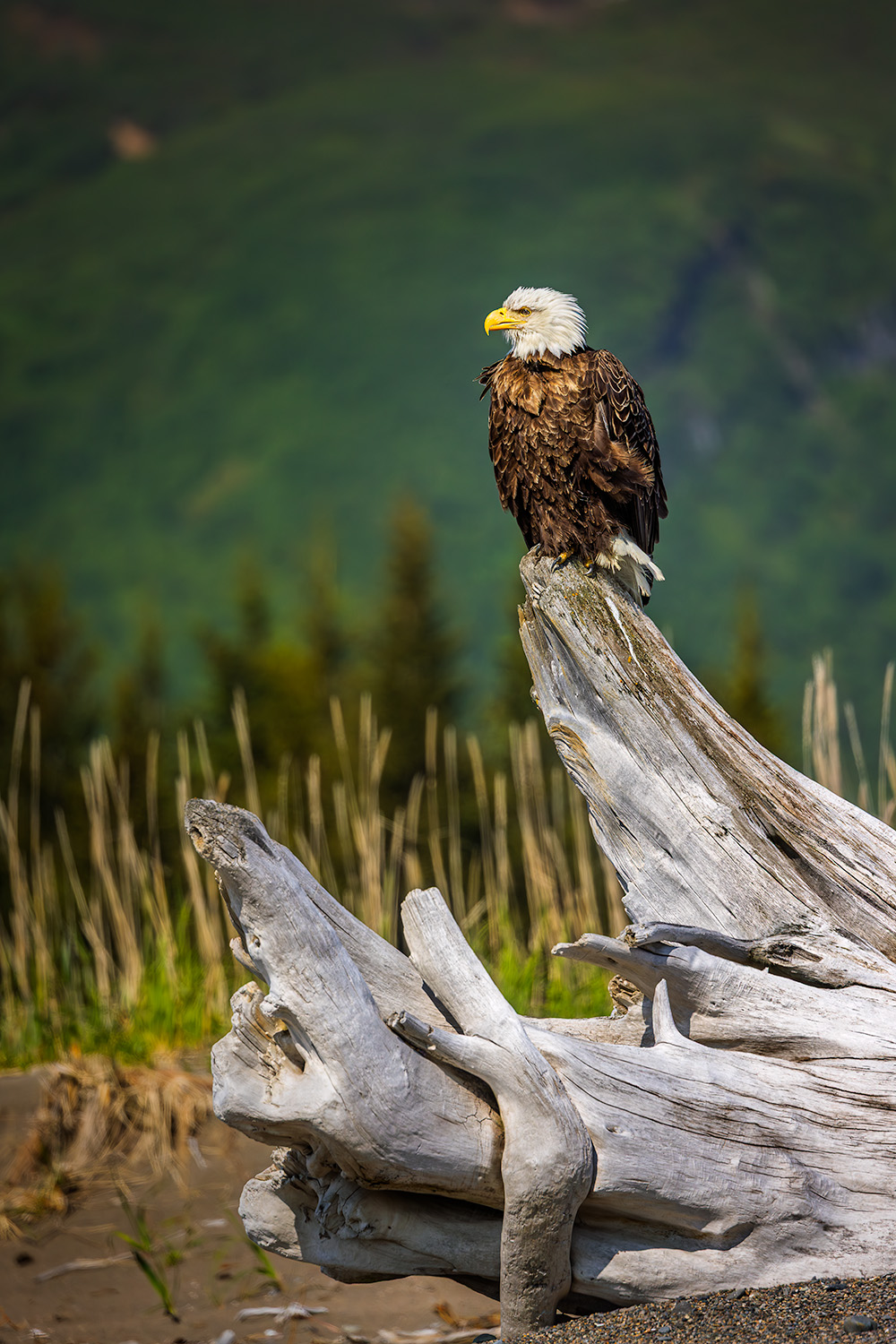
We base out of Silver Salmon Creek Lodge on the Cook Inlet coast — same lodge, same beach, same coastal bear country. Days run long: pre-dawn departures by ATV trailer to remote fishing locations, hours photographing coastal brown bears in active salmon runs, returns to the lodge for hot meals and image review. Beyond bears, the area routinely produces bald eagles, harbor seals, sea otters, and the occasional moose or wolf. September is bear season, and bears are the reason you come — but bald eagle photography is a regular bonus throughout the week, especially around the salmon streams.
THE FORMAT
5 vs. 7–12
photographers in our workshop vs. typical group sizes at most operators
This is a small group Alaska brown bear photography workshop. Maximum five photographers. That's a deliberate choice — at five, I can give every participant in-field instruction during peak action sequences without anyone fighting for position or settling for the angle nobody else wanted. Most operators run 7–12. We don't. This isn't one of those photo tours where you're stacked shoulder-to-shoulder for a 30-second photo opportunity — this is a true photo workshop with real instruction in a real wilderness setting.
FREE DOWNLOAD
Coming for the salmon run? Free 40-page Lake Clark bears guide.
IN-FIELD INSTRUCTION
How I read bears in the field — and how that changes your photographs
Read the moment
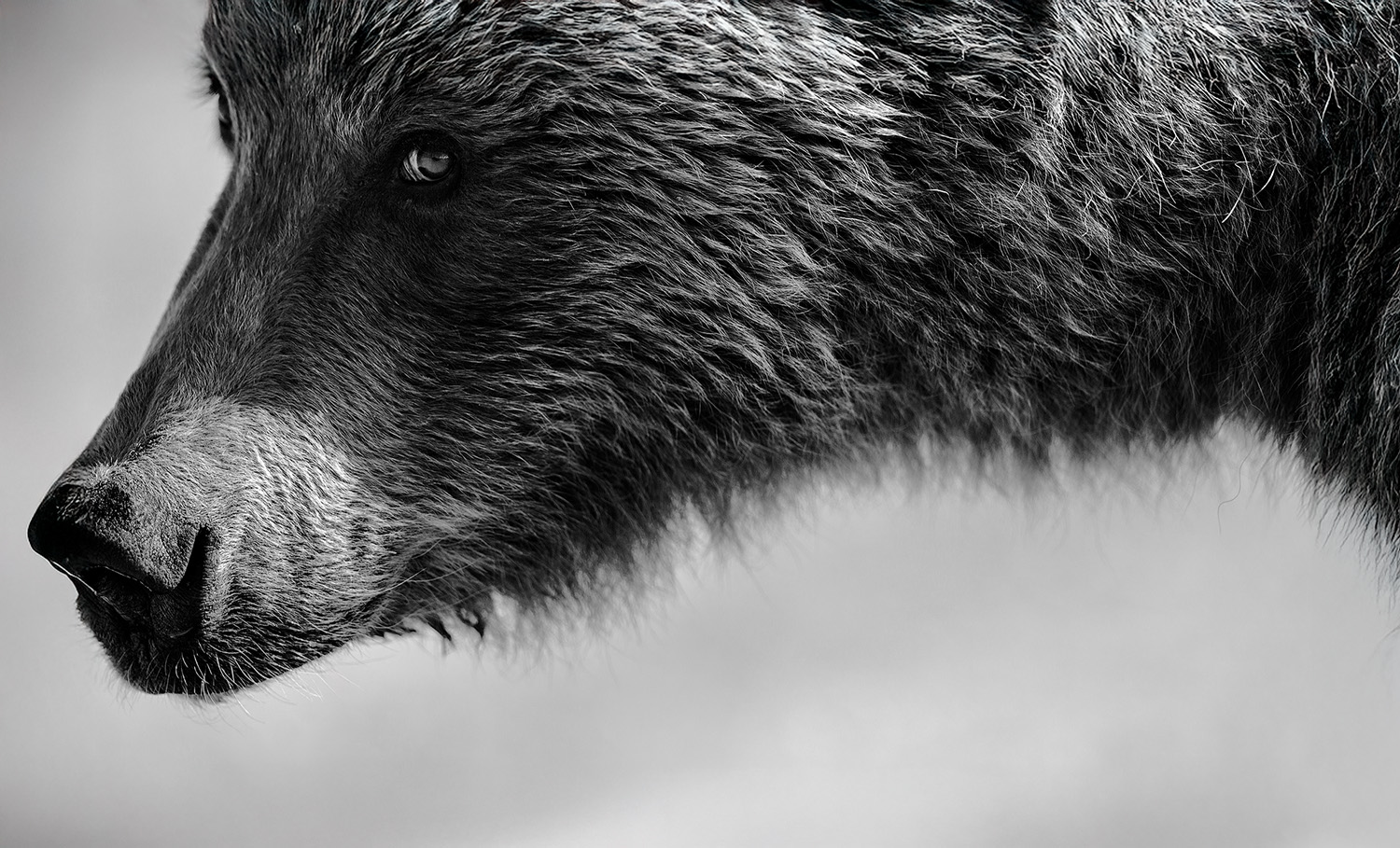
Reading bear behavior is half the workshop. Watching a coastal brown bear before the strike — how it angles into the current, how it tracks salmon downstream, the half-second tell before it commits — that's what separates a record shot from a frame you'll print. I'll teach you what I look for: shoulder position, water focus, ear angles, the moments when a bear is about to move and the moments when it's settled. You start anticipating instead of reacting. Your shutter timing changes. Your keeper rate goes up.
Work the field
We work the field with experienced bear guides who manage distance and approach so you can focus on photography. Most days that means walking the tidal flats and creek edges in chest waders or hip waders, getting low to put bears against clean backgrounds, and holding a position once we find good light. We don't chase. The coastal brown bears at Silver Salmon Creek are habituated to people moving slowly and predictably — they keep doing what they're doing as long as we keep doing what we're doing. That's how you get the close, intimate frames without the artificial feel of a viewing platform.
Print the frame
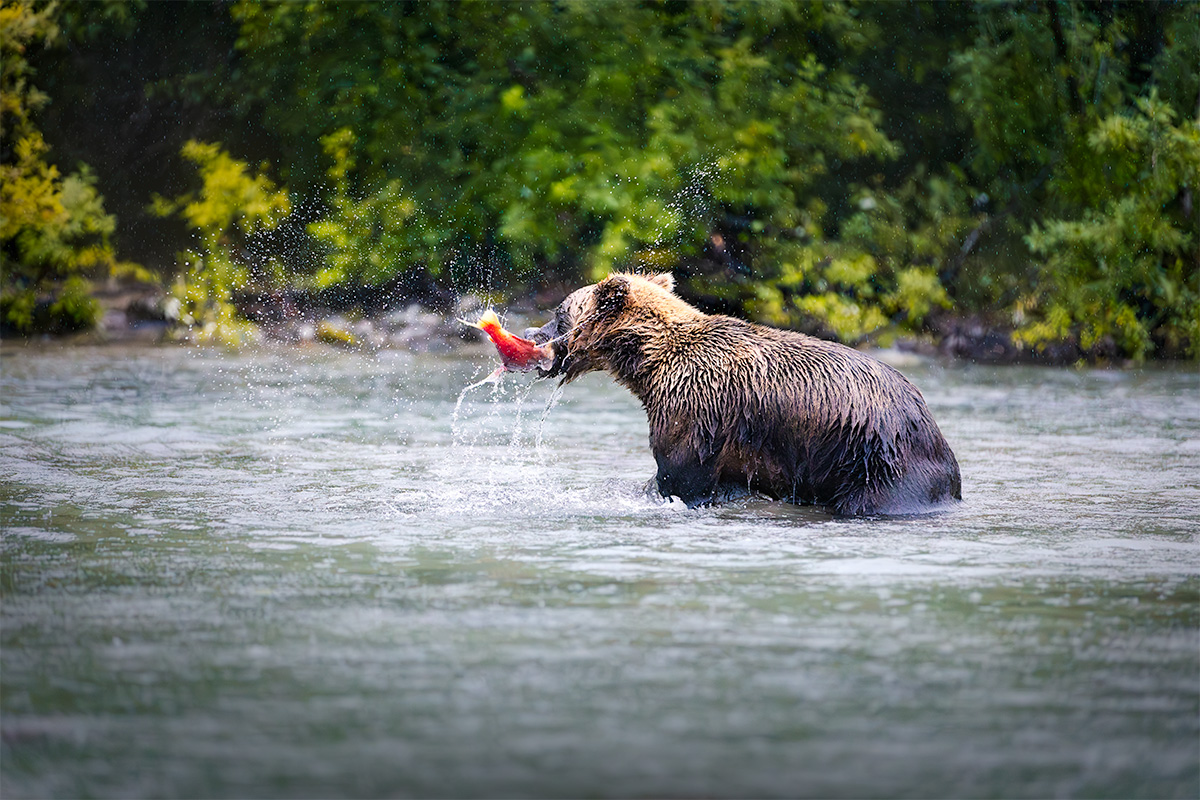
The result is photographs that read like wildlife photography, not zoo photography. A coastal brown bear with water exploding off a salmon catch, framed against autumn tundra, shot at eye level from 50 yards out — those are the images that come out of this workshop. Not because the bears are different here, but because the way we work them is. These are the kind of bears fishing sequences that produce strong images — bear viewing at its most authentic, on bears that have never been hand-fed or trained to a viewing platform.
WHY THIS WEEK
Photograph Coastal Brown Bears at Peak Salmon Run — September 11–18, 2026
September at Lake Clark is the single best week of the year to photograph brown bears. Coastal brown bears enter hyperphagia — the pre-hibernation feeding frenzy — and consume 15–20 sockeye salmon per day for 14–16 hours straight. Brooks Falls draws 30–50 photographers stacked on viewing platforms during peak season. We work the same salmon-run window with five photographers on open ground, no lines, no waiting, full freedom to position for the light and the angle. Dramatic catches with water exploding off the strike. Multiple bears in frame. Golden autumn tundra as backdrop. The photographs that come out of this week don't exist any other season.
Complete Package: $8,500 per person, all-inclusive
September 11–18, 2026 is fully booked. Join the waitlist for cancellations and first access to 2027 dates.
Primary focus: coastal brown bears in active sockeye salmon fishing during peak hyperphagia
Field timing: September 11–18, 2026 — peak mid-September salmon spawn at Silver Salmon Creek
Backdrop: golden tundra, russet willows and birch, low fall sun angle
Group size: 5 photographers maximum — every participant gets in-field instruction during action
Location: Lake Clark National Park, Cook Inlet coast — no platforms, no crowds, walk freely
Instruction: action photography settings, predictive focus, anticipating strikes — taught in the field as it happens
PEAK SEASON
Why September Is Peak Season for Alaska Brown Bear Photography
Two factors converge in mid-September at Lake Clark, and only in mid-September. The bears behave one way because of the salmon run. The light and the landscape behave another way because of where the sun sits, what the tundra is doing, and what coastal weather typically delivers. Both windows last roughly two weeks. The workshop is timed to their overlap.
Hyperphagia: The Behavior That Drives Fall Bear Photography
Hyperphagia is the scientific term for the seasonal feeding intensity that shapes everything about September bear photography. A coastal brown bear at Lake Clark in mid-September is metabolically driven to put on as many calories as possible before denning. That changes how they hunt, how long they stay in the water, how aggressively they defend a fishing spot, and how tolerant they are of other bears nearby. For photographers, it means bears stay in shooting range longer, hold positions in better light, and produce action sequences that simply don't happen at any other time of year.
Fall Colors and Low-Angle September Light
The September landscape at Lake Clark is the second reason this week matters. Sedge grasses turn golden, dwarf willows and birch shift to russet, and the sun drops to a low angle that warms every frame from morning through evening. Dark coastal brown bear fur against golden tundra, lit by warm fall light — that's the postcard frame nobody gets in July. Cooler temperatures also tend to produce more atmospheric conditions: low cloud, mist on the inlet, dramatic skies after weather fronts pass. This is also when landscape photography opportunities at Lake Clark peak — the dramatic peaks of the Chigmit Range catch the first light at sunrise, and Cook Inlet reflects the changing colors of the tundra and sky.
FALL VS SPRING
Fall vs Spring: Which Alaska Brown Bear Photography Workshop Fits Your Goals
I run two Alaska brown bear photography workshops at Silver Salmon Creek Lodge each year — one in spring, one in fall. Same lodge, same bears, two completely different shoots. Here's how September fall bear photography compares to June spring photography so you can pick the workshop that matches what you actually want to bring home:
This Workshop
Fall
September 11–18, 2026
Primary Bear Behavior
✓ Salmon fishing action (15–20 fish/day)
Cubs Age
✓ 7–10 months (more independent)
Landscape Colors
✓ Golden tundra, autumn fall foliage
Photography Focus
✓ Wildlife action shots, fast-moving fishing behavior
Bear Activity Level
✓ Peak hyperphagia (maximum feeding)
Best For
✓ Action photography, dramatic fall colors
Alternative
Spring
June 4–11, 2026
Primary Bear Behavior
General foraging, early-season activity
Cubs Age
3–4 months (most adorable)
Landscape Colors
Vibrant green, wildflowers
Photography Focus
Behavioral and family interactions
Bear Activity Level
Moderate feeding, mating season behaviors
Best For
Cubs, unique behaviors, maximum daylight
My recommendation: If your priority is wildlife action — bears in motion, splash-frame salmon catches, dramatic backdrops — book the fall workshop. The September salmon run produces sequences you can't get any other week of the year. If your priority is intimate behavior, mother-cub interactions, mating displays, and softer green landscapes, the spring workshop is the better fit. Both are exceptional. They just answer different photographic questions. See spring workshop details.
LAKE CLARK VS BROOKS FALLS
Lake Clark vs Brooks Falls: Why Lake Clark Wins for September Bear Photography
Brooks Falls at Katmai National Park is the famous one — and in July it deserves the reputation. Brooks Falls is famous for dramatic bear and salmon encounters. By September the salmon run there has tapered, the boardwalk crowds are still there, and you're shooting from fixed platforms with 30–50 other photographers. Lake Clark is the opposite story in September: peak salmon spawn at Silver Salmon Creek, no platforms, no boardwalks, no crowds. You walk the tidal flats and creek edges, position freely for the light, and work the bears at ground level. Same coastal brown bears. Better access. Smaller group. Lower price.
Our Workshop
Lake Clark
Cook Inlet · Lake Clark National Park
September Crowds
✓ Private group of 5 photographers
Movement Freedom
✓ Walk freely, multiple shooting angles
Fall Salmon Run Timing
✓ Peak mid-September
Wildlife Photography Instruction
✓ One-on-one guidance (5 max)
Price
✓ $8,500 all-inclusive
Comparison
Brooks Falls
Katmai National Park
September Crowds
30–50 people daily
Movement Freedom
Fixed platform positions only
Fall Salmon Run Timing
Peak July, moderate September
Wildlife Photography Instruction
Large groups (8–12)
Price
$10,000–$12,000+
Brooks Falls bears at Katmai National Park draw the famous crowds; Lake Clark coastal brown bears along the Katmai coast and Cook Inlet draw the photographers who actually want to make their own images.
Bottom line: Lake Clark delivers the same coastal brown bear density as Katmai with a fraction of the crowds at 75% of the cost — and unlike Brooks Falls, you're not shooting from a platform. For serious wildlife photographers in September, this is the right Alaska brown bear photography workshop.
WHERE WE STAY
All-Inclusive at Silver Salmon Creek Lodge
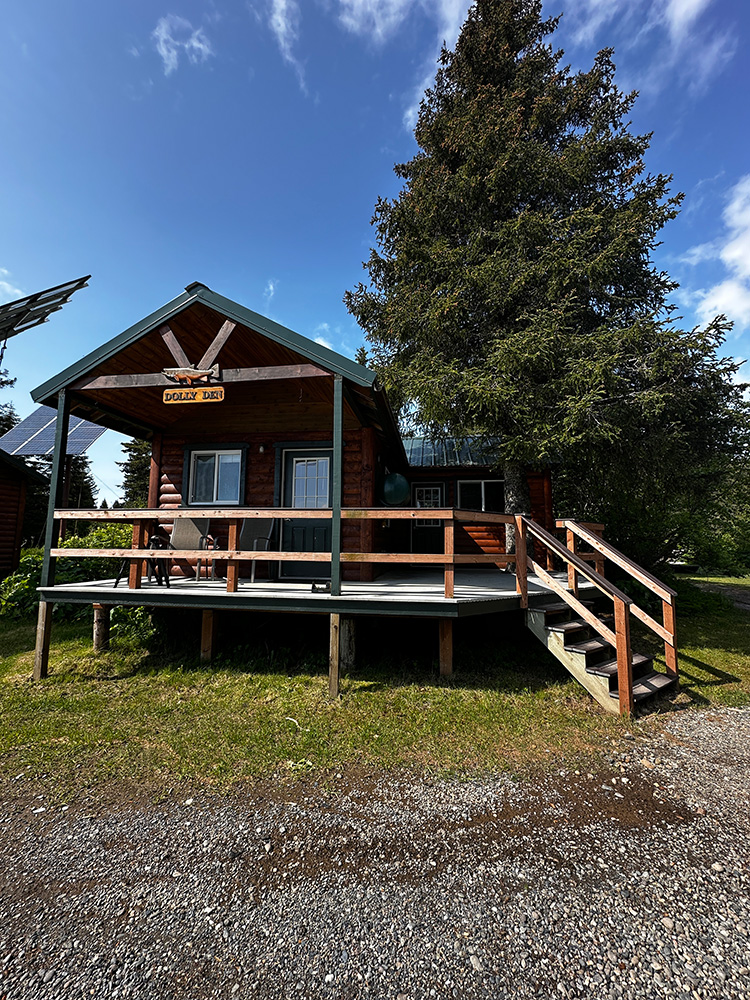
Silver Salmon Creek Lodge sits on the Cook Inlet coast inside Lake Clark National Park, with the beach and the bear territory directly out front. After full days in the field, photographers come back to private guest cabins at Silver Salmon Creek Lodge — the kind of remote Lake Clark lodge that's earned its reputation across decades of hosting wildlife photographers — and chef-prepared meals built around fresh Alaskan seafood, plus a wood-walled common area for image review and conversation.
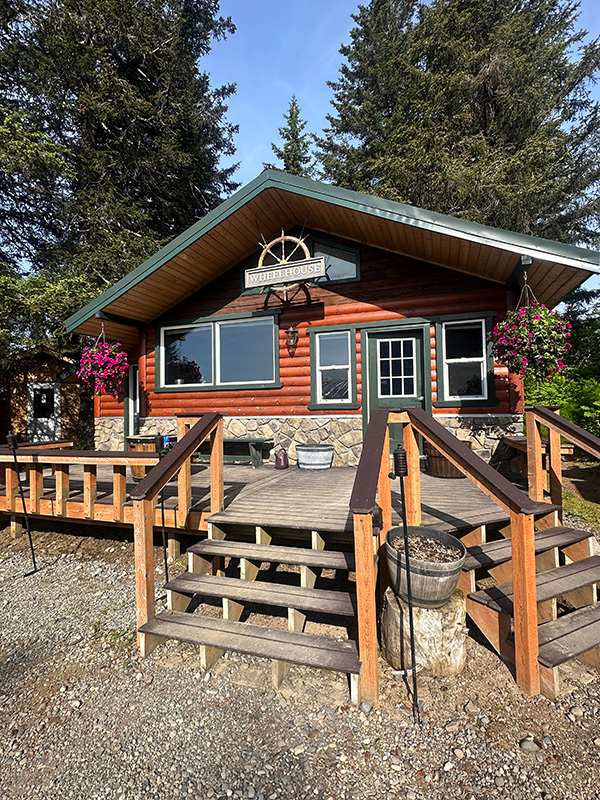
The lodge has hosted photographers for over 20 years and knows what we need: early breakfasts, late dinners, drying space for waders and rain gear, reliable power for charging batteries and dumping cards. Workshop tuition covers everything from the moment you land at Anchorage airport (Ted Stevens International, ANC): charter flights to the lodge, all lodging, every meal, ground transportation by ATV trailer, professional bear guides, photography instruction, and all park fees. The full breakdown is in the Workshop Details section below.
WORKSHOP DETAILS
Alaska Brown Bear Photography Workshop September 2026 — Dates and Details
The Logistics
Dates
September 11–18, 2026 (8 days, 7 nights)
Group Size
Maximum 5 photographers (small group advantage)
Difficulty
Easy / Moderate (short walks, photography-focused)
Cost
$8,500 per person, all-inclusive
Status
Fully booked — waitlist open
✓ Included
- ✓7 nights lodging (Anchorage + Lake Clark wilderness lodge + weather buffer)
- ✓Round-trip charter flights (Anchorage ↔ Lake Clark)
- ✓All meals at lodge (breakfast, lunch, dinner)
- ✓Welcome and farewell dinners in Anchorage
- ✓Ground transportation (ATVs with trailers for remote locations)
- ✓Professional bear guides and safety instruction
- ✓Photography instruction and daily wildlife photography mentoring
- ✓Daily image review and field critique sessions
- ✓All National Park fees and permits
- ✓Airport transfers from Ted Stevens International Airport
✗ Not Included
- ✗Airfare to/from Anchorage
- ✗Meals in Anchorage (except welcome/farewell)
- ✗Travel and equipment insurance (highly recommended)
- ✗Photography gear and equipment
- ✗Tips for guides and staff (discretionary)
- ✗Alcoholic beverages (available for purchase)
THE FULL BROCHURE
Take the full workshop brochure with you
Everything on this page — dates, pricing, what's included, and what a week in the field actually looks like — as a single PDF you can review offline or send to whoever you're traveling with.
A DAY IN THE FIELD
What a Day in the Field Looks Like at Lake Clark
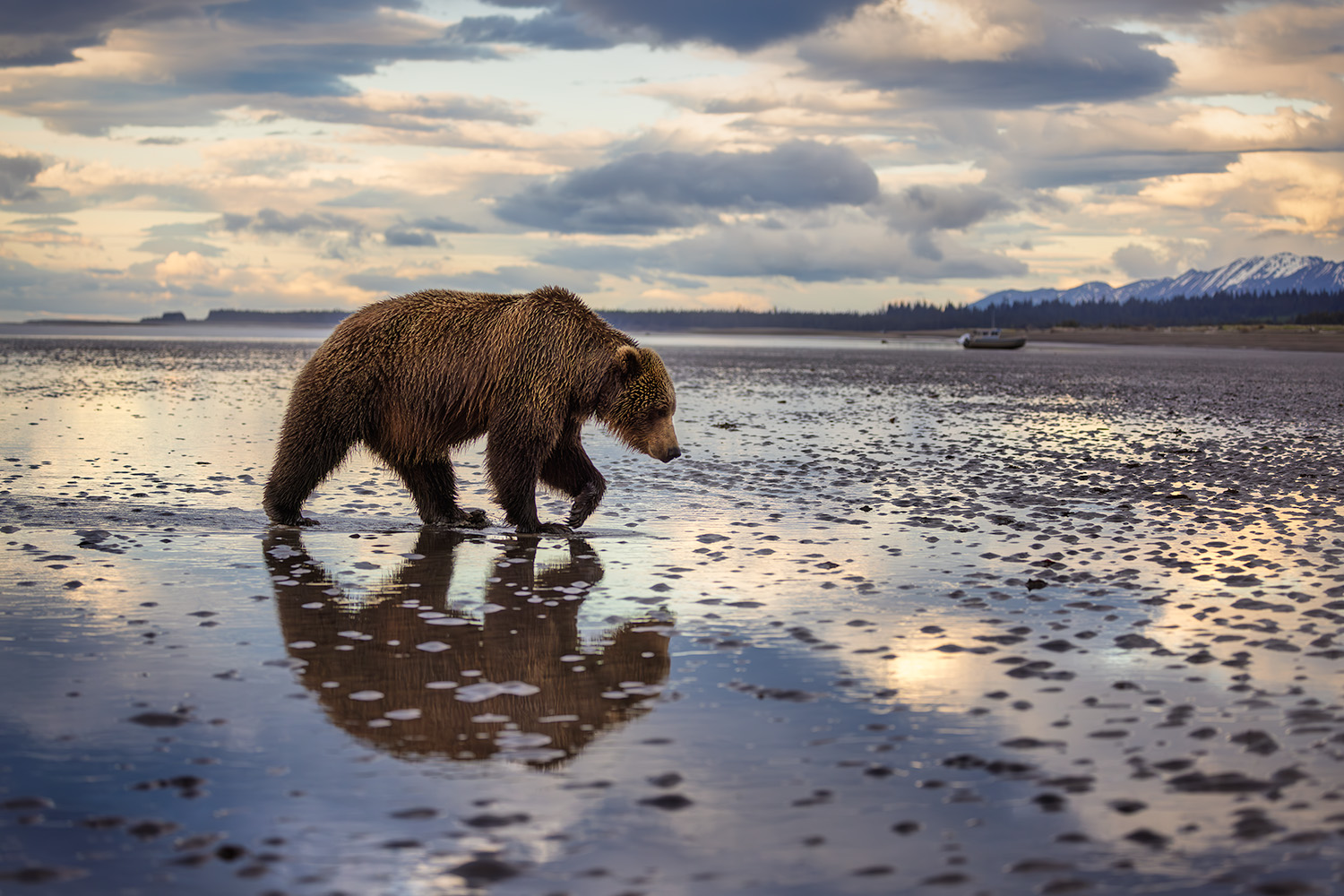
Mornings start before sunrise. We grab coffee, load gear into the ATV trailer, and head out from Silver Salmon Creek Lodge to position ourselves wherever the light and the bear activity are best that morning — usually a creek mouth, a tidal flat, or a sedge meadow within a mile or two of the lodge. We work the location for two to four hours, then break midday to return to the lodge for lunch, image review, and a chance to swap memory cards and recharge batteries. Afternoon sessions follow the same pattern — out to a different location chosen for late-day light, back to the lodge for dinner and field critique. The best photography opportunities happen in the early morning and late afternoon when the light is best, and emergency contact information is shared with every participant on day one in case conditions change unexpectedly in the field.
The pace adapts to the bears and the weather. Some days we'll spend six hours in one spot because the salmon are running thick and bears keep cycling through. Other days we'll move three or four times chasing better light or different behavior. That's the advantage of working in a small group with a guide who knows the area — we make decisions in real time based on what the conditions are giving us, not on a fixed itinerary.
Evening image review and post processing instruction happen in the field when there's downtime, or back at the lodge in the wood-walled common area. If conditions are good and we want to keep shooting, we save the post processing session for the last night at the Anchorage hotel — or schedule a follow-up Zoom after the workshop ends. The priority is always the field. The bears don't wait, and we don't either.
YOUR INSTRUCTOR
Your Instructor: Michael Schultz, Alaska-Born Wildlife Photographer
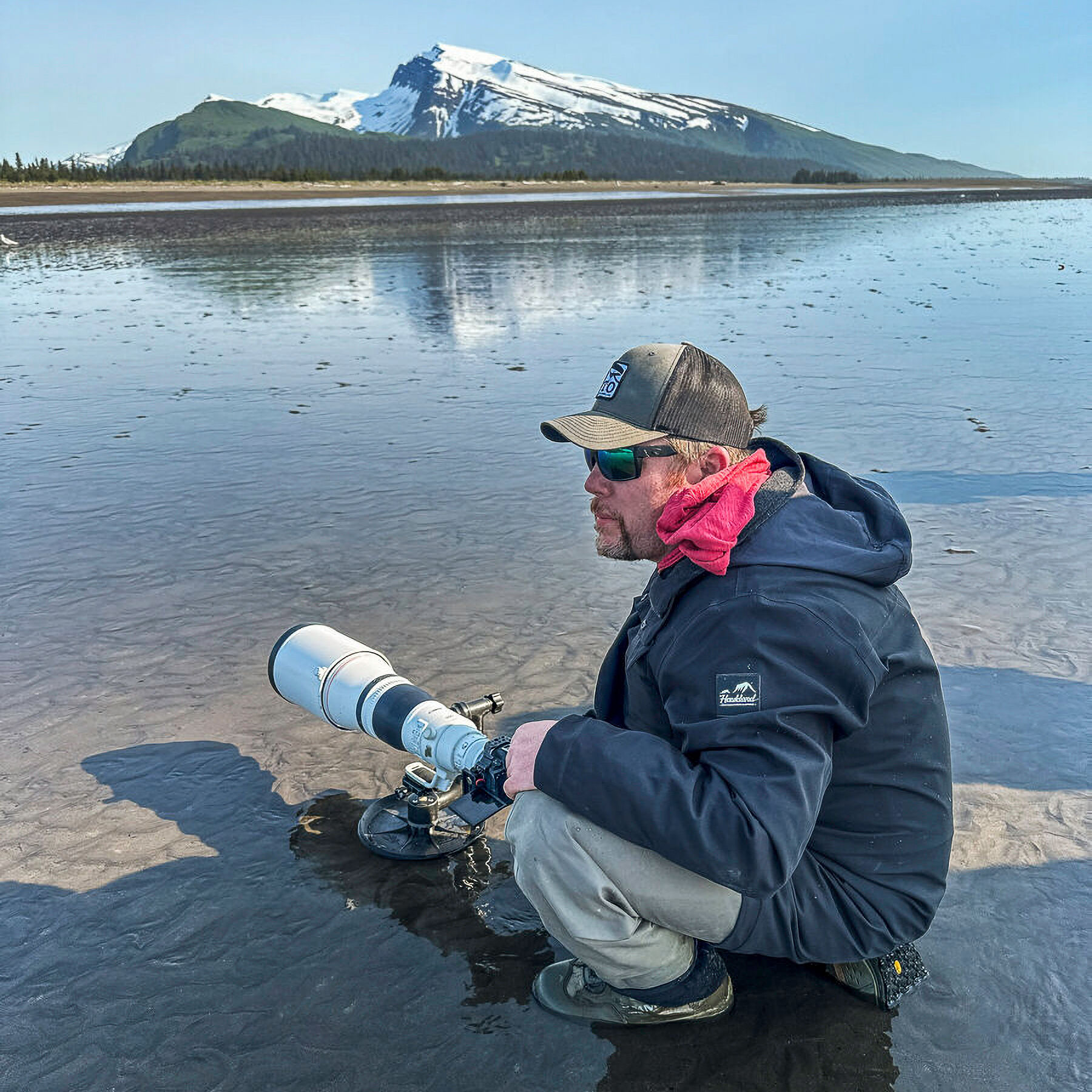
I'm Michael Schultz, founder of Face The Outdoors Photography. I was born and raised in Alaska, and I've spent years photographing this state professionally — its bears, its aurora, its coastlines, its weather. Face The Outdoors has been featured in National Geographic, and I've led photography workshops from Alaska to abroad. Alaska is home, and Lake Clark is one of the locations I return to every year.
The September fall bear photography workshop at Silver Salmon Creek is built around years of personal Alaska wildlife photography experience and the operational backbone of Silver Salmon Creek Lodge — one of the most experienced bear photography operations on the Alaska Peninsula. What I teach in the field is what I actually use myself: how to read coastal brown bear behavior before the strike, where to position for the light during peak hyperphagia, how to dial in shutter speed and continuous autofocus for fast salmon-fishing action, and when to slow down and wait for the frame instead of chasing it. Beginners get the fundamentals dialed in. Intermediate and advanced photographers get one-on-one mentoring on the artistic decisions that separate good wildlife images from portfolio-quality ones.
My approach is direct and practical. I teach the way I shoot: settings serve the photograph, not the other way around. The Alaska brown bear photography workshop format — five photographers maximum, eight days in the field, image review every evening — is built around the idea that the best wildlife photographers I've ever met learned by being in the field with someone who could explain what was about to happen and why. That's what you're paying for here.
"Inimitable....the ultimate compliment."
— Susan Johnson
WHO IT'S FOR
Who This Alaska Brown Bear Photography Workshop Is For
This workshop is built for serious photographers who want to come home with portfolio-quality coastal brown bear images. Skill level isn't a barrier — group size is. With five photographers maximum, I can match instruction to where each participant actually is. Beginners get the fundamentals dialed in: shutter speed for fast salmon-fishing action, continuous autofocus modes, exposure for high-contrast scenes with dark fur and bright water. Intermediate and advanced photographers get one-on-one mentoring on the artistic decisions — composition with fall colors, anticipating peak hyperphagia behavior, the difference between a documentary frame and a portfolio frame.
Physical Requirements
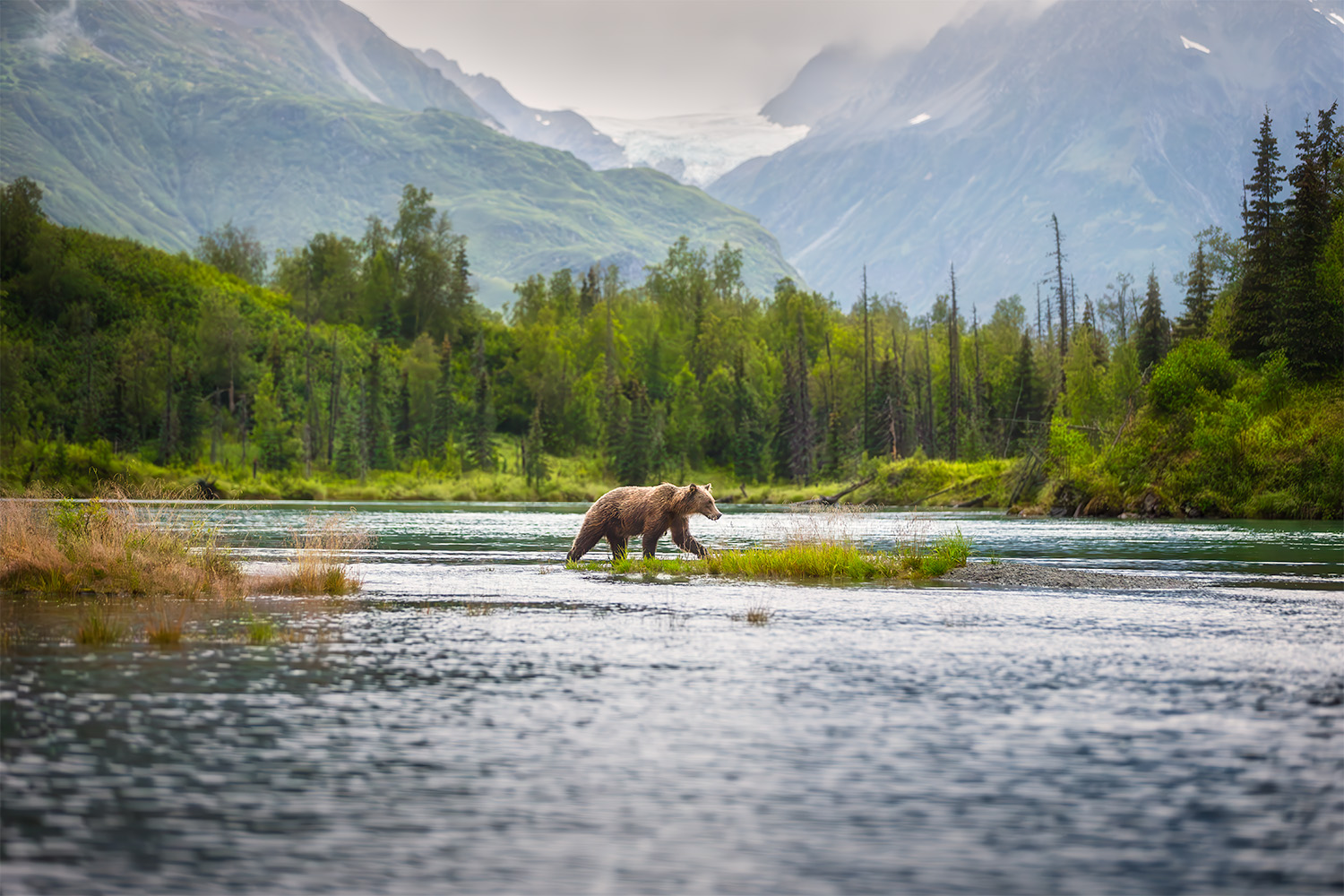
Walk up to 1/4 mile over uneven terrain while carrying camera gear (15–25 lbs). Stand or kneel for several hours. Navigate sandy beaches, marshland, and tidal flats. Get in and out of ATV trailers. Age isn't a factor — fitness level is. Past Alaska wilderness photography workshop participants have ranged from 25 to 75 years old.
Bringing a Guest
Yes, but all 5 spots require full tuition ($8,500 each) due to remote location constraints and limited lodge capacity at Silver Salmon Creek.
GEAR & EQUIPMENT
Camera Equipment for Alaska Brown Bear Photography
50-Pound Weight Limit
Charter planes have strict weight limits for this remote Alaska wilderness location. Pack what you need for the field; extra luggage stays at the Anchorage hotel.
Batteries
Bring multiple charged camera batteries — cold mornings drain them faster than you'd expect.
Power
Power for charging is reliable at the lodge between sessions.
Minimum Equipment Requirements
- ✓DSLR or mirrorless camera with fast burst mode (10+ fps recommended for salmon-fishing action sequences)
- ✓Telephoto lens for coastal brown bear photography (100–500mm zoom recommended)
- ✓Tripod or monopod with fluid head (recommended for tracking salmon-fishing action)
- ✓Multiple batteries (4+ charged, cold weather drains quickly)
- ✓High-capacity memory cards (action photography fills cards fast)
- ✓Rain covers for camera and lenses (essential for September Alaska weather)
Waders & Weather Gear
For wearing waders comfortably with camera gear in cold water and on long shoots, layer a wool base under the wader liner. Most days at Silver Salmon Creek involve at least some time wading shallow creeks for better angles on bears fishing — chest waders or hip waders, depending on the location and the day.
Not Sure About Your Gear?
Contact me before booking: [email protected] / +1-907-590-1567. I'll review your equipment for Alaska brown bear photography suitability and recommend alternatives if needed.
Rentals in Anchorage
Professional wildlife photography equipment can also be rented in Anchorage from Stewart's Photo Shop and Shutterbug, including 400–600mm telephoto lenses and full-frame camera bodies.
A complete packing list with clothing recommendations for Alaska's fall season will be sent after registration.
Frequently Asked Questions About Fall Alaska Brown Bear Photography
Common questions about the Fall Alaska Brown Bear Photography Workshop at Lake Clark National Park:
Why is September the best time to photograph bears in Alaska?
Peak Salmon Run: September is when fall sockeye salmon spawning peaks at Silver Salmon Creek, drawing maximum bear activity for the best fall coastal brown bear photography of the year.
Hyperphagia Feeding: Bears enter pre-hibernation feeding frenzy, consuming 15–20 salmon per day across 14–16 hours of nearly continuous feeding — nonstop wildlife action.
Fall Colors: Golden tundra, russet willows and birch, and low-angle September light create backdrops unavailable in summer.
Remote Wilderness Access: September is off-peak for general tourism, meaning we typically have prime bear photography locations to ourselves.
What should I know about coastal brown bear behavior during the fall salmon run?
Bears enter a feeding frenzy during hyperphagia from August to September, when they put on maximum calories before denning. Brown bears primarily feed on salmon during the summer and fall salmon runs, and brown bear mothers teach their cubs how to fish. Alaska brown bears thrive in coastal meadows rich in sedge grass during summer, and bears often wrestle and play in grassy meadows. Adult coastal brown bears can weigh up to 1,000 pounds. Maintaining a safe distance from bears is essential to avoid provoking them, and traveling with a certified guide enhances safety while photographing bears.
How does fall bear photography compare to spring in Alaska?
Choose Fall If You Want: Salmon fishing action, peak hyperphagia behavior, fall colors, older cubs (7–10 months), dramatic action shots.
Choose Spring If You Want: Young cubs (3–4 months), maximum daylight (20 hours), clamming behavior, mating season displays, vibrant green landscapes.
Both workshops are designed to maximize learning and photographic opportunities. Each offers a different aesthetic and behavioral focus.
Is bear photography safe? How close will we get?
Safety is the absolute priority on every workshop.
Distance: Typical shooting distance is 50–100 yards. Telephoto lenses (400–600mm) create intimate wildlife images while keeping a safe working distance.
Safety Measures: We work with professional bear guides who have years of experience with the coastal brown bears at Silver Salmon Creek. Daily safety briefings, bear behavior education, and strict field protocols keep the group safe. The bears at this location are habituated to people moving slowly and predictably — we don't approach them, and we don't put them in situations that change their behavior.
Bottom Line: With proper guidance and respect for the bears, fall coastal brown bear photography at Lake Clark is extremely safe.
Can beginners photograph fast-action wildlife and salmon fishing?
Yes — and that's exactly why this Alaska brown bear photography workshop is limited to 5 photographers.
Why Beginners Succeed: Individual instruction, predictive autofocus training, and repeated action sequences allow rapid skill improvement throughout the week.
What You'll Learn: Fast shutter speeds for freezing salmon catches, continuous autofocus tracking, panning techniques, burst-mode shooting strategy, and reading bear behavior to anticipate the strike.
Pro Tip: Bring a camera capable of 8+ fps. I'll teach you how to use it effectively in the field.
What's the weather like in September at Lake Clark?
Expect everything — preparation matters.
Temperature: Mornings 20–45°F, afternoons 45–60°F. Conditions can change quickly.
Typical Conditions: Partly cloudy, frequent rain, coastal wind, dramatic skies after weather fronts pass.
The Good News: Bears are active regardless of weather, and moody atmospheric conditions often produce the best images of the trip.
Is travel insurance necessary?
Yes — strongly recommended.
Why: Protects your $8,500 investment, covers flight delays from Anchorage, emergency evacuation from remote wilderness, and expensive photography gear.
Recommended provider:Squaremouth.com
Will there actually be salmon? What if the run is late?
This is wild Alaska — nature doesn't run on a schedule, and salmon runs vary year to year. That's why the workshop window is timed to mid-September, when sockeye spawning at Silver Salmon Creek consistently peaks. Lodge operators and bear guides who work this location year-round plan their entire season around this same window.
Even in slower salmon years, the Lake Clark coast offers more than enough subjects to fill memory cards: coastal brown bears foraging the tidal flats, bald eagles working the same salmon, sea otters and harbor seals in the inlet, fall landscapes shifting through autumn light. The workshop is built around the bears, but the location gives you a lot more than bears to photograph.
How do I get to Lake Clark for this workshop?
Step 1: Fly to Anchorage (Ted Stevens International Airport, ANC).
Step 2: Charter flight to Lake Clark from Anchorage (1-hour scenic flight, included in workshop fee).
Photography workshops like this often include floatplane access to bear territories.
Important: Do NOT book return flights for the same day as the charter return. Weather buffer days are built into the schedule because Alaska weather can ground flights.
Will there be other wildlife besides bears?
Guaranteed: Bald eagles, seabirds.
Likely: Sea otters, harbor seals, puffins.
Possible: Moose, foxes, wolves (rare).
Photography focus: 80% coastal brown bears, 10% other wildlife, 10% fall landscapes.
What's your cancellation policy?
Deposit: $2,800 non-refundable, secures your spot.
Refunds: Sliding scale based on cancellation date relative to workshop start.
Weather buffer: Anchorage buffer night included in itinerary in case charter flights are weather-grounded.
Travel insurance: Strongly recommended to protect your full investment.
View the complete cancellation policy and terms for full details.
Can I bring a spouse or guest who doesn't photograph?
Yes, with one important policy: due to limited capacity (5 spots total at Silver Salmon Creek Lodge), all participants must register and pay full tuition ($8,500).
Guests are welcome to photograph, observe, or simply enjoy the wilderness experience — but they count as one of the 5 spots.
What camera equipment do I need?
Minimum: DSLR or mirrorless camera, telephoto lens (200mm minimum, ideally 400–600mm), tripod or monopod.
Recommended: Multiple charged batteries, high-capacity memory cards, rain protection for camera and lenses.
Gear questions? Contact me before booking. I'll review your equipment for Alaska brown bear photography suitability.
What camera settings and gear work best for fall bear photography?
High shutter speeds of 1/1000s or faster are required to freeze fast-moving bears, and camera settings typically include f/6.3 and shutter speeds of 1/800 to 1/1600 for salmon-fishing action. Using continuous burst mode helps capture unpredictable bear movements, and using animal eye detection autofocus helps capture sharp images of bears. Using two camera bodies allows photographers to avoid lens changes in harsh conditions. A long telephoto lens of 400mm or greater is recommended for safety when photographing bears — photographers often use 200-400mm lenses, and a 100–500mm zoom is ideal for this workshop. Rain covers for camera gear are crucial due to unpredictable Alaskan weather, and rain sleeves protect cameras from moisture during shoots. Adequate power sources such as extra batteries are necessary for gear in cold weather. Avoid shooting from a standing height to create a more intimate perspective with the subject, and shoot early — early morning and late evening provide optimal lighting conditions for photography.
Still Deciding?
Let's figure out the right trip together.
Booking a workshop is a real decision, and some questions a website can't answer — your gear, your experience level, which of my trips actually fits what you want to photograph. So I set aside 45 minutes for a one-on-one call: bring your work if you'd like, and you'll leave with a clear plan and the right trip picked.
The session is $197, and if you book any workshop within a year, that full $197 comes off your deposit. If you go, it costs you nothing extra — if you don't, you've still walked away with a plan.
CONSERVATION
Conservation and Responsible Wildlife Photography
Working Ecosystem
Lake Clark National Park is one of the wildest places I've spent time photographing in Alaska, and the bears, sedge meadows, and tidal flats here aren't a backdrop — they're a working ecosystem that needs to stay intact for the next photographer who shows up. Every workshop I run at Silver Salmon Creek operates under that premise.
Field Protocols
In the field I teach respectful distance, long-lens technique, and how to read bear activity so you can anticipate behavior instead of provoke it. The certified bear guides I work with at Silver Salmon Creek have decades of experience reading these bears, and we follow National Park Service-approved protocols on every outing. Long lenses do the work, not approach distance.
Leave No Trace
I also follow Leave No Trace principles on every trip — pack out everything, stay on the routes the lodge and guides establish, and leave no impact on the sedge meadows or the natural world the bears depend on. Lake Clark stays wild because the operators who use it deliberately keep it that way. That's part of what your $8,500 actually pays for.

JOIN THE WAITLIST
Join the Waitlist — September 2026 Fall Salmon Run at Lake Clark
September 11–18, 2026. Five photographer maximum, now fully booked at $8,500 all-inclusive. This is the week coastal brown bears at Silver Salmon Creek hit peak hyperphagia and gorge on the sockeye salmon run — the most active, sustained bear photography window of the year. After this week, the bears begin moving toward dens and the salmon are gone. The next opportunity is September 2027 — and the natural habitat at Silver Salmon Creek delivers incredible numbers of coastal brown bears in one of the few protected areas on the Alaska Peninsula where genuine landscape photography opportunities exist alongside the wildlife. Join the waitlist for cancellations and first access to 2027 dates.
Fully booked for fall 2026 — waitlist open
September 11–18 is timed to peak salmon run at Silver Salmon Creek
$8,500 all-inclusive vs. $10,000–$13,000+ at competing Lake Clark and Katmai operators
Maximum 5 photographers vs. 7–12 at most workshops
Built on years of personal Alaska wildlife photography experience and the operational backbone of Silver Salmon Creek Lodge
Beyond the September fall workshop, FTOP runs upcoming adventures throughout the year — including the spring brown bear workshop at Lake Clark, aurora borealis tours in Fairbanks, and post processing image-review sessions for past participants. Join the waitlist below for one of the most established Alaskan wilderness photo tours in operation.
Waitlist Open
Join the waitlist for cancellations and 2027 dates
Or contact Michael for Alaska bear photography questions:
P.S. Don't confuse this fall salmon-run workshop with the spring clamming workshop — they're completely different Alaska bear photography experiences. Fall = salmon action and golden autumn colors. Spring = young cubs and clamming. Compare both Alaska bear photography workshops.
For more on what to expect from coastal brown bears at Lake Clark, read Brown Bear Encounters in Lake Clark National Park.
WAITLIST
These Dates Not Working for You?
September 2026 not working for your calendar? Join the Lake Clark bear waitlist and you'll hear first when dates open for future bear workshops — spring cubs or fall salmon run.