
This is a small-group photography workshop in Norway's Lofoten Islands and Senja, run during the autumn window when fall color holds across the interior valleys, golden hour stretches across most of the shooting day, and aurora season has just returned. Eight days, six photographers max. Co-led by Michael Schultz, an Alaska-born photographer with over two decades in the field, alongside the Lofoten Tours team on the ground.
The Workshop
Late Sept – Mid Oct window
Next cycle dates TBD
Waitlist subscribers hear 2–3 weeks before the public announcement.
Format 8 days, 7 nights — Lofoten + Senja
Group Six photographers max
Included Lodging, ground transport, and guiding · airfare and meals separate
The Setting
Why late September through mid October
Late September through mid October is when everything aligns in the Lofoten Islands. Fall color holds across the interior valleys, the sun stays low through most of the shooting day, aurora season has returned, and the weather is dramatic without being brutal. Autumn offers extended golden hours of light in the Lofoten Islands — directional light from morning through evening, no harsh midday gap.
What that means in practice: Late September to October offers vibrant fall foliage that lasts long enough to work into landscape compositions. The Northern Lights are best viewed from September to April, and September is one of the best months for Northern Lights. We shoot epic landscape work by day and chase aurora after dinner, sometimes well past midnight when the forecast lines up.
I co-lead this photo workshop with Christian and Klaus at Lofoten Tours, the local guide team who've worked this coast for over a decade with more than 500 photographers behind them. Their on-the-ground authority — which beach delivers at low tide, which pass holds fog, which road washed out — alongside my field instruction is the combination that makes the trip work.
A note on the aurora
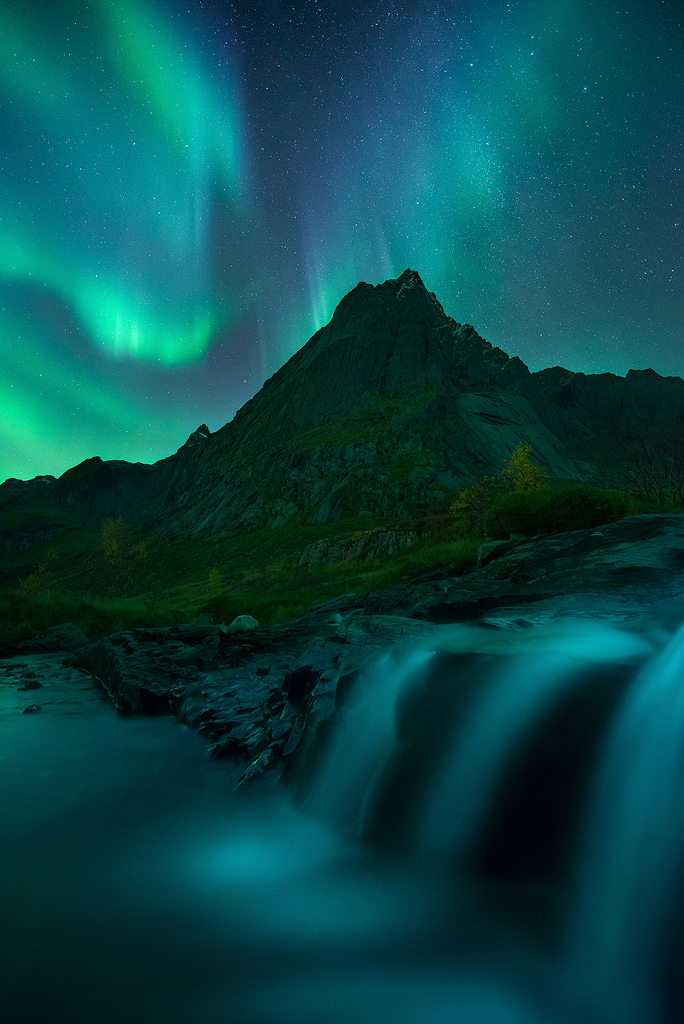
Lofoten is known for its unpredictable weather and dramatic light, which means clouds can move through fast — but they also clear fast. We monitor space weather forecasts and position the group accordingly. Most cycles produce multiple aurora displays, with the archipelago sitting deep enough inside the auroral oval for activity on most clear nights, even at lower Kp index.
In the Frame
What you'll photograph in Lofoten & Senja
Autumn in Lofoten and Senja is the convergence point for nearly every type of landscape photography I care about. Autumn photography workshops in the Lofoten Islands capture moody Arctic landscapes that don't exist anywhere else at this latitude. Participants explore dramatic fjords and fishing villages during the workshop, with eight days spread across the most photogenic stretches of Norway above the Arctic Circle. Here's what fills the SD cards:
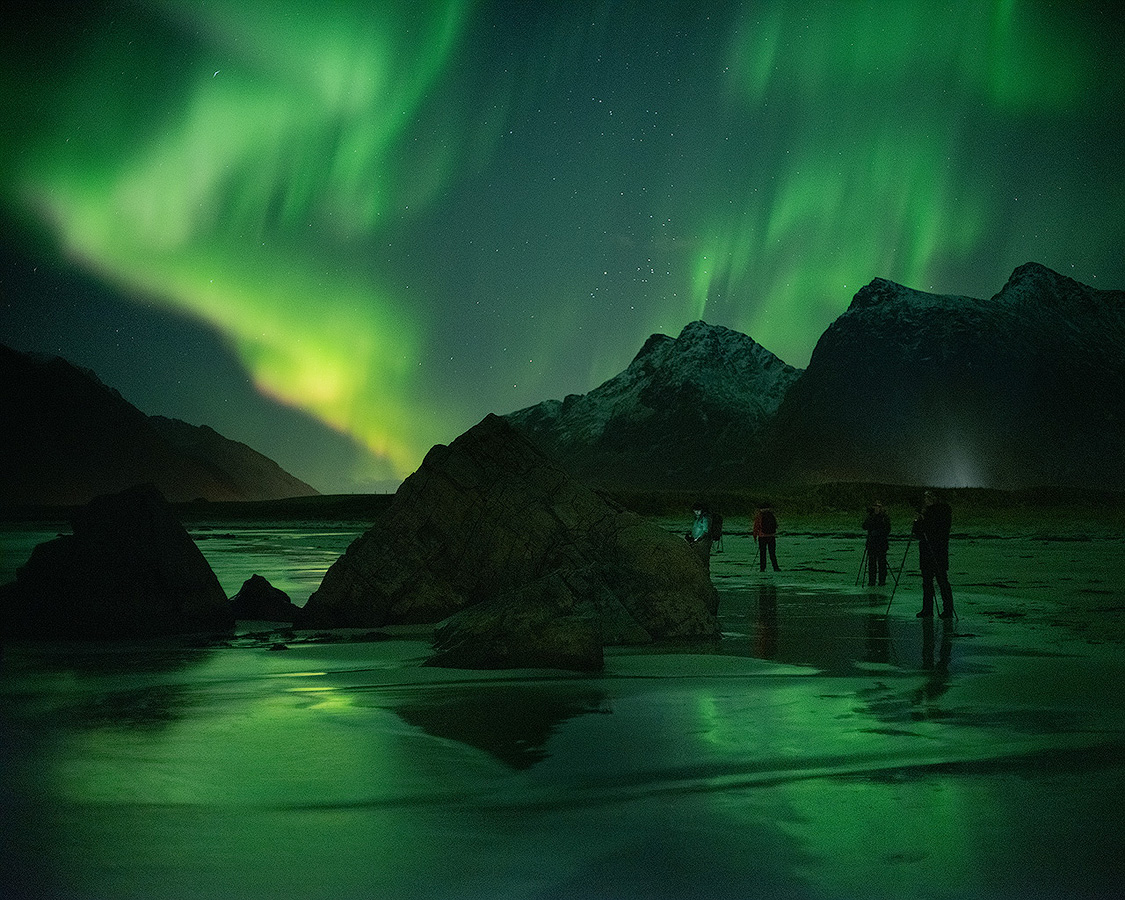
Workshop participants chasing aurora on a Lofoten beach. Long exposure caught wet sand reflection as the auroral oval crossed overhead. Fuji X-T5, 16mm, 8 seconds at f/2.8, ISO 3200.
Aurora Borealis Over the Coast
Auroral displays over the Norwegian Sea, reflected on wet sand at low tide, breaking across snow-dusted peaks. Aurora returns to Lofoten in late August and intensifies through October as nights grow longer.
Red Rorbuer of Reine & Hamnøy
The classic Lofoten compositions — red fisherman cabins at Hamnøy beneath the granite walls, Olstind reflecting in Reinefjord at sunset, the Sakrisøy peninsula at golden hour. Workshops include legendary locations like Hamnøy, Reine, and Uttakleiv beaches.
Autumn Color & Interior Valleys
Vibrant fall foliage holds across the Lofoten interior through October — birch and willow turning gold and amber, lining valleys and lakeshores. Warmer compositional layers against the otherwise cold Arctic palette.
Senja's Granite Walls
Three days in Senja — Norway's second-largest island. The granite peaks here are taller and more vertical than Lofoten, the visitor count is a fraction, and the seascapes feel more isolated and weather-driven.
Arctic Seascapes at Low Tide
Skagsanden and Uttakleiv beaches when the tides align — wet sand reflecting peaks, sea stacks rising from breaking surf. Long exposure techniques are ideal for capturing wave patterns over granite shelf.
Long Exposure & ND Filter Work
Utilizing ND filters helps to create dramatic cloud movement in long exposures, smoothing tidal motion and stretching low autumn skies across the frame. Focus stacking ensures sharp details from foreground to background when working close to wave action.
The Region & Season
Lofoten and Senja in autumn
Lofoten and Senja sit at the 68th and 69th parallels north — well inside the Arctic Circle, but warmed by the Gulf Stream into a climate far milder than the latitude suggests. The Lofoten archipelago alone covers about 1,227 square miles with 24,000 inhabitants, scattered across islands stitched together by bridges, tunnels, and short ferries. Colorful fjords and jagged mountain peaks define the visual identity here — the Lofoten Wall rises straight from the sea past 3,000 feet, with red and ochre rorbuer cabins clustered at the waterline.
Autumn is the window when this geography hits its photographic peak. Fall color holds across the interior valleys through October, the auroral oval passes directly overhead on clear nights, and the low sun angle keeps light directional through most of the shooting day. The same coastline that delivers grand vistas and dramatic seascapes by day delivers aurora reflections by night — two completely different bodies of work captured in the same 24-hour cycle. For a deeper dive on shooting these locations, see my Lofoten Islands photography guide.
Autumn aurora return
The Northern Lights return to Lofoten in late August and intensify through October. From the 68th parallel, the auroral oval passes directly overhead on most clear nights — no chasing latitude, no scanning the southern horizon.
Extended golden hours
Late September through mid October the sun stays low all day. Directional light from sunrise to sunset, no harsh midday gap. Golden hour effectively stretches across most of the shooting window.
Weather-adaptive shooting
Conditions shift fast — fog, squalls, rainbow breaks, sudden clearing. I adjust the day's plan in real time. When light is wrong we reposition, or pivot to image review sessions and Lightroom edits until the next window opens.
The Route
Where you'll shoot
Eight days, eleven named locations across two archipelagos. The actual itinerary shifts day-to-day based on weather, light, and tide windows — but these are the anchor stops the trip rotates through.
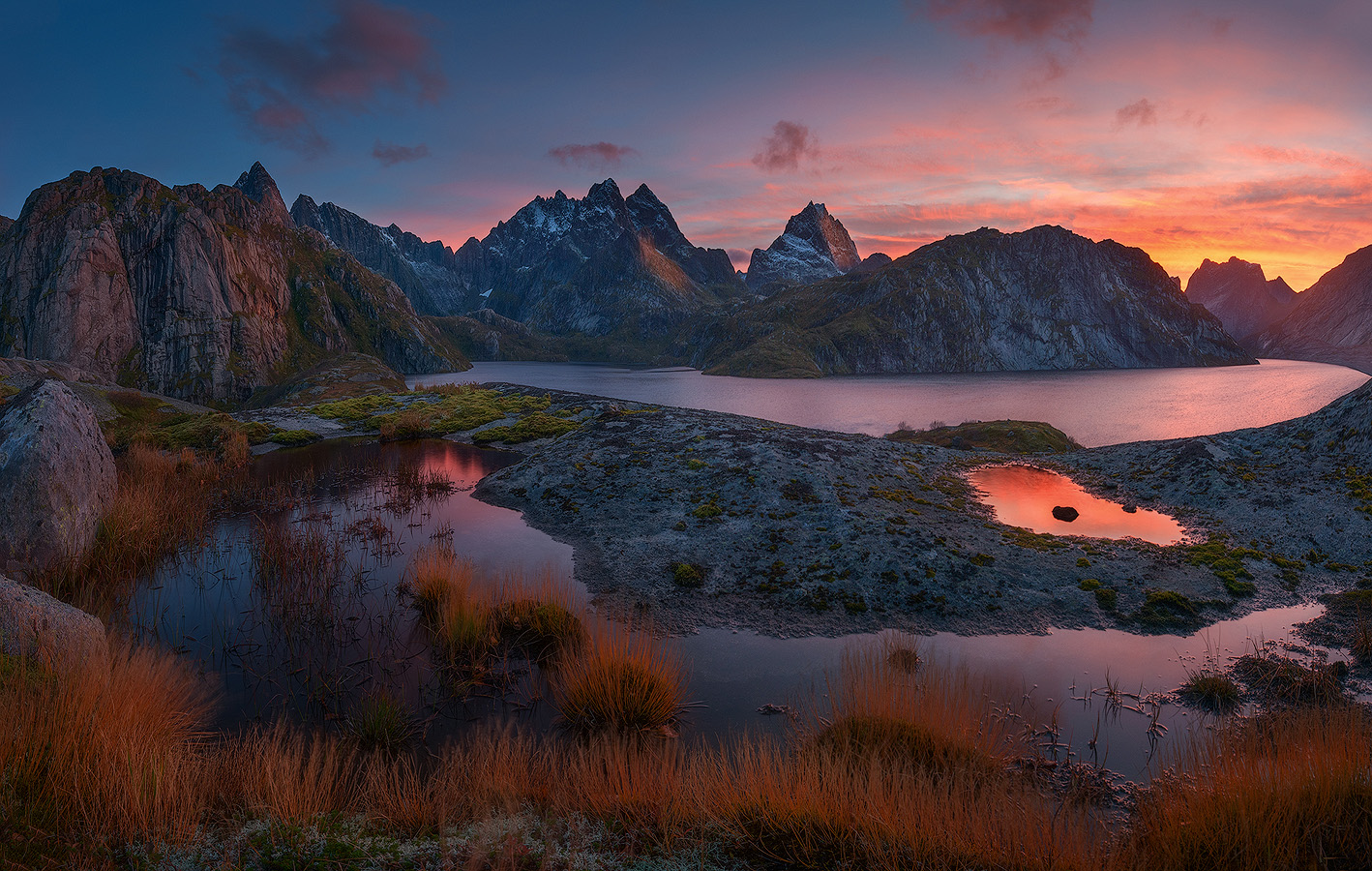
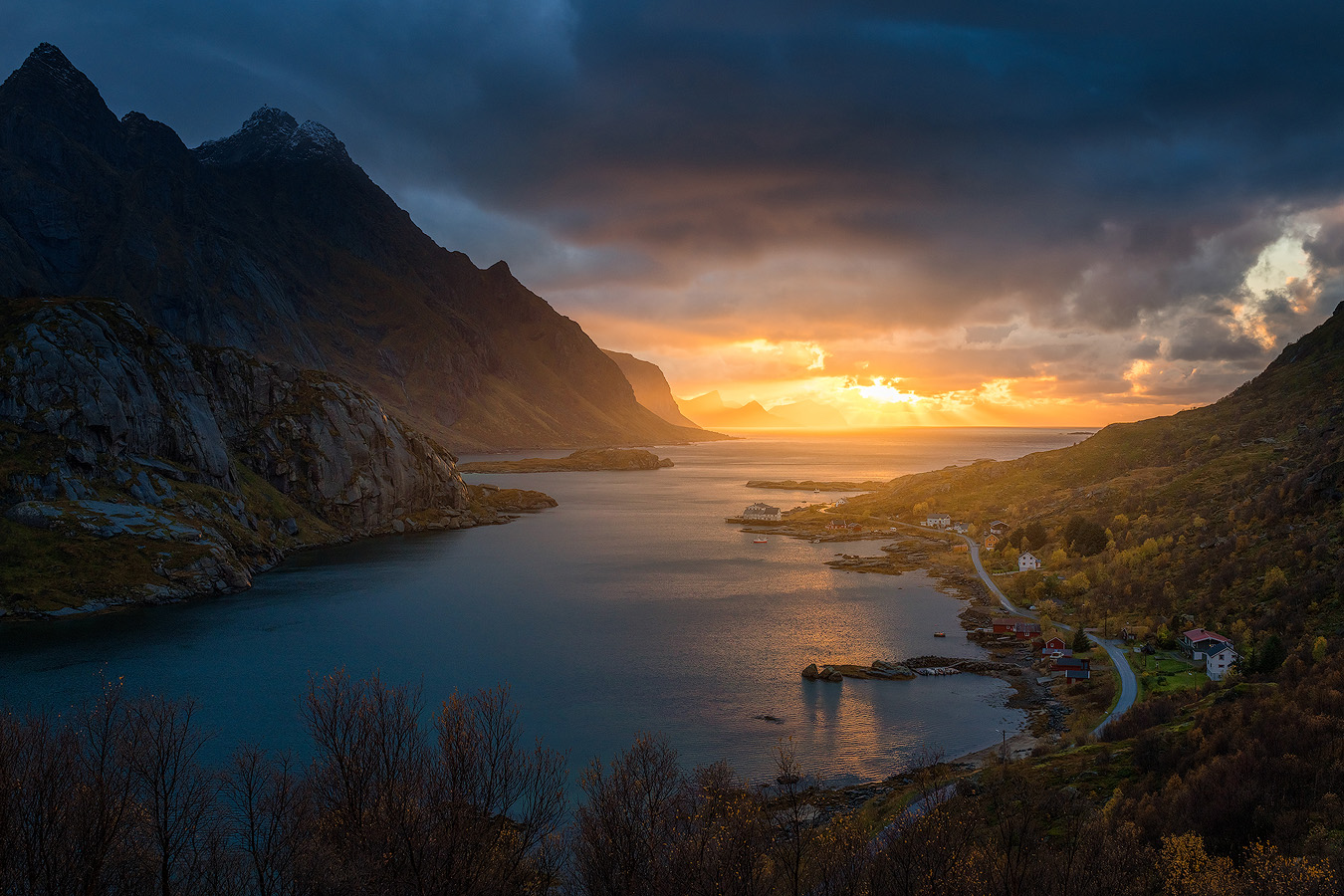
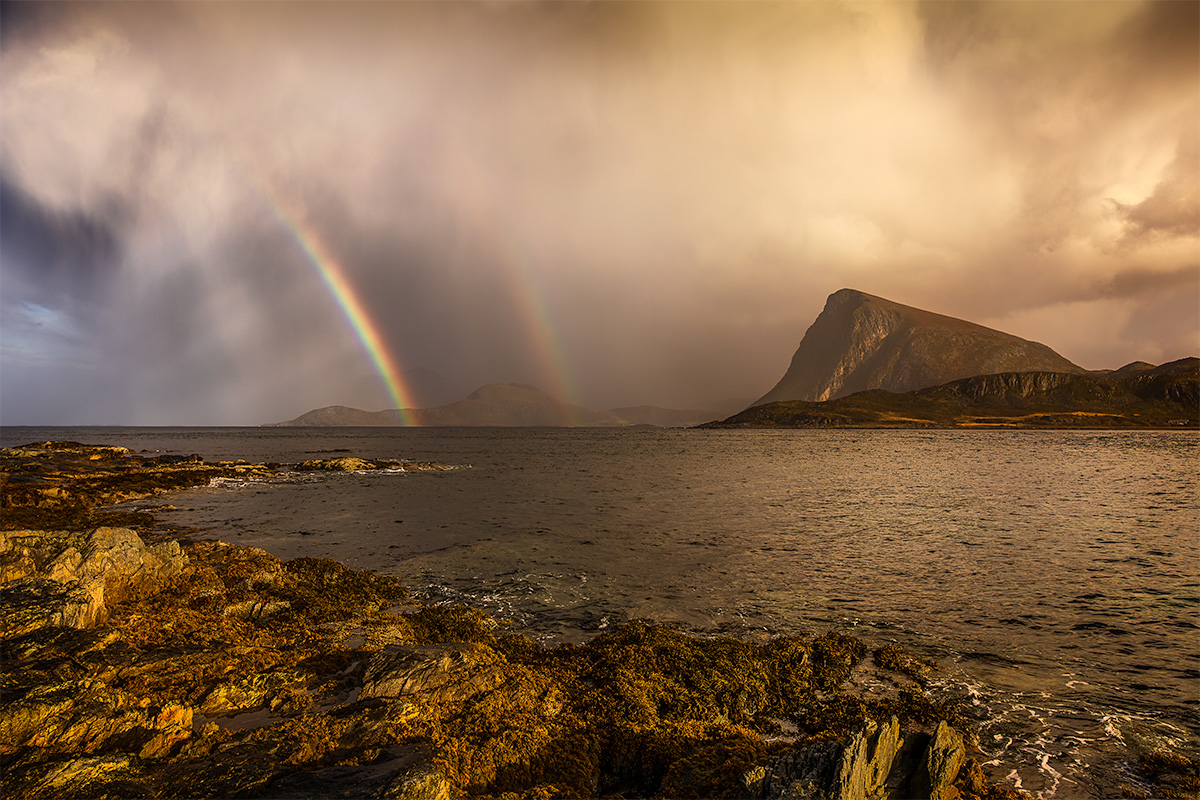
Mærvoll fjord at sunset on Vestvågøy. Autumn color holds in the foreground while storm light breaks across the granite walls beyond.
Reine
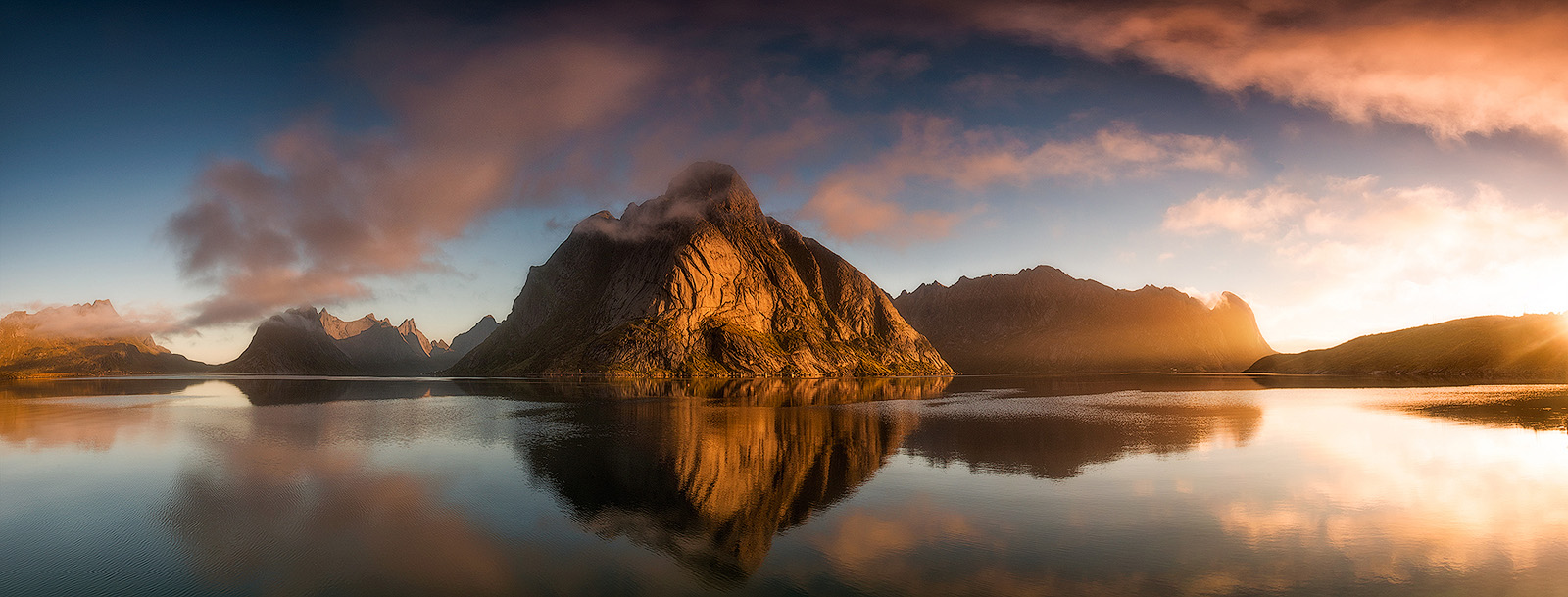
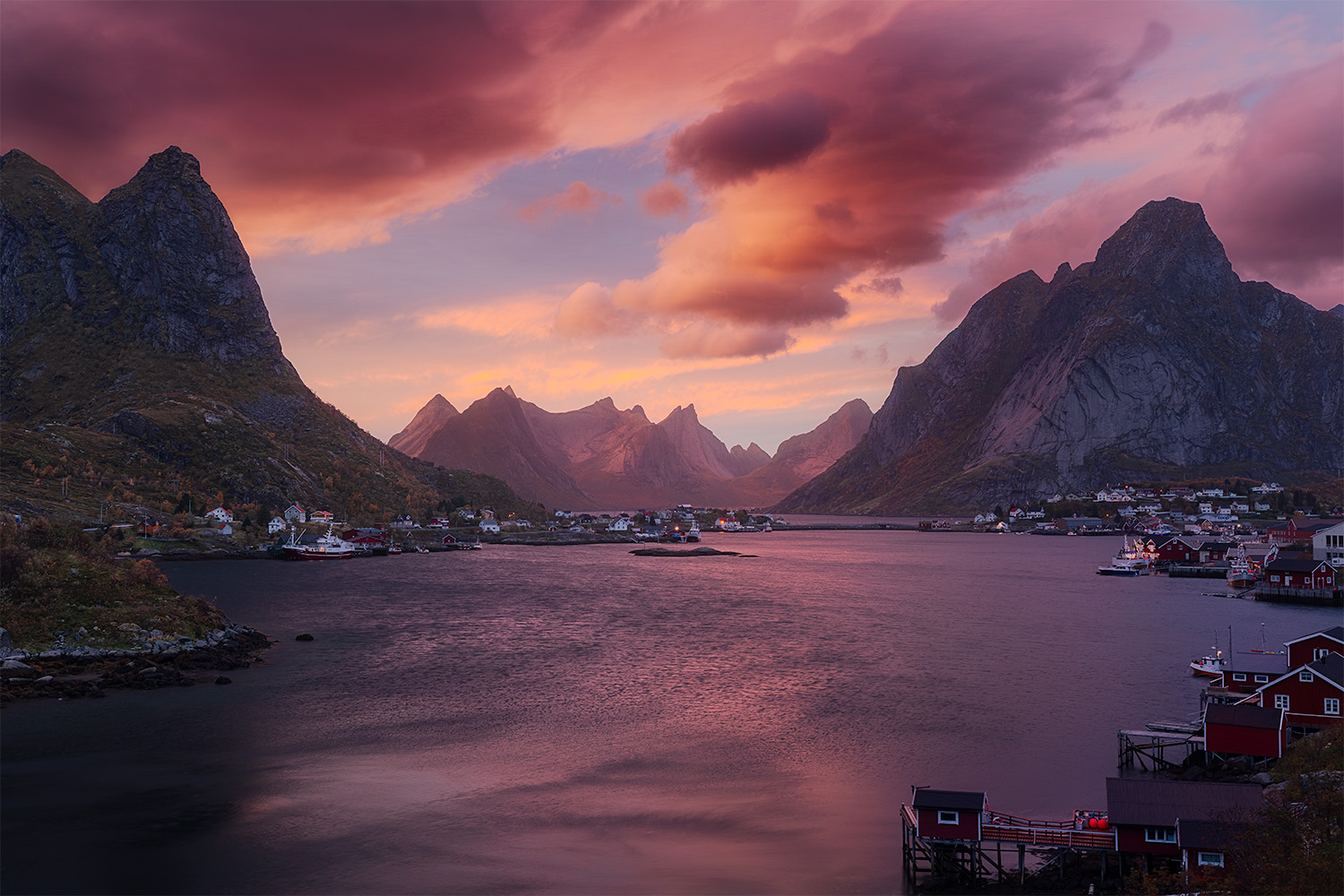
The classic Lofoten composition. Olstind mountain reflecting in calm Reinefjord at sunrise and sunset. Cabin-village-mountain-water tableau that's defined Lofoten in the photographic canon for decades.
Hamnøy
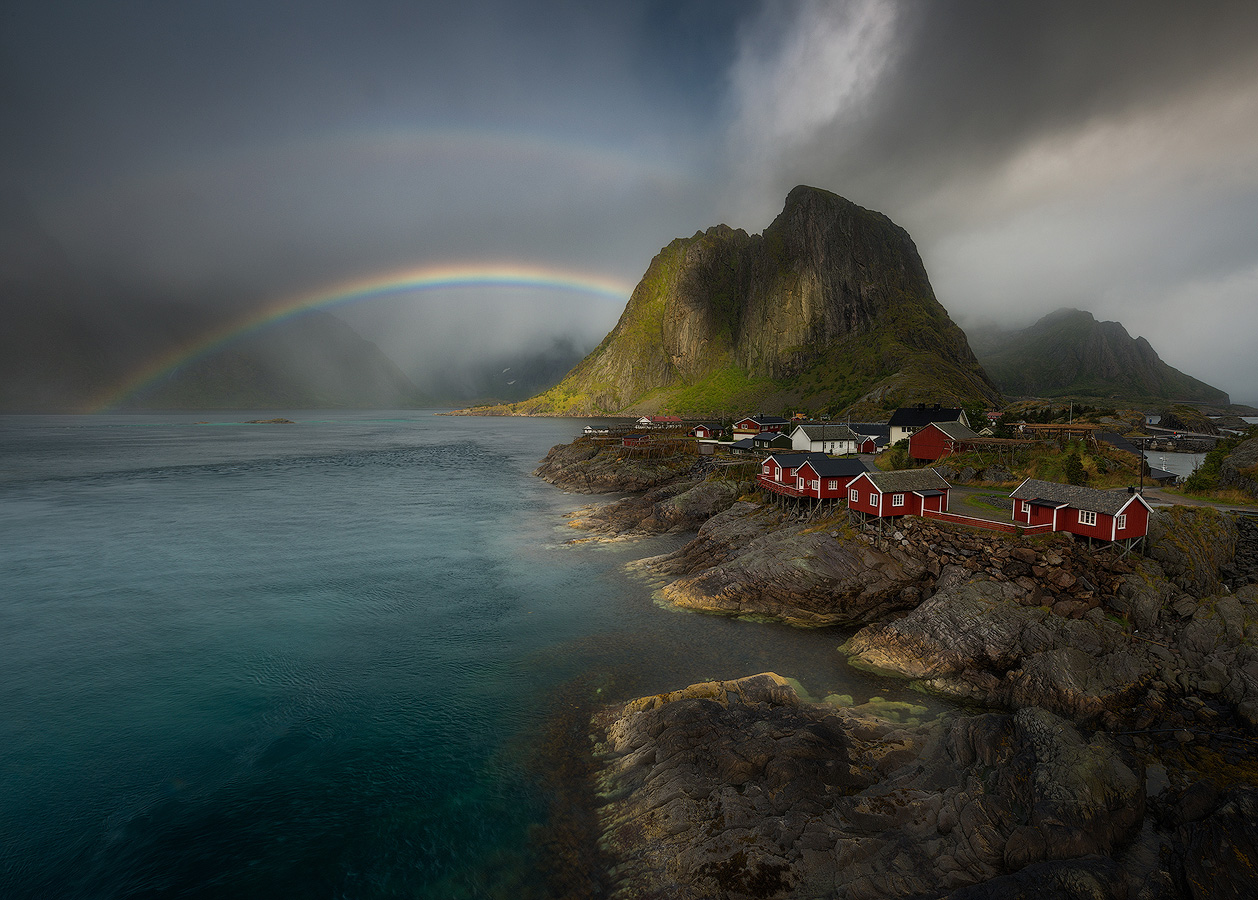
The most photographed rorbuer cluster in Norway. Red fisherman cabins beneath the granite walls. Bridge vantage points for golden hour and rainbow-after-squall storm light.
Sakrisøy
The small ochre-and-yellow rorbuer cluster between Reine and Hamnøy. Quieter compositions away from the busiest pull-outs. A different palette in the same fjord.
Uttakleiv
Wide Arctic beach on the western coast with sea stacks, boulder foregrounds, and unobstructed northern horizons for aurora viewing. Weather-driven seascapes and low-tide reflections.
Skagsanden
Crescent-shaped beach known for symmetrical wet sand reflections. Skagsanden beach is a popular location for aurora photography — at low tide the foreground becomes a mirror facing the mountains.
Senja
Three days on Norway's second-largest island, exploring the whole archipelago. Granite walls here are taller and more vertical than Lofoten, the visitor count is a fraction, and the seascapes feel more isolated and weather-driven.
Weather and conditions
Lofoten's weather can change dramatically within minutes — fog rolling in, squalls breaking through, sudden clearing. That's why the daily plan stays flexible. I work with the Lofoten Tours team to read conditions in real time and route the group to whichever location is delivering that hour.
The Rhythm
What a day looks like
Photography workshops in Lofoten run on dynamic schedules driven by weather conditions. Light, tide windows, and aurora forecasts shape the day. The rhythm tends to run like this:
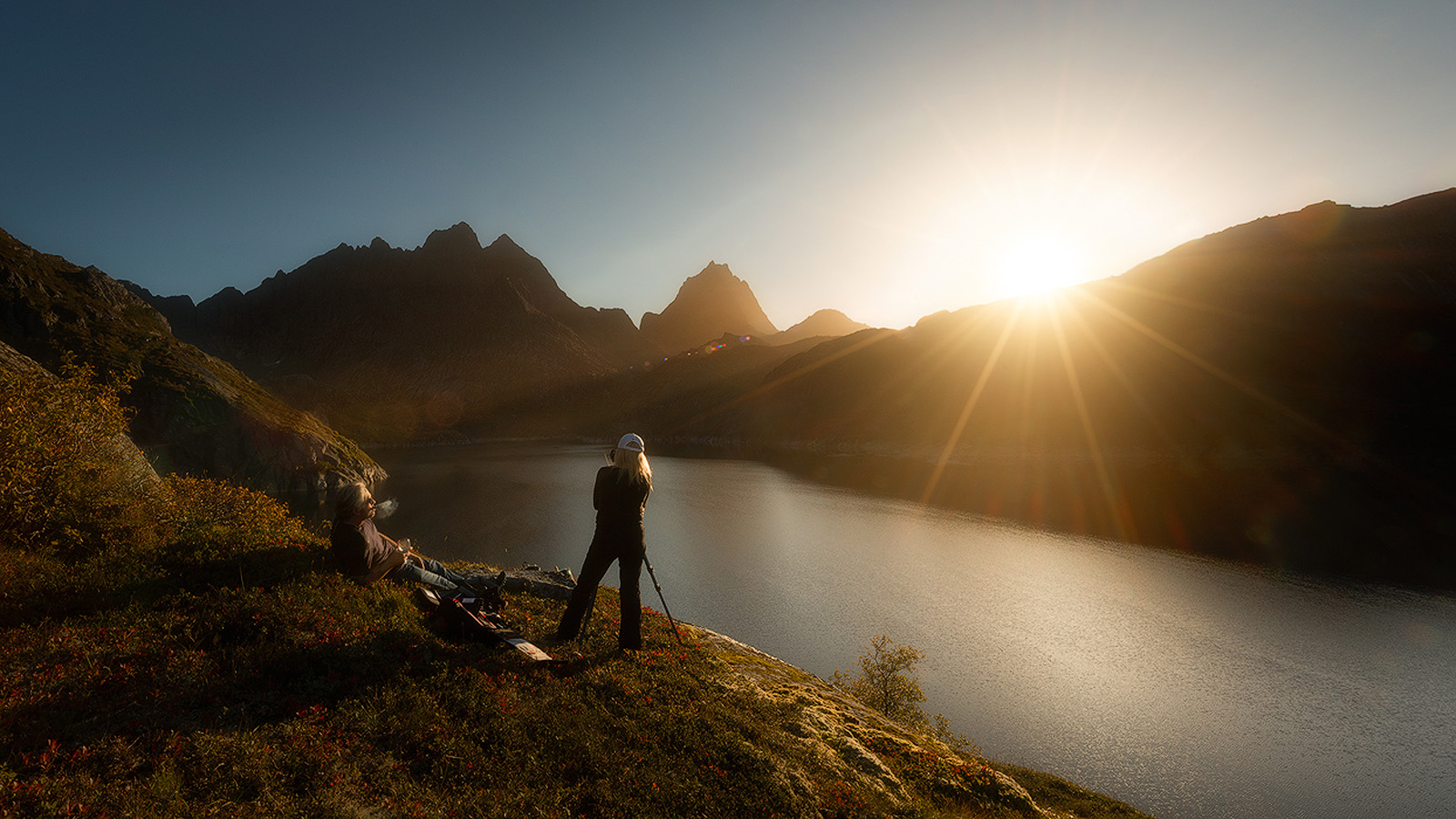
Workshop participants at sunrise on Solbjørn fjord. The 8 AM sun barely clearing the eastern ridge, low-angle light raking across the cabins on the shore.
Morning
6 – 8 AM · Sunrise
When the sun comes up we're already in position. Rorbuer reflections on glassy water, alpenglow on Olstind, low-angle light raking across granite walls. The shoot window stretches as long as the light holds.
Midday
When light goes harsh
Quieter hours. If light goes flat I'll run image review sessions, Lightroom edits, and quick technical clinics on whatever came up that morning. If the weather suddenly turns photogenic, we drop everything and shoot.
Late afternoon
3:30 – 6 PM · Golden hour
The sun stays low this far north — golden hour effectively stretches from late afternoon through twilight. Different vantage points than morning, different light angles, often dramatic cloud structure rolling in off the Norwegian Sea.
Clear nights
Aurora chasing
When the forecast and cloud cover line up, we head out. Could be a short session at a beach near lodging, could be a 90-minute drive to dodge a cloud bank. Aurora work is opportunistic — we chase the window when it opens.
The Curriculum
What you'll learn
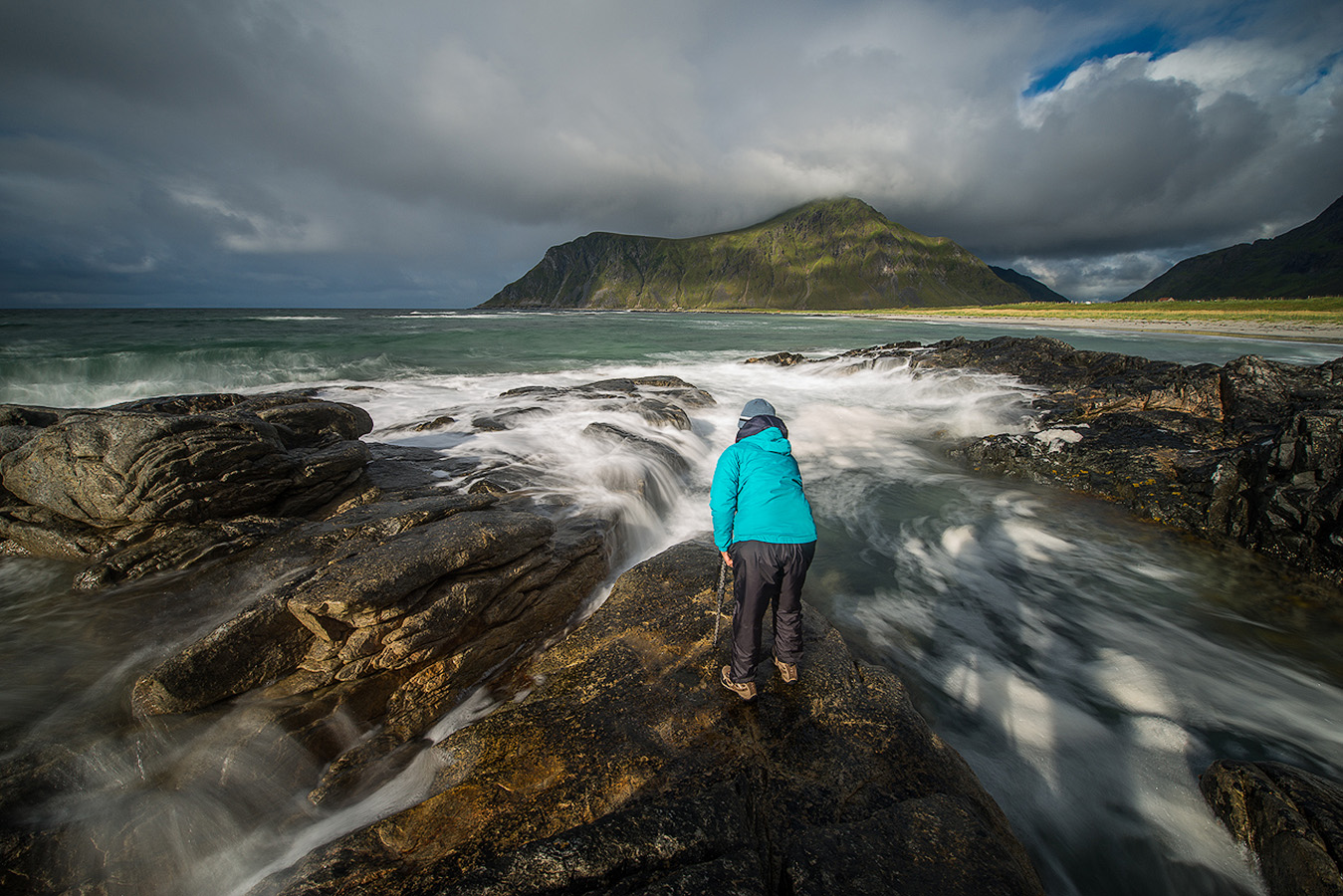
Workshop participant working ND filter long exposure on a Lofoten beach. 30 seconds smooths breaking waves into mist while keeping the granite headland sharp.
This is a fall photography workshop offering hands-on instruction in landscape and night sky photography. Sessions on landscape and nature photography techniques happen in the field — taught while we work the same light, locations, and conditions, not in classroom hours. The curriculum stretches across three areas:
01
Technical Skills
Manual mode and exposure work. Focus stacking that ensures sharp details from foreground to background. Long exposure techniques for capturing wave patterns on the coastlines. Aurora shooting at ISO 1600 to 3200. Protecting camera gear from moisture and condensation in cold conditions.
02
Creative Development
Composition in Arctic landscapes. Foreground anchoring on slippery basalt and granite. Isolating single peaks against weather. The workshop utilizes stormy weather for dramatic photography opportunities — recomposing on the fly when storm light breaks.
03
Professional Workflow
RAW processing in Lightroom. Image review sessions for what came in that morning. File organization and backup strategies for night-shoot-heavy days. Color and tone work tuned to the Arctic palette — pulling cool blue-grey light without making it look digital.
Getting There
Flying in and moving around
Lofoten photography workshops typically last 8 days and 7 nights. One international hop into Oslo, then a short domestic leg up to the islands. Once the group is moving together, I handle ground transport across the workshop itself.
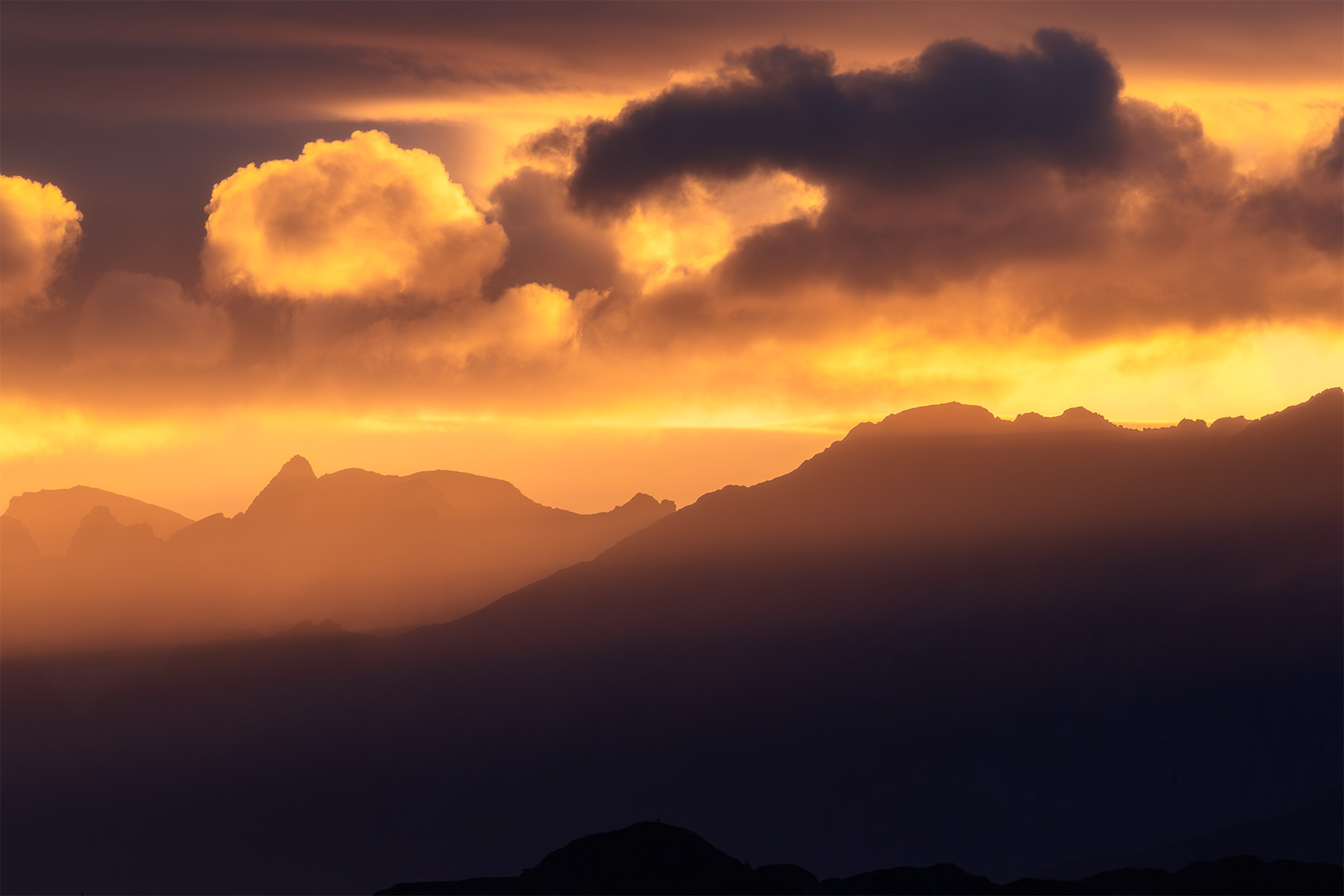
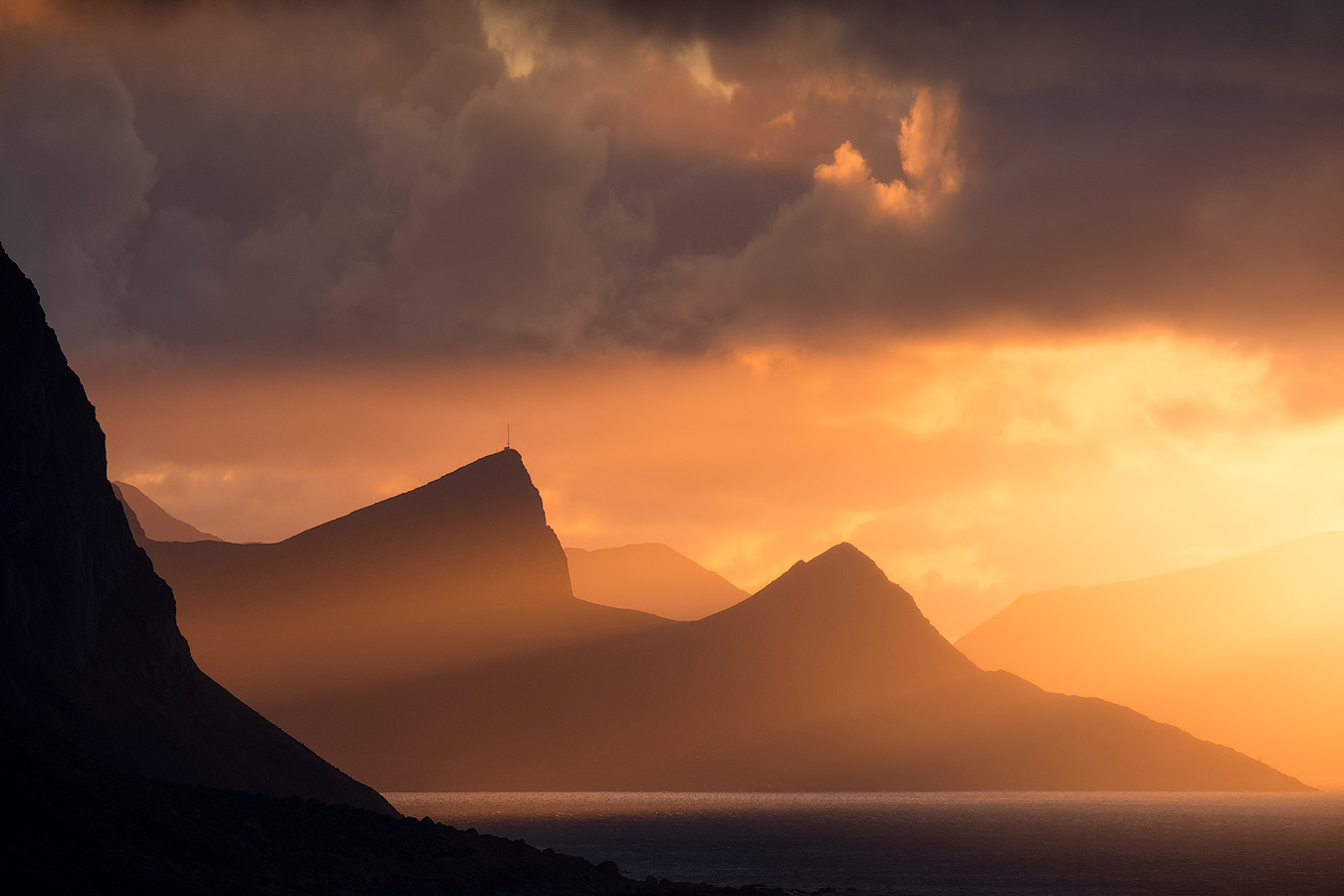
Telephoto compression flattening Norway's mountain layers into silhouettes — the kind of light that often catches us while moving between locations.
By air
Fly into Harstad/Narvik Evenes International Airport (EVE). Most participants connect through Oslo Gardermoen (OSL) on SAS or Norwegian Air — both run direct service to EVE multiple times daily. Scheduled bus service runs between EVE and the Narvik staging area, which is the most reliable way to handle the airport-to-hotel leg. Specific staging hotel and transfer logistics get confirmed to waitlist subscribers once next cycle dates are locked.
On the ground
Once the group is together, all workshop ground transport is handled — typically a large SUV or van depending on group size. No rental car needed, no navigating icy roads after dark. Photography workshops require a moderate level of physical fitness for hiking — most locations are short walks from the vehicle, but some involve scrambling on slippery basalt and uneven ground. No long backcountry trekking.
Where you'll stay
A combination of standard hotel nights and traditional rorbuer fishing cabins across the eight-day window, depending on the route and where the light is pulling us. Specific lodging gets confirmed to waitlist subscribers when next cycle dates open.
The Instructor
About Michael Schultz
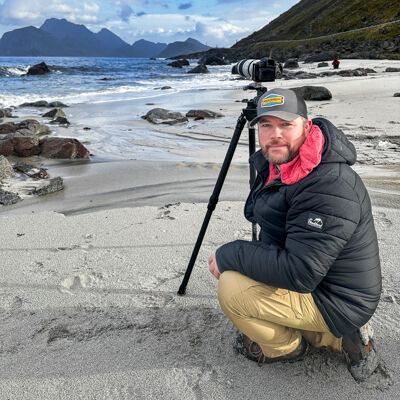
I'm Michael Schultz, founder of Face The Outdoors Photography. Born and raised in Alaska, I've spent over two decades photographing the state professionally — brown bears, aurora, coastlines, and weather. Face The Outdoors has been featured in National Geographic, and I lead workshops from Alaska to Norway to the Italian Dolomites. The Lofoten and Senja cycle is where I step outside my Alaska lane and work alongside the Lofoten Tours team in their backyard.
My teaching style is relaxed and field-focused. I want you leaving the workshop with stronger images, sharper technique, and a clearer sense of how to read light and weather — not a binder full of theory you won't open again. The instruction adapts to the participants: photographers building their first serious portfolio get the fundamentals locked in, experienced shooters get pushed on composition and post-processing nuance.
Questions before deciding whether to get on the waitlist? Reach out directly — happy to answer anything.
Questions before joining the waitlist? [email protected] · +1 (907) 590-1567