Northern Nordland, Norway
Face The Outdoors — Featured in National Geographic
Northern Nordland Aurora Photography Workshop
Eight days in Northern Nordland — not Lofoten.
My Nordland aurora photography workshop is eight days in Northern Nordland, Norway, based around Narvik — a small group photographing the aurora, frozen fjords, the Lyngen Alps, Stetinden, and ice caves. It's made for intermediate to advanced photographers who want to come home with Arctic images that don't look like the Lofoten postcard everyone else shoots. Northern Nordland sits at the same aurora latitude as Lofoten with a fraction of the tripods, so you photograph iconic Arctic scenery with the locations to yourself — six photographers maximum, March timing, and every session driven by conditions instead of a checklist. I'm Michael Schultz, an Alaska-born photographer with over two decades in the field, and I lead this workshop alongside local Norwegian guides who have worked this coast for years.
The Workshop
$6,950 per person
FTOP alumni rate available
A $2,000 deposit reserves your spot.
Dates March 19–26, 2027 · 8 days / 7 nights
Group Maximum six photographers
Included Lodging, ground transport, and guiding · airfare and meals separate
At a Glance
The workshop at a glance
Dates
Mar 19–26, 2027
8 days, 7 nights
Tuition
$6,950
per person · alumni rate available
Group Size
Six max
3:1 ratio in the field
Location
Northern Nordland
Narvik-based, not Lofoten
Included
Lodging + transport
and guiding · airfare, meals separate
Deposit
$2,000
reserves your spot
The Setting
Why Northern Nordland, not Lofoten
For 8 days in March 2027, we're photographing a region of Arctic Norway that most workshops drive past. Northern Nordland sits above the Arctic Circle, well inside the aurora zone, with fewer crowds than Lofoten and a landscape that's just as dramatic — frozen fjords, granite peaks, ice caves, and boreal forest buried in snow. Most Norway workshops funnel everyone through the same Lofoten spots — Reine, Hamnøy, Skagsanden — where ten tripods line up for one composition at blue hour; we work the same Arctic latitude with a fraction of the photographers.
The schedule is built around conditions, not itinerary checkboxes. If the aurora forecast looks strong, we shoot all night. If a storm clears at dawn, we're out the door before breakfast. That flexibility is only possible with a group of six.
This isn't a drive-by tour. It's a working photography workshop — slower pace, fewer locations shot deeper, with time to read the light and actually think about what you're making.
Most photographers only know the Lofoten Islands, so here's how the two regions compare side by side:
Northern Nordland
Narvik · Lyngen Alps · Stetinden
Crowds
Six photographers; most locations to ourselves
Signature Locations
Stetinden, the Lyngen Alps, frozen fjords, and boreal forest around Narvik
Landscape
Granite peaks, frozen fjords, ice caves, and deep snow
Aurora
Above the Arctic Circle, same aurora latitude as Lofoten, with dark-sky sites well away from any light dome
Access
Mainland, Narvik-based; remote sites larger tours can't reach
Best For
Photographers who want Arctic Norway images that don't look like everyone else's
The Famous Circuit
The Lofoten Islands
Reine · Hamnøy · Skagsanden
Crowds
Reine, Hamnøy, Skagsanden and Uttakleiv beaches with ten-plus tripods lined up per composition at blue hour
Signature Locations
The Lofoten archipelago — Reine, Hamnøy, Nusfjord, and the colorful fishing villages
Landscape
Jagged peaks and icy fjords; stunning photographic opportunities year-round
Aurora
Same Arctic latitude, but heavily photographed
Access
Island photo-tour circuit; the same well-known stops on every Lofoten itinerary
Best For
The classic Lofoten postcard
The Lofoten Islands, Norway are spectacular — that's exactly why they're crowded, and why most Lofoten photography workshops run the identical island circuit. This workshop trades the familiar Lofoten archipelago for the emptier mainland at the same Arctic latitude.
A note on the aurora
March is one of the most reliable months for aurora activity in Northern Norway. While we can't guarantee auroras (they're a natural phenomenon), our success rate is very high. We monitor space weather forecasts and position ourselves in the best locations when activity is predicted. Most participants see multiple aurora displays during the week.
In the Frame
What you'll photograph in Northern Nordland
Northern Nordland packs frozen fjords, alpine peaks, ice caves, and aurora-friendly dark skies into a two-hour radius from our base. Expert instruction throughout — I'll help you identify what's working in a composition and improve your images in the field.
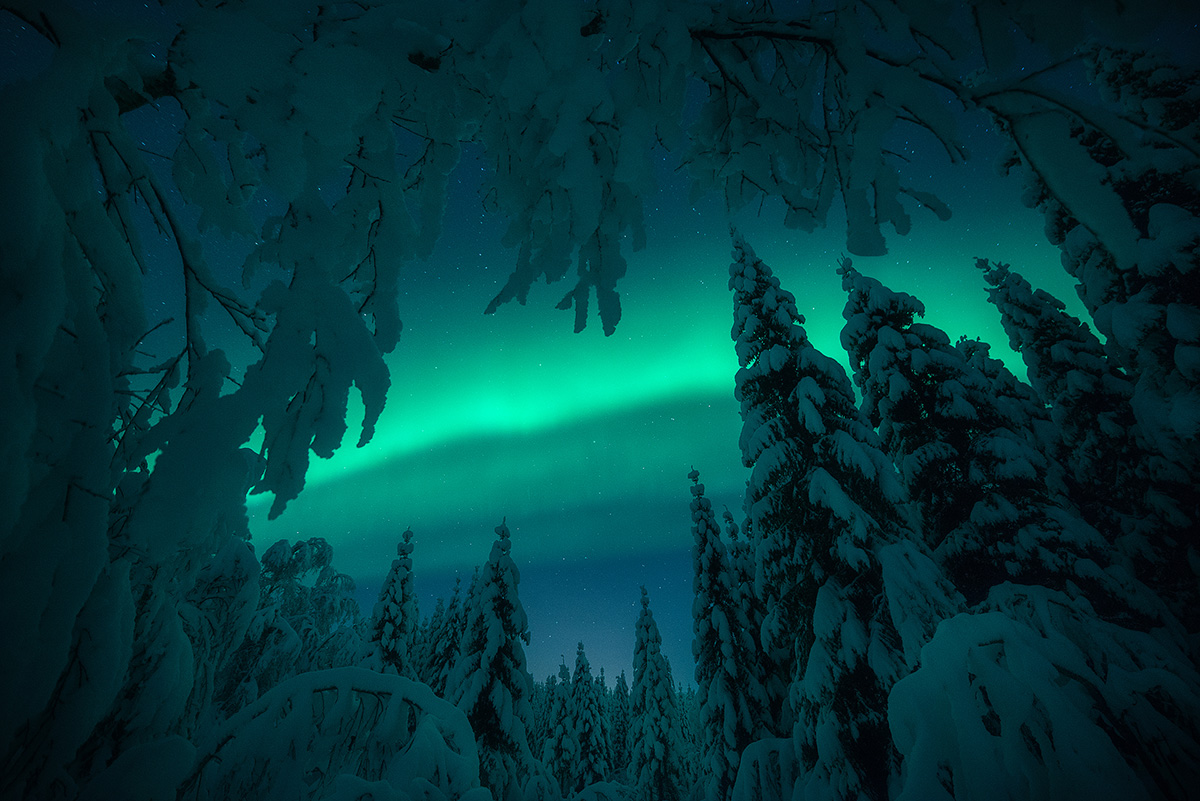
Northern lights illuminating the night sky through snow-covered boreal forests
Northern Lights (Aurora Borealis)
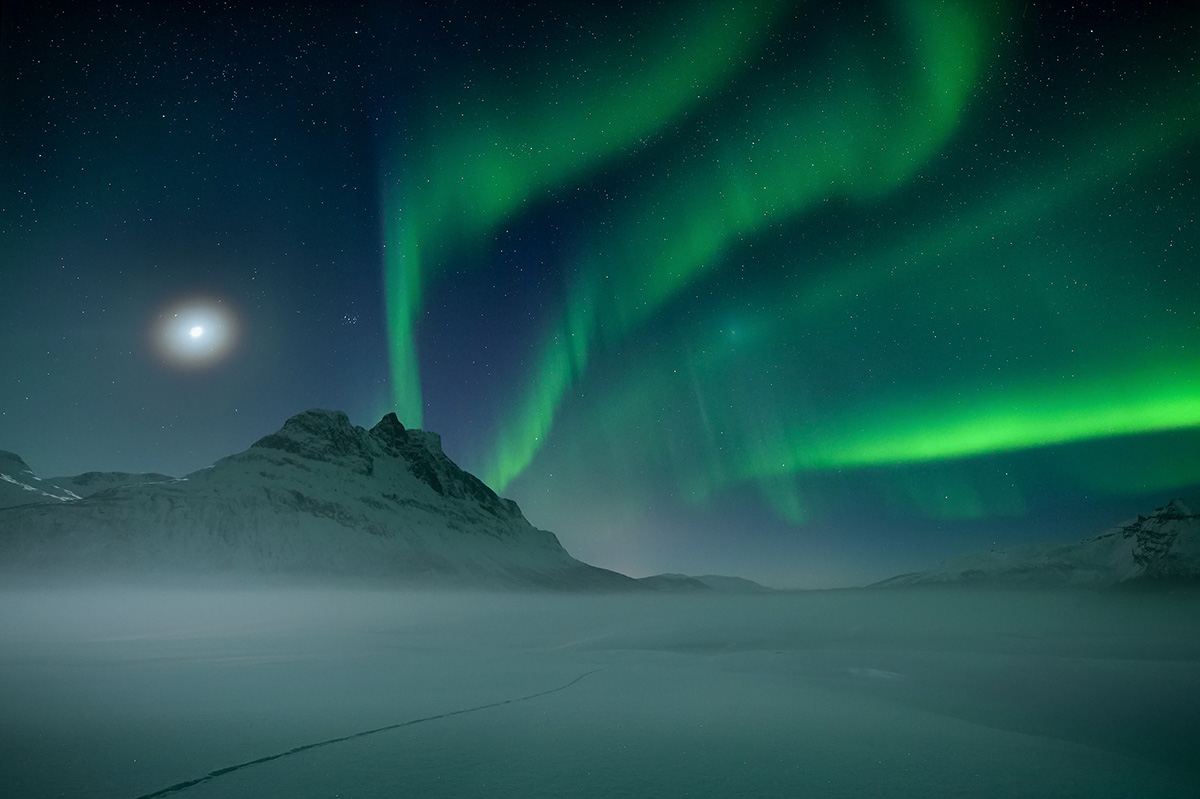
Multiple nights dedicated to aurora photography, covering camera settings, composition, and post-processing
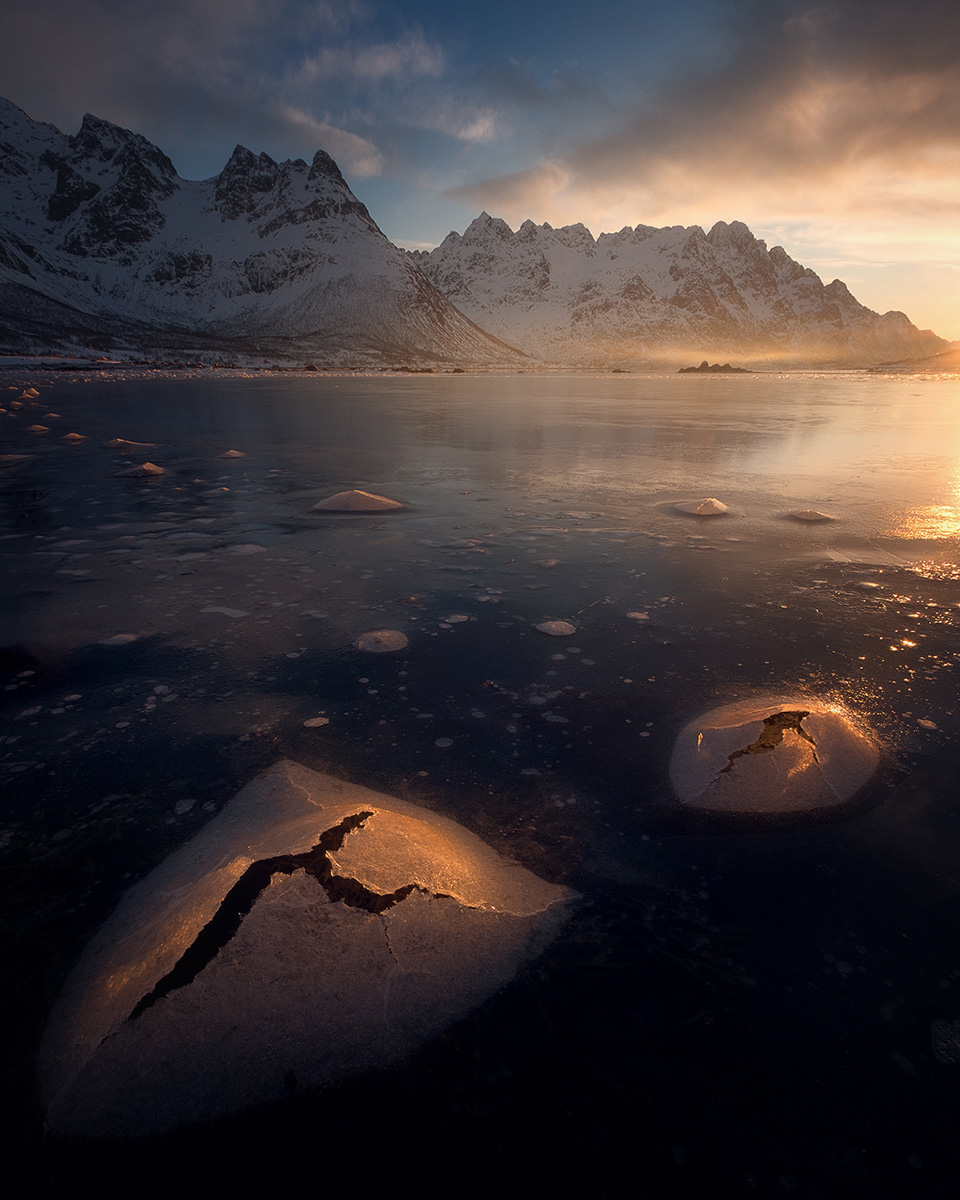
Frozen Fjords & Coastal Landscapes
Dramatic shorelines, sea ice, and mountain reflections at sunrise and sunset
Mountain Landscapes
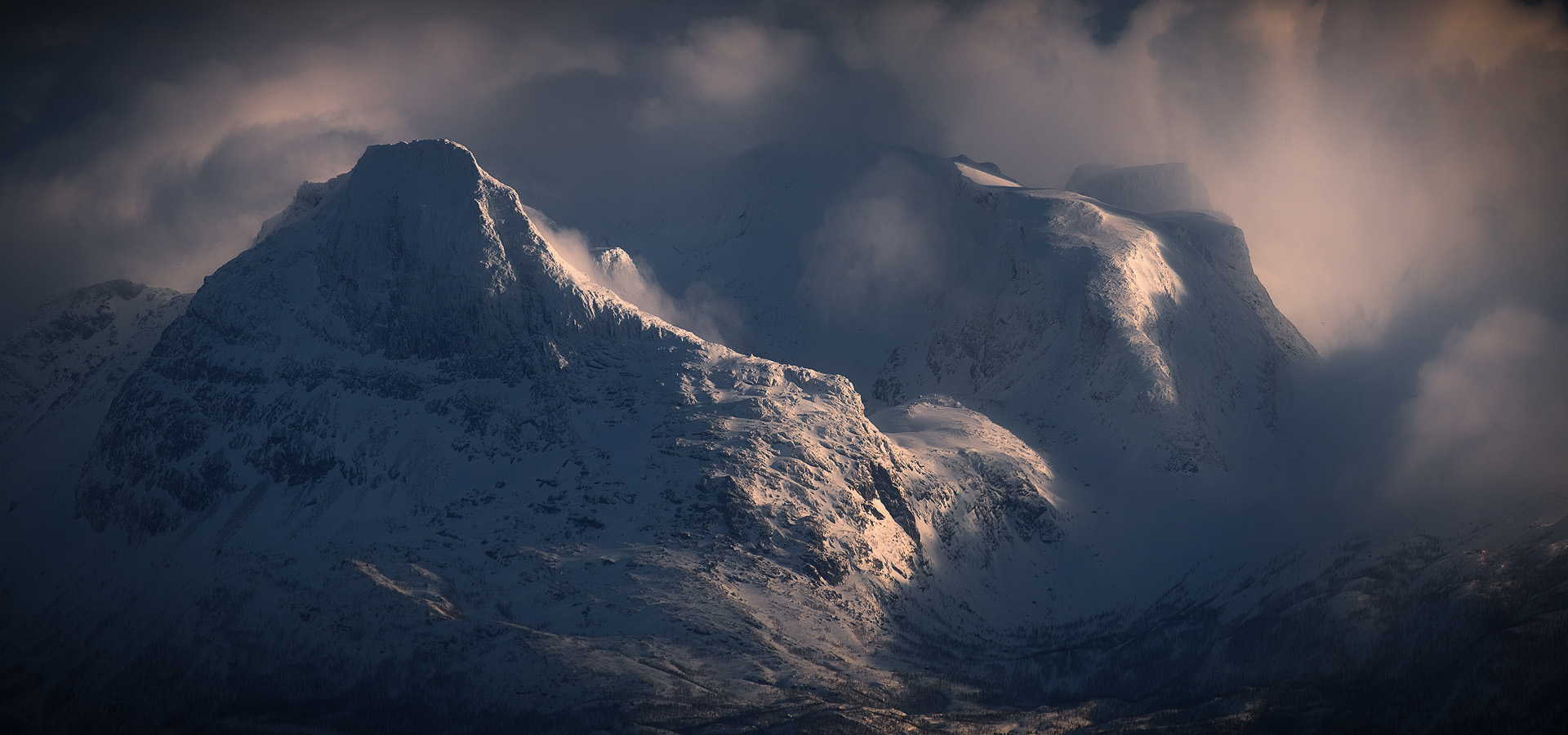
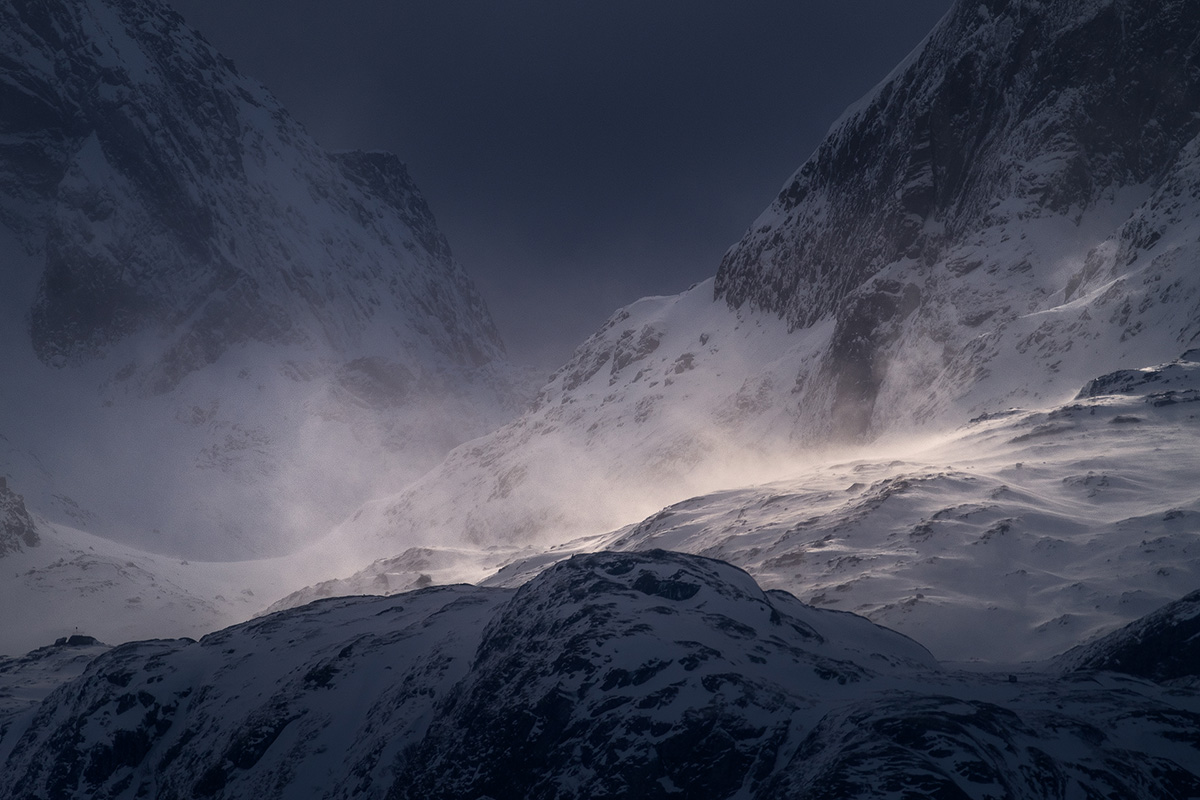
Jagged granite peaks, windswept ridges, and snow-covered valleys under dynamic skies
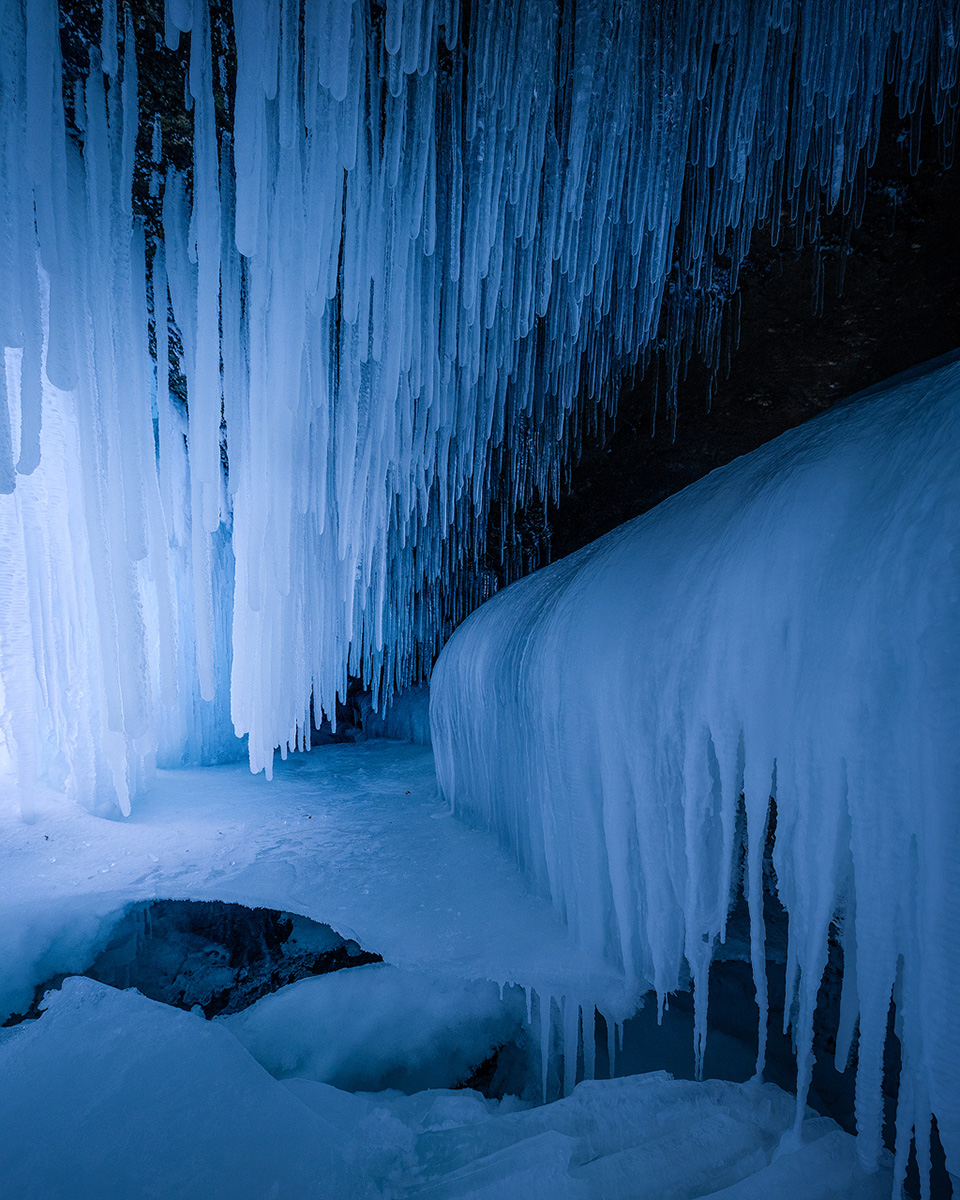
Ice Formations & Caves
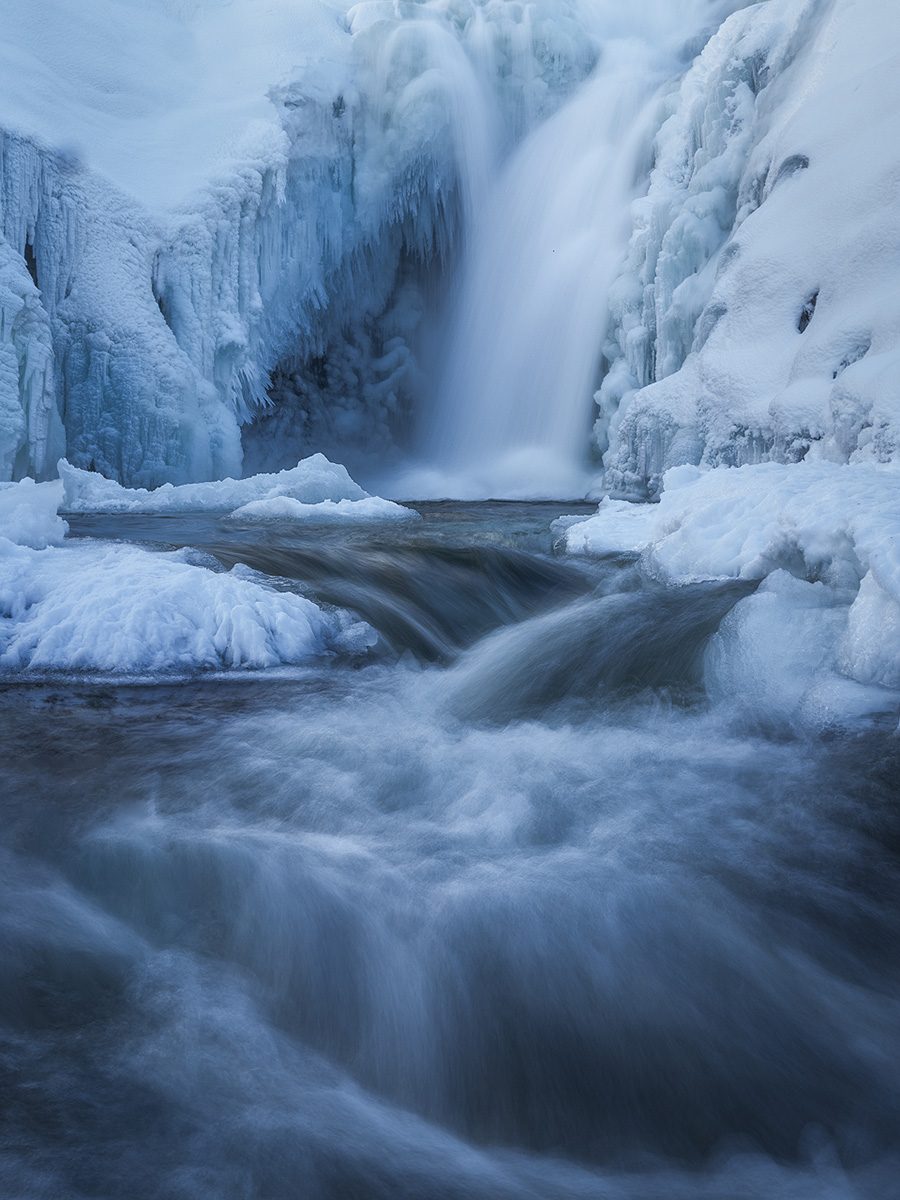
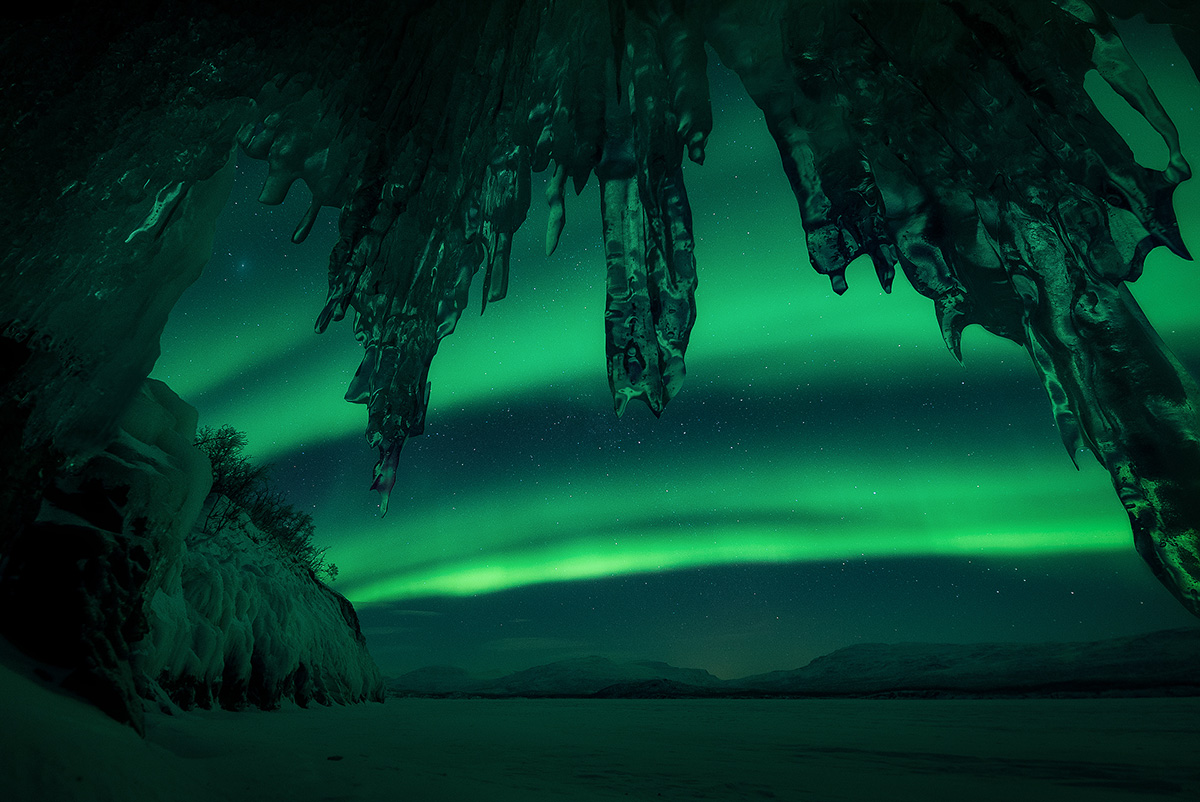
Intricate icicles, frozen waterfalls, and blue ice caves with otherworldly light
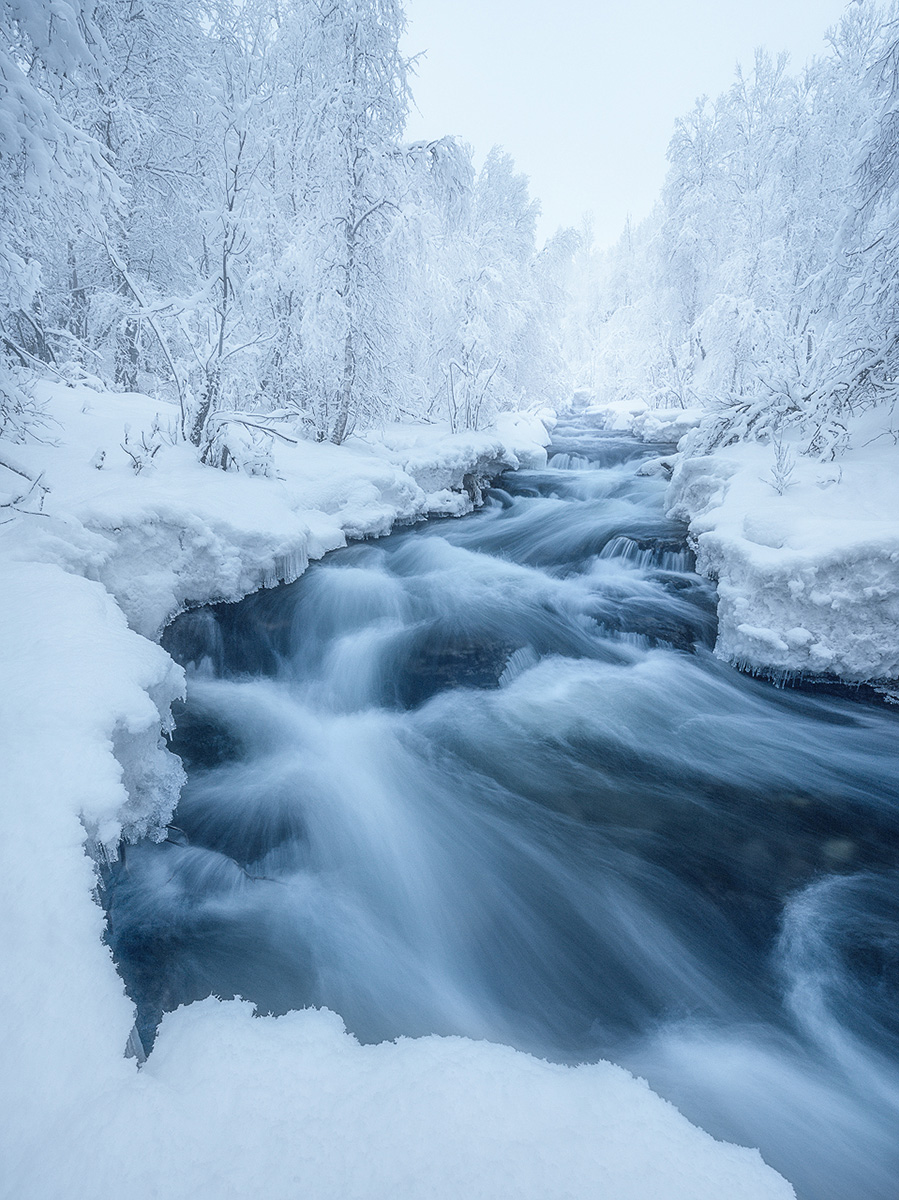
Winter Forest Scenes
Snow-laden trees, quiet streams, and intimate forest details
Abstract Winter Patterns
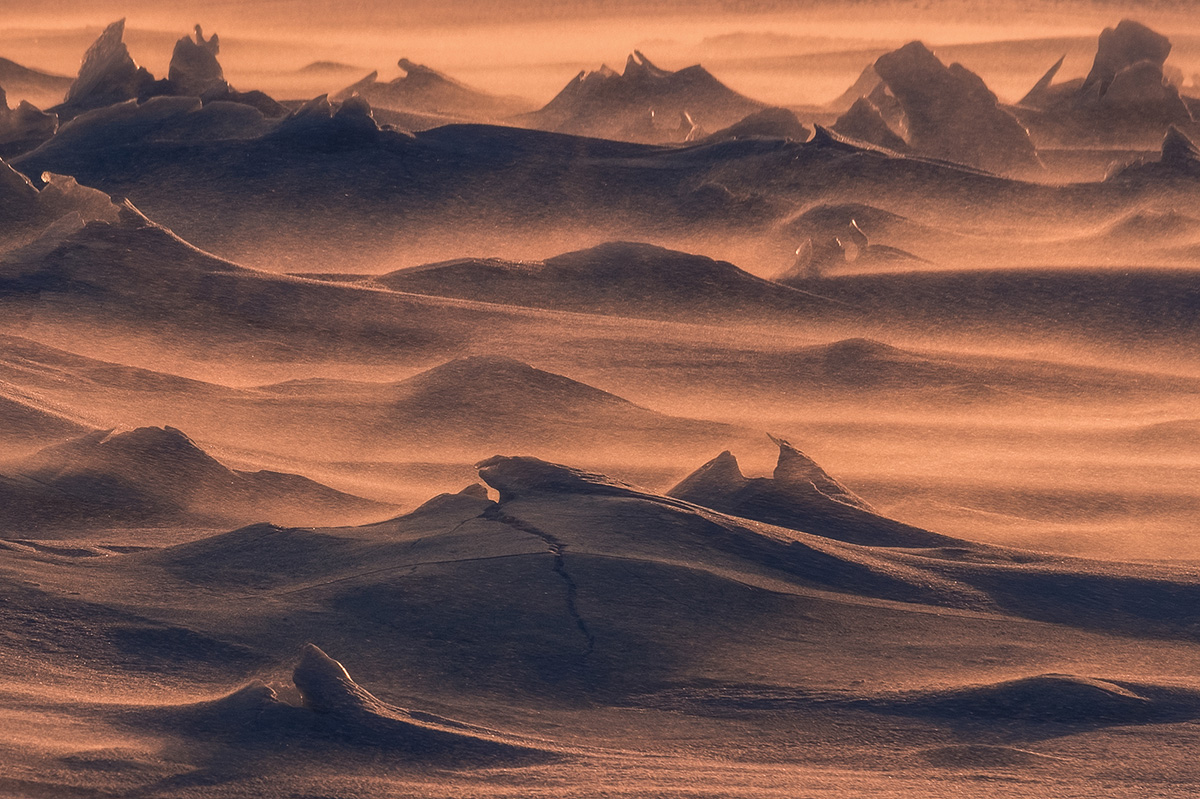
Wind-sculpted snow, ice textures, and minimalist compositions
The Region
Discover Unexplored Northern Nordland
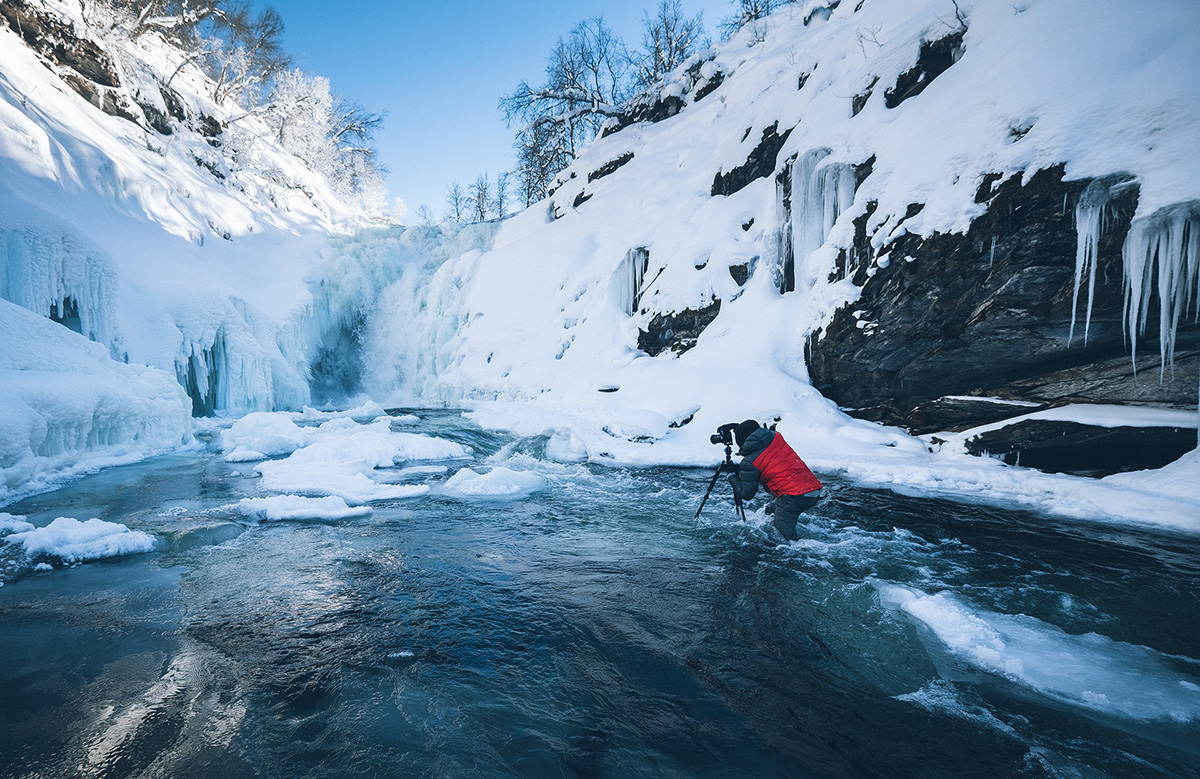
This workshop is based around Narvik and reaches north into the Lyngen Alps and the Stetinden region. You'll spend most days within an hour or two of our lodging, photographing locations I've scouted with local guides who've worked this coast for decades. Some days we're at sea level on a frozen beach. Other days we're up in the alps or deep in boreal forest.
What the workshop delivers: world-class Arctic landscapes with almost no other photographers, frozen fjords and quiet valleys far from light pollution, and hands-on instruction in Arctic landscape photography — composition, night work, and the advanced techniques that aurora and winter shooting demand. These are locations that don't show up on Instagram tour circuits.
Small group photography workshops are designed to provide personalized instruction and intimate experiences in stunning locations. This Nordland aurora photography workshop is limited to a maximum of 6 photographers — not the 12–16 most tours run — ensuring a 3:1 participant-to-instructor ratio that allows hands-on guidance, individualized feedback, and the flexibility to adapt to changing weather conditions.
Workshop sizes are kept small to guarantee a high instructor-to-student ratio, and the workshop features hands-on learning and image reviews — Arctic photography workshops like this are highly immersive and adaptive. Photographers of all skill levels — from intermediate enthusiasts to advanced professionals — benefit from the small group format, which fosters a collaborative learning environment and creates lasting connections among participants.
The small group also enables access to remote Northern Nordland locations that larger tour groups cannot reach, including frozen fjords, the Lyngen Alps, and dark-sky aurora viewing sites well away from any light dome.
The Season
Northern Lights Photography: March in the Arctic
March sits in the sweet spot for Arctic Norway aurora work — long dark nights, more stable weather than midwinter, and some of the most reliable geomagnetic activity of the year. We build the schedule around the forecast: if the Kp index spikes, we shoot all night. If clouds move in, we reposition. The reason March works so well is the spring equinox: around the equinox, geomagnetic activity statistically peaks — the Russell-McPherron effect — and it's the same boost that makes both spring and fall prime for the aurora. Early in the month you still get long, usable darkness, so March equinox timing in Northern Norway is one of the strongest windows of the year for aurora photography.
Northern lights photography in Arctic Norway requires specific gear and conditions for capturing magical aurora borealis displays over Arctic landscapes. Photographers should bring a wide-angle lens with a fast aperture (f/2.8 or wider), a sturdy tripod, and extra batteries for cold-weather operation.
The aurora borealis appears most frequently between September and March, with peak activity during the winter months when night skies stay dark for extended periods. Arctic landscape photography in this region also captures dramatic mountain peaks, frozen waterfalls, and Arctic wildlife — reindeer, sea eagles, and moose — at the nearby Polar Park reserve, where you can document Arctic species in naturalistic settings on a dedicated wildlife photography day.
High aurora activity
March regularly produces strong geomagnetic storms and sustained auroral displays.
Equinox timing
These dates span the March equinox, when geomagnetic activity statistically peaks — a documented seasonal effect (the Russell-McPherron effect) that aurora chasers plan around.
Long dark nights
8–10 hours of usable darkness for aurora photography.
Clearer skies
Statistically better weather than January and February.
Strong foregrounds
Deep snow, ice formations, and frozen fjords make for compelling aurora compositions.
Manageable temperatures
Typical range of -5°C to +3°C (23°F to 37°F) — cold but workable with proper layering.
We'll dedicate multiple evenings to aurora photography — camera settings, composition, and post-processing — working with fast lenses in the field and reading forecast data in real time to position for the best conditions. For what actually performs at -5°C or colder, see my Arctic Camera Gear Guide.
The Route
Where you'll shoot over eight days
Over 8 days, we'll move through the major photographic regions of Northern Nordland — the fjord coastline around Narvik, the Lyngen Alps, the granite peaks near Stetinden, and the boreal forest in between. Here's what's on the schedule:
Frozen Fjords & Coastal Landscapes
Sea ice, wind-carved shorelines, and mountain reflections at sunrise and blue hour.
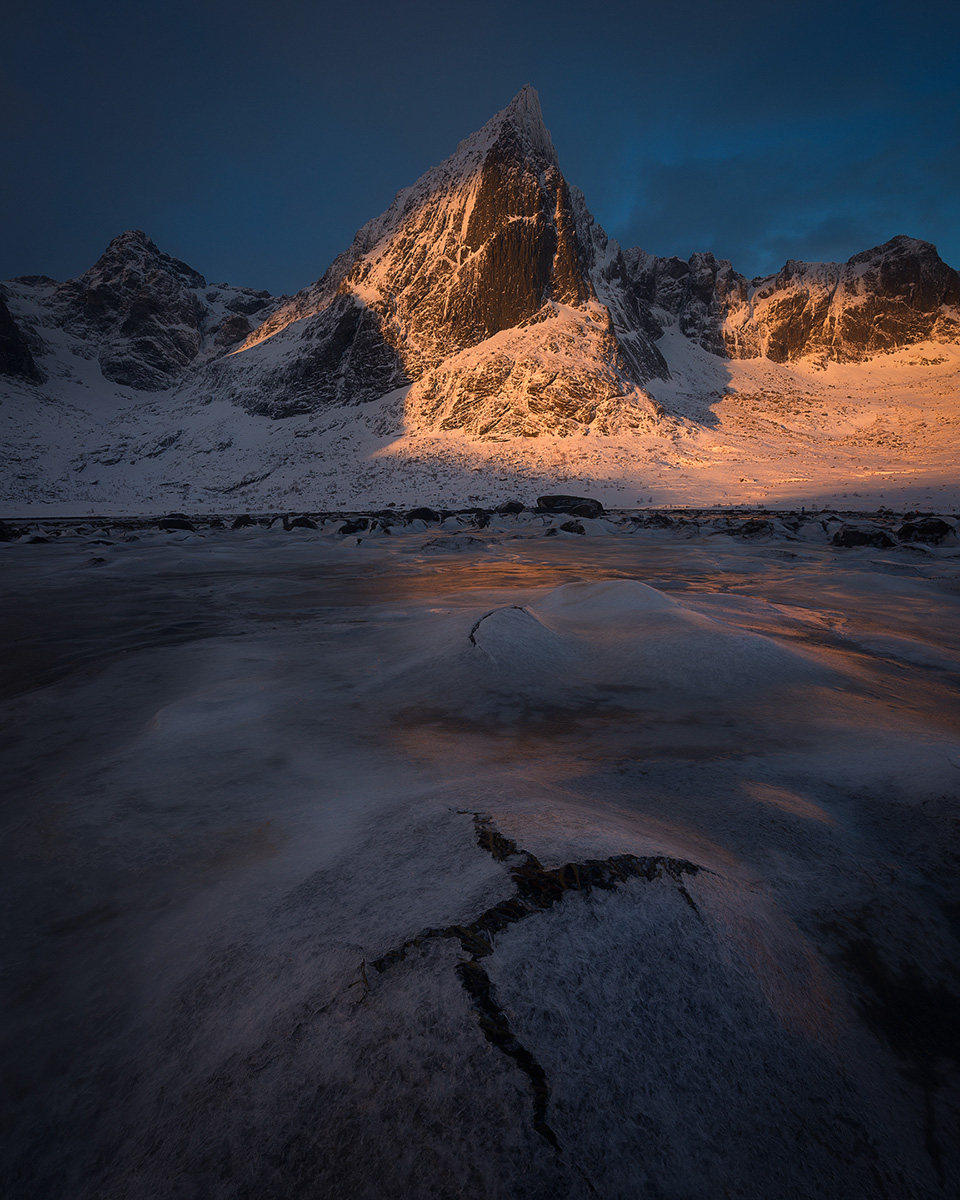
Stetinden Mountain
Norway's national mountain — a dramatic compositional anchor, especially under aurora.
Lyngen Alps
Sharp, dagger-shaped peaks and frozen forests. One of the strongest backdrops for aurora work in Arctic Norway.
Northern Lights over wild terrain
Multiple dedicated nights in dark-sky locations well outside any urban light dome.
Polar Park visit
Arctic wildlife — lynx, bears, wolves, moose — in a naturalistic reserve setting. A wildlife day for contrast.
Working with local guides
Klaus and Christian know this coast better than any outside photographer could. They find locations no tour circuit knows about.
Weather & conditions
Arctic conditions change fast — that's part of what makes the region photographically rich. Detailed clothing and gear lists are provided after registration. In the rare case of dangerous travel conditions, clear rescheduling and refund policies are in place — see the cancellation question in the FAQ for specifics.
The Rhythm
What a day looks like
No two days run the same, but the shape is consistent. Daily activities include sunrise and sunset photography sessions, and the workshop includes multiple daily photography sessions:
Morning · 7–9 AM
Sunrise light on peaks and fjords.
Midday
Rest, image review, and scouting the next location.
Late afternoon · 3:30–6 PM
Golden-hour landscape work.
Clear nights
Out for the aurora, for as long as the sky keeps delivering.
Between shoots, we eat at local spots — Norwegian coastal food is worth the trip on its own.
The Curriculum
What you'll learn
This isn't about collecting locations — it's about how you work. Daily field coaching, paired with image critiques and editing sessions back at the lodge, builds across three areas:
Technical Skills
Long exposures for water, cloud, and aurora. Exposure in high-contrast Arctic light. Focus in the dark. Cold-weather camera operation and battery management at -5°C and below.
Creative Development
Composition and depth. Working a scene from several angles instead of one postcard frame. Reading light and weather as they shift, and finding a consistent editing voice across your work.
Professional Workflow
Field organization and backup strategy. Shooting efficiently in harsh conditions without losing frames. Culling to your strongest images, plus editing tutorials in Lightroom and Photoshop.
Your Instructor
Michael Schultz
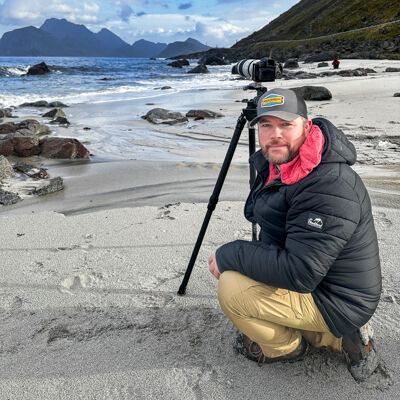
I'm Michael Schultz, founder of Face The Outdoors Photography. I was born and raised in Alaska, and I've spent years photographing this state professionally — its aurora, its bears, its coastlines, its weather. Face The Outdoors has been featured in National Geographic, and I've led photography workshops from Alaska to the Arctic coast of Norway. The skills I've built chasing the northern lights and working hard winter conditions at home are exactly what I bring to Northern Nordland — reading the forecast, keeping gear alive in the cold, and finding the frame when the weather turns.
I didn't start as a photographer. I started as someone who loved being outside — where silence has weight and every moment feels fleeting. Photography became the way I could hold onto those moments — not to prove they happened, but to remember how they felt.
"Patience over pressure. Presence over perfection. Emotion over algorithms."
Six photographers. Eight days. One Arctic March.
March 19–26, 2027 · Northern Nordland, Norway
Reserve Your SpotThe Practical Side
Gear and what's included
This workshop is $6,950 — eight days of instruction, seven nights of lodging, all ground transportation, location scouting, and expert guidance from two local Norwegian guides, all in one price. Airfare and meals beyond hotel breakfasts are the only costs on you. No surprise fees, no upsells. If we've photographed together before, you'll pay the alumni rate — just let me know.
What to bring
Essential
- Weather-sealed camera body
- Wide-angle lens, 14–35mm, for aurora and landscapes
- Sturdy tripod, carbon fiber recommended — to withstand strong winds and steady long exposures in cold conditions
- 6–8 spare batteries — battery life drops significantly in low temperatures, so carry extras
- 128GB+ memory cards and a laptop for review and backup
Recommended
- Telephoto zoom (70–200mm or similar)
- Remote shutter release or intervalometer — to minimize camera shake during long exposures
- ND filters for bright snow scenes
What's included
- 7 nights lodging — 5 hotel, 2 fisherman cabins (double occupancy)
- All ground transportation during the workshop
- All photography instruction
- Location scouting and local guiding
- All entrance and parking fees
- Pre-trip planning materials and hotel breakfasts
Not included
- Airfare to and from Norway
- Meals beyond hotel breakfasts
- Travel insurance (strongly recommended)
- Personal expenses
Single-occupancy upgrade $1,200 — a private room for the duration of the workshop.
Field tip — the cold
The biggest cold-weather risk isn't the camera freezing — it's condensation when you carry gear from -10°C into a warm cabin. Seal everything in a bag before you go inside and let it warm up sealed. Keep spare batteries in an inside pocket; the cold drains them fast, and a warm one swapped in will often revive a "dead" battery. We cover all of it on day one.
Workshop Brochure
Getting There
Getting to Northern Norway
We meet at Harstad/Narvik Airport, Evenes (EVE), in Northern Norway. Most participants route through Oslo (OSL) and connect to Evenes on a short domestic flight. Once you land, you're with us — all ground transportation for the week is covered. Detailed travel instructions, including the best connections, go out after you register.
Most passport-holders don't need a visa for a stay this short, but check your passport's validity and any current entry requirements for Norway before you book your flights.
Where you'll stay
Five nights in comfortable hotels and two in traditional Norwegian fisherman cabins — double occupancy, private bathrooms, heat, and wifi where it reaches. Warm places to thaw out, back up files, and review the night's frames between shoots.

Before You Book
Is this workshop right for you?
Skill level
Intermediate to advanced. You should be comfortable with manual mode (M), the exposure triangle (ISO, aperture, shutter speed), using a tripod, shooting in RAW, and basic post-processing in Lightroom or similar. Advanced techniques — including night photography and aurora work — we'll teach you in the field.
Fitness
Moderate fitness required. Most days involve 1–3 miles of walking on snow or ice while carrying camera gear. Participants must navigate slippery granite coasts and deep snow. You'll need to be comfortable standing still in cold conditions for extended periods during aurora and golden-hour shoots. Questions about specific requirements? Contact me directly.
Payment schedule
A $2,000 deposit reserves your spot. The balance is due 90 days before the workshop start date.
From Past Participants
What past participants say
"This was definitely a five star experience for me — beautiful nature, amazing nights chasing the northern lights, great food, fun group of travel companions, and a knowledgeable and down-to-earth guide in Michael."
Ellen S.
"We learned new techniques, refined our composition skills, and experienced a lifetime opportunity to photograph the Northern Lights. We returned home with some of our favorite images ever."
Boris & Claire
"Our photo tour of the Lofoten Islands was truly the trip of a lifetime. The entire experience was well organized — from rustic Fishermans' cabins and tasty local food to well-planned shooting locations that captured the best of Lofoten's amazing light and landscapes."
Abner P.
FAQ
Frequently asked questions
Common questions about my Nordland aurora photography workshop.
Why is this the best Nordland aurora photography workshop for serious photographers?
Most Norway workshops run 12–16 participants through the same Lofoten locations. This workshop is capped at 6 photographers and based in the less-crowded Northern Nordland region — Narvik, the Lyngen Alps, and Stetinden. March timing gives you long dark nights for aurora work and deep snow for landscape work. Small group, specific region, right season. If you want to come home with images that don't look like everyone else's, that's the case.
Will I see and photograph the Northern Lights?
March is one of the most reliable months for aurora activity in Northern Norway. While we can't guarantee auroras (they're a natural phenomenon), our success rate is very high. We monitor space weather forecasts and position ourselves in the best locations when activity is predicted. Most participants see multiple aurora displays during the week.
What if the weather is bad?
Arctic weather shifts fast — storms, blowing snow, dramatic clouds. Some of the strongest images on this trip come from conditions that would keep casual photographers indoors. We adapt to what the sky gives us, move to sheltered locations when needed, and always prioritize safety. A "bad weather" day isn't a lost day — it's often a different day than planned.
How much photography experience do I need?
You should be comfortable shooting in manual mode and understand the exposure triangle. This workshop is built for intermediate to advanced photographers who want to move up a level — not absolute beginners. We'll teach advanced technique (night photography, aurora work, long exposure) in the field, but you need a foundation to build on.
What camera gear do I absolutely need?
Minimum: a camera body, wide-angle lens in the 14–35mm range, sturdy tripod, and plenty of extra batteries. A detailed gear list is provided after registration. If you're considering new equipment for cold weather, see my Arctic Photography Gear Guide or contact me directly for recommendations.
What camera settings and gear work best for Arctic Norway aurora and winter photography?
For the aurora, astrophotography settings include mastering manual exposure setups and high ISO levels — ISO settings of 1600 to 3200 are recommended for aurora photography, paired with a fast wide-angle lens (f/2.8 or wider) and a sturdy tripod. The Lyngen Alps offer clearer skies for aurora tracking when compared to coastal regions, which is part of why we base where we do. For daytime winter landscapes, filters like ND and polarizers help manage shutter speed, and participants learn mechanical sequences like focus stacking for extreme depth of field. High-quality thermal gear and sturdy footwear are required for Arctic photography workshops, and you'll want extra batteries since they deplete quickly in the cold. The Arctic palette requires specific processing techniques to enhance low-light exposures, so post-processing sessions often include using Adobe Lightroom and Photoshop, with classroom-style RAW processing tutorials back at the lodge.
How cold will it be?
March temperatures in Northern Norway typically range from -5°C to +3°C (23°F to 37°F). Thanks to the Gulf Stream, this region is milder than other Arctic areas at the same latitude. With proper layered clothing — which is detailed in the packing list provided after registration — the cold is very manageable.
Will there be snow and ice?
Yes — that's part of why March is the right month. Deep snow, frozen waterfalls, snow-laden forests, ice formations along the coast, and possibly sea ice on the fjords. The winter landscape is as much the subject of this workshop as the aurora.
Can I come alone or should I bring someone?
Both work. Most participants travel solo and connect naturally with other photographers during the week. If you're traveling with a non-photographer partner, they're welcome — though the schedule is photography-focused, so they should be prepared for early mornings and late aurora nights. Due to the lodging and small group, the price stays the same whether they shoot or not.
What's the group dynamic like?
With only 6 photographers and two instructors, groups are tight-knit and the learning is hands-on. Most participants are serious landscape photographers looking to level up. The small size means real instructor attention and real connections with your group — you'll know everyone by day two.
Do you provide post-processing instruction?
Yes. We cover post-processing concepts throughout the workshop — exposure recovery, color handling in aurora shots, and developing a consistent editing voice. The focus stays on capturing strong images in the field, but we'll spend real time at the laptop too, especially on stormy evenings.
What if I need to cancel?
The $2,000 deposit is non-refundable and secures your spot — travel insurance is strongly recommended to protect your investment. A full refund is only provided in cases of extreme weather that make travel unsafe. Refunds are not given for missed shoots due to clouds, lack of aurora visibility, or normal Arctic weather conditions. We're also not responsible for non-refundable travel expenses (airfare, hotels, car rentals) if we must cancel the workshop — another reason to carry travel insurance. View our complete cancellation policy and terms for full details.
How physically demanding is this workshop?
Moderate. Most days involve 1–3 miles of walking on snow or ice while carrying camera gear. Some locations require short hikes from the vehicle. You need to be comfortable standing still in cold conditions for extended periods during aurora and golden-hour shoots. If you have specific mobility concerns, contact me before registering — I'm happy to discuss.
Will we visit Lofoten?
No. Lofoten is spectacular, but it's also heavily photographed and crowded — which defeats the purpose of a small-group workshop. This workshop explores Northern Nordland, which sits at the same Arctic latitude and has comparable landscape drama without the tripod traffic jams. You'll photograph locations most Norway tours never reach.
Have another question? Contact me — I'm happy to discuss any concerns or special requirements.
Still Deciding?
Let's figure out the right trip together.
Booking a workshop is a real decision, and some questions a website can't answer — your gear, your experience level, which of my trips actually fits what you want to photograph. So I set aside 45 minutes for a one-on-one call: bring your work if you'd like, and you'll leave with a clear plan and the right trip picked.
The session is $197, and if you book any workshop within a year, that full $197 comes off your deposit. If you go, it costs you nothing extra — if you don't, you've still walked away with a plan.
Reserve your spot for March 2027
March 19–26, 2027 · Northern Nordland, Norway
Six spots only — my Norway workshops typically fill 3+ months before departure.
Reserve Your Spot Questions before registering? Email [email protected] or call +1 907-590-1567.
Please review the complete Terms & Conditions for full details.
Waitlist
Can't make March 2027?
Join the Arctic Norway waitlist and you'll be the first to hear when I open dates for future workshops — usually 2–3 weeks before the general announcement.
Related Resources
Keep exploring
Arctic Photography Gear Guide
Which cameras, lenses, and accessories perform best in extreme cold.
Read the guide →
How to Photograph the Northern Lights
Aurora borealis photography — camera settings, composition, and post-processing.
Read the guide →
Lake Clark Brown Bear Workshops
Coastal brown bear photography in Alaska's Lake Clark National Park.
View the workshop →
Caddo Lake Cypress Bayou Workshops
Cypress bayou photography in the East Texas wetlands.
View the workshop →
All Photography Workshops
Browse every Face The Outdoors Photography workshop, Alaska to Norway.
View all →