Spring Equinox Northern Lights Workshop — 2026 Alaska Trip Report
I ran two back-to-back spring equinox northern lights workshops in Alaska this year — February 27 to March 7 around the full moon, and March 20 to 28 around the new moon and spring equinox proper. Clear skies every single night on both runs. Aurora borealis every single night on both runs. The first workshop kicked off at -40°F with ice fog rolling through a display overhead. The second workshop started its first night with a KP 7 storm that set the bar for everything that followed. If you've been wondering what a small-group spring equinox northern lights workshop in Alaska actually looks like — what the cold actually feels like, what it's like to stand under a sky that doesn't just glow but moves — this is what two of them in a row produced.
What These Workshops Actually Cover
Both runs are 8 nights long. Group size capped at 10 people. Hotel base was the Westmark in downtown Fairbanks, and we drive out into the Interior every evening — sometimes up to four hours from town, well past city light pollution and into the dark-sky country I've been working for over twenty years as a born-and-raised Alaskan.
The instruction covers the camera settings and exposure settings you actually need on the ground at -30°F: manual focus in the dark, long exposures for slow auroras, fast exposures for substorms, composition with foreground, multiple exposure blending for noise control and detail, and the post-processing decisions that turn a clean capture into a portfolio image. The essential camera gear for aurora photography is straightforward: a camera with manual settings, a sturdy tripod with a solid ball head, and a wide-angle lens with a fast aperture of f/2.8 or wider. Aurora photography requires ISO settings between 1600 and 3200 and shutter speeds typically between 5 and 15 seconds, with autofocus disabled because it does not work in the dark.
We shoot most of the night, sleep into the late morning, and use the daytime hours for landscape shooting, gear maintenance, and conversation about the previous night's take. One day mid-workshop is reserved for an in-depth image critique and post-processing session over dinner at my home. There is no fixed schedule — weather and solar activity drive the call, and everyone gets notified of departure times in advance.
For the full technical breakdown of gear and settings for aurora work, my northern lights photography guide covers it in depth.
Why the Spring Equinox Window Matters
The spring equinox period in late March is one of two annual windows when geomagnetic activity historically peaks. The earth's magnetic field aligns more directly with the solar wind during the equinox transitions, and that alignment tends to trigger heightened auroral activity, producing more frequent aurora events and stronger displays. The same is true at the fall equinox in September. The orientation of earth's magnetic poles relative to the incoming solar wind during these windows is what makes the equinox period statistically the strongest time of year for the aurora.
For photographers, the spring equinox window in Alaska combines this geomagnetic boost with the interior climate's tendency toward clear skies through February and March. Long, dark nights are still in play before the rapid loss of darkness that hits in April. Fairbanks sits directly under the aurora oval, which means the northern lights pass overhead rather than appearing low on the horizon — a structural advantage for composition. Minimal light pollution and dark skies in the Interior reduce artificial light interference, and the dark locations I use sit well outside any populated areas. It's the combination — geomagnetic activity, clear skies, sufficient darkness, position under the aurora oval, minimal light pollution — that makes February and March the time I structure the spring equinox northern lights workshop around.
The best time for northern lights photography in Alaska is from late August to late April, with peak activity around the spring and fall equinoxes when geomagnetic alignment is strongest.
Who Showed Up on Each Workshop
The two weeks were intentionally different and ended up being a perfect case study in how this workshop scales across skill levels.
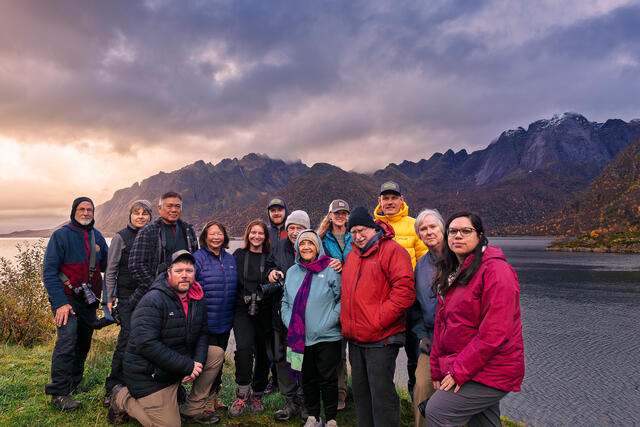
Workshop one (full moon week, February 27 to March 7) was all returning Face The Outdoors clients. Every person on that trip had been on at least one workshop with me before, and several had been on multiple. That changed the energy completely. We skipped most of the foundational settings work because everyone was already past it, and we spent more time on advanced composition, multi-shot stacking for noise control, and creative framing under moonlit conditions. The full moon was a feature on this run, not a bug — it lit up the foreground enough that we could compose snow-covered ridges and frozen rivers into the aurora frames without dropping ISO into the noise floor.
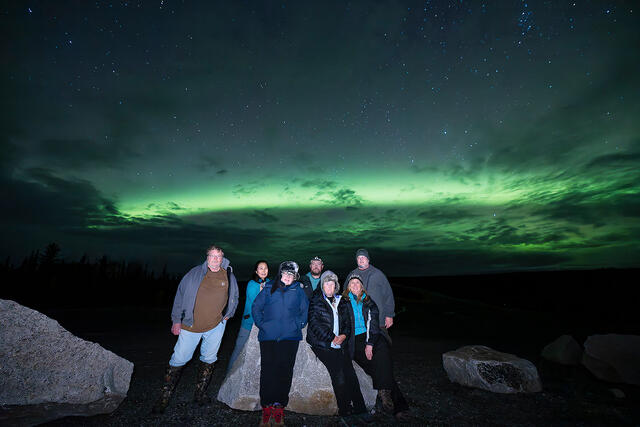
Workshop two (new moon week, March 20 to 28) was the opposite: every attendee was new to me, and several were new to night photography entirely. Different energy, different teaching focus. We spent more time on the front end with manual focus in the dark, white balance for aurora, reading aurora forecasts, and watching the KP index in real time. By night three, every photographer in that group was nailing focus on their own without asking. That's the moment in every workshop I look forward to most — the point where the gear stops being in the way and the photographer starts seeing again.
Both groups maxed out at 10 people. That cap is non-negotiable — at 10, I can still walk around and help every photographer find their composition. At 12, that breaks down. The small group setting is what makes the personal instruction work.
The First Night of Workshop One: -40°F, Ice Fog, and Aurora
I've been chasing the aurora borealis in Alaska for over twenty years, and the first night of the February run was one of the strangest displays I've worked.
We rolled out of Fairbanks under clear skies but with that thick interior cold settled in — the kind of cold where exhaled breath crystallizes and falls back at your boots. The thermometer in the van read -40°F when we parked. Ice fog had drifted in low across the ground, and the aurora was already up by the time we got tripods set.
What we got was an aurora arc running across the sky and ice fog rising off the unfrozen river below. At -40°F, water vapor lifting off any open surface freezes into suspended ice crystals before it has time to drift — that's the ice fog you can see hanging over the water and along the banks. We were shooting through that microclimate: aurora overhead, ice fog at our tripod legs, snow-covered banks anchoring the foreground, and the dark line of the river running through the middle of the frame. Standing in -40°F with an aurora overhead and ice fog rolling up off the water at your tripod legs is the kind of memory you don't lose. Nobody on that trip was thinking about the cold once the camera was on the tripod.
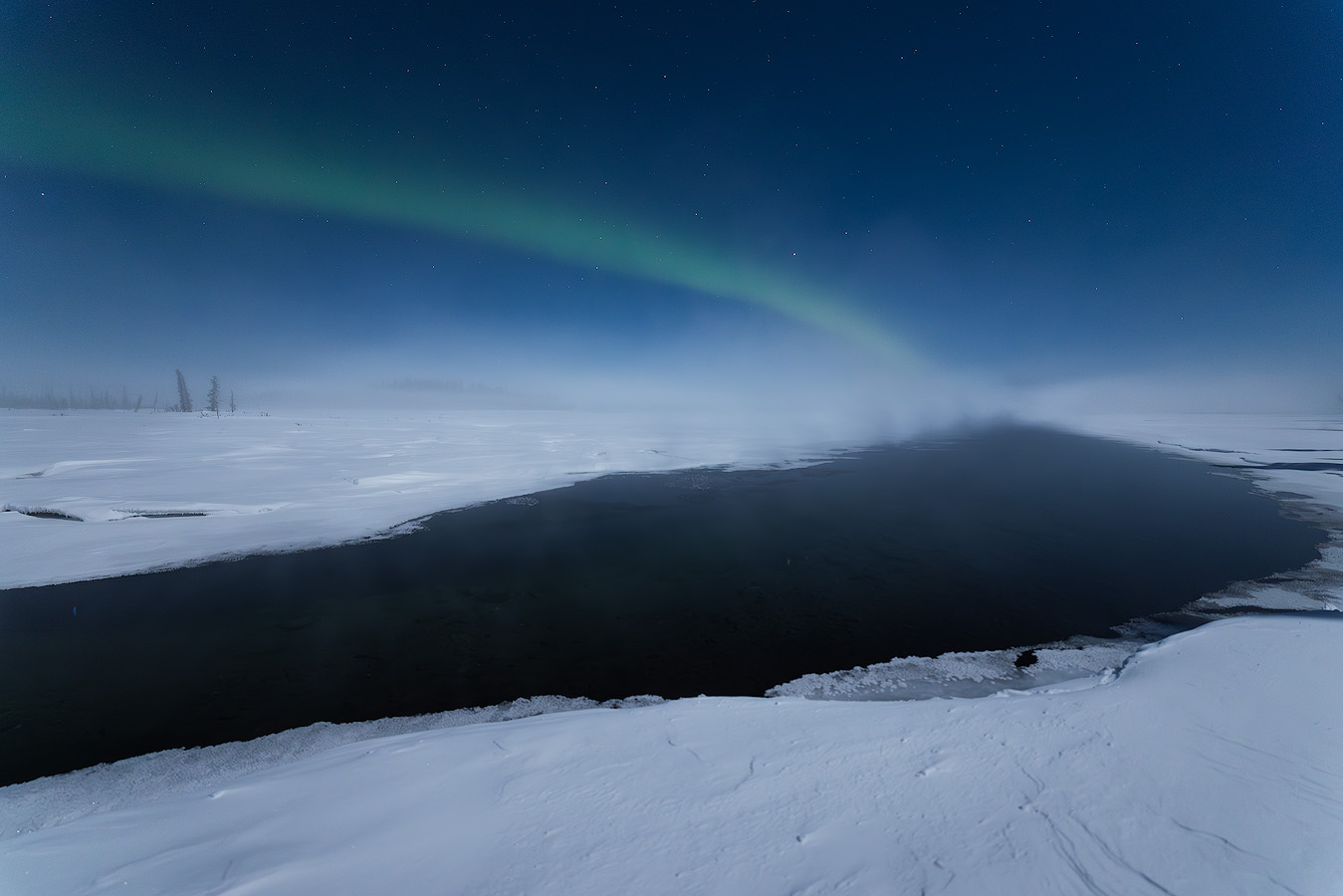
The technical challenge was real. At -40°F, batteries die in 20 minutes. Lenses fog when you pull a warm body out of a coat pocket. Tripod legs lock up if they've been wet. Nobody in that first group had shot in cold like this before — workshop one was returning clients, but returning to me usually means a fall Alaska workshop with milder temperatures around the September equinox, or October in the Lofoten Islands where the maritime air keeps the cold honest but nothing close to interior Alaska in February. Walking into -40°F is its own experience, and the first hour or two on that opening night was spent on the practical reality of it: where to keep batteries, how to handle the lens swap, when to step away from the tripod and let your hands recover. By the second night everyone was moving like they'd done it for years.
If you've never shot at these temperatures, my gear for arctic photography guide covers exactly what works and what fails.
The Lunar Eclipse and the Aurora on the Same Night
Two nights into workshop one, the lunar eclipse happened. We were already in the field for aurora when the moon went into eclipse, and the lighting on the landscape shifted dramatically through the night. The aurora kept firing as the moon dimmed.
What was rare wasn't the eclipse itself — those are calculated to the minute years in advance and we knew it was coming. What's rare is having an active aurora display during the eclipse window, clear skies overhead, and a group already in position with cameras on tripods. You can plan for the eclipse. You can't plan for the aurora cooperating. The lighting through totality is also unlike anything else you'll shoot during full moon week. As the moon dimmed through eclipse, the bright moonlit landscape we'd been working all week went nearly dark — the moon itself took on a dim reddish cast and the aurora became far more visually prominent without competing moonlight washing it out.
Night sky photography under these conditions takes specific technique: wide apertures, careful ISO management, and exposure settings that can hold detail in both the dim eclipsed moon and the active aurora in the same frame.
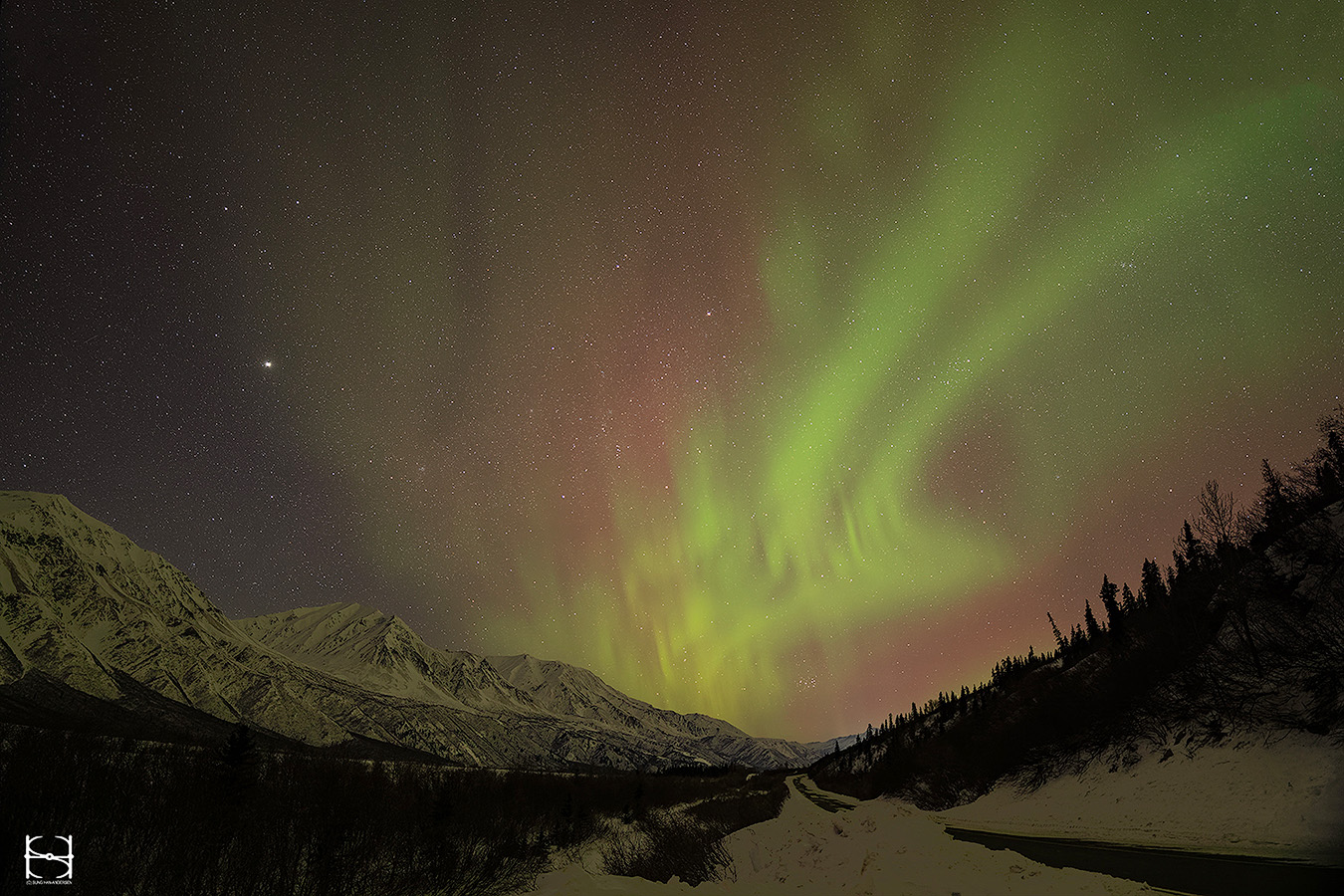
Two of the participants worked the eclipse-and-aurora window hard, and a handful of images came out of that night that I keep going back to. The combinations of moon phase, aurora intensity, and foreground choice gave each photographer something different to work with, and the variety in what they captured is part of why this kind of overlap event matters — it's not one shot everyone walks away with. It's a window where every photographer's compositional decisions show up clearly in the final files. Standing under a lunar eclipse and an active aurora at the same time is the kind of celestial event that defines a workshop.
Workshop Two Opening: KP 7 on the First Night
The second workshop opened with a geomagnetic storm I would have planned if I could have. KP 7 — well above what we normally expect — hit on the very first night together. That's the kind of aurora event that turns a workshop into a story people tell for years.
Aurora forecasts use the KP index, a 0-to-9 scale that measures geomagnetic activity. KP 4 produces a respectable display visible from Fairbanks. KP 5 is a strong show. KP 6 starts pushing the aurora oval south and brightens the colors. KP 7 is a different animal. The sky doesn't just dance; it moves. Substorms break out across the entire visible horizon. Reds and pinks appear that you don't usually see in a typical Fairbanks aurora display. Compositions you'd plan for an entire workshop happen in 20 minutes.
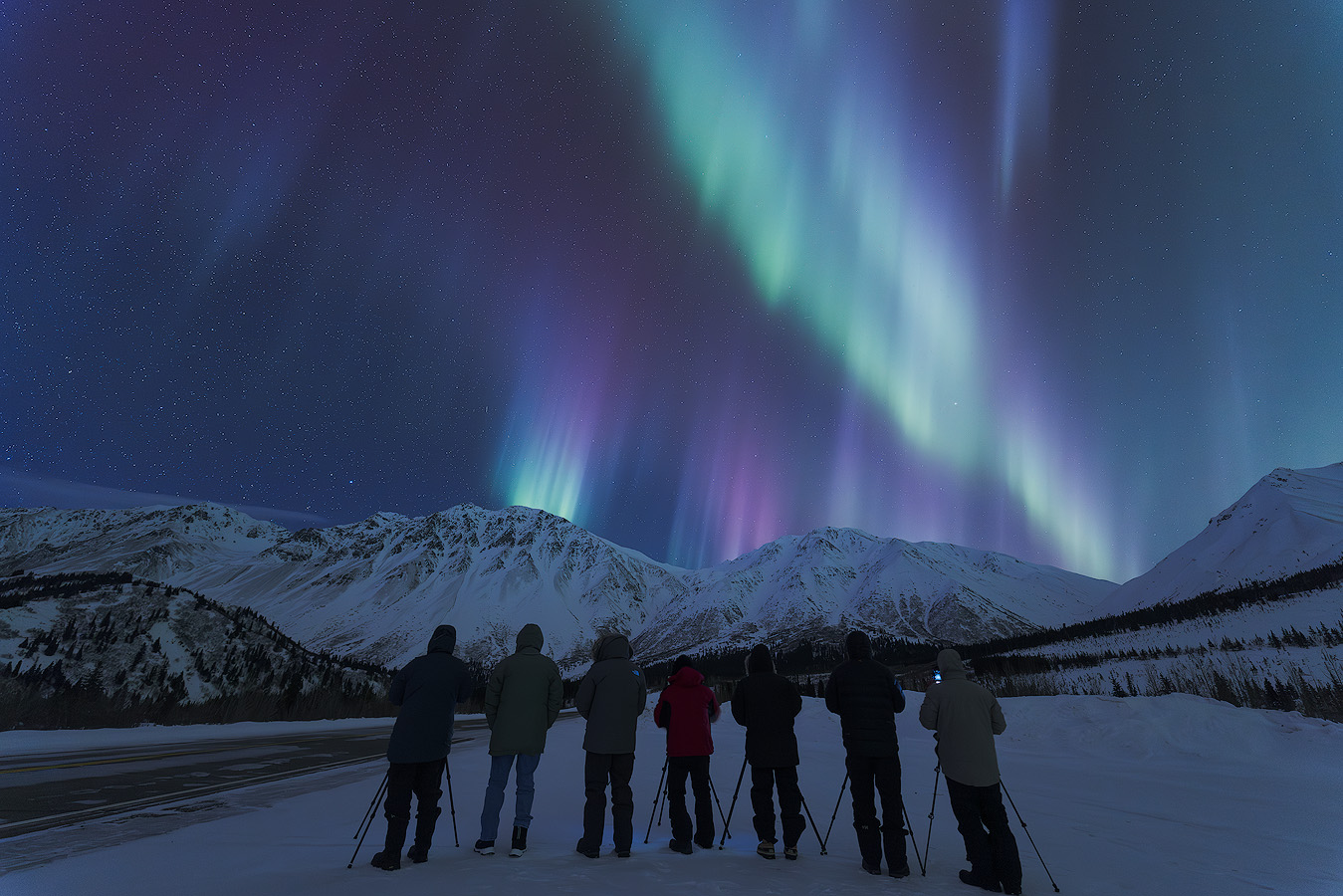
That first night ran 4 hours of solid auroral activity. We were down in the Eastern Alaska Range, with snow-covered peaks rising into the frame and the aurora moving across the sky above them. Most of the group had never seen anything like it. Several people in that workshop locked in portfolio images before they had fully unpacked their gear from the hotel that morning. That's why I run these as multi-night workshops rather than single-night experiences — aurora activity is variable, and giving photographers multiple nights is how you guarantee they actually capture what they came for.
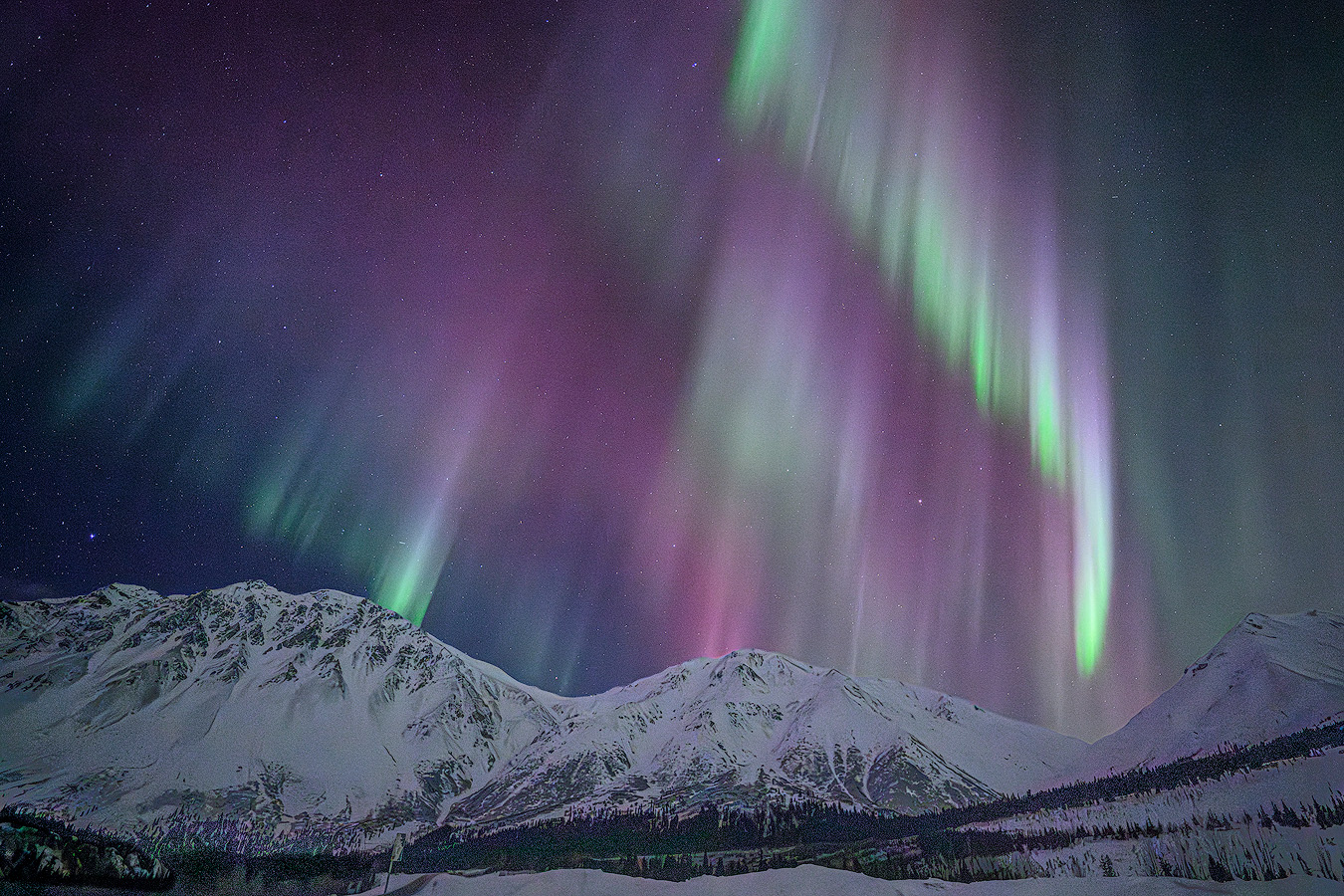
The downside of opening at KP 7 is that you set the bar for the rest of the week on night one. By nights five and six, when we were getting "normal" KP 4 to 5 displays, I had to remind people that what they were watching was still extraordinary. The aurora was different every night across the rest of the run — slower, sometimes more colorful, sometimes more subtle — but it was there every night.
Coldest night that second week ran around -20°F. Manageable. We could stay out longer, batteries lasted closer to their rated time, and tripod work was easier. Different challenge than the -40°F week, but a different kind of opportunity too.
Sixteen Nights, Sixteen Aurora Displays
I want to be precise about this because it's unusual: every single night of both workshops produced a usable aurora display. Sixteen nights total across the two runs. Sixteen nights of aurora.
That doesn't normally happen. Most workshops I've run over the years see two or three nights of clouds or low solar activity. This spring, the weather pattern locked into clear skies through both weeks, and the solar cycle is still riding high after the recent solar maximum — active enough that even quieter nights produced visible displays. The window of strong activity isn't over yet. Geomagnetic conditions tend to stay elevated for years on the descending side of a solar cycle, and that's working in our favor through 2027 and into 2028. This is part of why I structure the spring equinox northern lights workshop around the equinox window specifically. The historical odds favor this kind of consistency, and the multi-night format is what turns favorable odds into actual portfolio results.
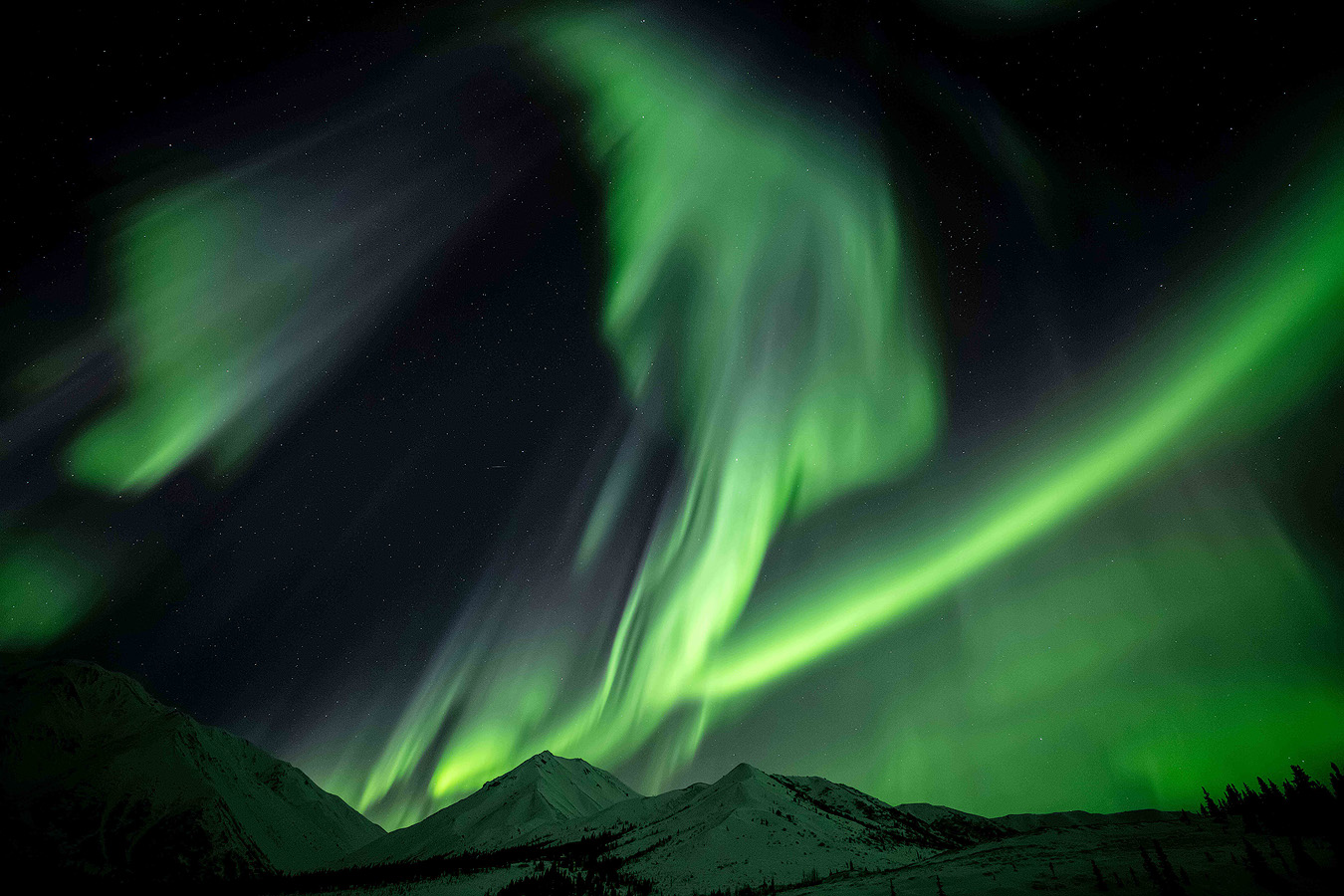
The variability matters more than the consistency. Some nights we shot fast, active substorms with shutter speeds at 1 to 3 seconds. Other nights we shot slow, sweeping bands of green across the night sky with exposures running 10 to 15 seconds.
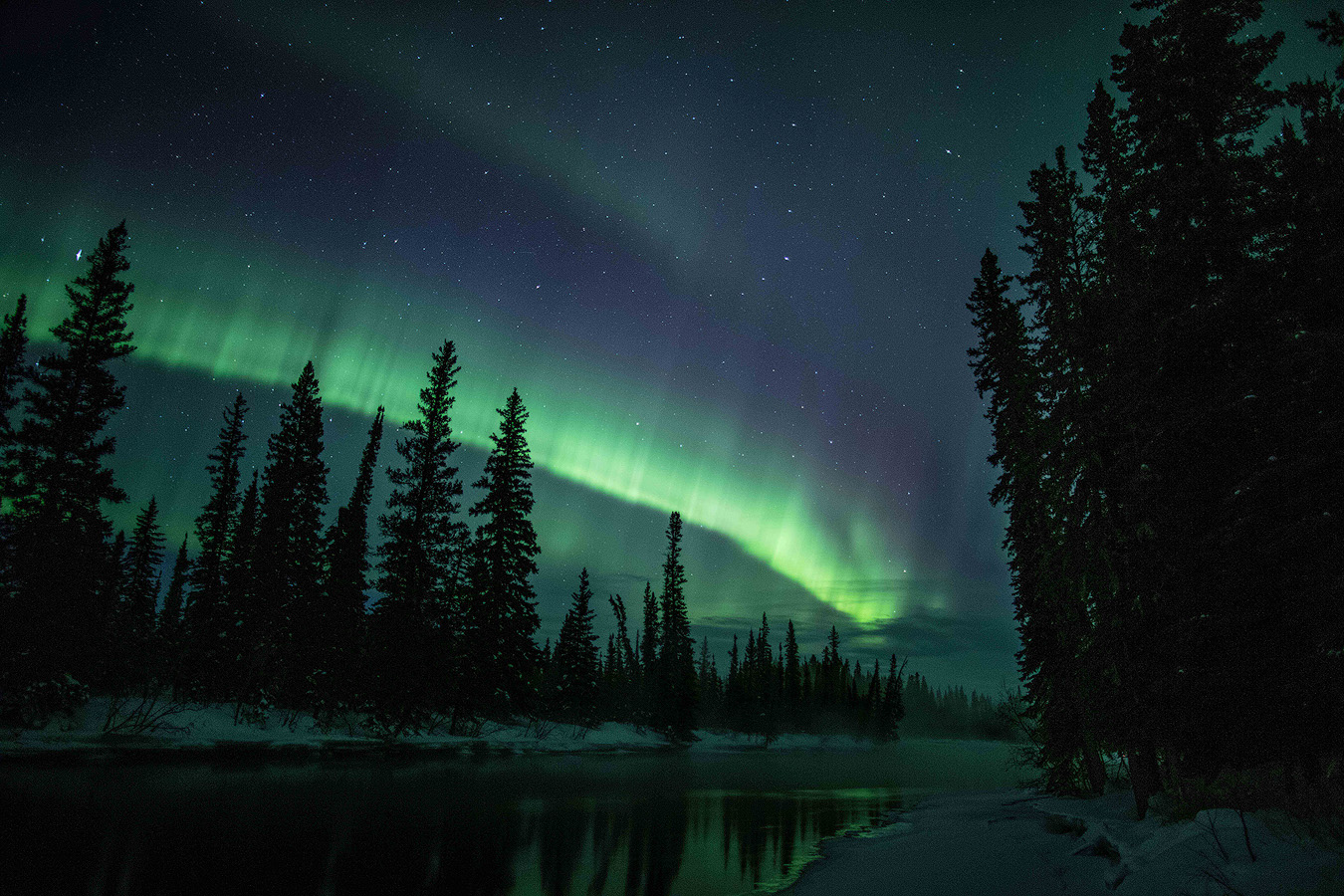
Some nights we got reflective compositions with aurora doubling in open water — those are the shots that really separate a workshop with location knowledge from a tour that drives you to a turnout and points at the sky.
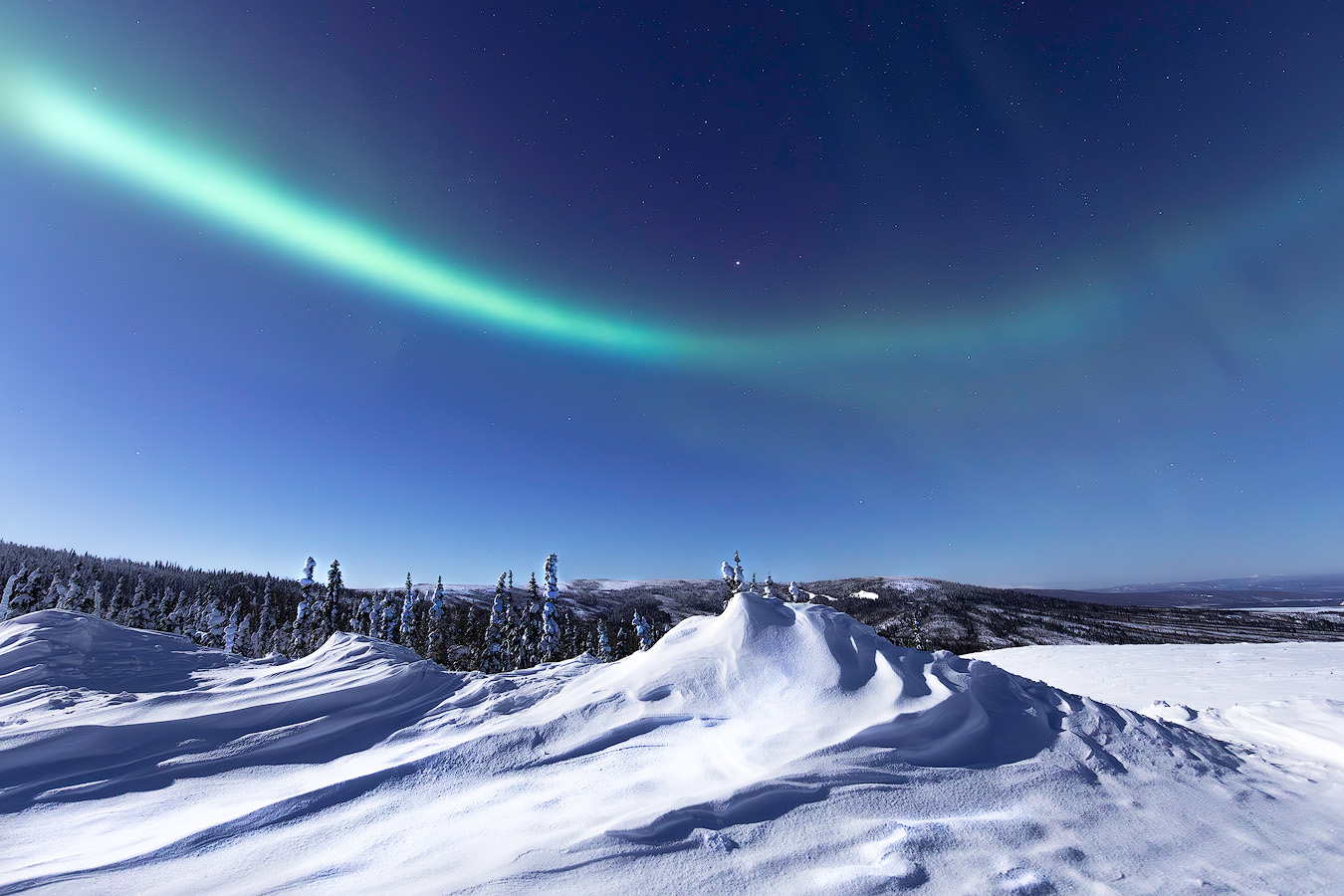
Daytime Shooting Between Aurora Nights
This is the part most people don't ask about until they get here.
Both workshops included afternoon shoots when weather and energy levels allowed. The Interior of Alaska in February and March is its own landscape — boreal forest under heavy snow, hoarfrost on every branch, low-angle light through the trees, and views back toward the Alaska Range on clear days. There's a chance of caribou, moose, fox, or lynx crossing your scene. We worked on landscape compositions, on light and shadow on snow, and on intimate detail shots that have nothing to do with aurora.
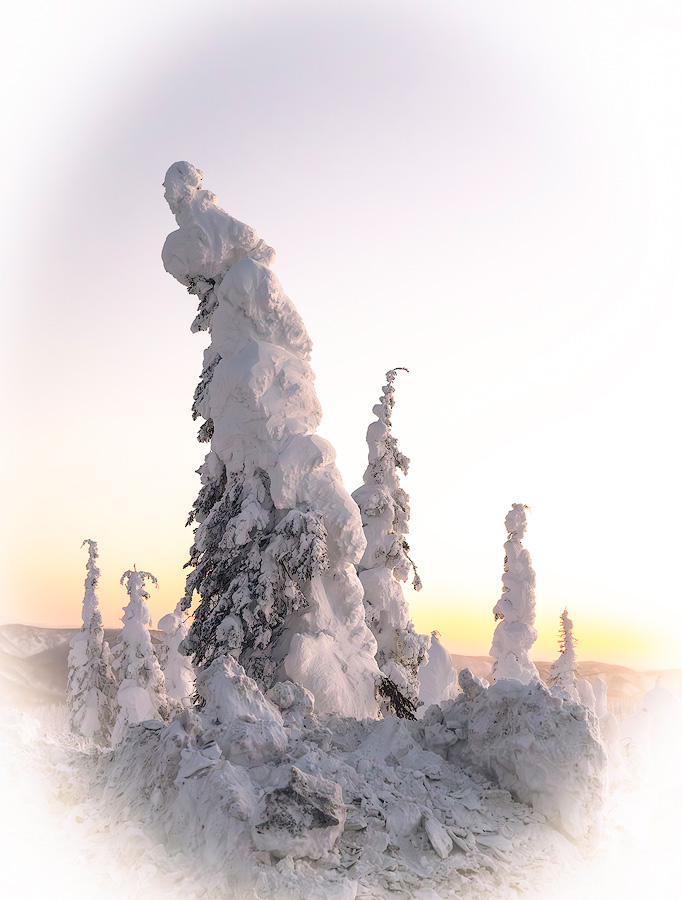
Both groups got out to the World Ice Sculpture Competition in Fairbanks for at least one evening. The carved blocks of clear river ice — some of them ten feet tall — make for an entirely different kind of photography session, and it's included in the workshop fee.
Daytime work levels people up between aurora nights. By the time the lights came back out, everyone's eye was sharper.
For another version of the layered fall and winter Alaska experience this connects to, my fall Alaska photography trip report covers that side of the work.
The Home BBQ and Image Critique Session
The long nights didn't leave room for daily post-processing sessions — when you're shooting until 3 or 4 AM and driving back in, the next day starts later than a normal workshop schedule. So instead of daily classroom time at the hotel, I set aside one full day mid-workshop and folded it into something better.
I opened my home to the group. We ran an extended image critique and post-processing session built around a BBQ dinner — the kind of evening where you're sitting around the table looking at each other's work on a big screen, talking through edits, sharing the file someone made on night three that they couldn't quite get right. The workflow I teach is built around what actually works on aurora files: RAW conversions with conservative noise reduction, luminosity masks for sky-and-foreground separation, holding back saturation on greens to keep skin tones natural in any foreground figures, multiple exposure blending for stacked detail, and combining multiple frames for true noise control rather than relying on a single high-ISO exposure.
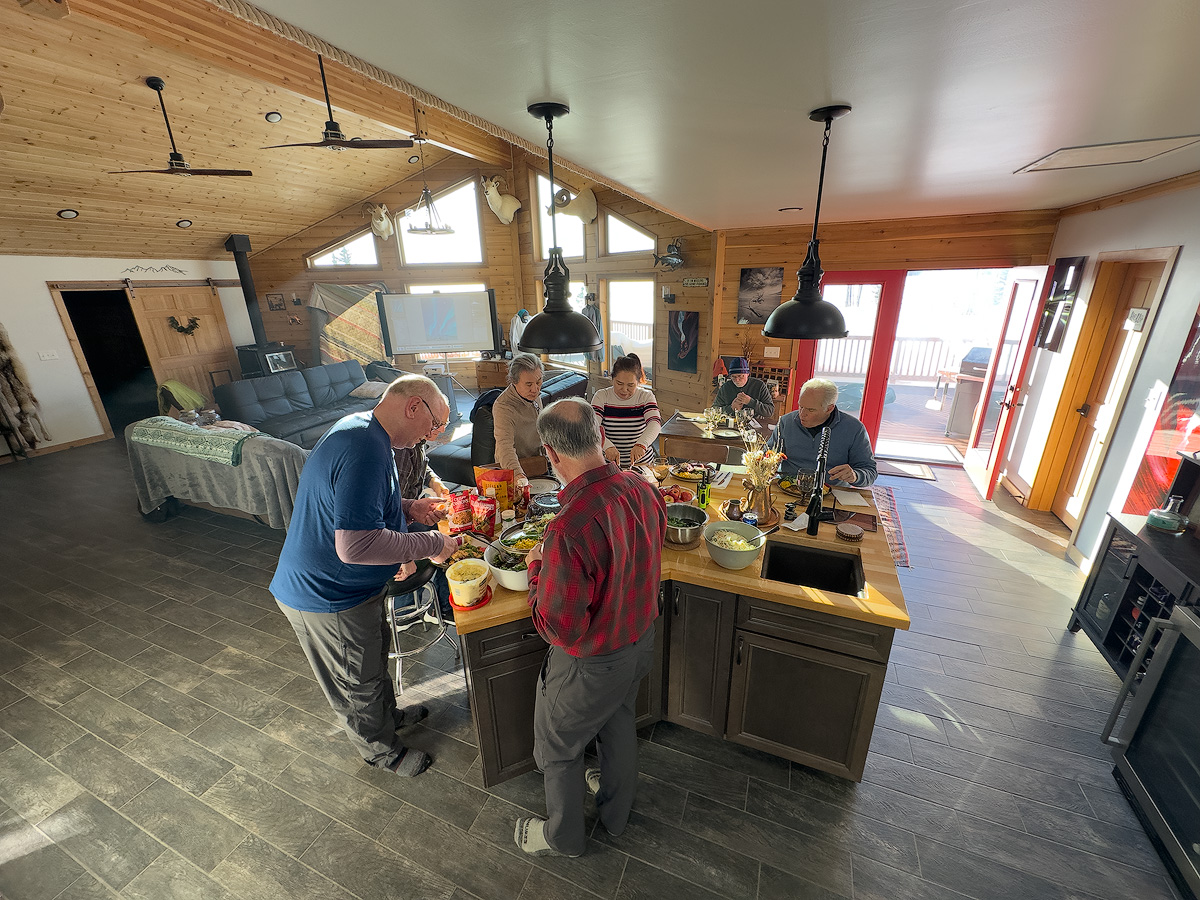
That session is the part of the workshop that compounds the most. Everyone walked out with edited portfolio images, the workflow patterns to repeat at home, and a meal together that put the whole group in a different headspace for the rest of the trip.
My landscape photography post-processing guide covers the workflow logic in more depth if you want to see it laid out.
Conditions, Cold, and What to Actually Expect
Here is the honest version of what spring in interior Alaska is going to ask of you.
Nighttime temperatures during workshop one ran -30°F to -40°F. Workshop two ran -10°F to -20°F at the coldest. Daytime highs across both runs were in the -10°F to +20°F range. These are sub-zero temperatures that demand real preparation. Layers matter more than gear weight. A parka rated to -30°F or below, snow pants or bibs rated the same, smartwool base layers, and good insulated boots are non-negotiable. Hand warmers in the gloves, toe warmers in the boots, and a balaclava or face mask for the worst of it. Hot beverages help on long nights.
Battery management at -40°F is a real thing. I tell every participant to keep three fully charged batteries on their person at all times, inside an inner layer where body heat keeps them functional. Dead batteries in the field is the most common avoidable workshop problem and it doesn't have to happen.
We travel up to 200 miles in a single night when activity calls for it. Restroom facilities at shooting locations are sparse to nonexistent. The pace is relaxed, but the geography is real, and so is the cold. If you're considering a spring equinox northern lights workshop, that prep envelope is what you're committing to.
Photographer-Submitted Work
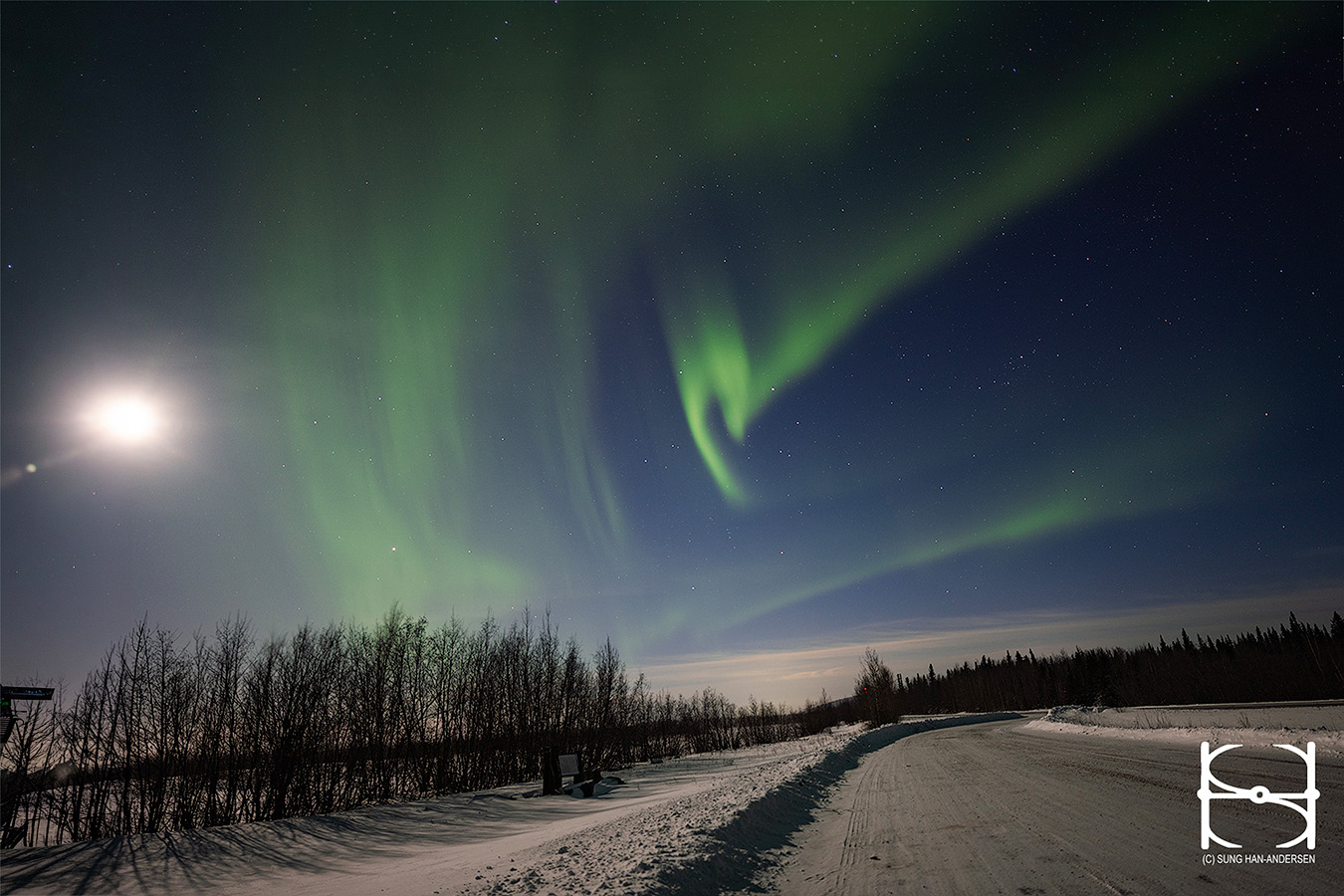
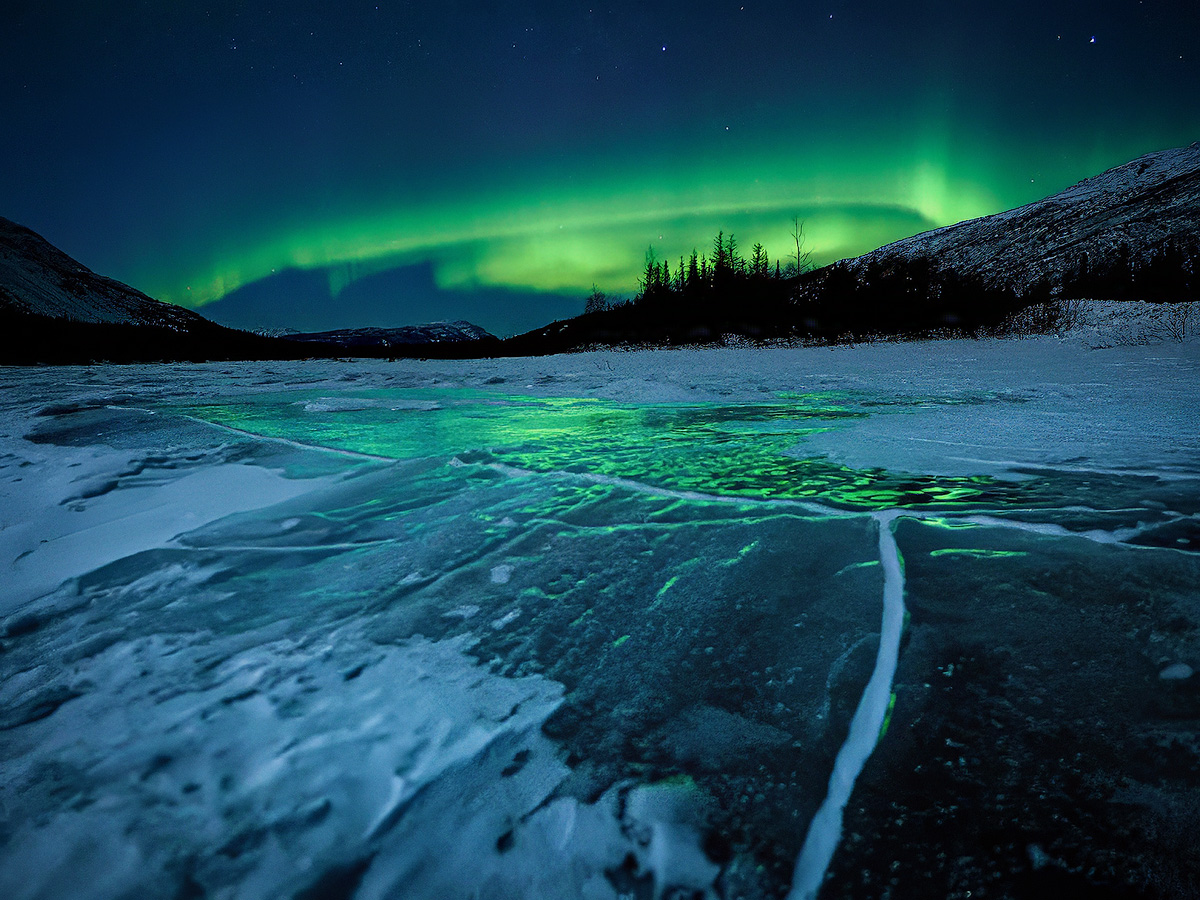
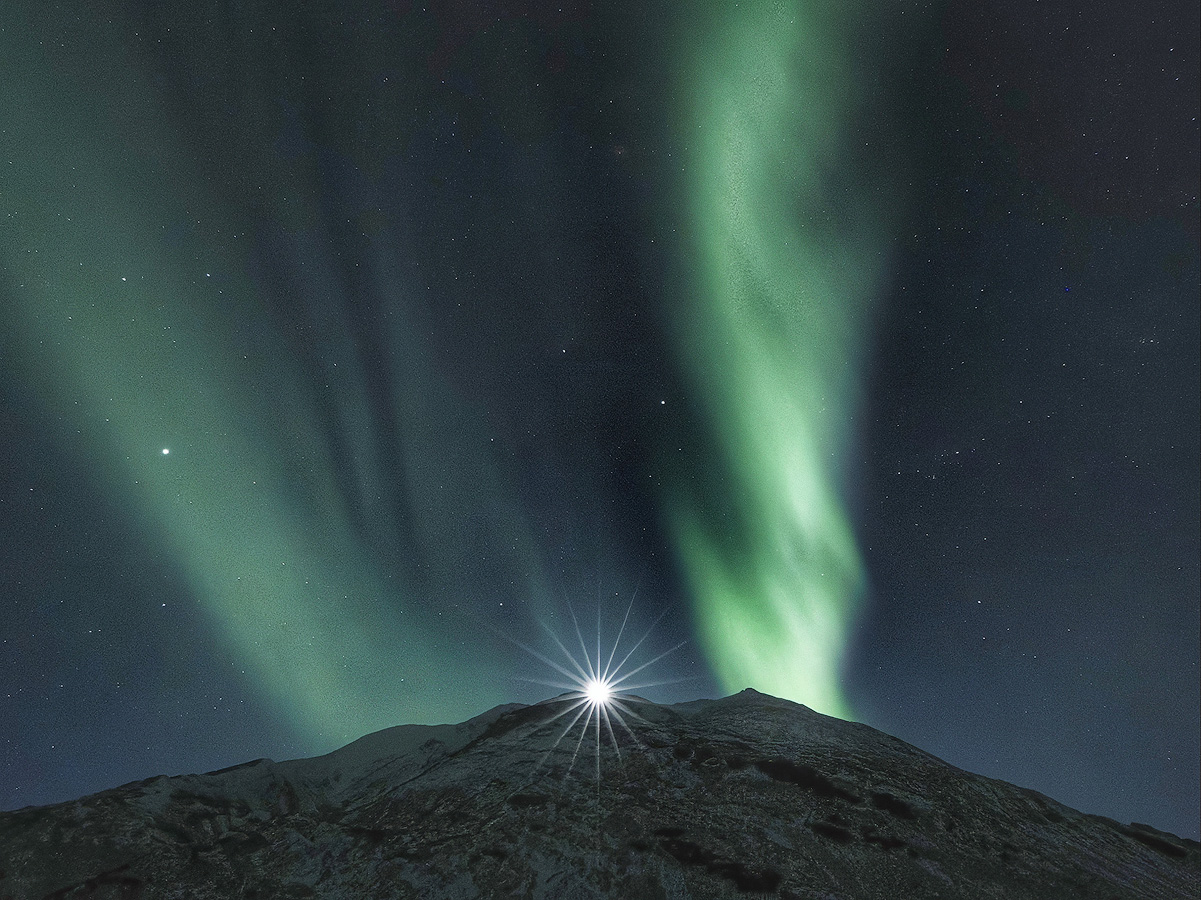
Most of the images you've seen throughout this trip report were shot by workshop participants and used here with their permission. That's deliberate — when prospective attendees ask me what's achievable at their skill level, the answer isn't my work. It's theirs. Part of how that happens is that I push photographers to look at the scene differently than the person standing next to them — to find their own composition rather than make the same shot everyone else is making. The two images below show that working in practice. Same nights, same conditions, very different photographic decisions.
Where to Photograph the Aurora With Me Next
I lead aurora photography workshops in Alaska and Arctic Norway during both equinox windows — fall in September, spring in late February and March — when geomagnetic activity peaks as earth's magnetic field aligns with the solar wind. Both locations sit directly under the auroral oval and deliver consistently strong displays in those windows. I specifically select dark locations with minimal light pollution for these workshops, well outside city light. Every run follows the same small-group, location-led, all-skill-levels approach you've just read about.
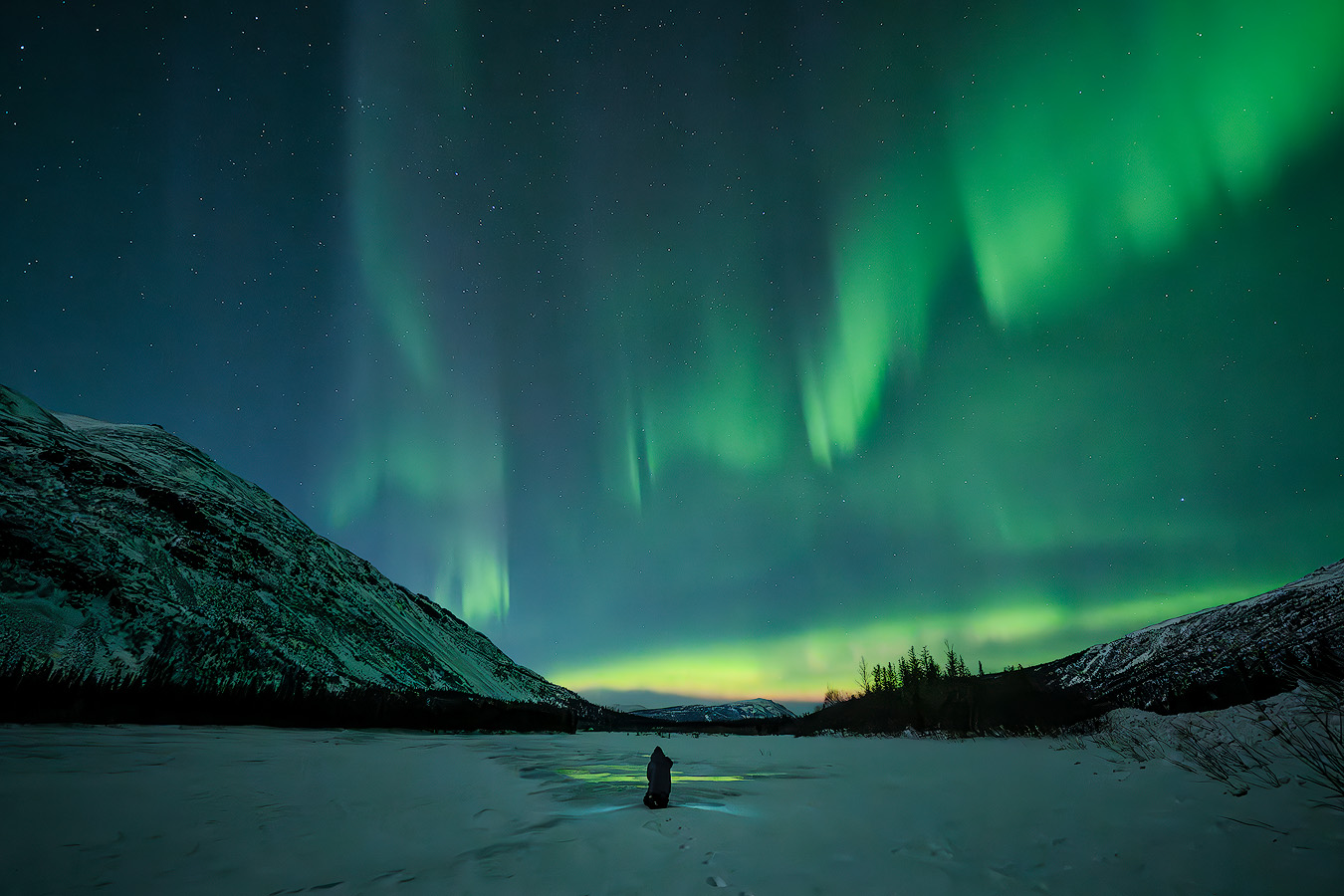
The 2026 Alaska workshops are complete. My next scheduled aurora run is Arctic Norway, March 2027 — seven nights working the Lofoten coastline under the aurora, with the added range of coastal landscapes, fishing villages, and arctic ocean reflections you don't get in interior Alaska. Workshop dates and logistics are listed on the Arctic Norway workshop page.
If you specifically want the next spring equinox northern lights workshop in Alaska, contact me directly to get on the early notification list. New Alaska workshop dates get announced to my email list before they go public.
Frequently Asked Questions
What is a spring equinox northern lights workshop?
A spring equinox northern lights workshop is a multi-night, small-group photography expedition timed around the late-March equinox window when geomagnetic activity historically peaks because earth's magnetic field aligns more directly with the solar wind. My version of this workshop runs 8 nights in Fairbanks, Alaska, with daily travel into the dark-sky interior, hands-on aurora photography instruction covering camera settings and composition, and a mid-workshop image critique and post-processing session hosted at my home. Northern lights workshops typically include nightly aurora chasing, focused instruction, and access to dark locations away from light pollution.
When is the best time to photograph the northern lights in Alaska?
The best time for northern lights photography in Alaska is from late August to late April. Peak aurora activity and notable aurora events occur around the fall equinox in September and the spring equinox in March, when earth's magnetic field aligns with the solar wind. This alignment enhances solar wind interactions and leads to increased aurora displays, especially during periods of solar maximum. February and March specifically benefit from increased geomagnetic activity combined with consistently clear interior skies.
How cold does it get during a spring aurora photography workshop in Alaska?
Spring aurora workshops in interior Alaska see nighttime temperatures from -10°F down to -40°F, with daytime highs from -10°F to +20°F. During my February 2026 workshop, the coldest night reached -40°F with ice fog. The March 2026 workshop bottomed out around -20°F. These sub-zero temperatures require parkas and snow pants rated to -30°F or below, smartwool base layers, insulated boots, and hand warmers.
Can a beginner photographer attend a spring equinox northern lights workshop?
Yes. My March 2026 workshop included several photographers new to night photography, and every one of them made portfolio aurora images before the week was over. Pre-trip preparation matters: arrive with the essential camera gear for photographing the aurora — a camera with manual settings, a sturdy tripod with a solid ball head, and a wide-angle lens with a fast aperture of f/2.8 or wider. The small group setting allows me to give every participant individual instruction.
What camera settings work best for northern lights photography?
Aurora photography requires manual exposure settings: ISO between 1600 and 3200 for most displays, aperture wide open at f/2.8 or wider, and shutter speeds typically between 5 and 15 seconds depending on aurora speed. Fast substorms need shorter exposures of 1 to 3 seconds. A wide-angle lens captures the most of the entire sky. Manual focus is essential because autofocus does not work in the dark. Multiple exposure blending lets you combine several frames for greater dynamic range and detail.
Do I need a guide to photograph the northern lights in Alaska?
You can chase the aurora independently in Alaska, but a guided workshop offers access to dark locations and dark skies with minimal light pollution — the remote, low-light areas away from Fairbanks that most visitors won't find on their own. Guided workshops also provide real-time decision-making based on aurora forecasts and weather, transportation in winter driving conditions, and direct photography instruction in the field. Locations matter more than people expect. A workshop guide who reads aurora forecasts, understands local weather patterns, and knows where to find the clearest, least light-polluted skies is the difference between watching the sky and capturing it.
About the Workshop Leader
Michael Schultz is a born-and-raised Alaskan landscape photographer with over 20 years of field experience in Alaska and a National Geographic publication credit. He leads spring equinox northern lights workshops in Alaska from his Fairbanks base, brown bear workshops at Lake Clark, Caddo Lake cypress swamp photography trips, and international workshops in Arctic Norway and the Italian Dolomites.