
Spring Bear Photography Workshop Trip Report: Five Days at Lake Clark
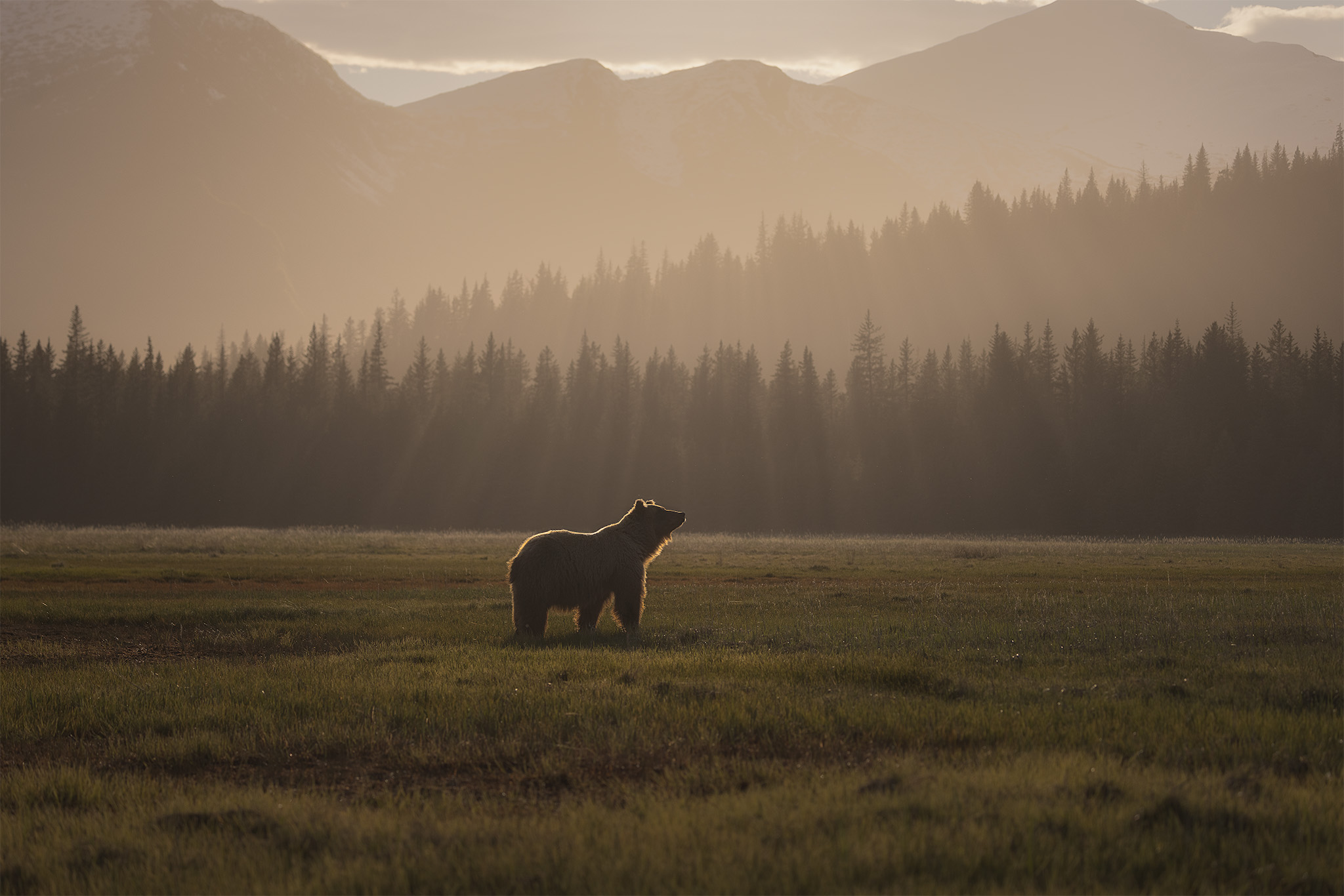
This is the trip report from my spring bear photography workshop at Silver Salmon Creek Lodge in Lake Clark National Park, which ran June 4–11, 2026 — five days of shooting at Lake Clark, with travel days in Anchorage on either end. Over those five days in spring, a small group worked coastal brown bears at close range under clear June light — nursing sows and yearling cubs, mating pairs, clamming on the tidal flats, bald eagles working the shoreline, and a few black bears for good measure. Here's how the week unfolded, and why the people who came are already talking about coming back.
Bears Before I Even Got There
The trip started before the trip did. On the drive down to pick everyone up in Anchorage, I had a cow moose cross with her twin newborn calves, then two black bear — a sow with last year's cub working the brush along the road. If you've spent any time in Alaska you learn not to read too much into a good omen. But it's hard not to grin when the wildlife shows up before the workshop even starts.
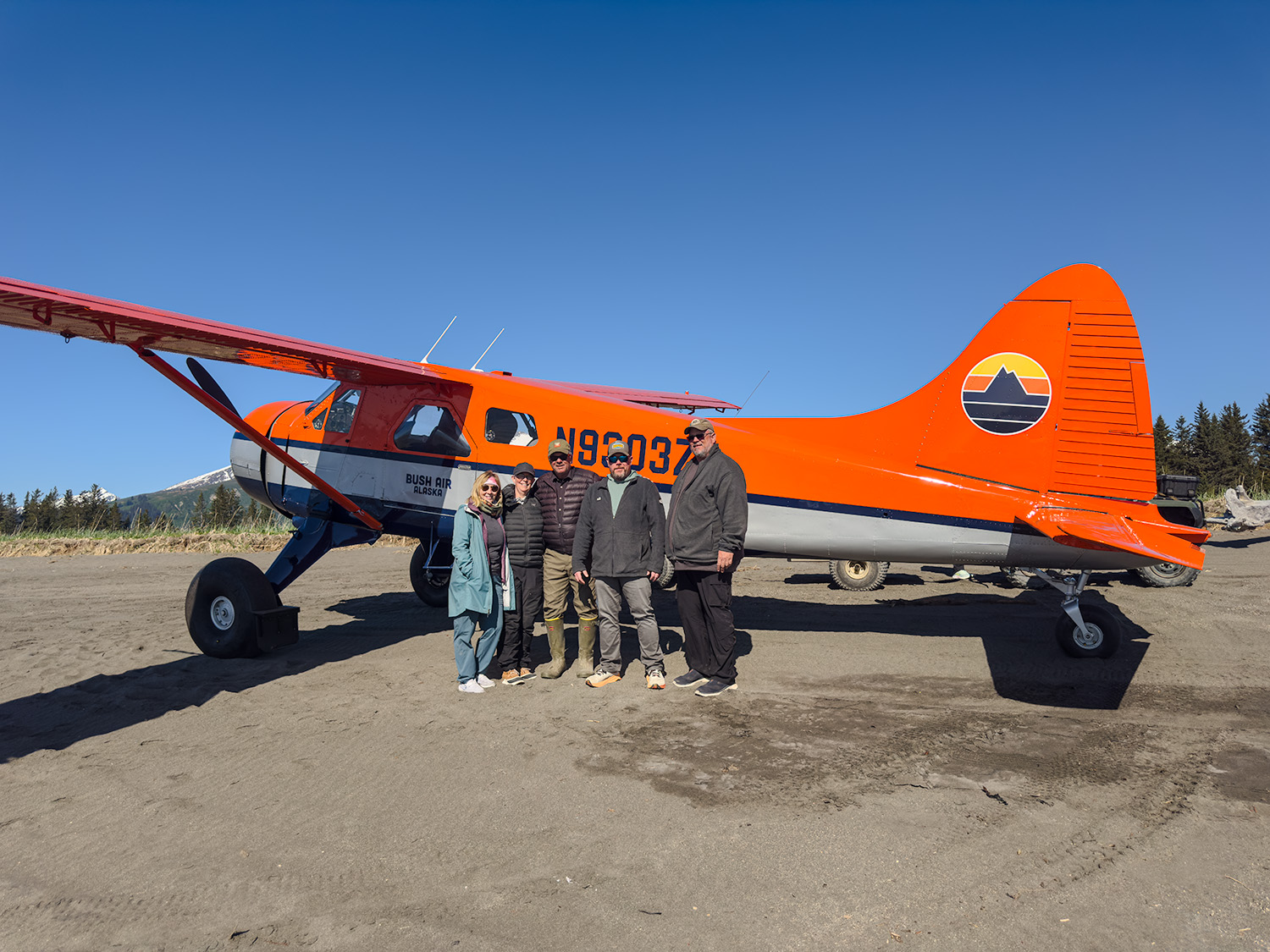
The next morning the group flew over to the lodge — a cow and calf moose on the ride in. And Lake Clark didn't waste any time. Before anyone had reached the lodge, a boar and sow were mating right out in the meadow. Cameras weren't even unpacked yet. That's the thing about this place: you can be on bears before your bags hit the floor.
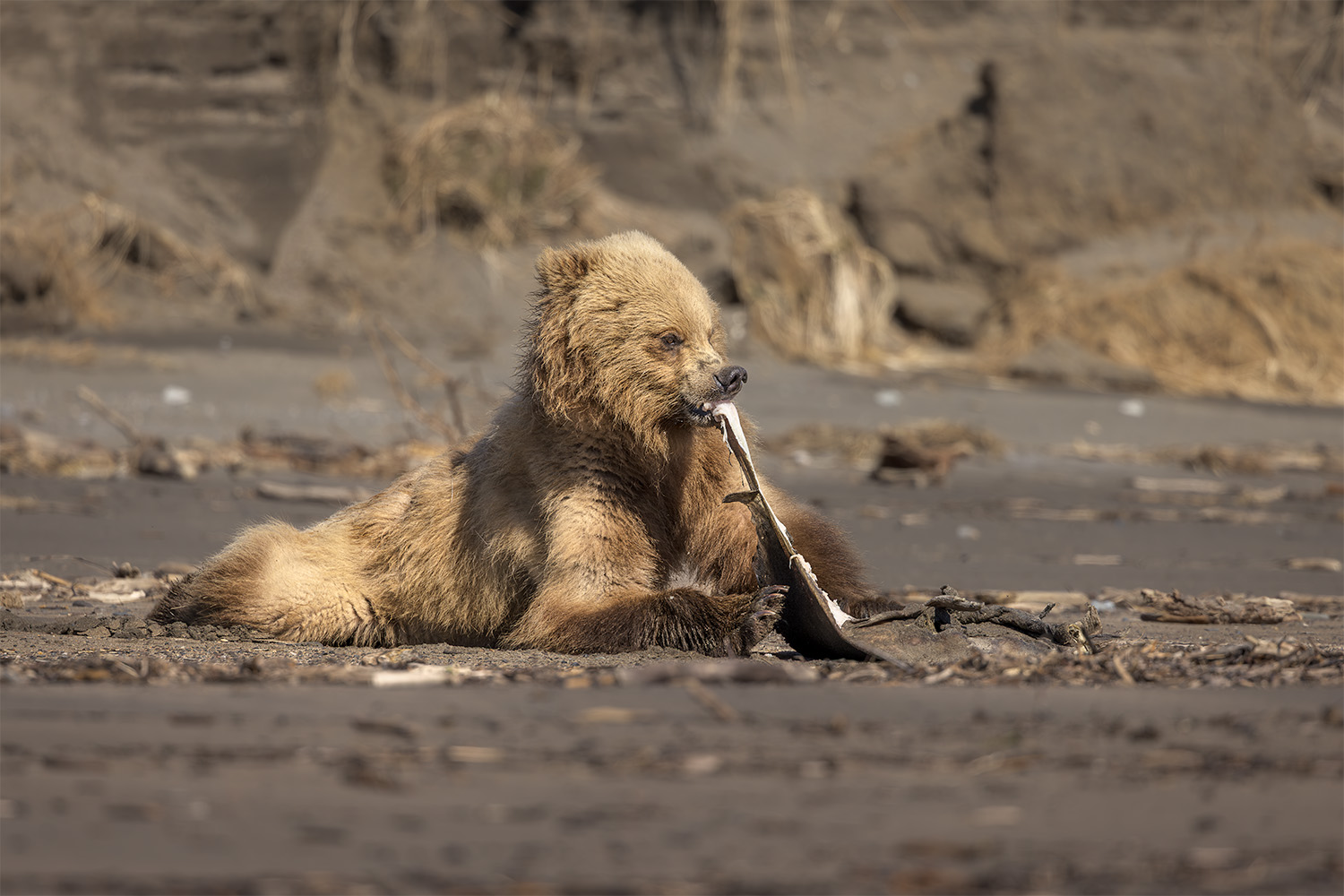
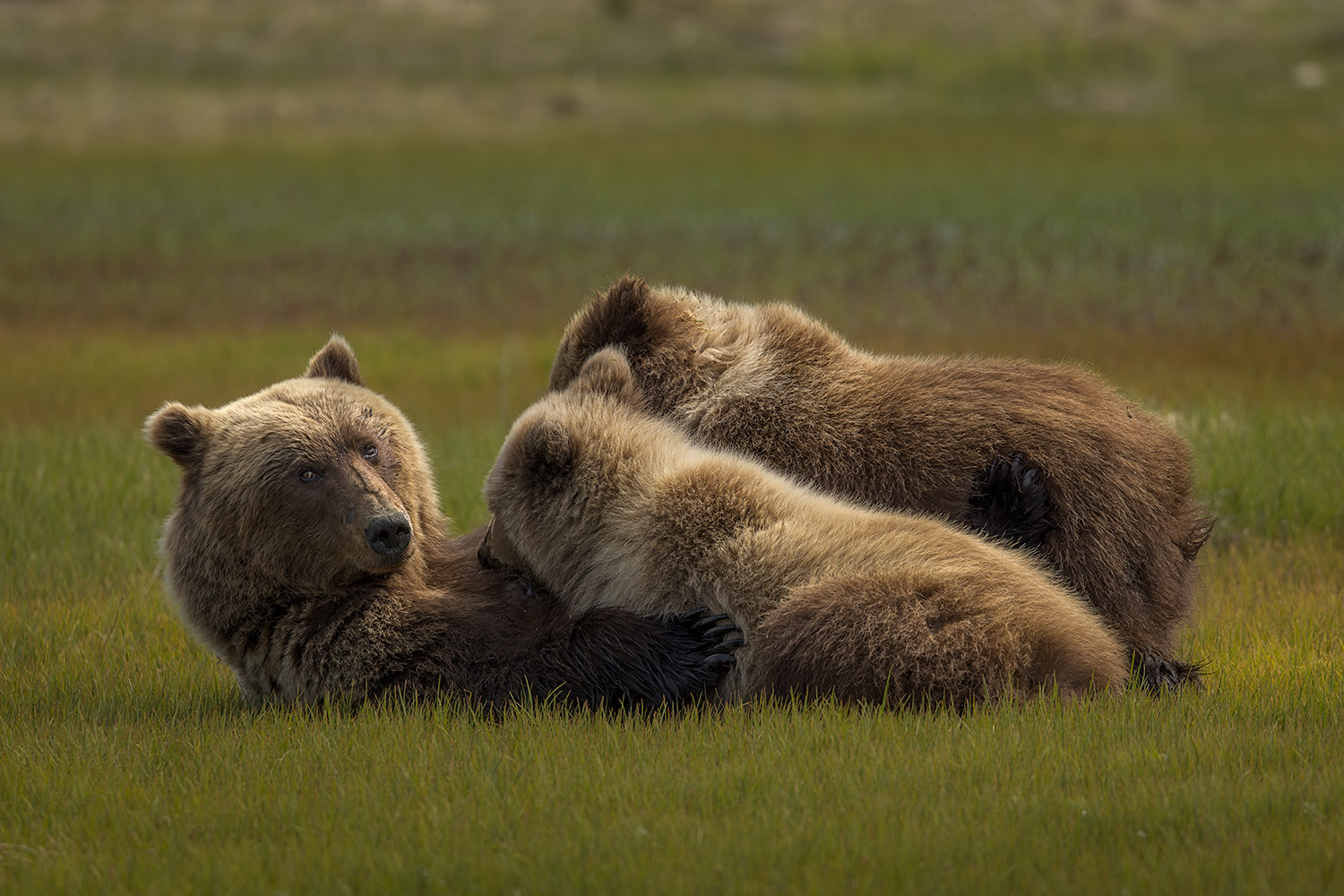
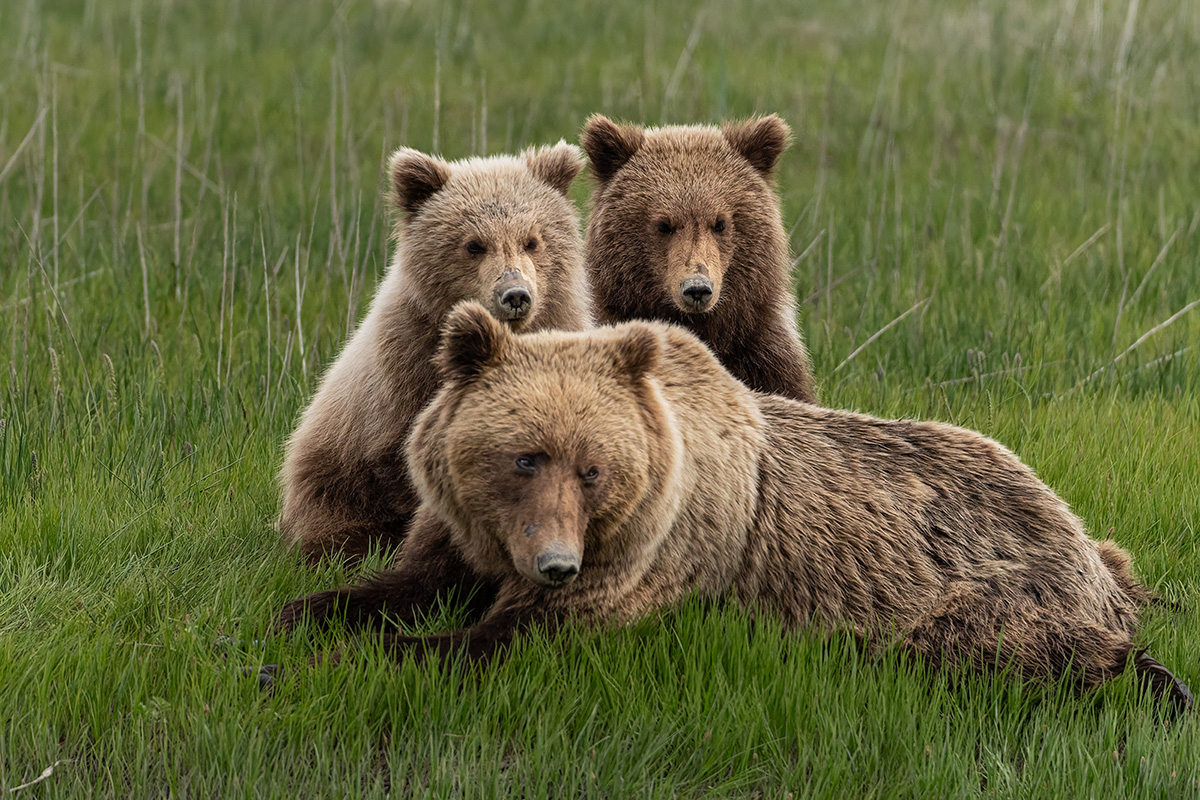
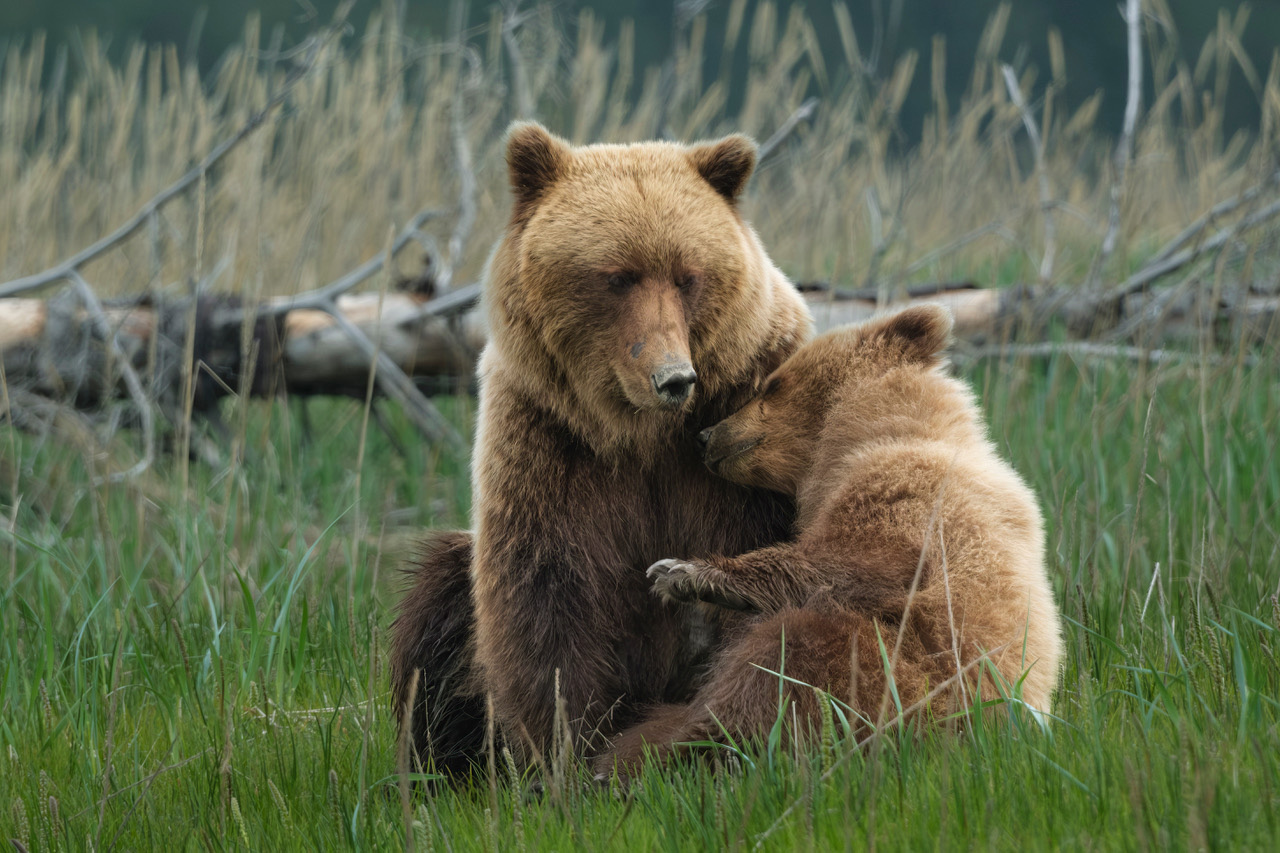
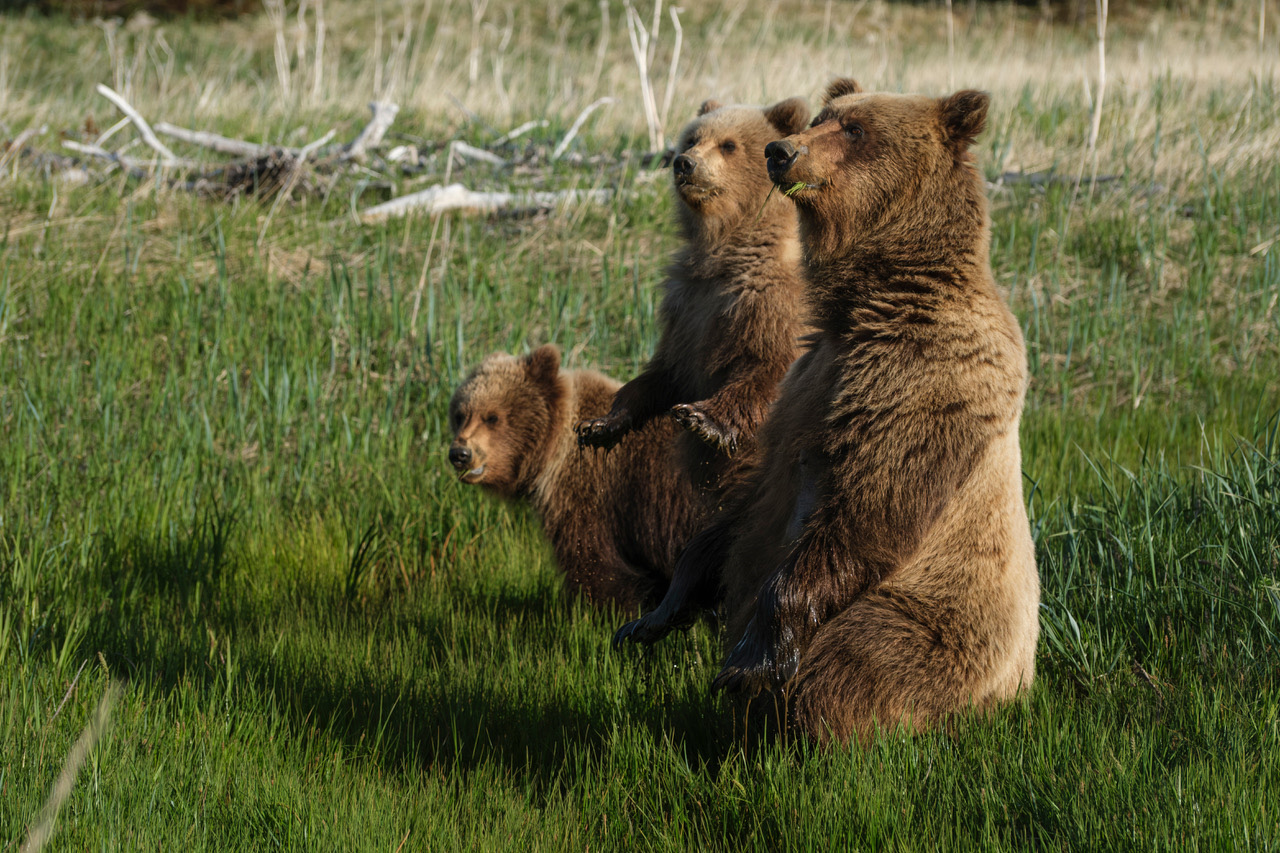
Once everyone's rooms were sorted, the briefing done, and camera gear checked, I took the group out. The mating pair had slipped into the brush for a bit. The first bear action came right after we headed out — a sow had found a skate washed up on the shore and sat down to eat it, a nice show to open the week on. Then, glassing the meadow, Kelly caught the backside of a sow grazing down in a slough — just her rump sticking up out of the creek, which is exactly the kind of unglamorous reality of wildlife photography nobody puts on a brochure. Then the meadow gave up the shot of the day: a sow with her two cubs from last year, grazing out in the open. The cubs decided grass wasn't cutting it and wanted milk, so she nursed them right there in front of the group.
Six bears on day one, under clear, sunny skies. Not a bad start.
The Week Finds Its Rhythm
We had bears every day — that's the short version. The longer version is that the week settled into a rhythm of mornings and evenings out in the field, the bears writing the schedule and the group along for whatever they decided to do.
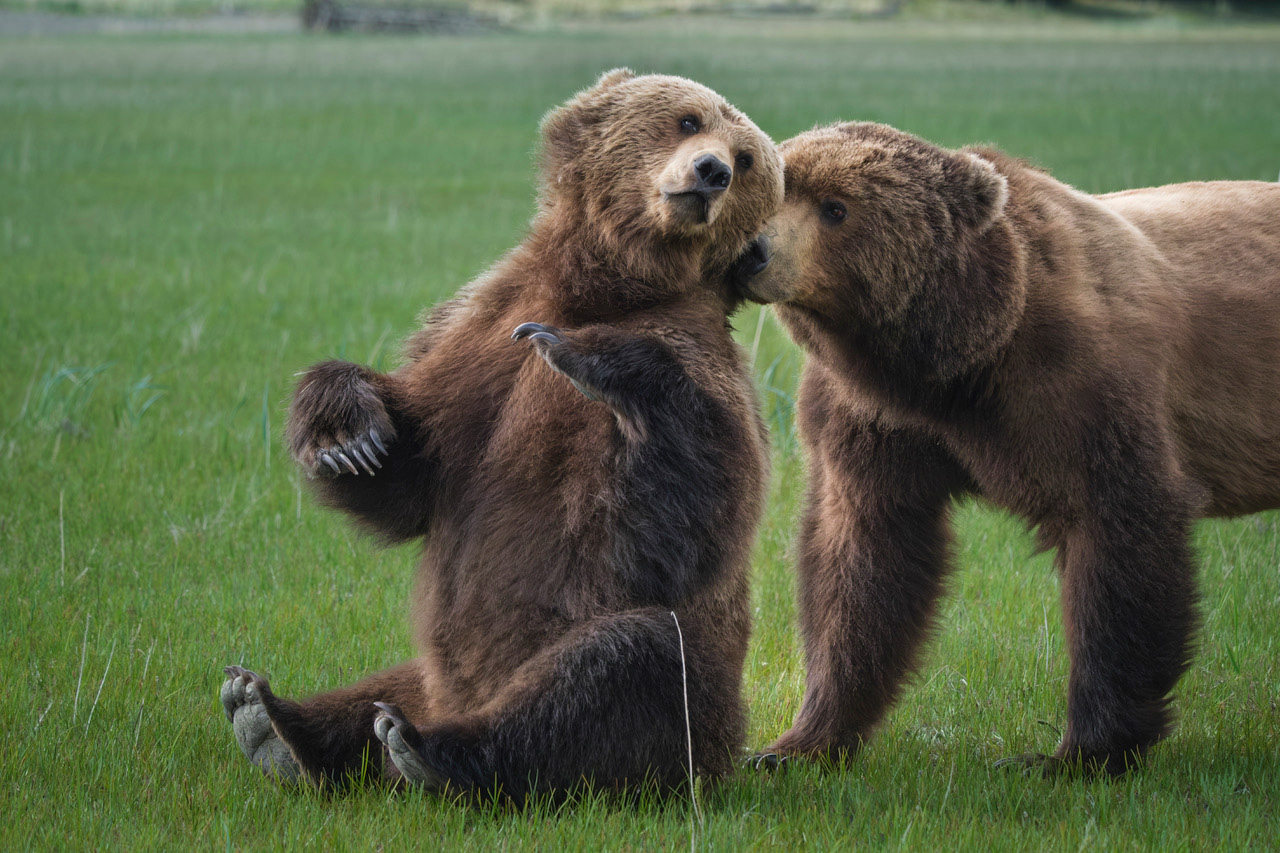
Day two was flat-out busy, bears moving through camp all morning. A sow ran down a boar and the two of them paired up and mated in front of the lodge for thirty-eight minutes — I timed it, because at some point you stop shooting and just start watching. Bear romance, for the record, can be a comical thing to witness; there's a lot of negotiating that goes on. Clamming bears worked the tidal flats, and there was more nursing out in the field.
Day three slowed down, the way wildlife always does right before it doesn't, but it still gave up cub action and more mating pairs, plus a bonus that surprised everybody — a black bear walked into camp. They're skittish little things with this many brown bears around, so having one turn up right in camp was a treat.
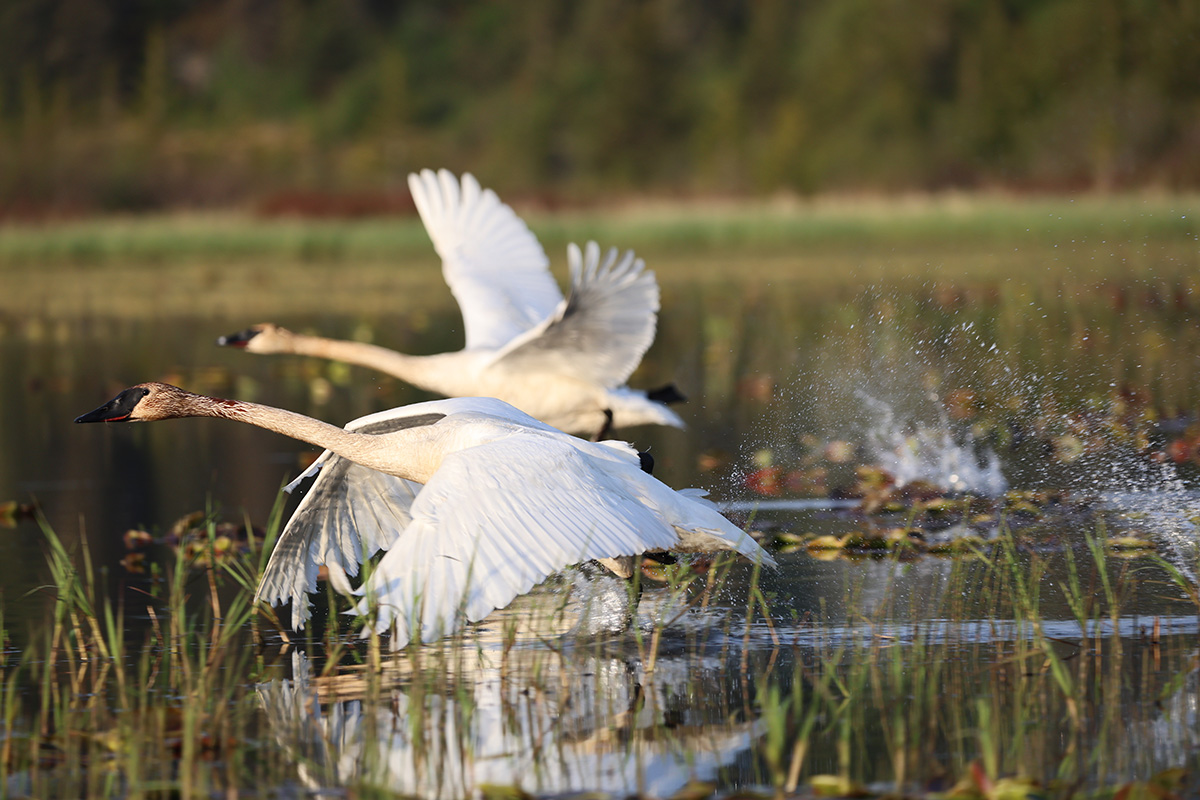
It wasn't all bears, either. One morning's run up to the lake brought soft, quiet light and a pair of swans that lifted off in unison, the water glistening off the splash as they took flight — the group got the whole takeoff. And on the slower stretches, bald eagles turned up along the shoreline and the tidal flats more than once; every time one dropped in, the group was on it.
Long Nose and Her Two Cubs
If there was a main character to the week, it was a sow the lodge calls Long Nose. She's a local — they've watched her out here for years, raising cub after cub — and you can see the experience in her. She's a good mom, and it shows in the small things: the patience, the way she keeps half an eye on her two no matter what she's doing.
This year she had a little female and a little male, and like any pair of siblings they'd sorted themselves out early. The little female was the adventurer — bold, first to try anything, always a step further out than mom probably liked. The little male was a true mama's boy, never far from her side. Watching the two of them figure out who they were against each other was half the entertainment of the trip.
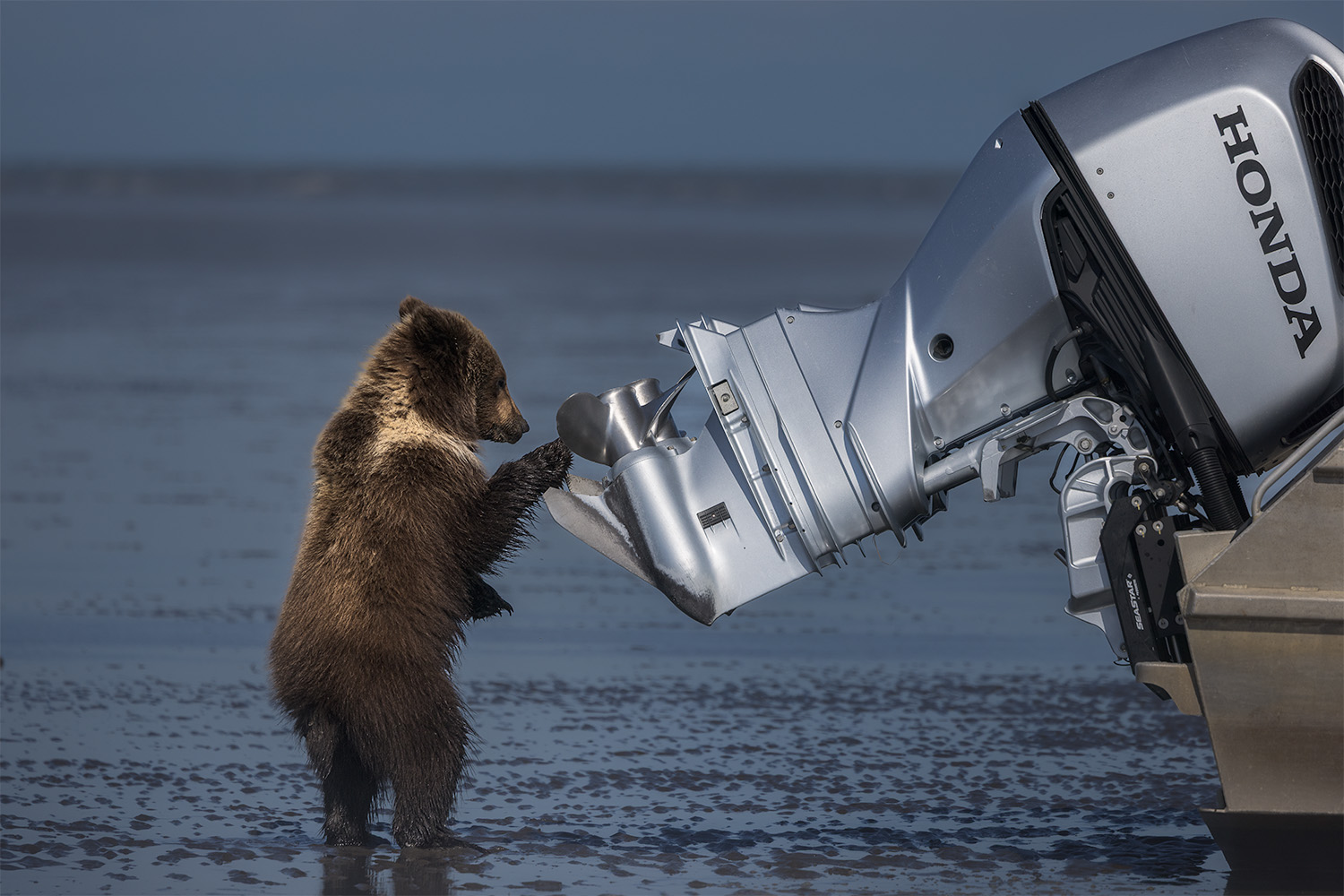
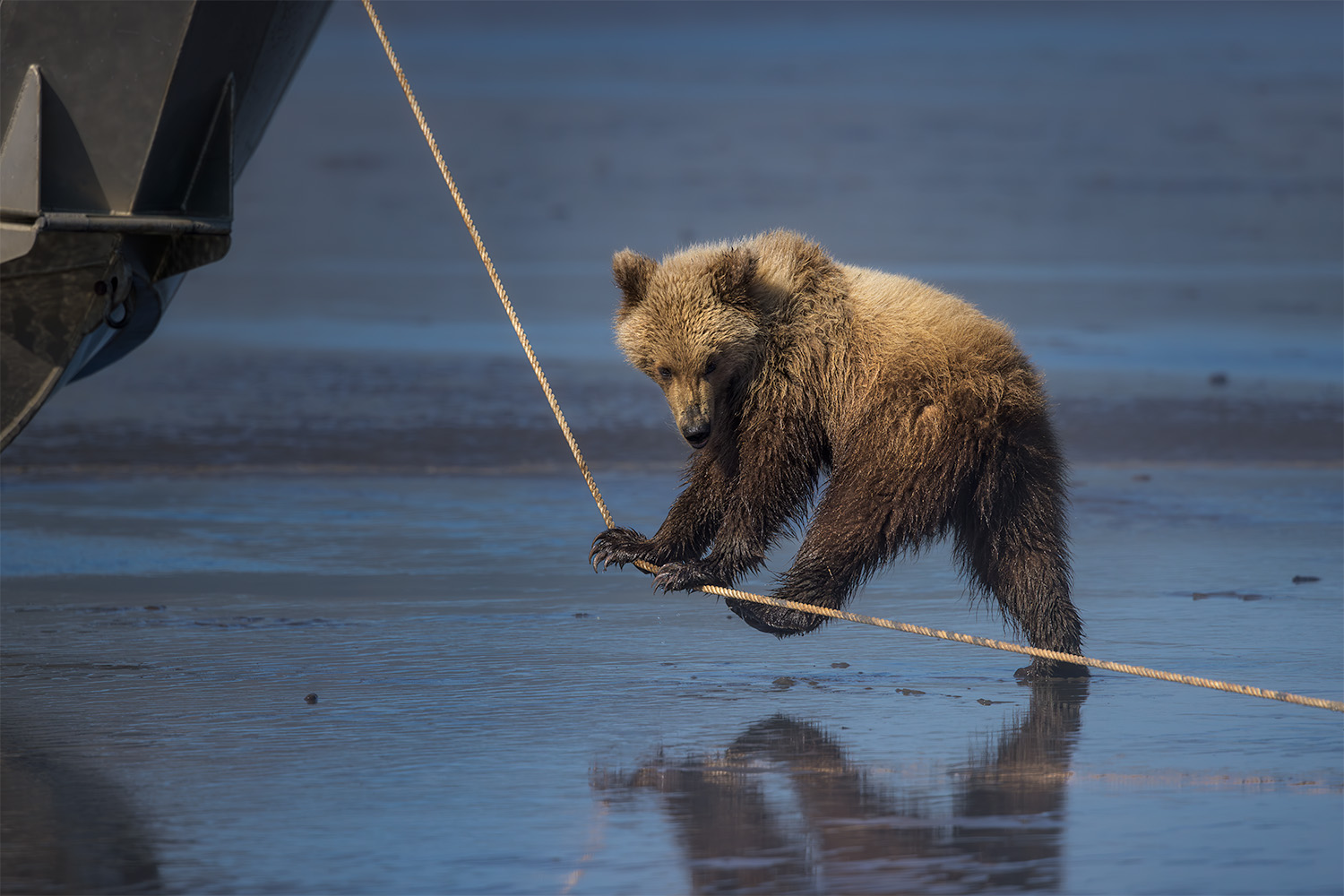
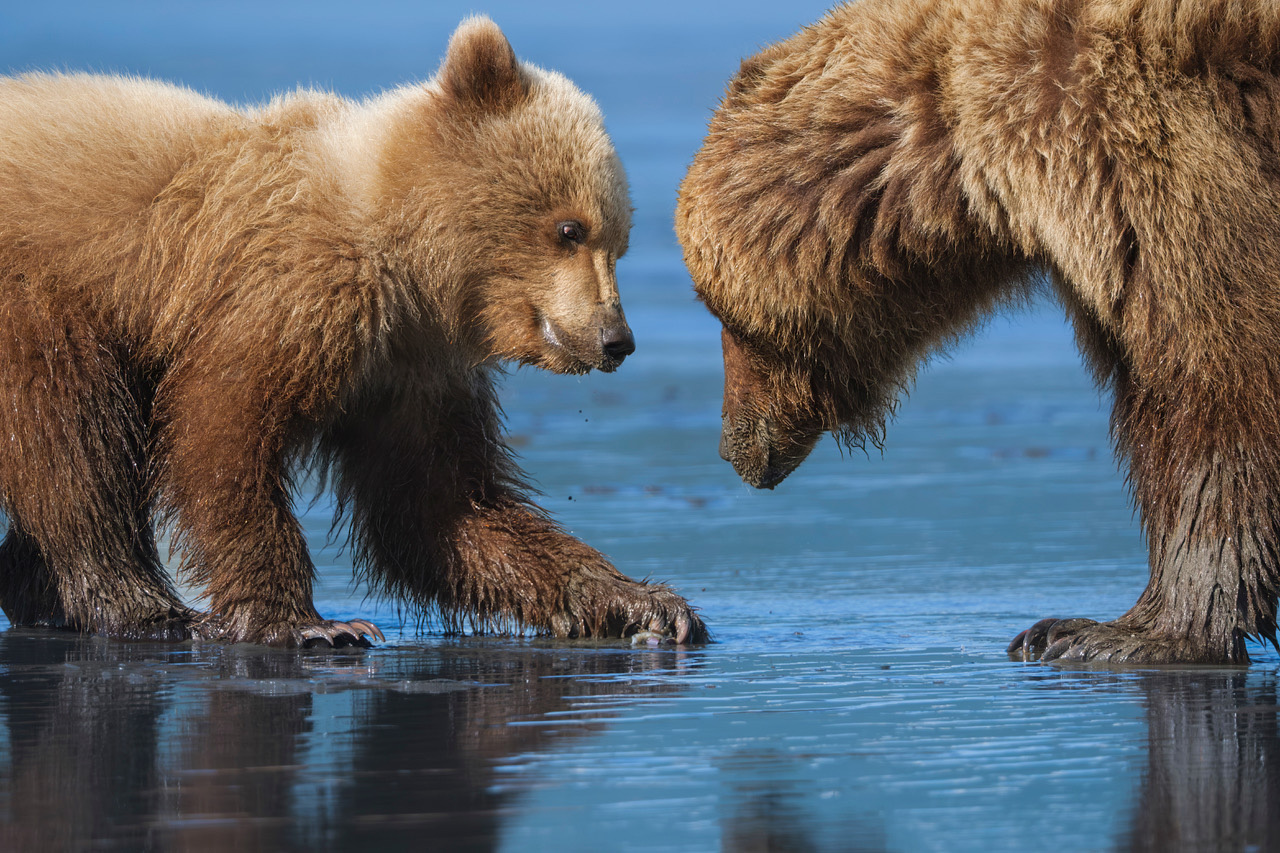
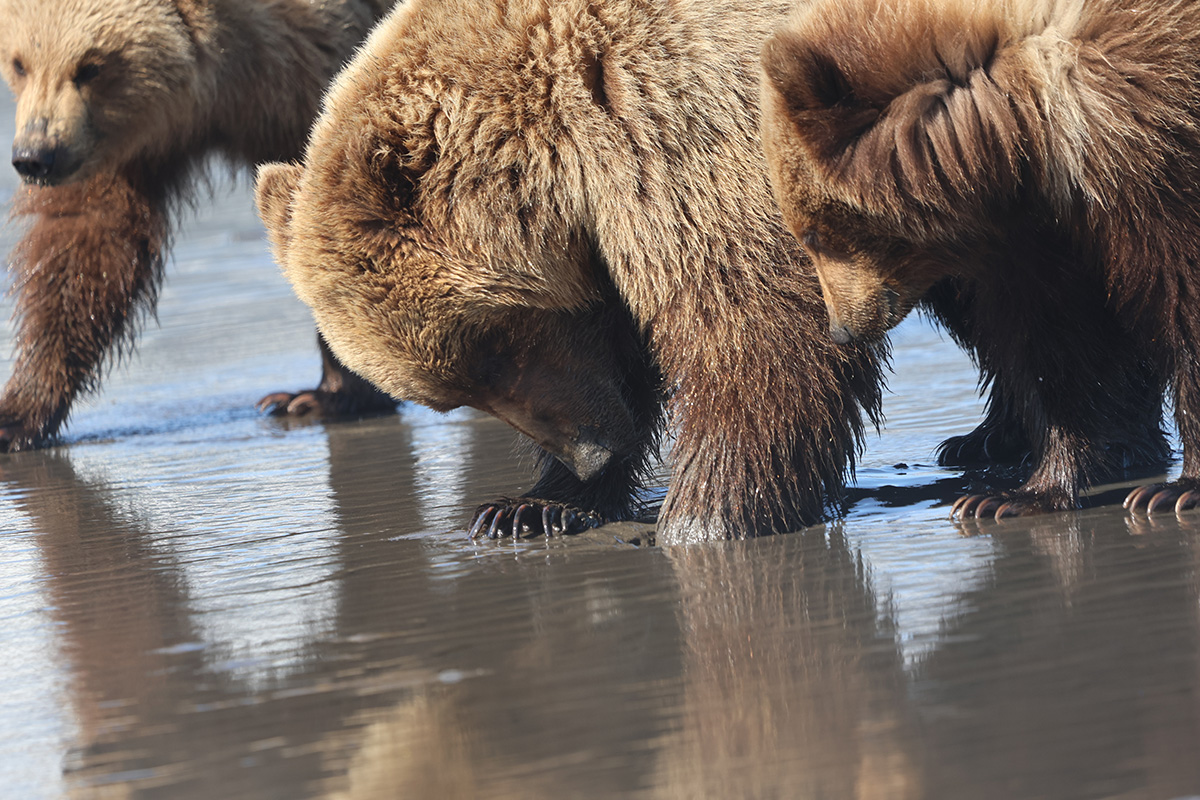
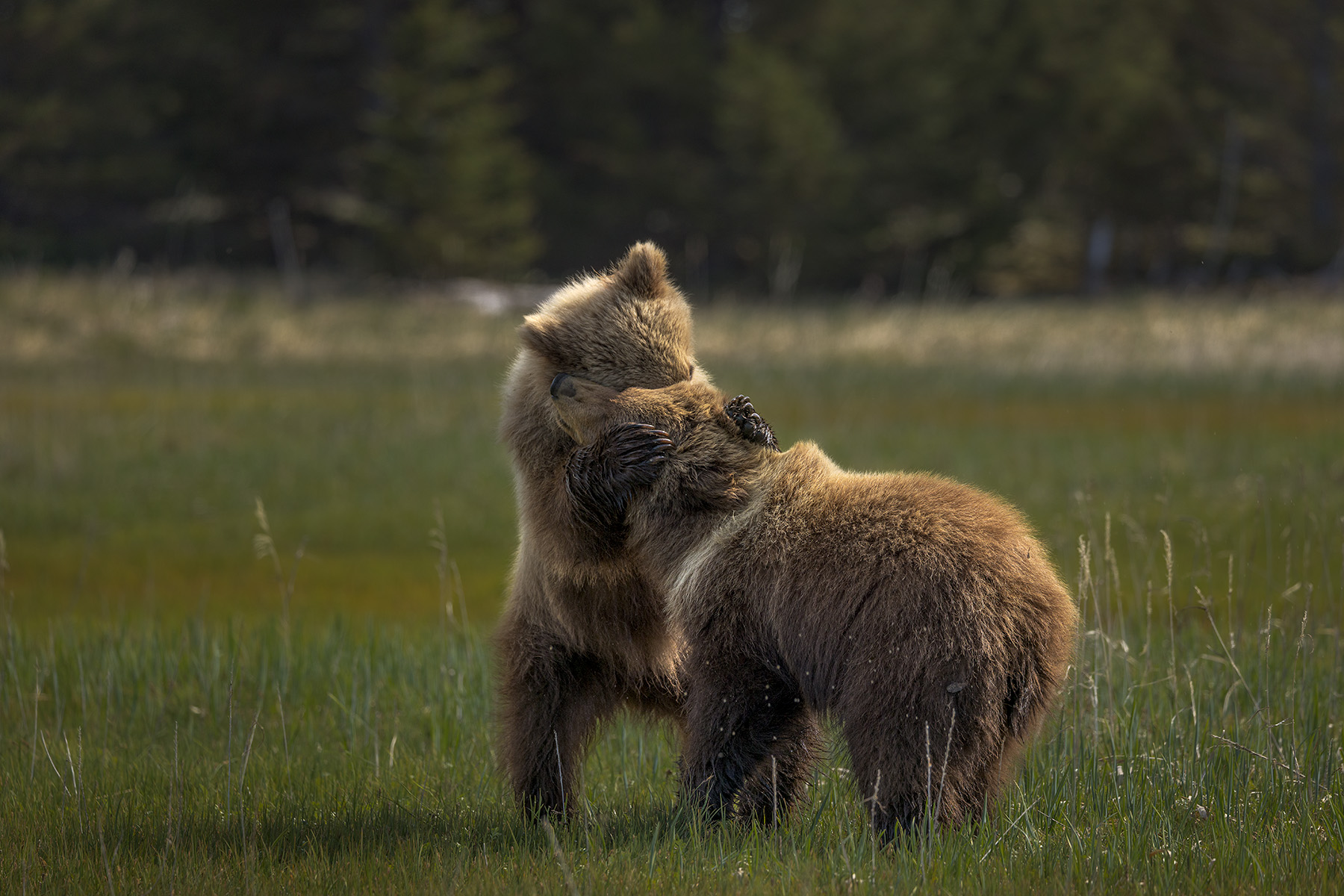
Out on the tidal flats, the cubs would shadow her close and copy everything she did as she taught them to clam — heads down, mimicking the dig, working out the timing of it. That kind of feeding-pattern reading is half of what helps you anticipate the shot before it happens. They didn't always stay on task. They'd break off to chase seagulls across the flats, or stop cold and start wrestling each other, or get completely absorbed in a stick or a clump of moss like it was the most important thing in the world. One of them spent a while trying to climb the anchor line on a dry-docked boat; both ended up inspecting the outboards. Then they'd remember mom and scramble back.
You're close enough out there to hear all of it. There were stretches where you could hear the cubs crying — that low, insistent fuss — wanting to be nursed, and you'd watch Long Nose work the other side of it, trying to wean them off, steering them back to the grass, distracting them with one more bite when she'd had enough of the asking. That's the kind of thing you don't read about beforehand and don't forget once you've stood there for it.
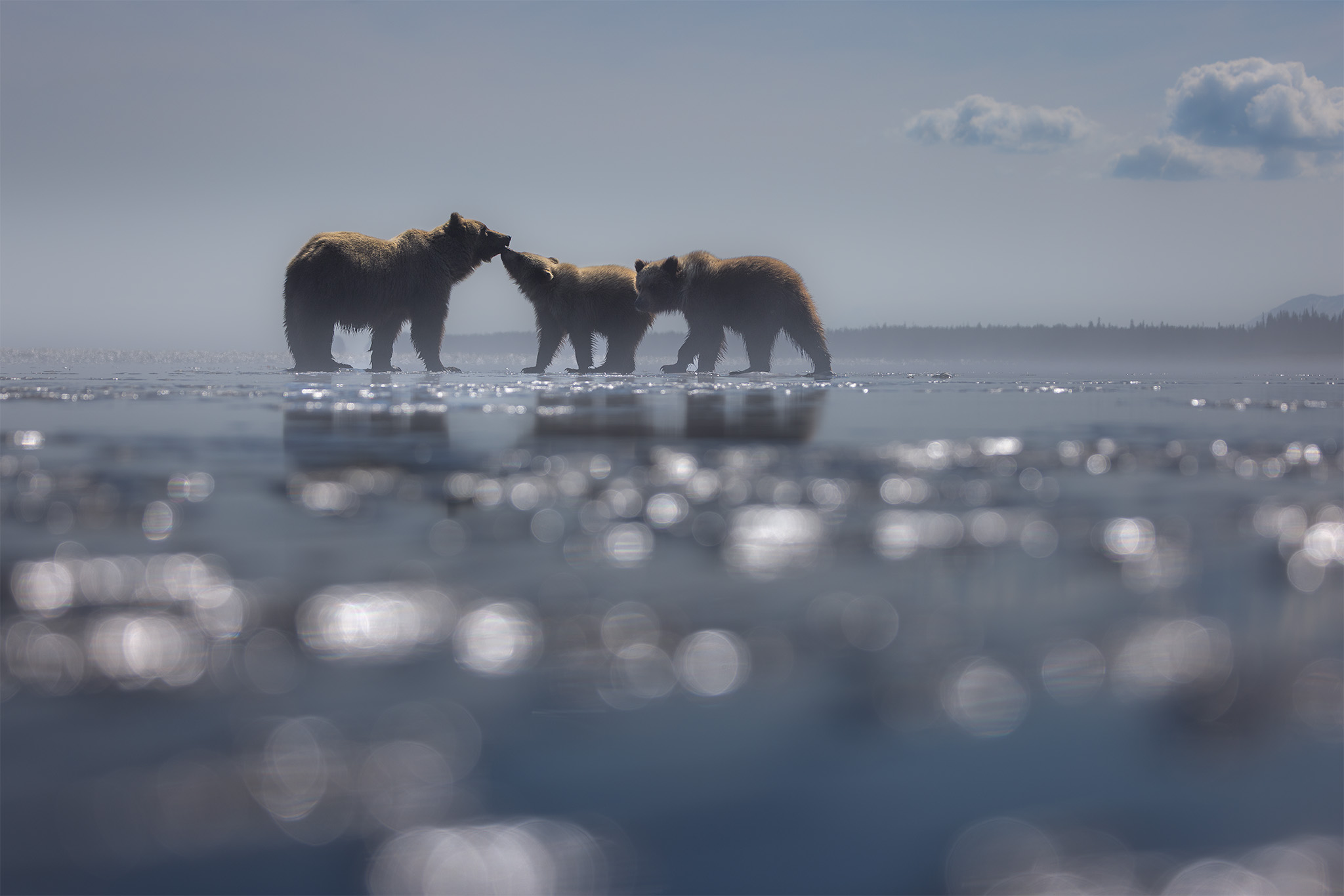
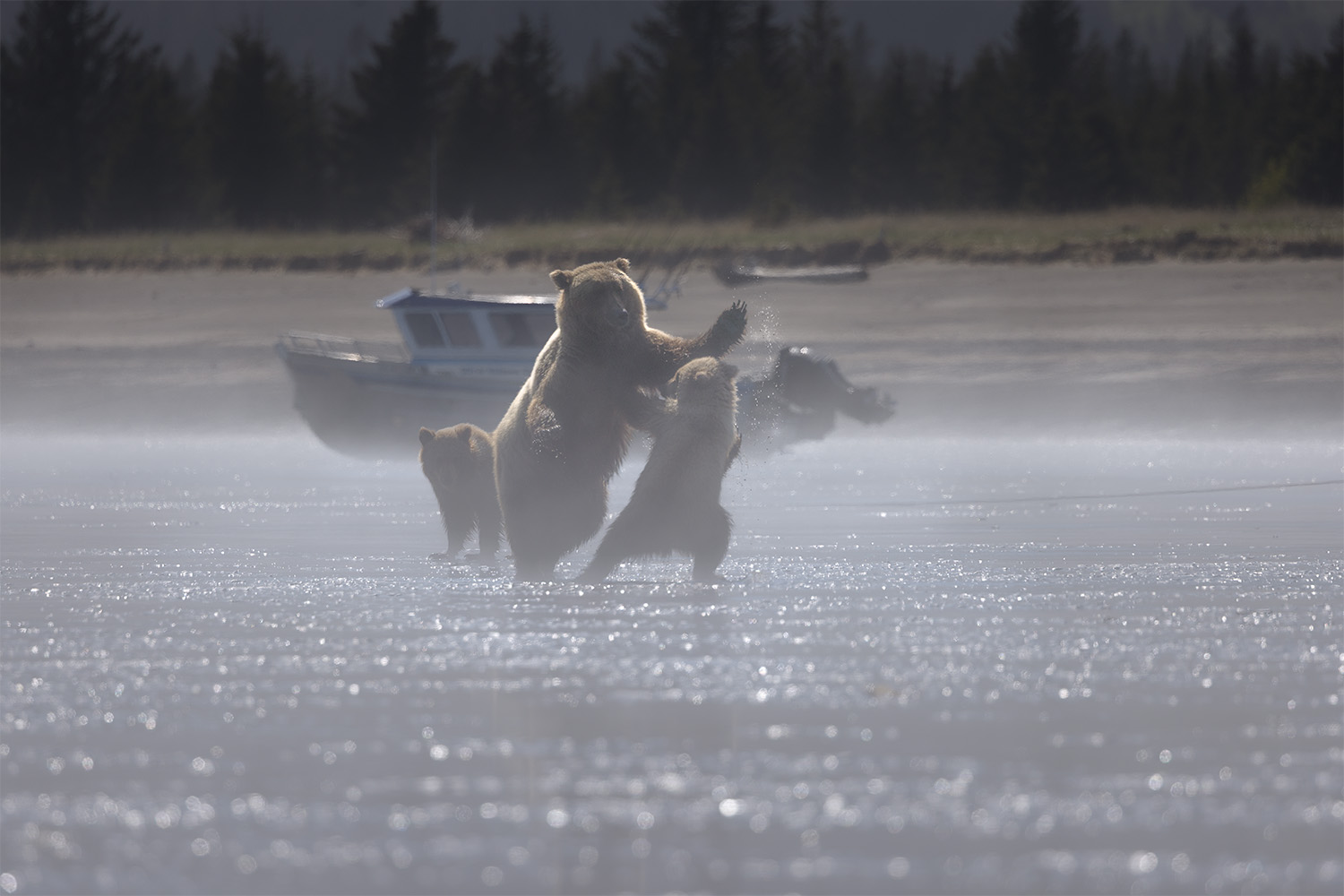
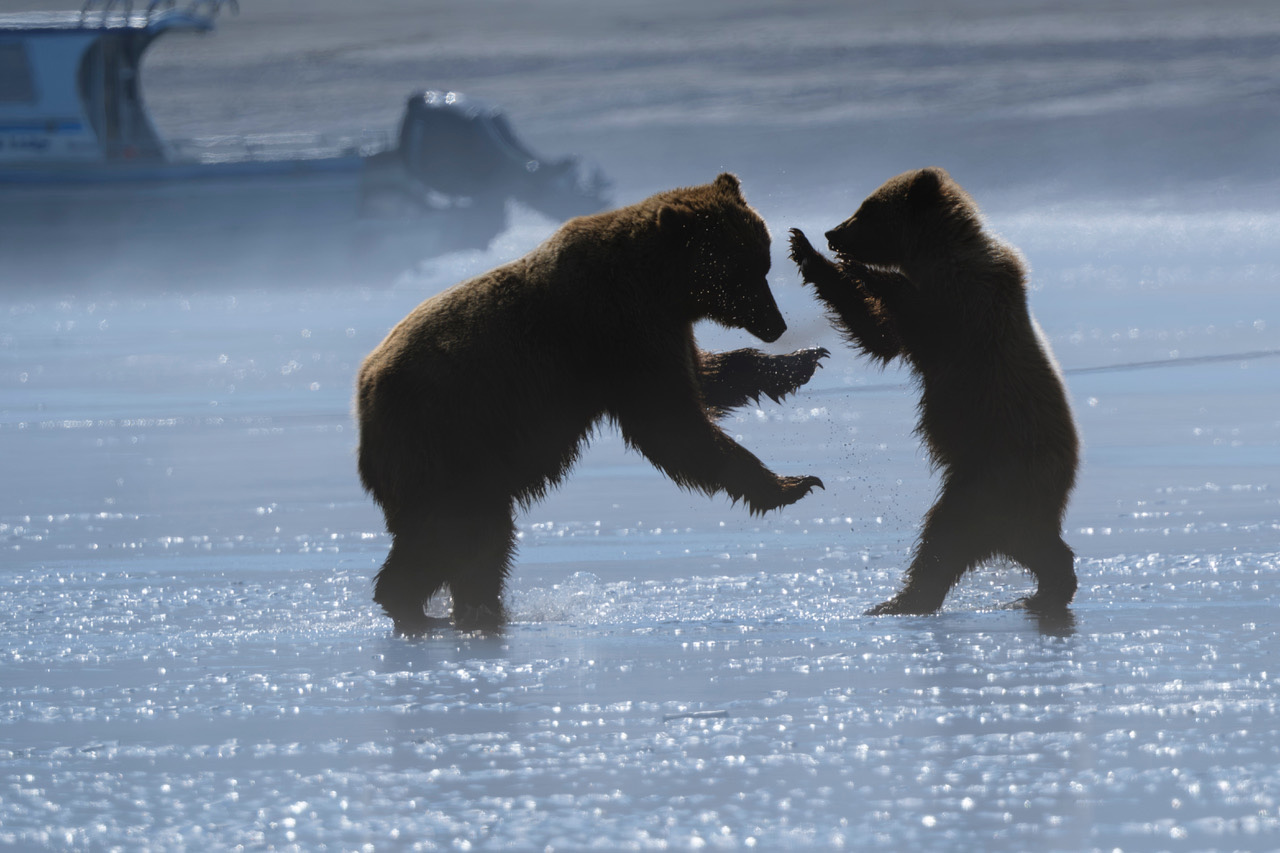
The best of it came when all three were out on the tidal flats together at the right time of evening. The mist was rising off the wet sand, the low light coming through it, and the bears went to silhouette — Long Nose and her two cubs playing, backlit, the whole scene built out of rim light and steam. That's a frame you have to commit to. I had everyone underexpose that bright sky hard — let the silhouettes build the scene and be the scene — riding exposure compensation down around two stops under, while holding a shutter speed fast enough to freeze the cubs' play. That kind of in-field coaching is where people make real gains in their technical camera skills. You protect the highlights, you keep the motion sharp, and you let the dark shapes and the backlit mist carry it. It's the kind of shot that looks like luck and is actually a setting.
One evening, right after a nursing session, both cubs came up with white milk muzzles. The little male nudged in and kissed Long Nose on the side of the face, and left a smudge of milk on her cheek. Nobody could have set that up. You only get those interactions in a place like this.
There were a lot of moments that week where the right move was to put the camera down and just take it in. I tell every group that — the photography matters, but some of this you're going to want to watch with your own eyes, not through a viewfinder. It's hard for me to put into words what it's like to be let into their world like that, front row, on the bear's terms, by mutual respect rather than intrusion. So I usually just tell people the truth: you have to experience it. I can describe it all day and still not land it.
The Last Morning
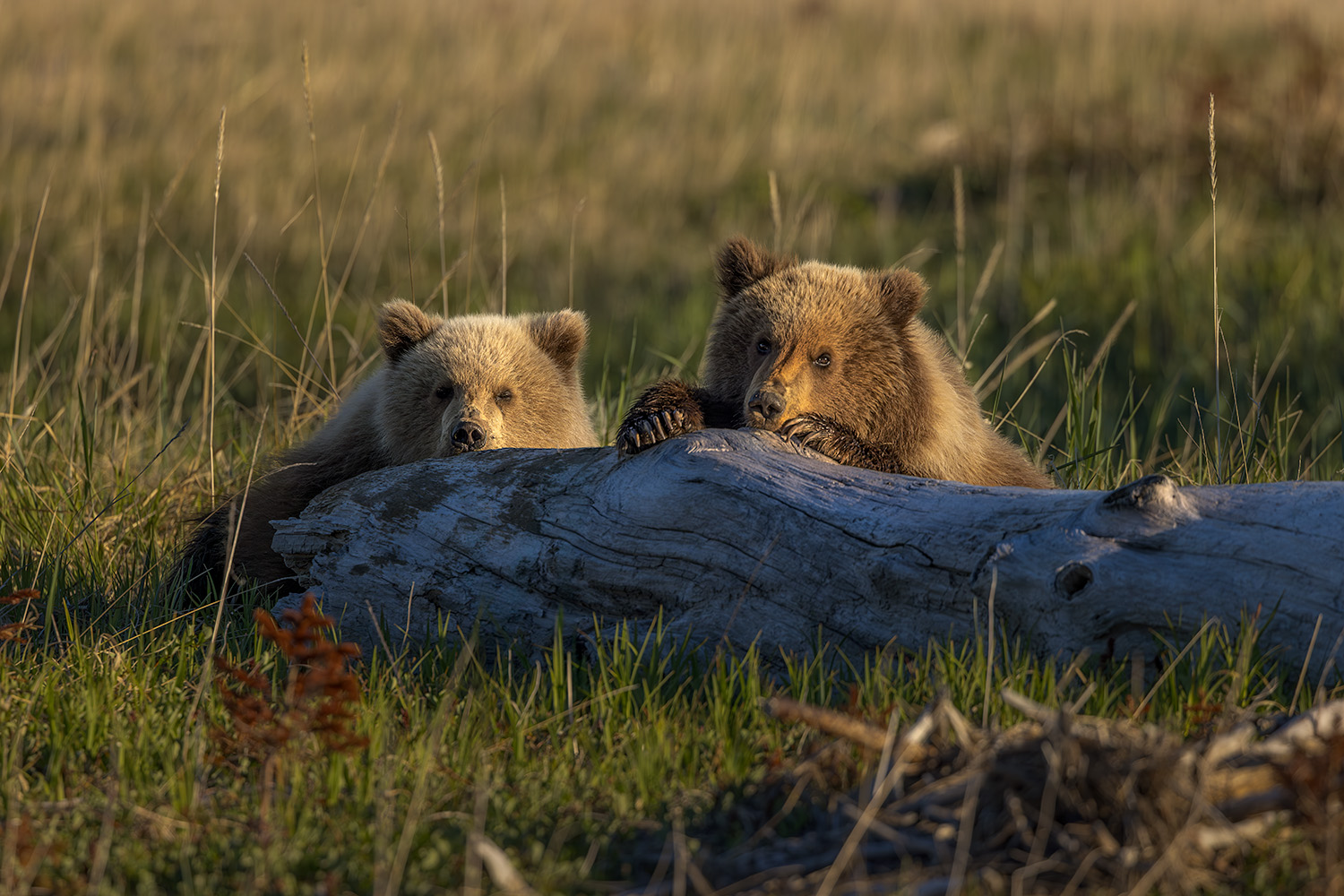
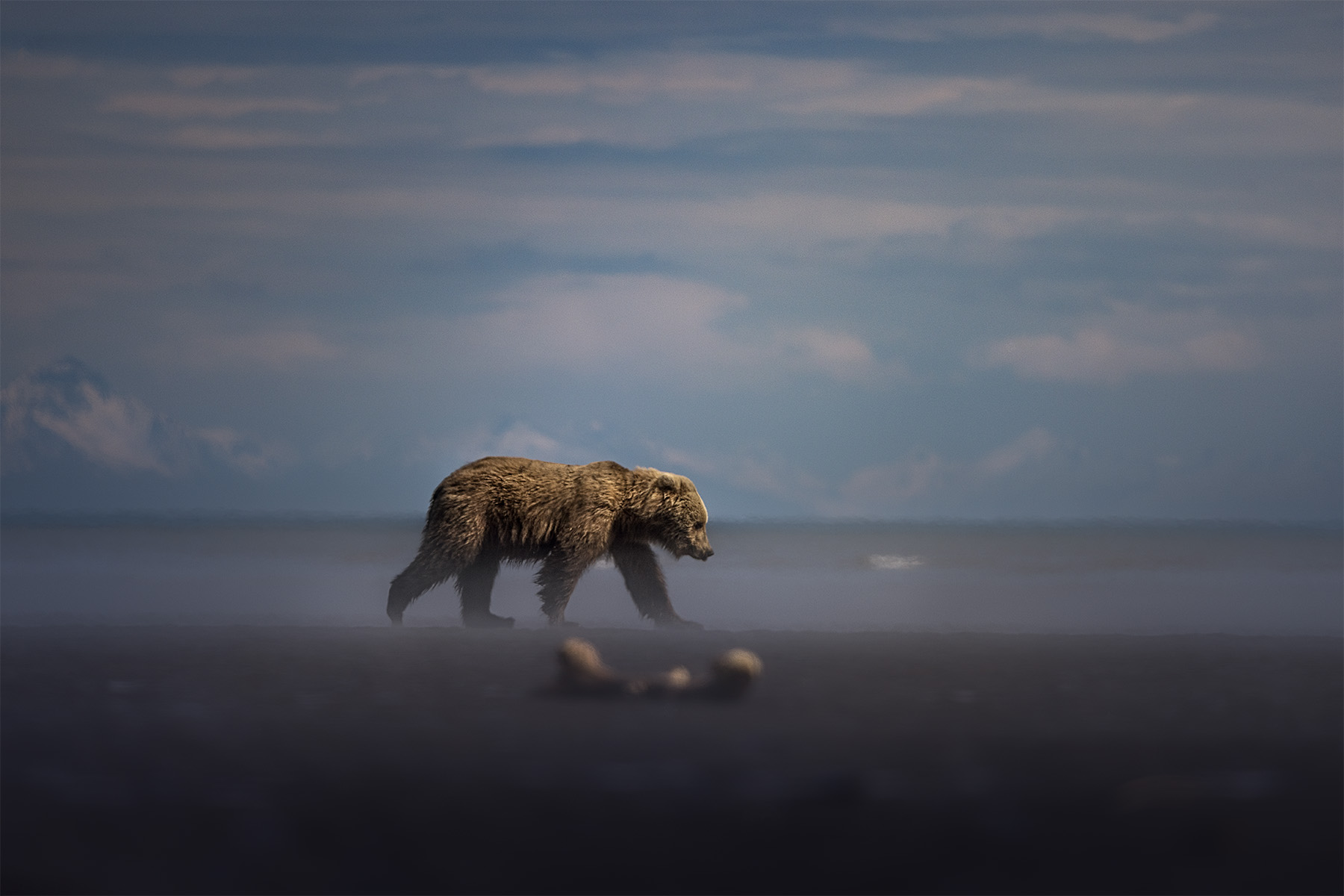
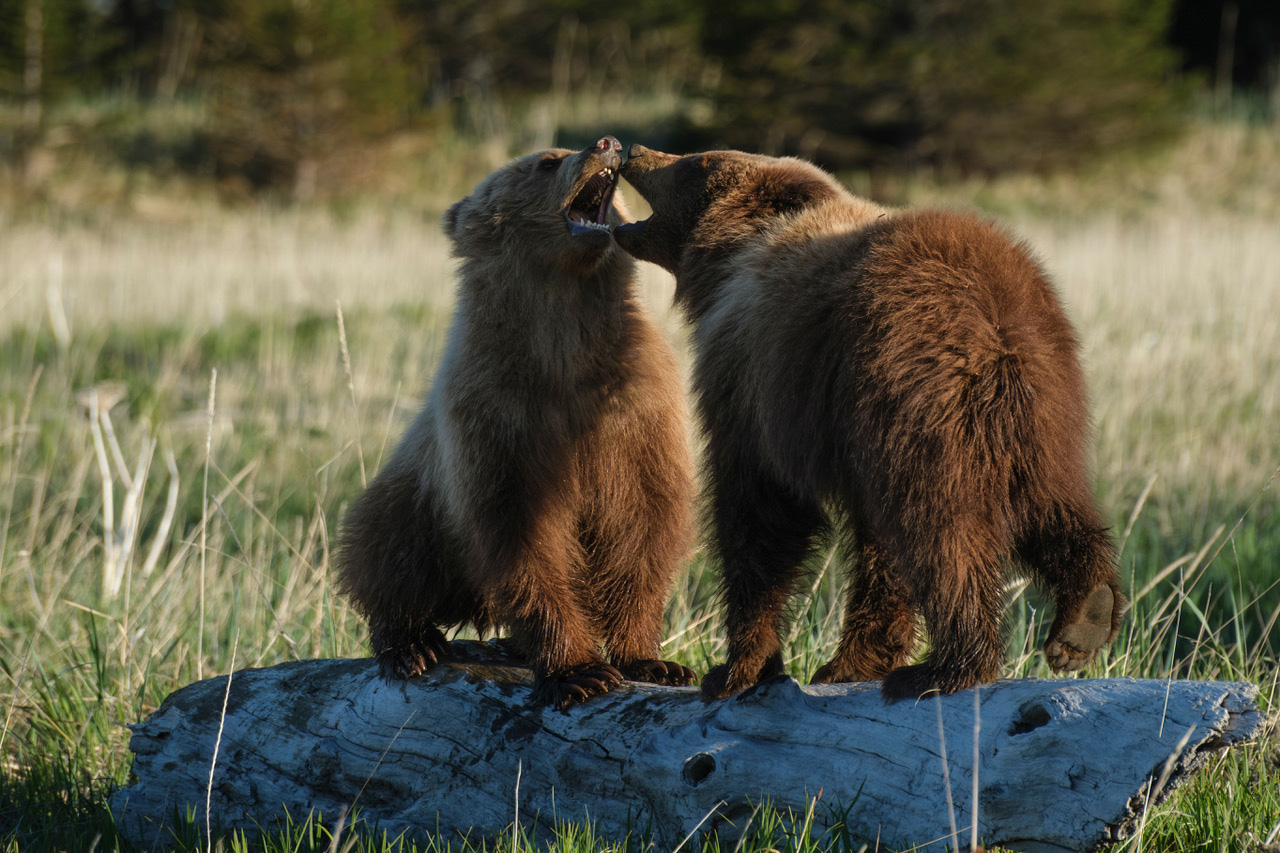
Two beats stuck the landing on the way out. The last night's session gave the group a quiet gift — the cubs playing on an old weathered log in the meadow, deep in golden hour. And on the morning we left, as everyone waited to head down to the beach for the plane home, a brown bear walked right through camp, about fifteen feet in front of us. Cameras were already packed and the SD cards were full from the week, so nobody got that last frame — but it was a fitting send-off all the same. On the flight back to Anchorage, a black bear crossed an airstrip below, like the country wasn't quite finished with the group yet.
What Stuck With People
At the end of every workshop I ask everyone what they'll remember most. This time the answers were almost unanimous.
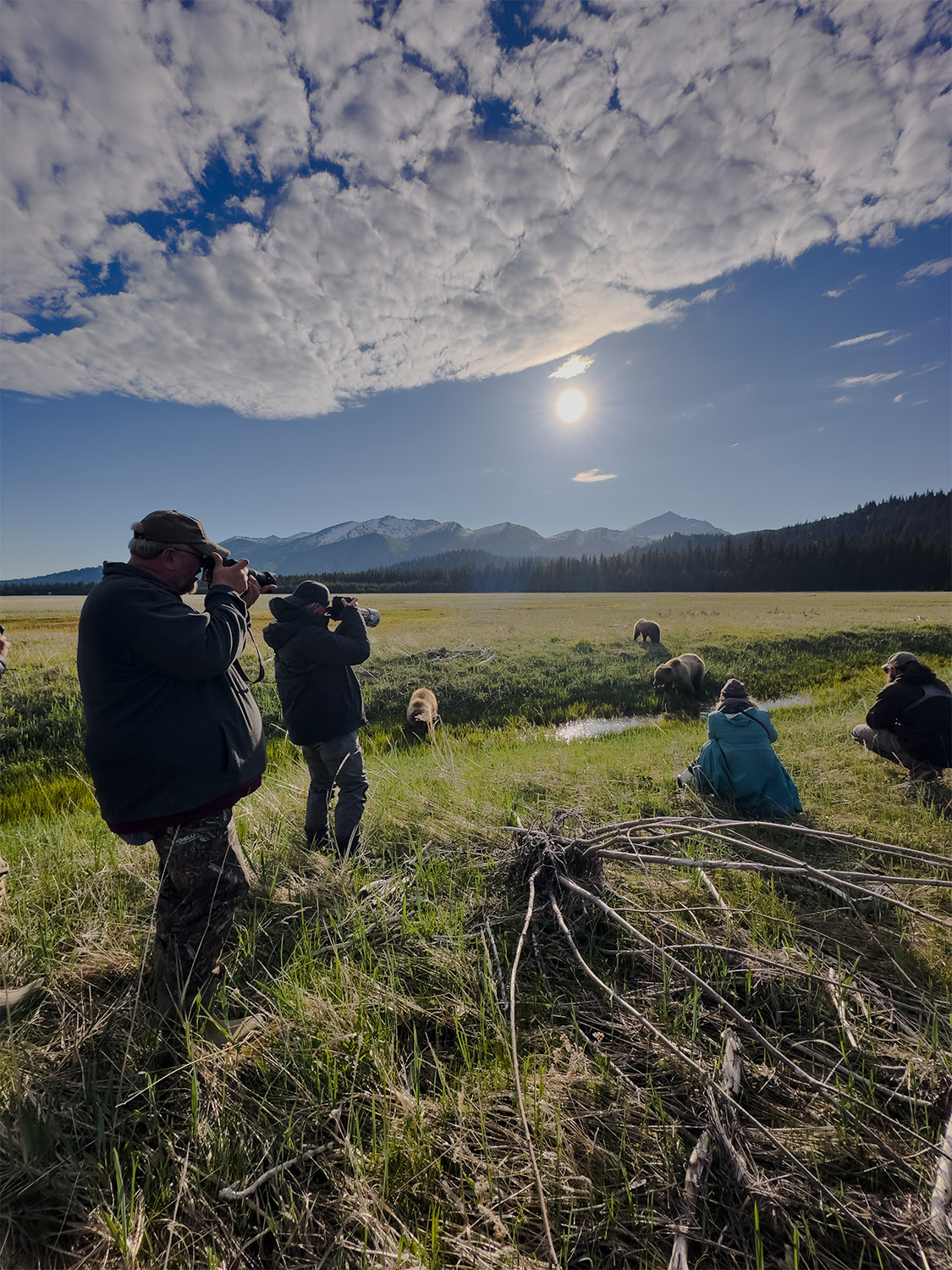
The first was how close the bears get. Until you've stood there and watched a sow nurse her cubs a short distance away, calm and unbothered, it's genuinely hard to put into words — and a coastal brown bear can weigh up to 1,000 pounds, so close is a word that carries some weight here. People come in braced for long-lens-only, keep-your-distance wildlife work — and then the experience rearranges what they thought was possible. That closeness is the whole reason I run this at Silver Salmon Creek. It's a land-based lodge, so you're walking out to the bears and staying with them, not burning the best light in transit, and the small group size is a big part of why it works so well.
The second answer, every time: the food. I'd heard people call this place magical, and the group said it exceeded their expectations across the board. A few had been to Katmai, and to a person they felt Lake Clark outshined it — enough that they're already talking about their return.
A lot of that comes down to David and Joanne, who own Silver Salmon Creek Lodge, and their wonderful staff. They go out of their way to make everyone feel welcome — they make a point of talking to each person and remembering names, and that hospitality is part of what lifts this whole experience to another level. The bears get the headlines, but the place is why people come back.
If you want the deeper background on photographing this stretch of coast, I've written up brown bear photography at Lake Clark and a longer piece on what brown bear encounters at Lake Clark actually look like up close.
Frames From the Group
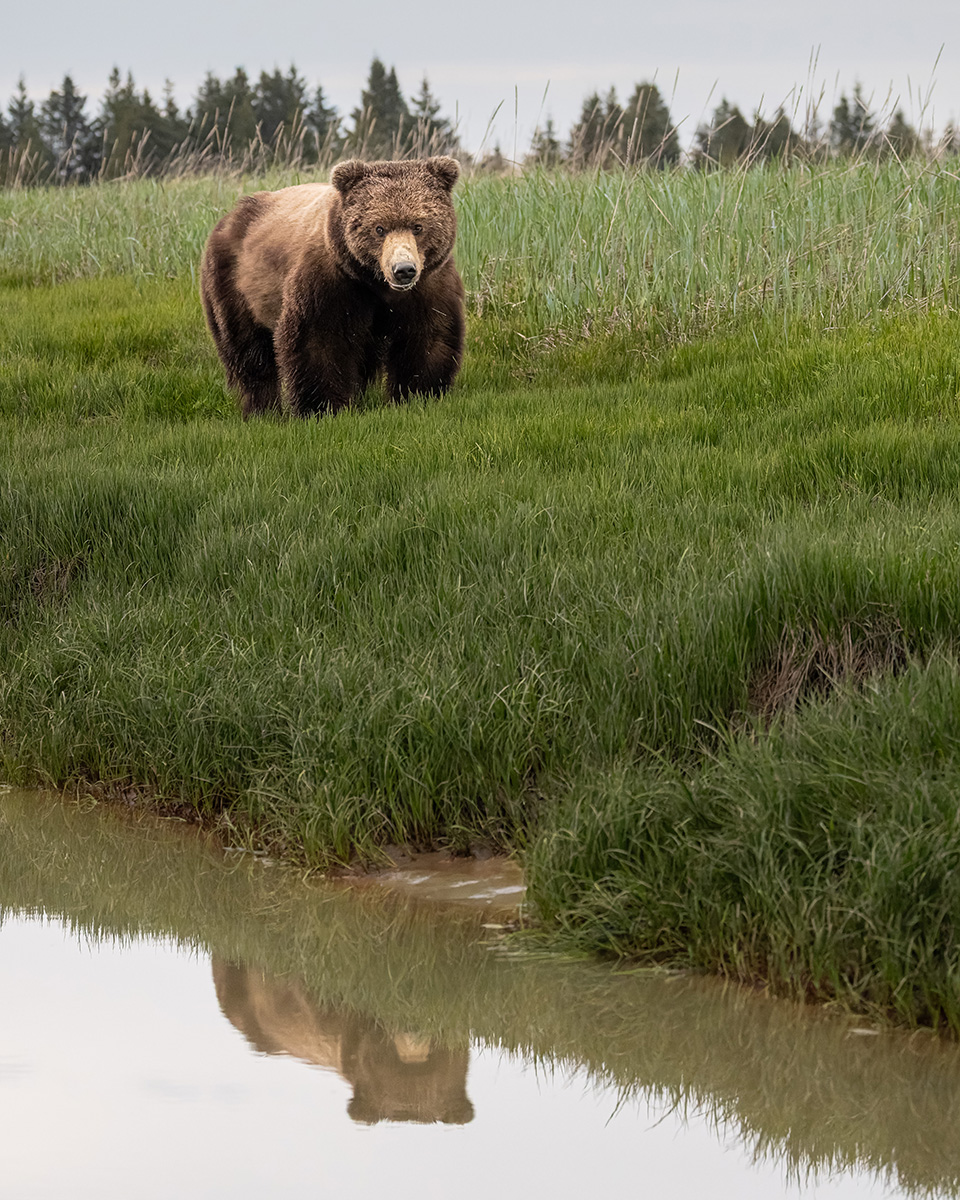
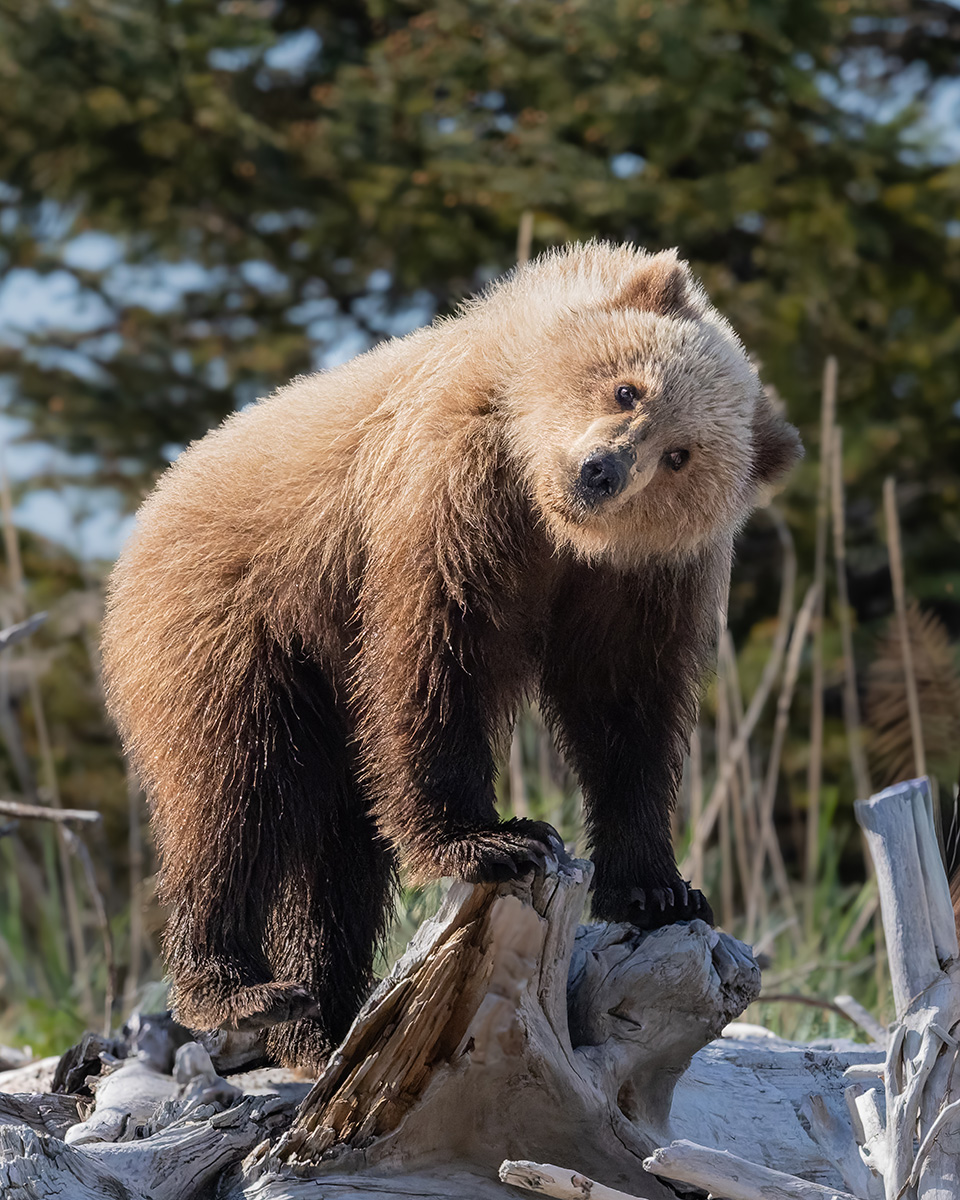
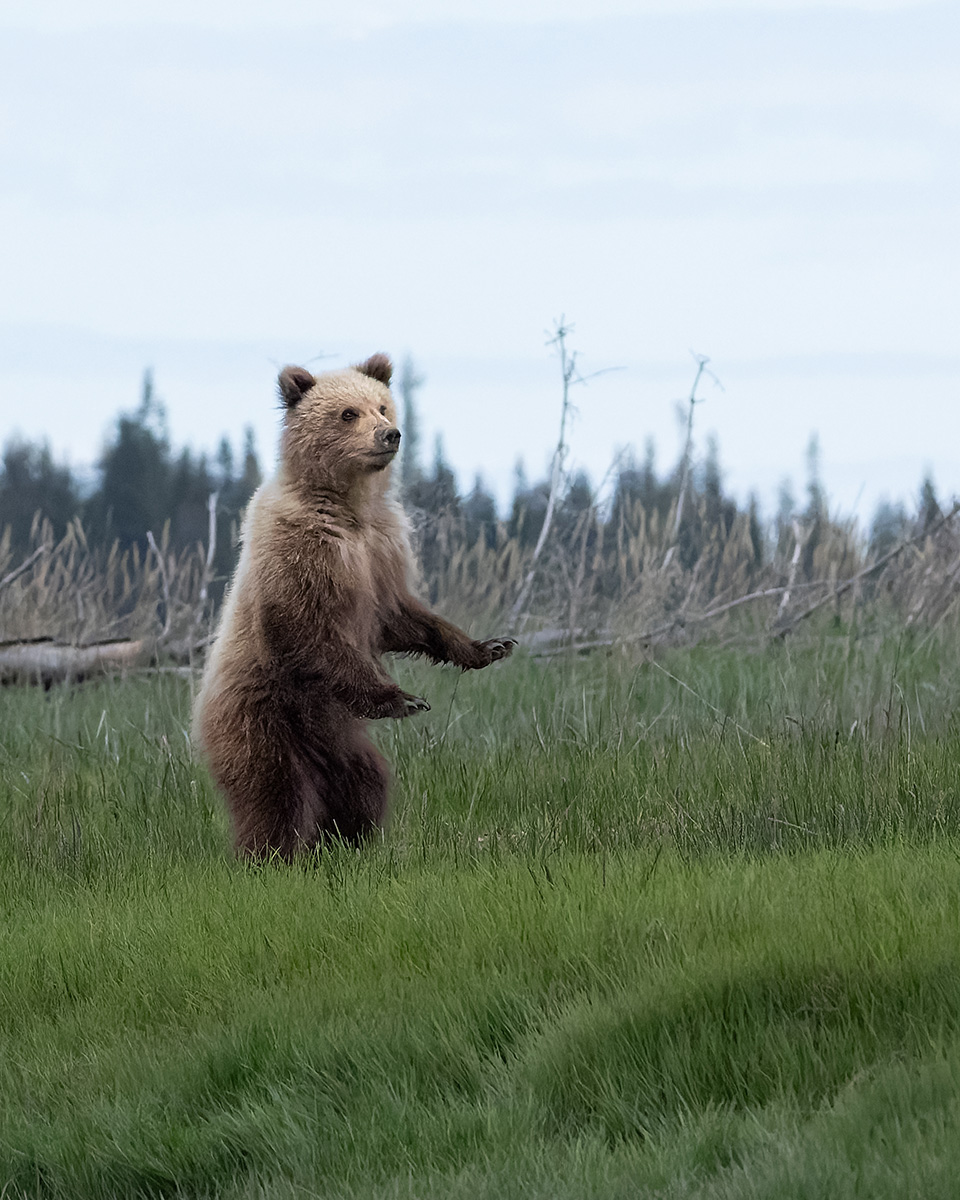
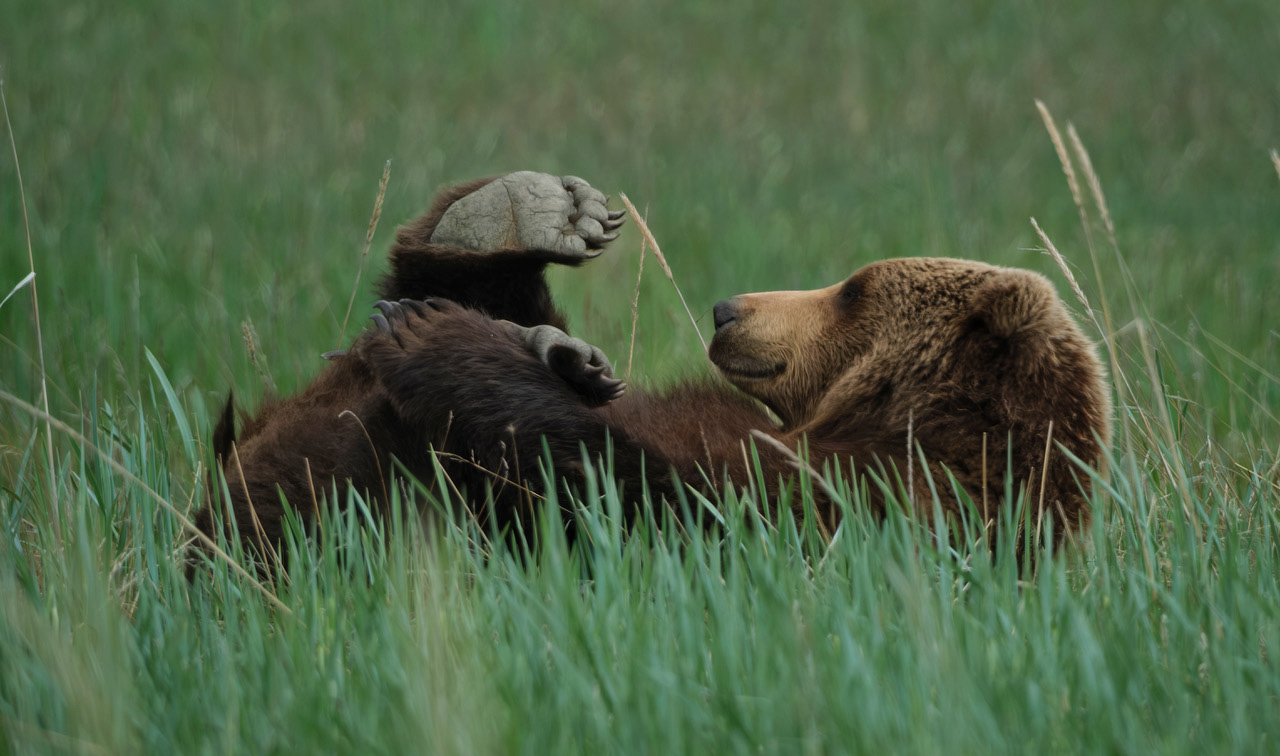
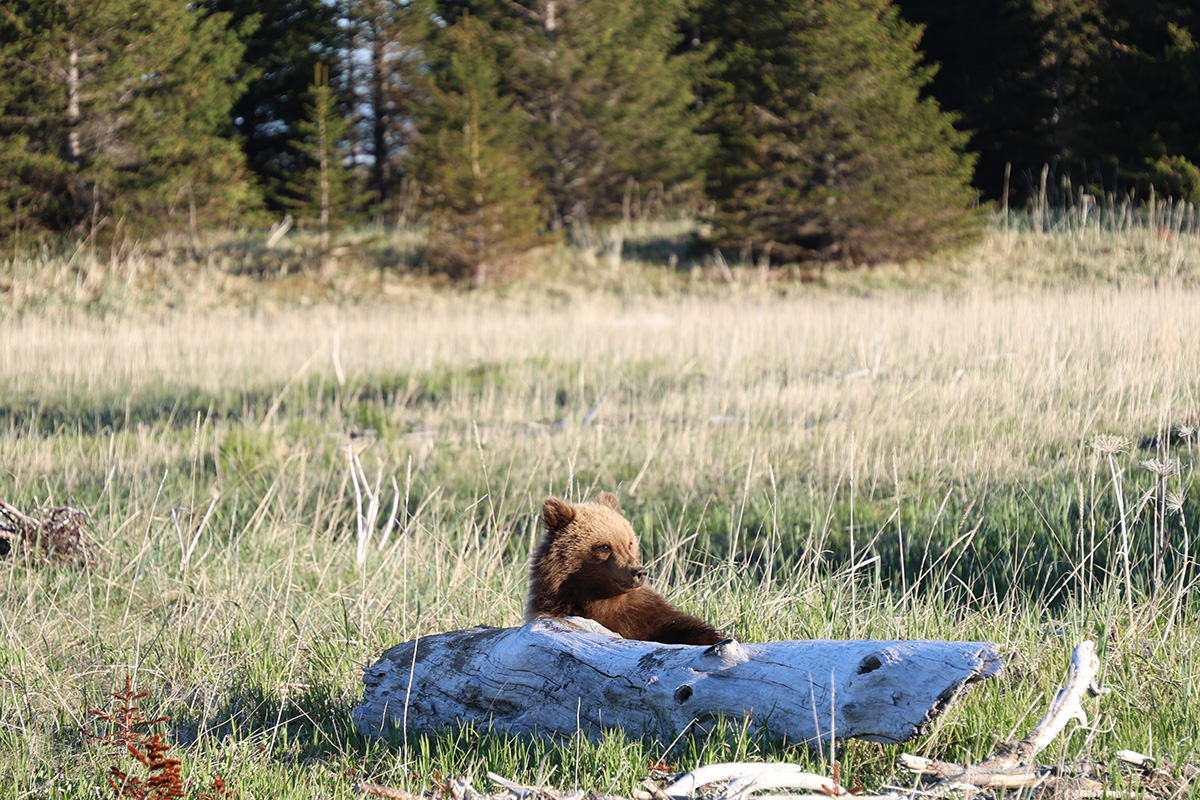
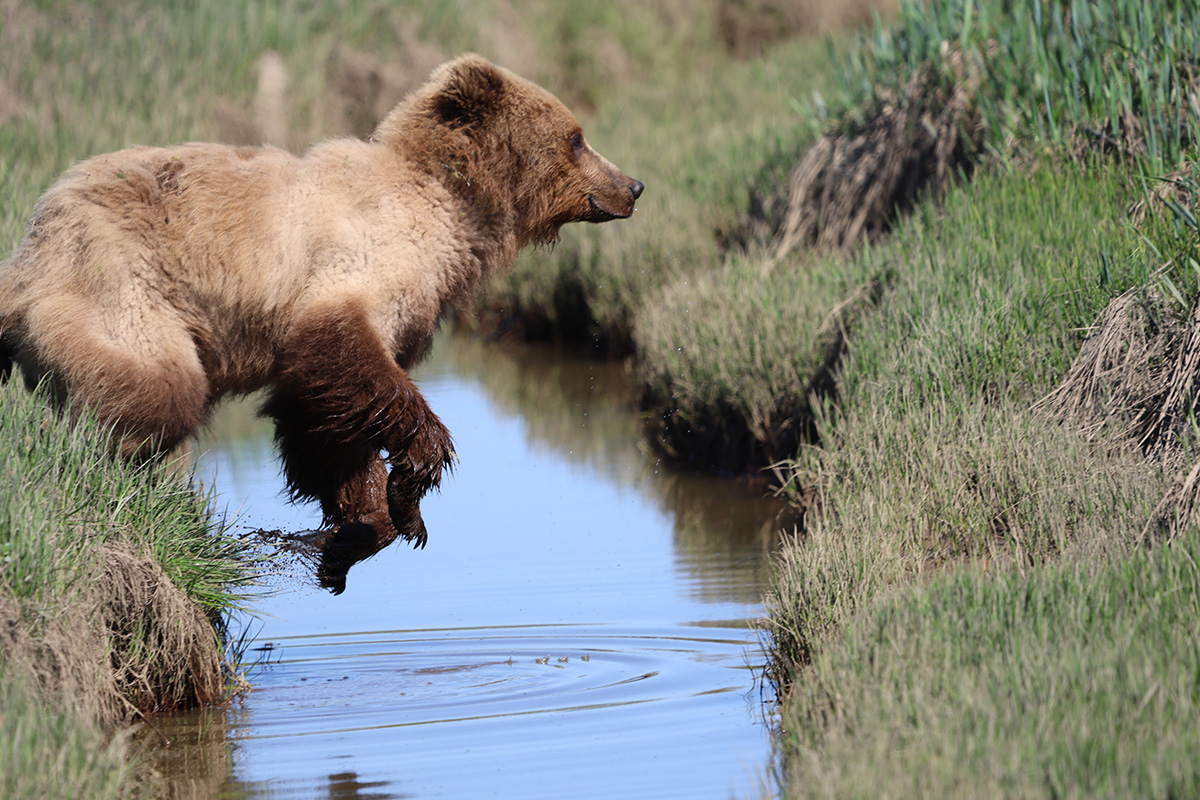
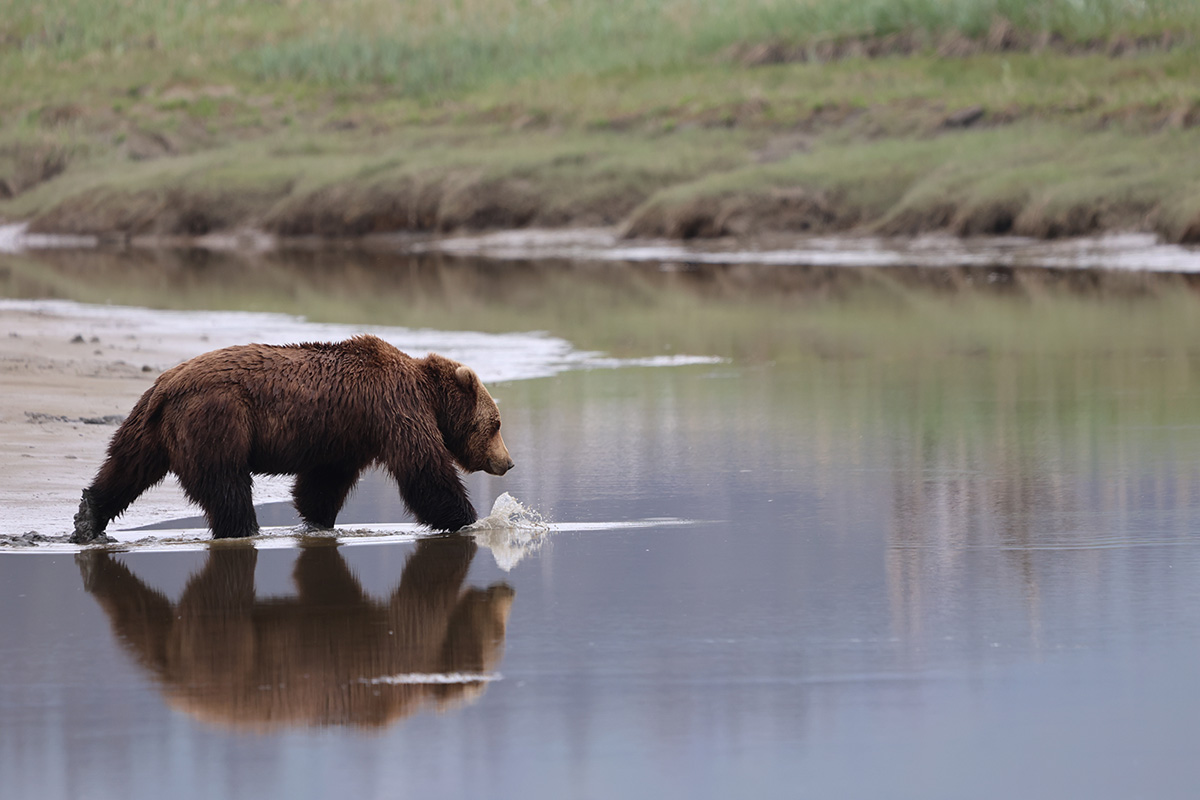
These aren't my photographs — they're the ones the group brought home from the week, by Janice, Kelly, and Steve. This is what five days on the coast at Silver Salmon Creek actually looks like through their lenses.
Join Me Next June
I run this spring workshop once a year, capped small, at Silver Salmon Creek in Lake Clark National Park. The 2027 dates are set and the seats are open — same lodge, same coast, same June light and mothers-and-cubs window. If a week like this one is what you're after, here's where to start: the Lake Clark spring bear photography workshop.
Frequently Asked Questions
When is the best time to photograph spring brown bears at Lake Clark?
Late May through June, when the coastal brown bears are grazing the sedge meadows and mothers bring their cubs out into the open. June is prime for mothers-and-cubs behavior — nursing, clamming on the tidal flats, and cubs playing in the meadows — under long, soft northern light. June falls before the salmon run, which is exactly why spring is about courtship and mothers and cubs rather than bears fishing.
How close do you actually get to the bears?
Closer than most people expect. At Silver Salmon Creek the bears are habituated to people on foot and relaxed, so working distances are intimate when the behavior allows. The single most common reaction at the end of the week is surprise at how close the photography really is — but it's always on the bear's terms, with a certified guide reading bear behavior and the situation in real time.
What lens do I need for Lake Clark bear photography?
A 100–500mm is my go-to recommendation — it covers the intimate behavior and gives you reach when a bear is working farther out. A 200–400mm zoom is also a strong choice. Bring a second body if you have one so you're not changing lenses while the action is happening, and shoot from a low angle for a more intimate perspective.
What camera settings work for bears in action?
For fast-moving bears — a sow chasing a boar, cubs wrestling — a shutter speed of 1/1000s or faster freezes the motion; around f/6.3 with continuous burst mode and animal eye-detection autofocus keeps a moving bear sharp. The best light is early morning and late evening, so be ready to shoot wide open and lean on those golden hours.
Is Lake Clark better than Katmai for bear photography?
They're different experiences. Several photographers on this trip had been to Katmai and felt Lake Clark outshined it — the land-based lodge means more time on the bears and less time in transit, and Silver Salmon Creek's coastal meadows and tidal flats put you on grazing, clamming, and mothers-and-cubs behavior rather than a single salmon-falls scene.
How many people are in the workshop?
It's a small group, capped at five photographers, so everyone gets real time with the bears and personal instruction in the field.